To guarantee your greenhouse receives clean, safe water, implement a rainwater filtration system. Start with gutters and collection tanks to remove large debris, then add mesh or sediment filters for smaller particles. For advanced purification, consider cartridge filters, UV sterilization, or chemical treatments to eliminate pathogens. Proper design and regular maintenance keep your system efficient and extend its lifespan. Keep exploring to discover more ways to optimize water quality and sustainability in your greenhouse.

Get garden gear delivered free with Prime
- Fast, free delivery on millions of items
- Prime Video, Amazon Music and more included
- Member-only deals all year
Key Takeaways
- Collect rainwater through gutters and tanks, filtering out leaves, dirt, and debris with mesh screens or sediment filters.
- Incorporate advanced filters like cartridge or sand filters to remove small particles and pathogens.
- Use UV sterilization or chemical treatments for additional purification of the water.
- Design the system considering greenhouse size and local climate for optimal performance.
- Regular maintenance and filter replacement ensure consistent, high-quality water for healthy plant growth.
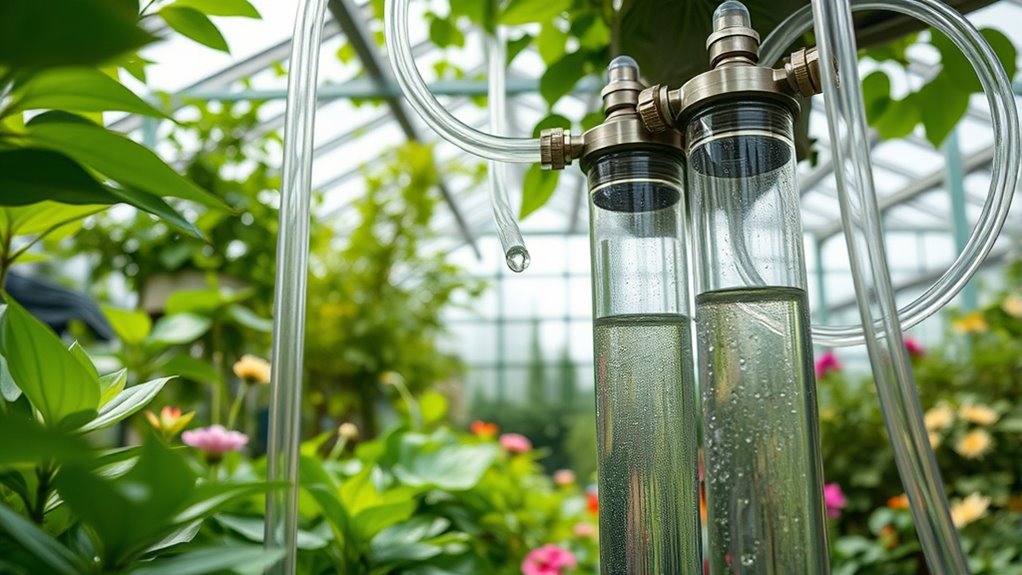
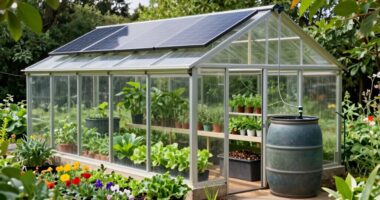
Rainwater filtration systems are essential for maintaining healthy, sustainable greenhouses. When you rely on rainwater harvesting, you’re tapping into a free, plentiful resource that can considerably reduce your dependence on municipal water supplies. However, rainwater isn’t always clean; it can carry dirt, debris, bacteria, and other contaminants that could harm your plants or clog your irrigation systems. That’s where effective filtration technology comes into play. By implementing a reliable rainwater filtration system, you guarantee that the water you use is not only abundant but also safe and suitable for your plants’ needs. This process begins with capturing rainwater through gutters and collection tanks designed specifically for this purpose. Once collected, the water passes through a series of filtration stages that remove physical impurities like leaves, dirt, and debris, which can cause blockages or damage to your irrigation components.
Filtration technology in these systems often includes mesh screens or sediment filters that trap larger particles. As the water moves further into your system, finer filters—such as cartridge filters or sand filters—eliminate smaller particles and microorganisms that could pose health risks to your plants. Some advanced systems even incorporate UV sterilization or chemical treatments to further purify the water, ensuring it’s free from pathogens. The key advantage of integrating modern filtration technology into rainwater harvesting is that it maximizes water quality while minimizing maintenance and troubleshooting. You’ll find that high-quality filters are designed for easy cleaning and replacement, which keeps the system running smoothly without requiring extensive technical knowledge.
Using a well-designed rainwater filtration system not only improves plant health but also extends the lifespan of your irrigation equipment by preventing sediment buildup and clogging. It also promotes sustainability by making the most of natural rainfall, reducing your water bills, and lowering your environmental impact. When choosing a filtration setup, consider factors like your greenhouse size, local climate, and the quality of your rainwater source. Properly maintained, a robust filtration system will serve you for years, providing a consistent supply of clean water tailored to your plants’ needs. In short, investing in advanced filtration technology for rainwater harvesting is a smart move that supports your goals of sustainability, efficiency, and healthy plant growth.
rainwater gutter filtration system
As an affiliate, we earn on qualifying purchases.
As an affiliate, we earn on qualifying purchases.
Frequently Asked Questions
How Often Should I Replace My Greenhouse Rainwater Filter?
You should replace your greenhouse rainwater filter every 6 to 12 months, depending on its filter lifespan and water quality. Check the filter regularly for clogs or debris, and perform replacements more frequently if you notice reduced water flow or increased contaminants. Regular maintenance guarantees maximum filtration, preventing buildup and ensuring your plants receive clean, safe water. Consistent replacement keeps your system functioning efficiently and protects your greenhouse environment.
Can Rainwater Filtration Systems Handle Heavy Metal Contaminants?
Yes, rainwater filtration systems can handle heavy metal contaminants, but it depends on the system’s design. Think of it as a gatekeeper, blocking unwanted guests like heavy metals during contaminant removal. Look for systems equipped with specialized filters, such as activated carbon or ion exchange resins, which excel at heavy metal filtration. Regular maintenance guarantees these filters keep working effectively, protecting your plants from harmful contaminants.
Are There Eco-Friendly Options for Greenhouse Rainwater Filters?
Yes, you can choose eco-friendly alternatives for your greenhouse rainwater filters. Look for sustainable filtration options like bio-filtration systems, which use natural materials to clean water, or ceramic filters made from eco-friendly materials. These options reduce environmental impact and promote sustainability. By selecting eco-friendly alternatives, you guarantee your greenhouse water system stays environmentally responsible while effectively filtering rainwater for your plants.
What Is the Maintenance Cost of a Typical Rainwater Filtration System?
You’ll find the maintenance cost of a typical rainwater filtration system quite manageable, especially when considering its long-term benefits. A cost comparison shows it’s economical over its system lifespan, with regular upkeep like filter replacements and minor inspections. These routine tasks help guarantee peak performance and longevity, so you won’t need to worry about unexpected expenses. Overall, investing in a well-maintained system pays off by keeping your greenhouse thriving efficiently.
How Do I Troubleshoot Low Water Flow in My Filtration System?
To troubleshoot low water flow, start by checking for flow rate issues caused by filter clogging. Remove and clean or replace the filter if it’s dirty or blocked. Inspect the pipes for obstructions or debris, and confirm the inlet and outlet valves are fully open. If flow remains low, examine the pump for malfunctions and verify the water source isn’t restricted, addressing these issues systematically should restore proper flow.
Conclusion
Implementing a rainwater filtration system in your greenhouse isn’t just smart—it’s essential. Did you know that untreated rainwater can carry pollutants that reduce plant growth by up to 30%? By investing in a quality filtration system, you’ll guarantee your plants get clean, healthy water, boosting their productivity and your success. Take control of your greenhouse’s water source today, and watch your plants thrive while saving money and the environment.
Halloween Picks
halloween
As an affiliate, we earn on qualifying purchases.