To adopt a low-energy greenhouse habit, focus on strategic design and natural resources. Position your greenhouse south-facing if you’re in the northern hemisphere, use thermal mass materials to retain heat, and incorporate passive solar principles. Improve airflow with vents and exhaust fans, and consider shading methods to prevent overheating. These simple, sustainable practices can boost plant health and cut energy costs. Keep exploring to discover more ways to create an eco-friendly, efficient gardening space.

Get garden gear delivered free with Prime
- Fast, free delivery on millions of items
- Prime Video, Amazon Music and more included
- Member-only deals all year
Key Takeaways
- Design greenhouses with passive solar principles to naturally maintain optimal temperatures and reduce energy reliance.
- Use high thermal mass materials like water barrels or stone to absorb and release heat efficiently.
- Position greenhouses south-facing in the northern hemisphere to maximize sunlight exposure.
- Incorporate natural cross-ventilation and adjustable vents to regulate temperature and humidity.
- Combine passive solar design with smart ventilation strategies for a sustainable, low-energy gardening environment.
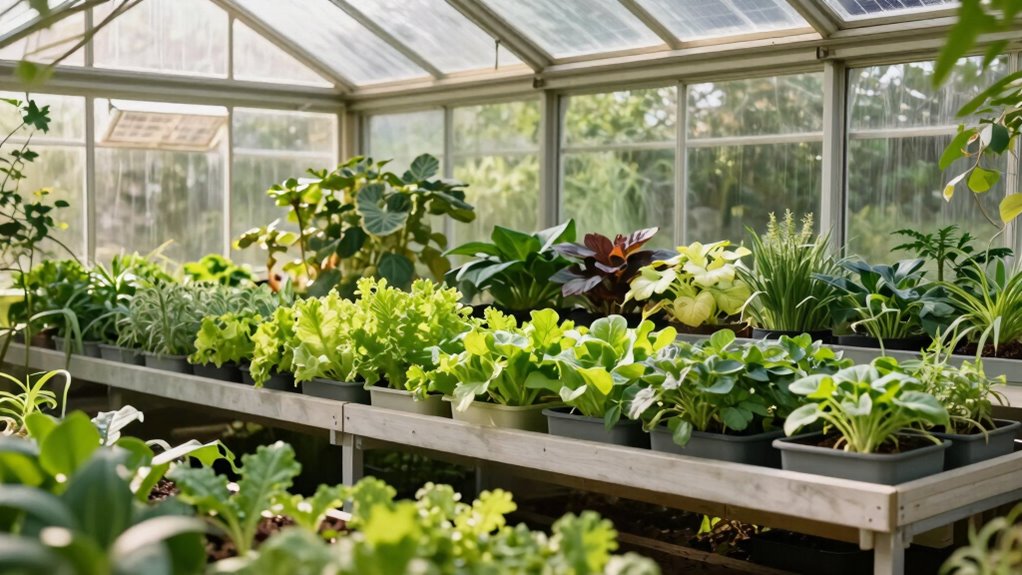
Have you ever considered how a greenhouse can transform your gardening routine? It’s not just about extending your growing season; it’s about creating a more efficient, sustainable space for your plants. One low-energy habit that more gardeners should adopt involves optimizing solar heating and ventilation strategies. These techniques work together to regulate temperature naturally, reducing your reliance on electricity and heating systems. By harnessing the sun’s power and managing airflow smartly, you can maintain ideal conditions for your plants without wasting energy or money.
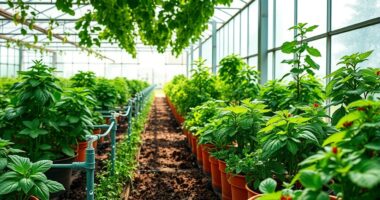
Solar heating is a simple yet effective method to warm your greenhouse during cooler months. Positioning your greenhouse to maximize sunlight exposure is key. South-facing structures in the northern hemisphere, for example, allow maximum sunlight to enter through large, unobstructed windows. You can also use materials with high thermal mass, like water barrels or stone, to absorb heat during the day and release it slowly at night. This passive solar approach ensures that your greenhouse stays warmer longer, reducing the need for supplemental heating. It’s a natural way to keep your plants cozy without increasing energy consumption, making your gardening more sustainable and cost-effective.
Position your greenhouse south-facing with high thermal mass materials to maximize passive solar warmth.
Ventilation strategies are equally important in maintaining a healthy environment inside your greenhouse. Proper airflow prevents overheating in the summer and reduces humidity, which can cause plant diseases. Installing adjustable vents or exhaust fans allows you to control airflow efficiently. When the temperature rises, opening vents at the top and bottom of your greenhouse facilitates natural cross-ventilation, pulling cooler air inside and pushing warm air out. During colder days, keeping vents closed conserves heat. Some gardeners even incorporate shade cloths or roll-up sides to further control heat buildup without relying on electric fans or cooling systems. These ventilation strategies keep the temperature stable, protect your plants from stress, and promote healthy growth—all while consuming minimal energy.
Combining solar heating with smart ventilation creates a low-energy ecosystem that benefits both your plants and the environment. This approach requires some planning—think about your greenhouse’s orientation and ventilation options—but it pays off with lower energy bills and a more eco-friendly gardening routine. More gardeners should copy this habit because it demonstrates that sustainable gardening doesn’t mean sacrificing productivity. Instead, it’s about working smarter—using natural resources and simple strategies to create an ideal growing environment. Incorporating passive solar design principles can further enhance your greenhouse’s energy efficiency. Understanding energy-efficient design can help you optimize all aspects of your greenhouse for maximum sustainability. Additionally, paying attention to thermal mass can improve heat retention during colder days. When you implement these techniques, you’re not only optimizing your space but also contributing to a more sustainable future. By adopting these methods, you can achieve healthier plants and a greener planet simultaneously. It’s a small shift that makes a big difference, and once you see the results, you’ll wonder why you hadn’t started sooner.
As an affiliate, we earn on qualifying purchases.
Frequently Asked Questions
How Much Does Installing a Low-Energy Greenhouse Typically Cost?
Installing a low-energy greenhouse typically costs between $5,000 and $15,000, depending on size and features. Your investment covers solar integration to maximize energy efficiency and advanced insulation techniques to retain heat. By choosing eco-friendly materials and solar-powered systems, you reduce ongoing energy costs. While upfront expenses may seem high, the long-term savings and sustainable benefits make it a smart choice for passionate gardeners aiming for eco-conscious growth.
What Are the Best Plant Types for Low-Energy Greenhouses?
Imagine your greenhouse as a cozy nest, where sunlight filters softly through solar shading, nurturing your plants. Opt for heat-loving plants like tomatoes, peppers, and herbs, which thrive in warm, protected environments. Leafy greens and root vegetables also flourish with minimal energy, thanks to smart plant selection. By choosing these types, you maximize your low-energy greenhouse’s efficiency, turning it into a thriving, sustainable oasis that practically takes care of itself.
How Do I Maintain Optimal Temperature in a Low-Energy Greenhouse?
You maintain ideal temperature in your low-energy greenhouse by harnessing passive heating techniques, like positioning your greenhouse to maximize sunlight and using thermal mass to store heat. Insulation techniques, such as double-glazing or adding insulation panels, help retain warmth overnight. Regularly monitor temperature levels and use minimal supplemental heating, only when necessary, to keep conditions stable without wasting energy. This approach guarantees your plants stay healthy and your energy use stays low.
Can a Low-Energy Greenhouse Be Used Year-Round?
Yes, a low-energy greenhouse can be used year-round if you select seasonal plants suited to each period. You should adjust ventilation and insulation to maintain ideal temperatures and prevent pests year-round. Incorporate pest prevention strategies like screens and natural repellents, especially during off-seasons. With proper planning, your greenhouse can support healthy plants throughout the year, reducing energy use while maximizing productivity and plant health.
What Are Common Challenges Faced With Low-Energy Greenhouse Setups?
You might face challenges like managing humidity control and preventing overheating, especially on sunny days. Solar shading becomes vital to reduce heat buildup, but it’s tricky to balance with adequate light. Maintaining consistent humidity levels can also be tough, risking plant health. These hurdles require careful planning and adjustment, making it necessary to stay vigilant and adapt your low-energy greenhouse setup to guarantee your plants thrive year-round.
Conclusion
Adopting a low-energy greenhouse habit isn’t just eco-friendly; it also boosts your gardening success. Imagine saving on energy bills while growing lush tomatoes year-round—like Sarah, who optimized her greenhouse insulation and lighting. By mimicking her approach, you can enjoy healthier plants and a smaller carbon footprint. Start small, experiment with energy-efficient practices, and watch your garden thrive while conserving resources. It’s a simple step toward a more sustainable, productive gardening future.
Columbus Day / Indigenous Peoples' Day Picks
long weekend sales
As an affiliate, we earn on qualifying purchases.