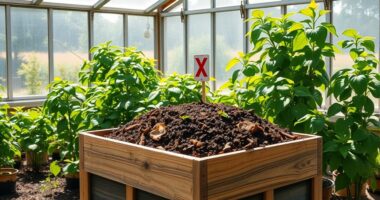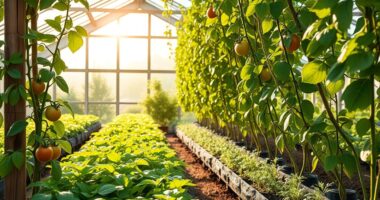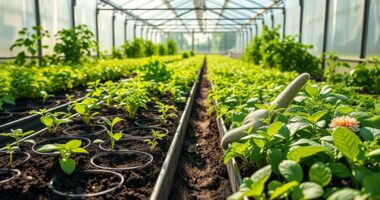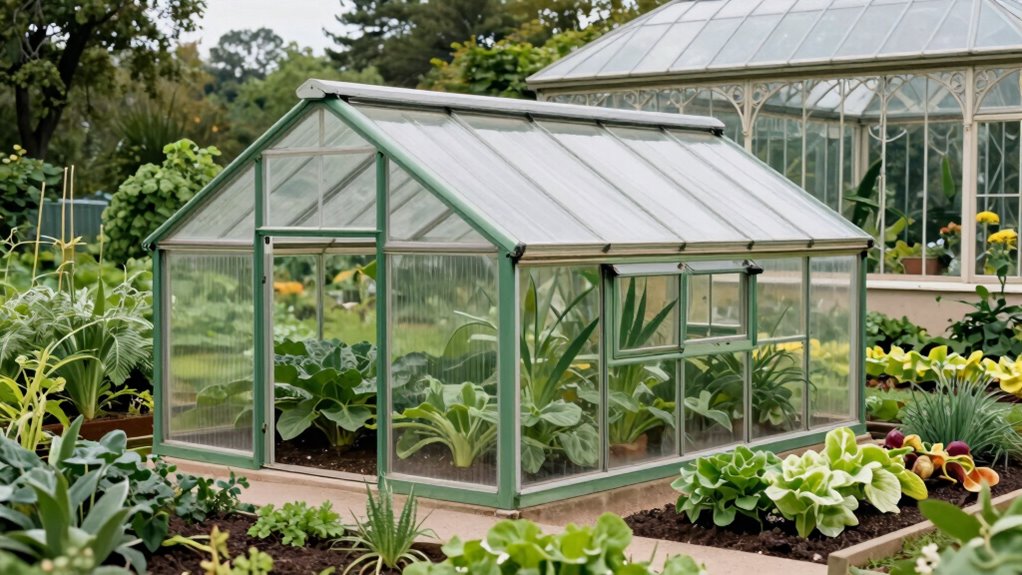

Simple sustainable greenhouses often outperform fancy ones because they’re easier to maintain and repair, reducing downtime and costly repairs. They are more adaptable to your local conditions, allowing customization for ideal plant growth. Their affordability means you can focus on functionality rather than expensive technology, making them more reliable. Plus, energy-efficient passive solar design keeps costs low and plants healthy. If you keep exploring, you’ll discover how these straightforward approaches can deliver better results without the fuss.

Get garden gear delivered free with Prime
- Fast, free delivery on millions of items
- Prime Video, Amazon Music and more included
- Member-only deals all year
Key Takeaways
- Simple designs reduce maintenance and repair needs, ensuring consistent operation and plant health over time.
- Cost-effective materials and construction make sustainable greenhouses more accessible and easier to upgrade or adapt.
- DIY approaches foster customization and better climate adaptation, enhancing overall plant growth and resilience.
- Less reliance on complex, automated systems minimizes failures and simplifies troubleshooting.
- Passive solar and energy-efficient techniques maximize environmental benefits and operational savings.
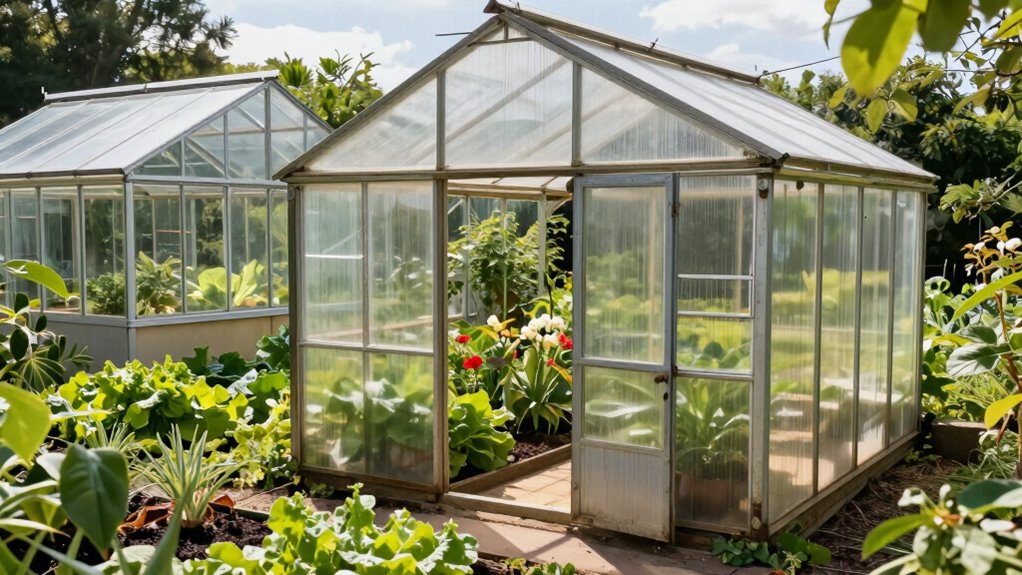
While you might be tempted to invest in state-of-the-art materials and complex systems, many successful greenhouses rely on straightforward, cost-effective materials that are easy to source and maintain. Using simple, sustainable designs means you can keep costs down while still creating an environment that nurtures your plants effectively. For instance, clear polycarbonate panels or recycled wood can serve as excellent, affordable alternatives to expensive glass or synthetic materials. These options not only save money but also reduce environmental impact, aligning with sustainable principles. Additionally, sustainable greenhouses often incorporate energy-efficient features that further enhance their performance and reduce operational costs. When you opt for DIY construction, you gain additional advantages. Building your greenhouse yourself allows you to customize it to your specific needs and local conditions. Plus, DIY projects foster a deeper understanding of your greenhouse’s functioning, so you’re better equipped to troubleshoot issues and make improvements. Many sustainable greenhouses are designed with minimal tools and readily available materials, making them accessible to hobbyists and small-scale growers alike. You don’t need to be a professional builder to assemble a functional, durable structure—just a bit of planning, patience, and resourcefulness. In fact, the simplicity of these designs often makes them more resilient over time. Fancy greenhouses with complex systems—automated watering, climate control, and high-tech insulation—can be prone to failure if one component malfunctions. Meanwhile, a straightforward greenhouse built with durable, cost-effective materials tends to be easier to repair and maintain. This resilience is crucial for ensuring your plants stay healthy, especially if you’re operating on a tight budget or in an area where replacement parts are hard to find. Furthermore, simple sustainable greenhouses encourage innovation and adaptability. When you’re not tied to expensive, proprietary systems, you can experiment with different materials or modify your design based on your experience. This flexibility often results in a more efficient, personalized greenhouse setup that performs better in your specific climate. Effective sustainable design principles enhance both resilience and productivity, making your greenhouse more environmentally friendly and cost-efficient. Incorporating passive solar design techniques can significantly boost energy savings and plant growth. Additionally, using low-tech solutions can further simplify maintenance and reduce reliance on external energy sources. Recognizing the importance of material selection can also help maximize the longevity and sustainability of your greenhouse. Overall, by focusing on affordable, easy-to-assemble materials and DIY construction, you create a greenhouse that’s not only cost-efficient but also robust, adaptable, and environmentally friendly—surpassing many of the high-tech, costly options out there.
As an affiliate, we earn on qualifying purchases.
Frequently Asked Questions
How Do Simple Greenhouses Handle Extreme Weather Conditions?
You’ll find that simple greenhouses handle extreme weather better because they focus on climate resilience and material durability. Their straightforward design allows for easier reinforcement and adaptation, like adding extra insulation or windbreaks. Plus, using durable, locally-sourced materials helps withstand harsh conditions without complicated technology. This practical approach makes simple greenhouses more resilient, ensuring your plants stay protected and healthy, even during unpredictable weather patterns.
What Are the Main Maintenance Differences Between Simple and Fancy Greenhouses?
A stitch in time saves nine, and with simple greenhouses, maintenance is straightforward. You focus on design simplicity and material durability, making repairs easier and less frequent. Fancy greenhouses, with complex systems and intricate designs, require more ongoing upkeep—checking electronics, adjusting climate controls, and maintaining costly materials. In contrast, simple greenhouses demand less time and effort, allowing you to keep your greenhouse in top shape without the hassle of constant repairs.
Can Simple Greenhouses Be Expanded Easily Over Time?
Yes, simple greenhouses can be expanded easily over time thanks to their modular design. You can add sections or panels as your needs grow, making scalability potential a key advantage. This flexibility allows you to customize your greenhouse without significant overhaul costs. By planning for future expansion from the start, you guarantee your setup remains manageable and adaptable, helping you maximize your growing space efficiently.
How Do Costs Compare Over the Long Term?
Over the long term, simple sustainable greenhouses typically cost less due to their lower initial investment and easier maintenance. Their design emphasizes cost efficiency and durability, reducing ongoing expenses. You’ll also benefit from sustainability benefits like energy savings and reduced resource use, which further cut costs over time. While fancy greenhouses may seem appealing upfront, their higher costs often outweigh benefits, making simple greenhouses a smarter, more economical choice for sustained success.
Are There Specific Crops Better Suited for Simple Greenhouses?
You’ll find that simple greenhouses work well for a variety of crops, especially those that benefit from consistent temperature and humidity, like leafy greens, herbs, and tomatoes. They’re also great for encouraging crop diversity, making it easier to grow different plants side by side. Plus, their straightforward design simplifies pest control, reducing the need for chemicals and helping you maintain healthier crops overall.
Conclusion
You might be surprised to learn that simple greenhouses often outperform their fancy counterparts, mainly because they’re easier to maintain and more energy-efficient. A recent study shows that low-tech greenhouses can produce up to 30% higher yields with less cost and environmental impact. So, next time you’re thinking about upgrading your greenhouse, consider keeping it simple—you’ll save money, reduce your carbon footprint, and likely see better results in the long run.
Fall yard work Picks
leaf blowers
As an affiliate, we earn on qualifying purchases.