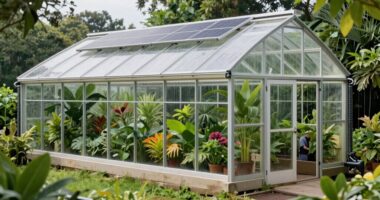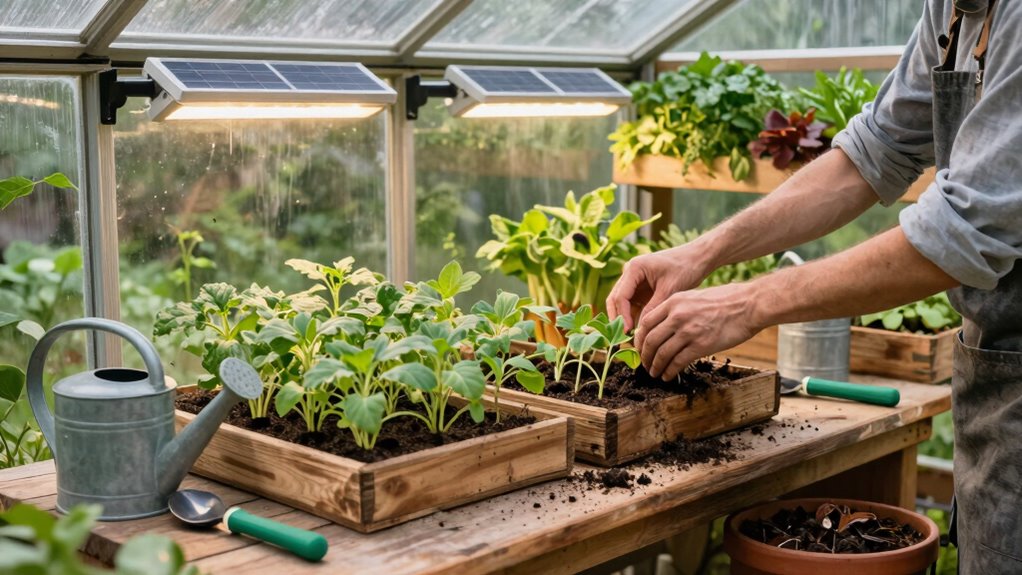

To make sustainability practical in your backyard greenhouse, start by composting kitchen scraps and yard waste to enrich your soil naturally. Use native plants that need less water and resist pests, supporting biodiversity and reducing resource use. Install renewable energy sources like solar panels for lighting or ventilation, and collect rainwater for irrigation with drip systems. Reuse materials for shelving and containers to cut waste. Keep exploring sustainable practices, and you’ll discover simple ways to make your greenhouse eco-friendly and efficient.

Get garden gear delivered free with Prime
- Fast, free delivery on millions of items
- Prime Video, Amazon Music and more included
- Member-only deals all year
Key Takeaways
- Incorporate composting to produce natural fertilizer and reduce organic waste in the greenhouse.
- Use native plants to minimize water use and support local biodiversity.
- Install solar panels or wind turbines to power greenhouse equipment sustainably.
- Collect rainwater and implement drip irrigation for efficient resource management.
- Reuse and recycle materials, such as containers and furniture, to minimize waste and promote eco-friendly practices.
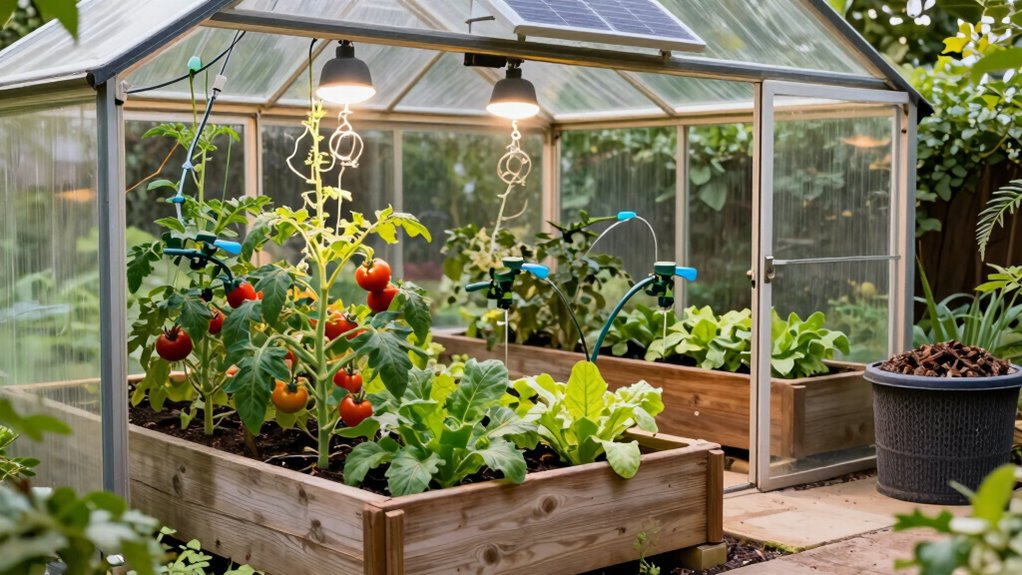
Creating a sustainable backyard greenhouse allows you to grow fresh, healthy plants while minimizing your environmental impact. To make sustainability feel practical, you need to integrate simple, effective strategies that fit seamlessly into your routine. One of the most impactful ways to do this is through composting techniques. Instead of sending kitchen scraps and yard waste to the landfill, you can turn them into nutrient-rich compost that feeds your plants naturally. This reduces waste and cuts down on the need for chemical fertilizers, which can harm the environment. With just a little effort, you can set up a compost bin or tumbler nearby, making it easy to add organic waste regularly. Over time, you’ll develop a steady supply of compost that improves soil health and plant growth without extra expense or energy. Embracing biodiversity by growing a variety of native plants can also enhance the resilience of your greenhouse ecosystem. Incorporating native plants can further support local ecosystems and promote a healthier environment overall. Additionally, understanding indigenous knowledge can help you select plants and practices that are naturally suited to your region, increasing your greenhouse’s sustainability.
Transform kitchen scraps into nutrient-rich compost to nourish plants naturally and reduce waste efficiently.
Another key to sustainable greenhouse practices is harnessing renewable energy sources. Depending on your setup, you might consider installing solar panels to power your greenhouse’s ventilation, lighting, or small water pumps. Solar energy provides a clean, renewable power source that reduces reliance on fossil fuels, helping you lower your carbon footprint. If solar isn’t an option, look into wind turbines or small-scale hydro systems, if your location allows it. Even small, portable solar-powered devices can make a big difference in reducing your greenhouse’s energy consumption. By shifting to renewable sources, you not only cut emissions but also create a more resilient system that’s less vulnerable to energy price fluctuations. Additionally, choosing energy-efficient equipment can further support your sustainability goals.
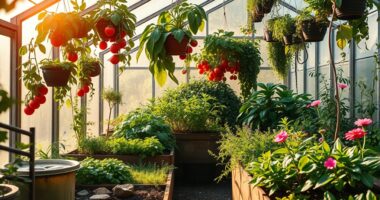
In addition to composting and renewable energy, practical sustainability involves thoughtful resource management. For example, collecting rainwater for irrigation conserves tap water and reduces your water bills. Installing drip irrigation systems minimizes water waste, ensuring your plants receive precisely what they need. Incorporating native plants into your greenhouse can also lower resource demands, as they typically require less water and are more resistant to pests and diseases. These small adjustments make your greenhouse more eco-friendly without adding significant complexity or cost. Moreover, monitoring your water usage and adjusting schedules accordingly can optimize efficiency and further conserve resources. A good understanding of local climate patterns and seasonal changes can help you plan your resource use more effectively.
Finally, consider how you can reuse and recycle materials in your greenhouse setup. Use recycled containers for seed starting, repurpose old furniture for shelving, and select durable, eco-friendly materials whenever possible. These choices extend the lifespan of your equipment and reduce waste. When you combine composting techniques, renewable energy sources, and resource-conscious practices, sustainability stops feeling like an extra effort and becomes an inherent part of your gardening routine. This way, you cultivate a thriving, eco-friendly environment that benefits both your plants and the planet.
As an affiliate, we earn on qualifying purchases.
Frequently Asked Questions
How Can I Reduce Energy Costs in My Greenhouse?
You can reduce energy costs in your greenhouse by optimizing your garden design to maximize natural sunlight and heat retention. Use reflective surfaces and proper insulation to keep heat in, reducing heating needs. Implement pest management strategies that minimize the use of energy-intensive equipment. Regularly maintain vents and fans for efficient airflow, and consider installing a thermometer to monitor and adjust conditions, making your greenhouse more energy-efficient and sustainable.
What Are the Best Low-Maintenance Sustainability Practices?
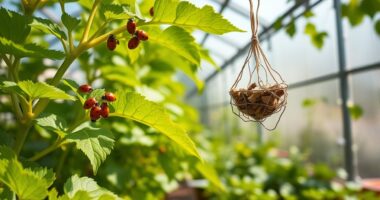
Did you know that implementing eco-friendly pest control and water conservation techniques can cut your greenhouse’s maintenance time by up to 30%? To keep it low-maintenance, focus on natural pest control methods like beneficial insects, and install drip irrigation systems for efficient water use. These practices not only save time but also promote sustainability, making your greenhouse easier to manage while reducing environmental impact.
How Do I Compost Effectively in a Small Space?
To compost effectively in a small space, use a compact compost bin that fits your area. Keep the composting temperature high by layering green and brown materials and turning it regularly. This accelerates decomposition and prevents odors. Monitor the temperature with a compost thermometer, aiming for 135-160°F. Keep the bin moist, but not too wet, to maintain ideal conditions for quick, efficient composting in your small backyard greenhouse.
Can I Incorporate Renewable Energy Sources?
Yes, you can incorporate renewable energy sources into your greenhouse. Don’t let concerns about cost or complexity hold you back—solar integration is more affordable and straightforward than ever, powering lights or fans efficiently. You might also consider small-scale wind energy if your location has sufficient wind. These renewable options reduce reliance on grid power, making your greenhouse more sustainable and inspiring you to create an eco-friendly oasis that feels both practical and empowering.
How Do I Track Sustainability Progress Over Time?
You can track your sustainability progress by regularly monitoring water conservation and soil health. Keep a detailed log of water usage, noting reductions over time, and test your soil’s nutrient levels to guarantee it remains healthy. Use simple tools like moisture meters and pH testers. Comparing data month-to-month helps you see improvements, encouraging ongoing efforts, and making sustainability feel practical as you witness tangible results in your greenhouse.
Conclusion
By embracing sustainability in your backyard greenhouse, you not only nurture your plants but also support the planet. Think of it as a small act with big impacts—like planting a tree that grows alongside your garden. Remarkably, studies show that eco-friendly practices often lead to healthier, more resilient crops. So, when you make sustainability practical, you’re not just gardening; you’re cultivating a greener future, one seed at a time.
Halloween Picks
halloween
As an affiliate, we earn on qualifying purchases.