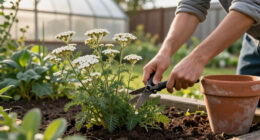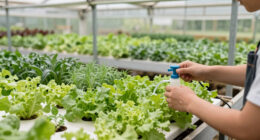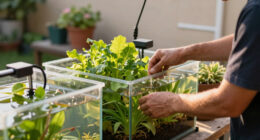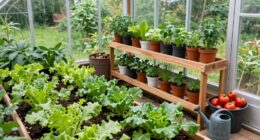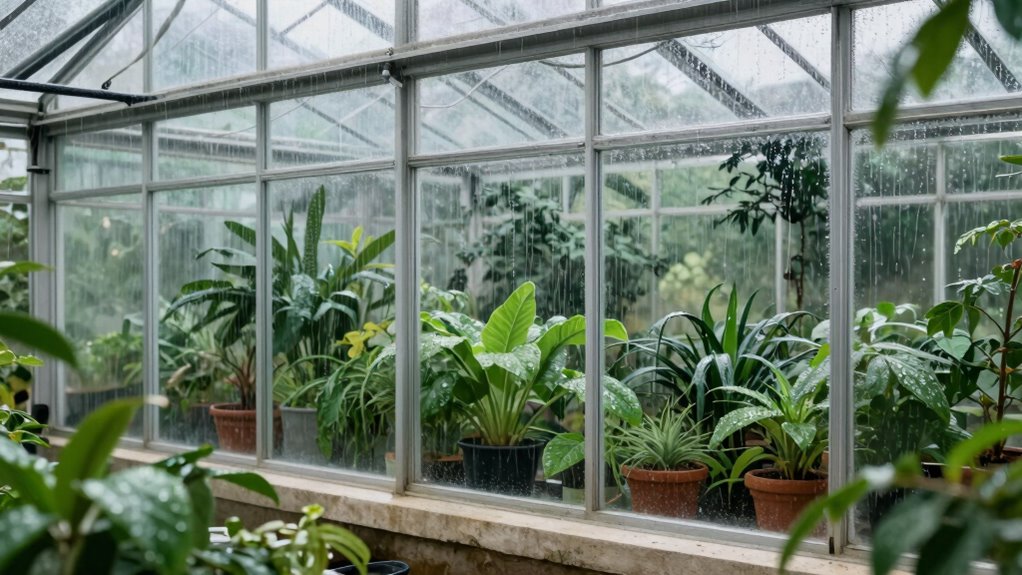

Using rainwater in your greenhouse changes how you feel about your work by fostering a deeper connection to natural resources and promoting eco-friendly practices. It reduces reliance on municipal water, improves plant health, and encourages mindful water management. This shift makes greenhouse operations feel more purposeful and aligned with sustainability principles. As you embrace these routines, you’ll find a greater sense of stewardship and fulfillment. Keep exploring to discover more about transforming your greenhouse experience.

Get garden gear delivered free with Prime
- Fast, free delivery on millions of items
- Prime Video, Amazon Music and more included
- Member-only deals all year
Key Takeaways
- Using rainwater fosters a deeper connection to natural resources and promotes eco-conscious gardening practices.
- It enhances the greenhouse’s sustainability, creating a sense of environmental responsibility and stewardship.
- Rainwater’s purity improves plant health, making daily routines feel more purposeful and aligned with ecological principles.
- Managing rainwater systems encourages mindfulness and resourcefulness, transforming greenhouse operations into a meaningful activity.
- The overall experience becomes more authentic and fulfilling, emphasizing ecological harmony and sustainable stewardship.
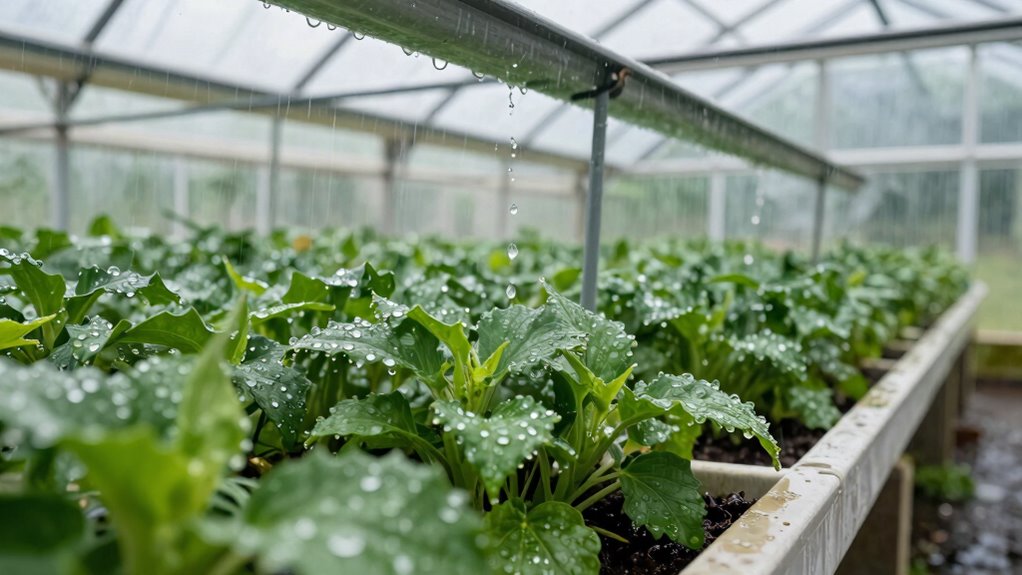
Rainwater harvesting has become an increasingly popular way for greenhouse operators to reduce reliance on municipal water sources and promote sustainable practices. When you incorporate rainwater harvesting into your greenhouse, you start to see how it transforms the entire experience of running your operation. Instead of depending solely on city supplies, you tap into a natural resource that feels more aligned with eco-conscious gardening. This shift doesn’t just benefit the environment; it also changes how you perceive your work, making it feel more connected to nature and sustainability.
Handling rainwater effectively means paying close attention to water quality management. You realize that collecting rainwater isn’t just about the amount you gather, but also about ensuring it’s pure enough for your plants. Proper filtration and treatment become essential, and this focus on water quality management elevates your overall approach. You find yourself more engaged in understanding water chemistry, testing for contaminants, and maintaining the system. It’s a hands-on process that gives you a greater sense of control and responsibility, making your greenhouse feel more like a well-oiled, eco-friendly machine.
As you develop your rainwater collection system, you notice a positive change in how your plants respond. Rainwater often contains fewer chemicals than tap water, allowing plants to thrive with less stress. This naturally improves growth rates and reduces the need for chemical interventions, creating a healthier environment inside your greenhouse. Over time, this fosters a sense of pride—knowing that your plants are benefiting from a more natural water source. It also simplifies water management, since rainwater tends to be softer and better suited for delicate plants and seedlings.
The sustainability aspect of rainwater harvesting also shifts how you approach your daily routines. You become more mindful of your water consumption, tracking how much you collect and use. This awareness deepens your connection to the land and encourages more efficient practices. You start to see your greenhouse as part of a larger ecosystem, where resourcefulness and conservation are key. This change in mindset makes running your greenhouse feel less like a routine task and more like a meaningful contribution to environmental health.
Ultimately, using rainwater changes the entire vibe of your greenhouse. It’s not just about saving money or complying with regulations; it’s about creating a more sustainable, responsible operation. The process of collecting, managing, and utilizing rainwater turns routine watering into an act of stewardship. It makes your greenhouse feel more authentic, more rooted in nature, and more fulfilling to operate. In the end, rainwater harvesting reshapes your entire perspective, making the experience of running a greenhouse feel more rewarding and aligned with ecological principles. Incorporating water quality management into your routine further enhances the benefits of sustainable practices.
rainwater harvesting system for greenhouse
As an affiliate, we earn on qualifying purchases.
As an affiliate, we earn on qualifying purchases.
Frequently Asked Questions
How Does Rainwater Impact Greenhouse Humidity Levels?
Using rainwater impacts greenhouse humidity levels by naturally increasing humidity, aiding in humidity regulation. Rainwater is usually cleaner, so it improves water quality, reducing the risk of pests and diseases caused by contaminated water. When you use rainwater, you maintain a more stable and healthier environment for your plants, making humidity control more efficient and consistent. This natural source helps you manage your greenhouse climate effectively while promoting healthier plant growth.
Are There Any Pests Associated With Rainwater Irrigation?
Yes, rainwater irrigation can bring in pests like waterborne insects and rainwater pests. These pests might hitch rides on collected rainwater, introducing insects such as mosquito larvae or other waterborne pests into your greenhouse. To prevent this, make certain your rainwater harvesting system is well-maintained, screened, and regularly cleaned. This helps keep pests out and maintains a healthy environment for your plants, avoiding potential infestations caused by contaminated water.
Does Rainwater Affect Plant Nutrient Absorption Differently?
You might think rainwater just hydrates plants, but it actually influences nutrient absorption by reducing nutrient leaching and helping maintain mineral balance. Unlike tap water, rainwater is free from chemicals that can disrupt nutrient uptake. This natural water source allows plants to absorb nutrients more efficiently, fostering healthier growth. So, using rainwater can subtly shift how your plants access essential nutrients, making your greenhouse feel more vibrant and resilient.
How Does Rainwater Usage Influence Greenhouse Energy Costs?
Using rainwater can lower your greenhouse’s energy costs because its high quality reduces the need for extensive filtration and heating. Rainwater supports water conservation efforts, meaning you use less energy to treat and distribute water. Additionally, because rainwater is naturally cooler, it helps regulate temperature, further decreasing cooling costs. Overall, switching to rainwater streamlines operations, cuts expenses, and promotes sustainable practices in your greenhouse management.
Can Rainwater Reduce the Need for Chemical Fertilizers?
Using rainwater can reduce your need for chemical fertilizers by providing pure, organic nutrients to your plants. For example, a greenhouse in Oregon collected rainwater, which contained essential minerals that boosted plant growth naturally. This water’s high purity means fewer additives are needed, promoting healthier, more resilient crops. Rainwater’s organic nutrients naturally support plants, decreasing reliance on chemical fertilizers and fostering a more sustainable, eco-friendly growing environment.
Conclusion
Just as the river shapes the land over time, switching to rainwater transforms your greenhouse experience, making it more sustainable and lively. You become the steward of nature’s gift, echoing the wisdom of ancient civilizations that valued water’s purity. Embracing rainwater isn’t just a choice; it’s a dance with the elements, turning your greenhouse into a sanctuary where growth thrives in harmony with the world outside. The future of your garden begins with a single, mindful drop.
Fall yard work Picks
leaf blowers
As an affiliate, we earn on qualifying purchases.