
TL;DR
Smart garden irrigation systems use schedules, local weather information, soil sensors, or a combination of these to decide when to water. They can reduce unnecessary watering, but they cannot fix leaks, poor coverage, or a schedule that ignores what different plants need. Start by splitting your garden into suitable zones, then check and adjust the system through the season.
A garden can look thirsty after a hot afternoon even when its roots still have plenty of water. A fixed timer can’t tell the difference, but a smart controller may use weather information or a soil reading to make a better call. That can mean fewer wasted watering cycles and less guesswork while you’re away.

Get garden gear delivered free with Prime
- Fast, free delivery on millions of items
- Prime Video, Amazon Music and more included
- Member-only deals all year
Smart garden irrigation systems range from simple app-connected hose timers to controllers operating several buried valves and sensor-equipped zones. The right choice depends on your garden’s layout, water source, plants, and the features you’ll actually use. This guide explains how these systems work, where they help, what to check before buying, and how to keep them working well.
Use separate zones for areas with different plants, sun, soil, or watering hardware.
Choose drip for many beds and containers, sprinklers for broad lawns, and soaker hoses for suitable planting rows.
Treat weather data and sensor readings as useful clues, then check the soil and plants for yourself.
Test for clogs, leaks, and misdirected spray before changing a schedule to solve dry patches.
Follow local watering restrictions and seasonal guidance even when your controller recommends a watering cycle.
See what makes an irrigation system smart
A smart garden irrigation system uses a schedule, weather data, soil moisture readings, or a combination of these to decide when and how long to water. A basic controller may delay a preset schedule after rain, while a more advanced model can adjust individual zones using sensor readings or flow data. The goal is to make watering fit conditions better than a timer that repeats the same routine every day.
Think of the controller as a kitchen timer that can also check the weather outside. It might skip a run after rainfall, but it doesn’t automatically know whether a sheltered tomato pot stayed dry while the open lawn got soaked. For example, if your weather service reports a shower but your patio awning kept your planters bone-dry, you may still need to water the containers.
Some systems use sensors, while others rely on local weather information such as rainfall and temperature. A controller that combines both sources can offer more context, though accuracy still depends on sensor placement and the information available to that specific product. A reading from one corner of the garden is a small window into conditions, not a view of every root.
Smart scheduling can support healthier plants and reduce unnecessary watering, but it doesn’t guarantee water savings. A cracked hose or badly placed sprinkler can waste water even when the schedule looks clever. Treat automation as a helpful assistant: it handles routine decisions, while you check what the garden actually needs.
Products Worth Considering

Husqvarna 460 Rancher 24-Inch Gas Chainsaw

Orbit B-hyve XR 16-Zone Indoor/Outdoor Smart Sprinkler Controller

Greenworks 40V Cordless Chainsaw Kit with 12-Inch Bar, 2Ah Battery and Charger
As an affiliate, we earn on qualifying purchases.
Match each watering method to the plants it serves
Choose a watering method that suits the area: drip irrigation feeds water near roots, sprinklers cover broad areas such as lawns, and soaker hoses seep along beds. A smart controller can operate one or more methods, but each area needs hardware and a schedule suited to its plants. No app setting can make a lawn sprinkler water a row of tomatoes as precisely as drip tubing can.
For example, a gardener with a lawn, raised vegetable beds, and patio pots might need three separate watering zones. The lawn could use sprinklers for broad coverage; drip lines could serve tomatoes and peppers; containers might need shorter, more frequent runs because pots dry out quickly. If all three share one schedule, some plants may get too much while others stay thirsty.
Drip irrigation often limits evaporation and runoff in beds because it delivers water close to the soil. Sprinklers can be a practical choice for a wide lawn, but wind can blow their spray onto a path or fence. Soaker hoses work well along many planting rows, though their output can vary with pressure and hose length.
Before you buy a controller, map the garden by plant type, sun exposure, and watering hardware. A shady bed and a sunny slope rarely need the same schedule. Separate zones let you adjust those differences instead of asking one setting to suit every corner.
Set up zones that follow your garden’s real needs
Separate your garden into zones when areas have different plants, soil, sun, slopes, or irrigation hardware. A zone is a group of valves or outlets that the controller waters together, so keeping similar needs together makes scheduling easier. A lawn and a vegetable bed may share a water source, but they usually shouldn’t share a watering routine.
To plan your zones, walk the garden at the start of a watering cycle and note where each line or sprinkler sends water. Use this quick sequence:
- Group similar plants: keep lawn, containers, trees, and vegetable beds apart when their needs differ.
- Check exposure and soil: mark sunny, shaded, sloped, sandy, or clay-heavy areas.
- Match the hardware: group sprinklers, drip lines, and soaker hoses separately where possible.
- Run a short test: look for puddles, dry patches, leaks, and spray hitting hard surfaces.
- Set and revisit schedules: adjust after seeing how the soil feels and how plants respond.
Imagine two beds on opposite sides of a fence: one gets afternoon sun and has loose soil, while the other sits in shade with heavier soil. The sunny bed may dry faster, but the shaded bed might stay wet after rain. Separate zones let you respond to those differences instead of relying on a single timer.
Established plants and lawns often do well with deep, less frequent watering, while seedlings and small containers may need more frequent attention. Early-morning watering gives plants time to take up water while generally limiting evaporation and prolonged leaf wetness. Your local watering restrictions still take priority over any automated plan.
Pick controls you can use with your current setup
The best smart controller is one that works with your water source, valves, wiring, and preferred controls. Hose timers can be simpler to install, while controllers attached to existing irrigation valves may require checking the system’s wiring and compatibility. Wi-Fi can enable app access and weather updates, but not every garden needs remote control.
Before buying, check whether the product supports your number of zones, existing valves, and chosen watering hardware. Also look for clear information about offline behavior: some controllers keep saved schedules when the internet drops, while others lose remote access or weather updates. If you travel often, knowing what continues to run during an outage can matter more than a voice assistant feature.
For instance, someone who waters a few patio pots from a hose bib might prefer a basic smart hose timer. A larger garden with buried valves, a lawn, and several beds may benefit from a multi-zone controller and separate sensors. In both cases, a strong Wi-Fi signal outdoors can make app features more dependable, but Bluetooth or local scheduling may suit a smaller setup.
Costs depend on the number of zones, sensors, plumbing or wiring needs, and possible ongoing fees. A device’s reported water use may be an estimate, not a reading from your utility meter. Confirm current compatibility, subscription terms, and supported smart-home connections before purchase, since product features can change.
Check sensors and hardware before trusting the schedule
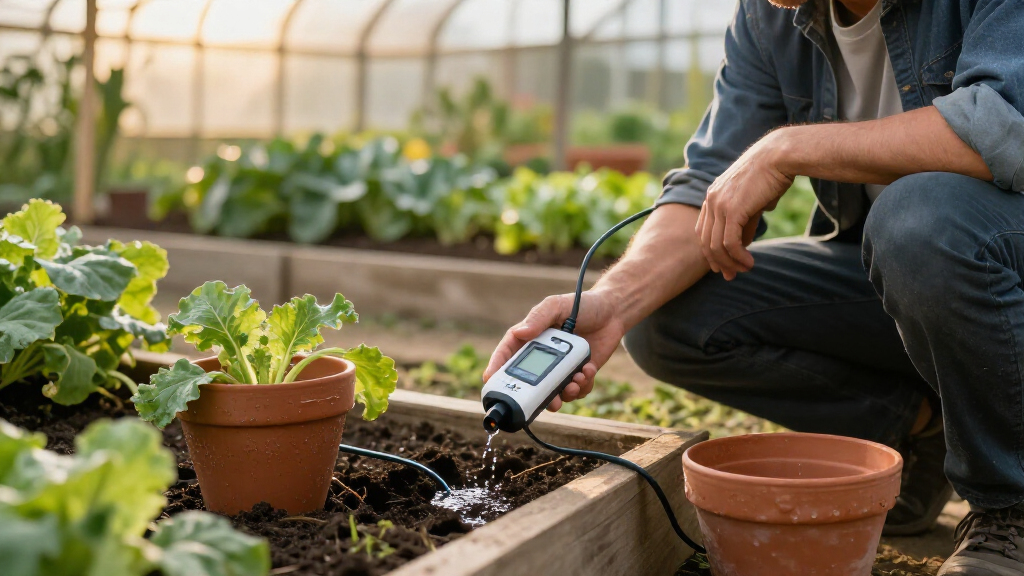
Smart controls work best when sensors sit in representative soil and the irrigation hardware delivers water evenly. A sensor only measures the spot where you place it; it can’t tell you whether a distant bed has dried out. Filters, emitters, tubing, valves, and sprinkler heads also need occasional inspection because clogs and leaks can defeat a well-planned schedule.
Suppose your sensor sits under a leafy shrub in shade while the rest of its zone contains sun-baked pots. It may report damp soil and delay watering just when the pots need a drink. Place sensors in a typical part of the zone, follow the maker’s placement directions, and check whether the reading matches the soil you can feel by hand.
Walk the system while it runs. Look for a sprinkler spraying the sidewalk, a puddle forming beside a cracked connector, or a drip emitter that has stopped releasing water. A flow meter or unusual-use alert may help flag a problem, but features and accuracy vary by product. The alert is a prompt to inspect, not proof of a specific leak.
Seasonal changes call for fresh checks. Seedlings, containers, and new plantings may need different attention from established trees, and a fixed schedule can become unsuitable as temperatures or rainfall shift. In a drought, follow local guidance even if your controller suggests a run; automation should respect restrictions and real garden conditions.
Decide whether automation will earn its place
A smart system is most useful when it solves a real watering problem, such as managing several zones, adapting to changing weather, or keeping a garden going while you travel. It may be less compelling for a few hardy plants you water by hand once a week. Cost and convenience depend on your starting setup, the features you need, and the time you’re willing to spend maintaining it.
Consider a household with a lawn, fruit trees, and vegetable beds that often forgets to turn off a hose after watering. Separate schedules and a weather delay could make daily care easier and help avoid a needless cycle after rain. By contrast, a renter with three low-maintenance pots may do just as well with a simple timer or a watering can.
Think through the likely tradeoffs before choosing:
- Potential benefits: fewer manual starts, weather-based delays, zone-specific schedules, and clearer run-time information.
- Setup demands: checking compatibility, placing sensors, connecting valves or hoses, and testing coverage.
- Ongoing upkeep: replacing batteries or parts, cleaning filters, checking for leaks, and revising schedules as seasons change.
- Possible extra costs: sensors, installation work, replacement components, or optional subscriptions.
Ask yourself whether you need remote access, separate zones, rain delays, or help spotting unusual water use. Then compare those needs with the installation and maintenance your garden can support. Smart irrigation is a tool, not a guarantee: the garden still tells you when a setting needs attention.
Frequently Asked Questions
Do smart irrigation systems really save water?
They can reduce unnecessary watering when they skip cycles after rain or follow the needs of different zones. The result depends on your old watering habits, climate, setup, and maintenance. A smart schedule can still waste water if a line leaks or a sprinkler sprays the pavement.
Do I need Wi-Fi to use a smart garden irrigation system?
Not always. Some systems use Bluetooth or run a stored schedule locally, while remote access and weather updates may need Wi-Fi. Check what continues to work if your internet connection goes down.
Are soil sensors better than weather-based controls?
They provide different information: a sensor measures soil where you place it, while weather-based controls estimate conditions using local weather information. Either can help, and some systems use both. Placement matters; a shaded sensor may not represent a sunny bed.
Can one system water my lawn and vegetable garden?
Often, yes, if the controller supports separate zones and each area has suitable irrigation hardware. A lawn sprinkler and a vegetable bed’s drip line usually need different schedules. Check the controller’s zone count and compatibility before buying.
How much maintenance does smart irrigation need?
Plan to check for leaks, clogged emitters, damaged tubing, and sprinkler heads that have shifted or become blocked. Review sensor placement and schedules as plants grow and seasons change. A short inspection while the system runs can reveal dry spots or runoff.
Can a smart controller prevent overwatering?
It can help by adjusting schedules to weather or sensor readings, but the settings and hardware still matter. A poorly placed sensor, unsuitable zone grouping, or faulty valve can lead to too much water. Check soil moisture and plant condition rather than relying on an app alone.
Conclusion
Set up smart irrigation around the garden you actually have: its plants, sun, soil, slopes, and watering hardware. Start with sensible zones, test where the water lands, and adjust schedules when the weather or plants change. A sensor can report one patch of soil, but your hand can check another.
Remember the simple rule: let automation handle the routine, then let the garden have the final word. When the morning sun hits damp soil and the leaves stay perky, you’ll know your settings are doing their job.