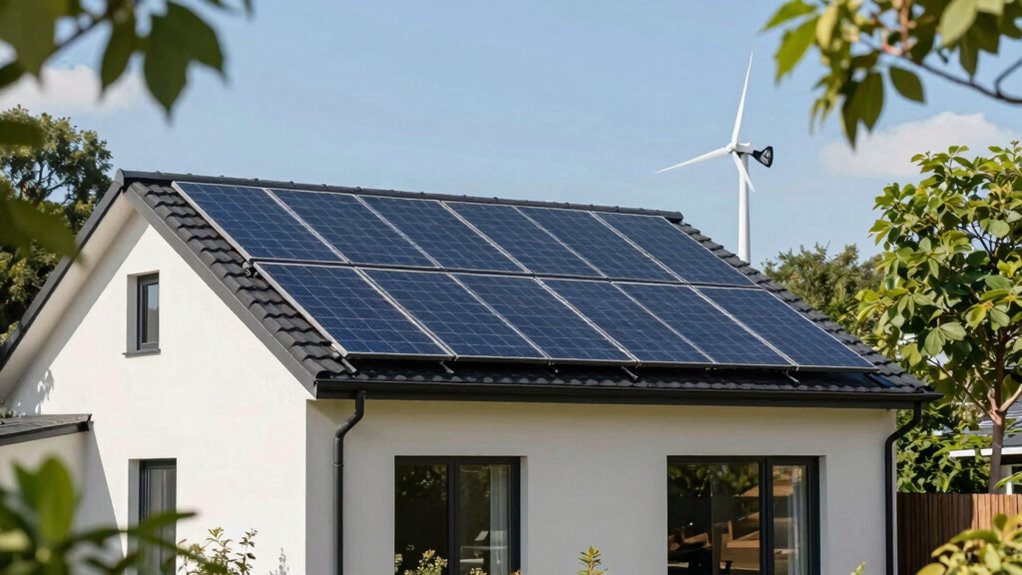

Switching to eco-friendly heating systems like solar panels, geothermal, or air-source heat pumps can markedly lower your greenhouse gas emissions and cut energy costs. By properly insulating your home, sealing leaks, and using smart thermostats, you maximize efficiency and savings. These sustainable options harness natural resources, reducing reliance on fossil fuels. If you want practical tips on choosing and maintaining these systems, you’ll find plenty of valuable insights ahead.
Key Takeaways
- Utilizing renewable energy sources like solar panels and geothermal systems significantly reduces greenhouse gas emissions and operational costs.
- Installing efficient insulation and sealing leaks minimizes heat loss, lowering energy consumption and associated environmental impact.
- Implementing smart thermostats and zoning controls optimizes heating, reduces waste, and enhances overall energy efficiency.
- Regular maintenance of renewable heating systems ensures optimal performance and longevity, maximizing eco-friendly benefits.
- Investing in renewable heating technologies can qualify for incentives and rebates, further decreasing costs and environmental footprint.

Goplus 2.5FT x 10FT/ 20FT Solar Pool Heater for Above Ground Pool Inground Pools, Swimming Pool Solar Panel Heating System, Weatherproof Pool Warmer (2.5FT x 10FT)
- High-Efficiency Solar Heating: Heats up to 3408 gallons efficiently
- Large Solar Collector Panels: 10ft x 2.5ft panels for maximum sun capture
- All-Weather Durable Material: Made of PE withstands -20°C to 90°C
As an affiliate, we earn on qualifying purchases.
As an affiliate, we earn on qualifying purchases.
Assess Your Home’s Heating Needs and Efficiency
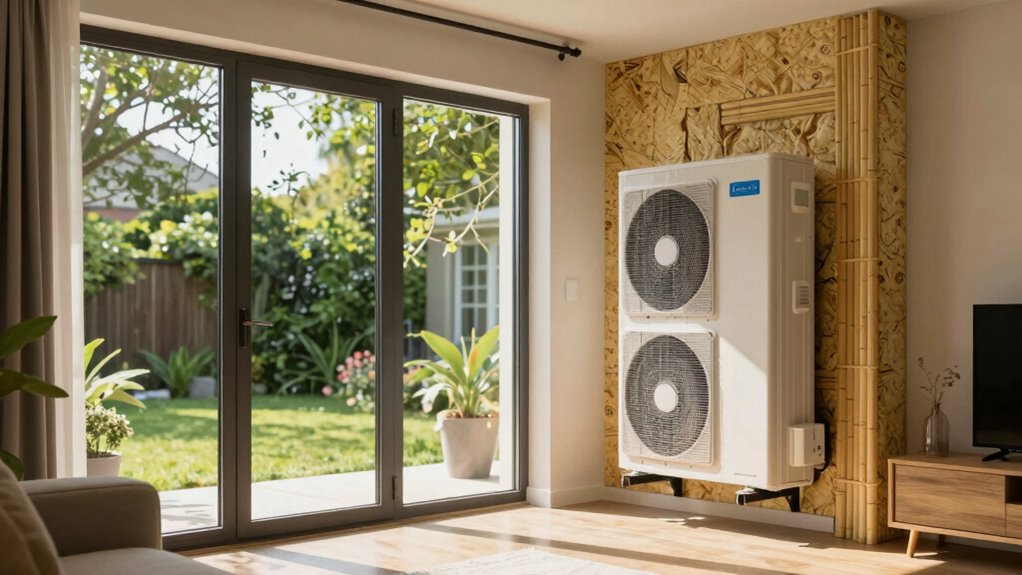
Before upgrading your heating system, it’s vital to evaluate your home’s specific needs and current efficiency. Start by evaluating how well your current system maintains indoor air quality, which impacts comfort and health. Check for drafts, insulation gaps, and overall energy use to identify areas for improvement. Proper thermostat calibration is essential; an accurately set thermostat ensures your system heats efficiently without wasting energy. If your thermostat isn’t calibrated correctly, your home might be over- or under-heated, decreasing efficiency and increasing costs. Additionally, understanding lifestyle for longevity can help you adopt habits that support a healthier, more energy-efficient home environment. Incorporating indoor air quality assessments can further identify opportunities for sustainable improvements. Being aware of factors like microplastics in dust and the use of dehumidifiers can also contribute to a healthier indoor environment and better overall efficiency. For example, using essential oils such as eucalyptus or peppermint can be a natural way to improve air quality and promote a comfortable atmosphere. Regularly inspecting your home’s ventilation systems can help ensure proper airflow and reduce indoor pollutants, further enhancing efficiency. By understanding your home’s heating demands and optimizing your existing system, you can make informed decisions about upgrades or adjustments. This step helps improve indoor air quality and guarantees your heating system operates at peak efficiency, saving energy and reducing environmental impact.
How Renewable Energy Powers Sustainable Home Heating
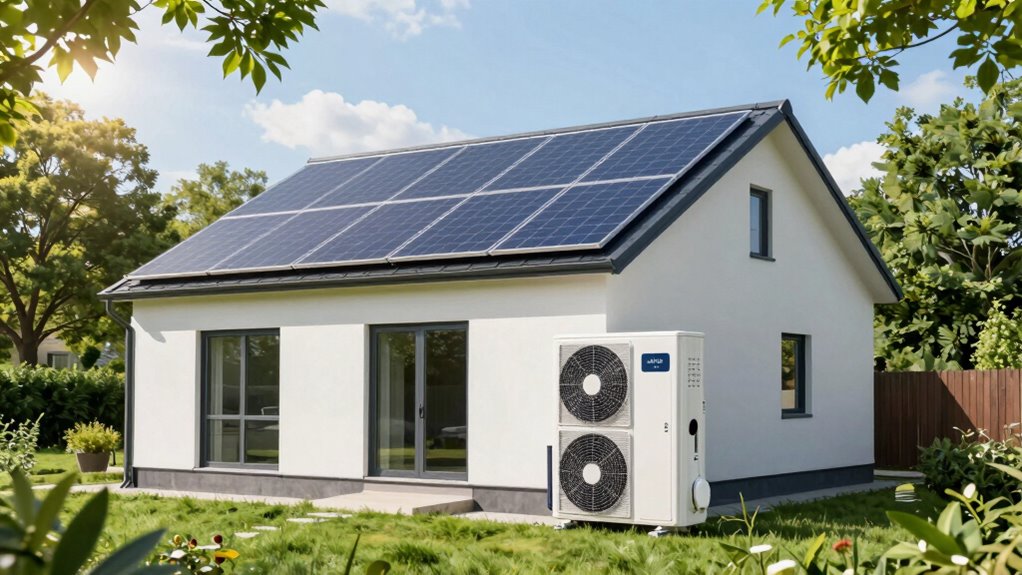
Renewable energy sources are transforming how we heat our homes by providing cleaner, sustainable alternatives to traditional systems. Solar panels, heat pumps, and wind turbines harness natural resources to generate heat efficiently. Smart thermostats optimize energy use, adjusting temperatures based on your habits and weather conditions, ensuring comfort while reducing costs. Many regions offer renewable incentives, making eco-friendly upgrades more affordable and appealing. Additionally, integrating energy-efficient technology into your home can further maximize savings and sustainability. These systems also contribute to reducing greenhouse gases, supporting a healthier environment. Incorporating advanced insulation techniques can significantly improve overall energy efficiency, reducing heating needs and further lowering costs. Utilizing renewable energy sources can dramatically decrease dependence on fossil fuels, enhancing energy security. Embracing renewable energy options not only benefits the environment but can also lead to substantial long-term savings on energy bills. Here’s a quick look at renewable heating options:
| Energy Source | Key Benefit | Incentives Available |
|---|---|---|
| Solar Power | Free solar energy | Tax credits, rebates |
| Heat Pumps | Efficient heating | Grants, subsidies |
| Wind Turbines | Eco-friendly power | Incentive programs |
Step-by-Step Guide to Installing Eco-Friendly Heating Systems
Installing an eco-friendly heating system involves careful planning and precise execution to guarantee you get the most benefit from your investment. Begin by evaluating your home’s heating needs and choosing the right system, such as a geothermal or air-source heat pump. Ensure proper insulation to maximize efficiency. When installing, prioritize indoor air quality by selecting filters and ventilation options that reduce pollutants. Incorporate safety and seamanship fundamentals to ensure proper ventilation and safe installation practices. Integrate a smart thermostat to enhance energy use, maintain comfort, and monitor system performance remotely. Follow manufacturer instructions carefully, and consider hiring professionals for complex installations. Test the system thoroughly once set up, adjusting settings for ideal operation. Regular maintenance ensures longevity and efficiency, helping you save on energy costs while reducing your carbon footprint. Additionally, researching energy-efficient systems can help you select the most sustainable options for your home. Understanding home insulation plays a crucial role in optimizing your heating system’s performance and reducing overall energy consumption. Incorporating proper system sizing and flow ensures your system operates smoothly and efficiently.
Compare Solar, Geothermal, and Air-Source Heat Pumps
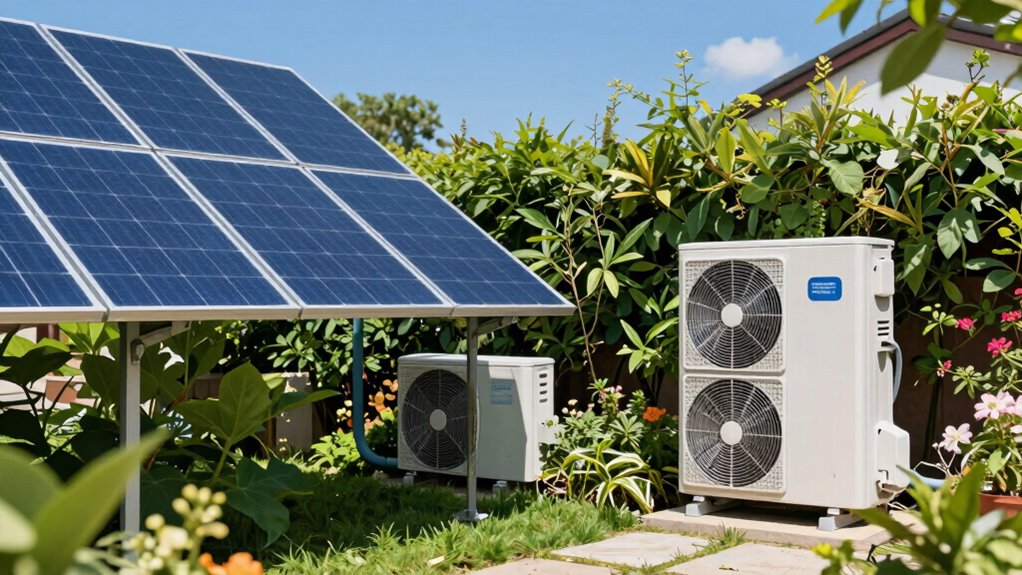
When choosing between solar, geothermal, and air-source heat pumps, you’ll want to take into account their efficiency and how much you can save on costs over time. Installation and maintenance requirements vary, affecting your long-term effort and expenses. Additionally, each option’s environmental impact plays a key role in making an eco-friendly choice for your home. Incorporating smart thermostat setup strategies can also optimize system performance and further enhance energy savings. Understanding the water-cooling options available for climate control systems can provide additional benefits for energy efficiency and comfort. Proper system placement and solar panel orientation are essential for maximizing energy output and ensuring safety from issues like shading or snow accumulation. Considering product durability can help you select systems that stand the test of time and reduce replacement costs. Additionally, understanding system efficiency ratings can guide you toward more sustainable and cost-effective choices.
Efficiency and Cost Savings
Have you ever wondered which eco-friendly heating option offers the best balance of efficiency and cost savings? Solar, geothermal, and air-source heat pumps each have unique benefits. Solar panels can markedly cut energy bills over time, but initial costs are higher. Geothermal systems are extremely efficient, maintaining consistent indoor air quality and climate control, but installation can be costly. Additionally, understanding the installation process can help homeowners plan more effectively. A long-term cost analysis is essential to determine the most economical choice based on your specific location and energy needs. Recognizing the impact of climate on system performance can further guide your decision-making. Overall, geothermal offers the highest efficiency, but air-source heat pumps provide a more accessible, cost-effective solution for many households. Somatic therapy principles can also help individuals manage stress related to energy costs and environmental concerns, supporting healthier, more mindful choices.
Installation and Maintenance
Considering the installation and ongoing maintenance, solar panels typically require a longer, more involved setup process due to the need for rooftop space and electrical integration. In contrast, geothermal systems involve burying underground loops, which demands significant upfront effort but offers durable, low-maintenance operation. They provide consistent indoor air temperature control, unaffected by outside weather, and rarely need repairs. They also utilize renewable energy sources, making them an even more sustainable choice. Air-source heat pumps are easier to install, usually requiring less space and simpler connections, but their efficiency can drop in extremely cold conditions. Maintenance for all systems involves regular checks—cleaning components, inspecting for leaks or corrosion, and ensuring ideal performance. Overall, while solar may need more initial work, geothermal and air-source pumps tend to offer simpler, more reliable ongoing upkeep. Mythology-inspired names can also symbolize strength and resilience, much like these sustainable heating options.
Environmental Impact
Are you wondering how different heating systems impact the environment? Solar, geothermal, and air-source heat pumps each have unique effects on air pollution and resource depletion. Solar energy produces no emissions during operation, greatly reducing air pollution. It relies on sunlight, a renewable resource, so it doesn’t deplete natural resources. Geothermal systems also have low emissions and use stable underground heat, minimizing air pollution and conserving resources. In contrast, air-source heat pumps consume electricity, which may come from fossil fuels, contributing to air pollution and resource depletion if not sourced renewably. However, they’re more efficient than traditional heating systems. Overall, solar and geothermal options tend to be more eco-friendly, with less impact on air quality and resource exhaustion, making them better choices for sustainable heating.
Are Eco Heating Solutions Worth It? Costs and Benefits
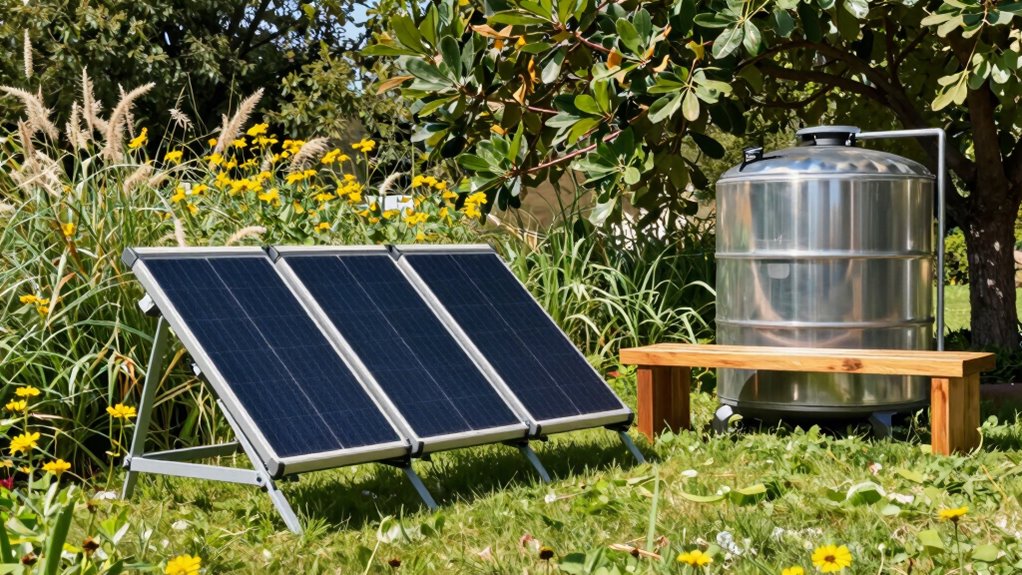
You might wonder if eco heating solutions are truly cost-effective and worth the investment. When you look at the long-term savings and reduced environmental impact, they often prove advantageous. Considering both the financial and ecological benefits can help you decide if making the switch aligns with your goals.
Cost Efficiency Analysis
While eco-friendly heating solutions often come with higher upfront costs, many homeowners find that the long-term savings and environmental benefits outweigh the initial investment. Your focus on pricing strategies and understanding market trends can improve cost efficiency. Consider these points:
- Initial Investment vs. Long-Term Savings: Eco systems may cost more initially but reduce energy bills over time.
- Incentives and Rebates: Many regions offer financial incentives that lower upfront costs.
- Market Trends: Growing demand for eco solutions drives prices down and boosts technology efficiency.
- Operational Costs: Lower maintenance and fuel expenses make eco options more cost-effective over their lifespan.
Evaluating these factors helps you determine if eco heating solutions fit your budget and sustainability goals.
Environmental Impact Benefits
Considering the environmental impact of heating options is essential when evaluating their overall worth. Eco-friendly heating solutions considerably reduce your carbon footprint, helping to lower greenhouse gas emissions. By using renewable energy sources or highly efficient systems, you minimize reliance on fossil fuels, which are major contributors to climate change. These solutions also support ecosystem preservation by decreasing air and water pollution caused by traditional heating methods. Reduced emissions help protect wildlife habitats and maintain biodiversity. Additionally, eco-friendly systems often require less maintenance and generate fewer hazardous waste byproducts. Over time, these benefits contribute to a healthier planet and a more sustainable future. Investing in environmentally conscious heating options not only benefits your home but also plays a crucial role in global efforts to combat climate change.
Tips to Maximize Energy Savings and Cut Waste
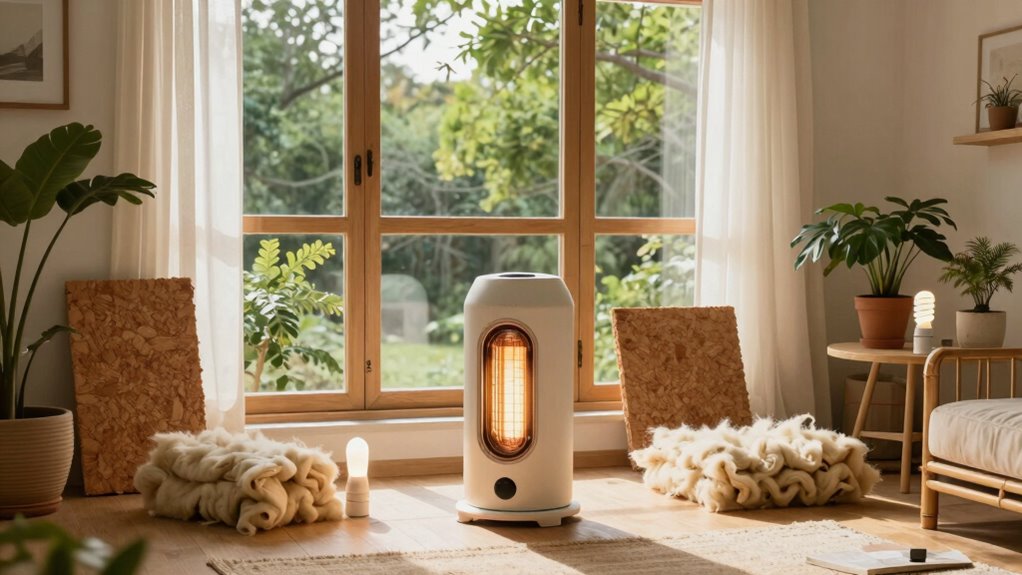
Wondering how to get the most out of your heating system while reducing waste? Here are four tips to maximize energy savings and improve indoor air quality:
- Seal leaks and insulate your home to prevent heat loss, reducing energy use and costs.
- Use programmable thermostats to adjust temperatures when you’re away or asleep, cutting waste.
- Maintain your heating system regularly for efficiency and better indoor air quality.
- Explore government incentives for eco-friendly upgrades, making sustainable choices more affordable.
Implementing these tips helps you save money, supports a greener environment, and often qualifies you for incentives that offset upgrade costs. Staying efficient also means less energy waste, reducing your carbon footprint while keeping your home comfortable.
Common Challenges When Going Green and How to Overcome Them
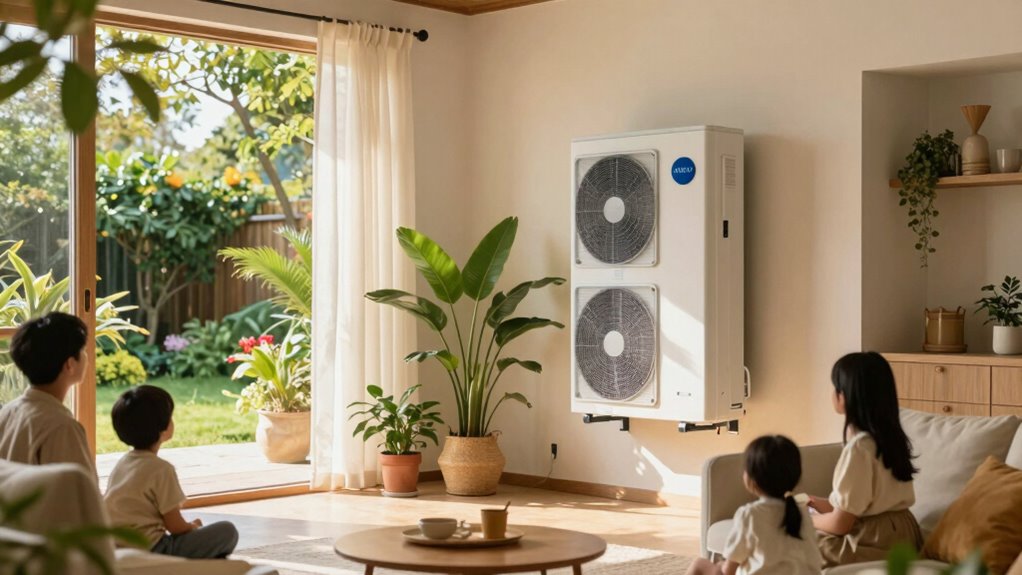
Adopting eco-friendly heating practices can be highly rewarding, but it often comes with its own set of challenges. Urban planning may limit space for renewable systems, and policy incentives aren’t always accessible or clear. You might feel overwhelmed by initial costs or uncertain about long-term benefits. These hurdles can seem discouraging, but understanding them helps you navigate the path more effectively.
| Challenge | Overcoming Strategy |
|---|---|
| Limited urban space | Opt for compact, multi-functional systems |
| Lack of policy incentives | Research local programs and advocate for change |
| High upfront costs | Seek grants or financing options |
| Policy uncertainty | Stay informed and engage with local planning |
Real-Life Examples of Eco-Friendly Home Heating
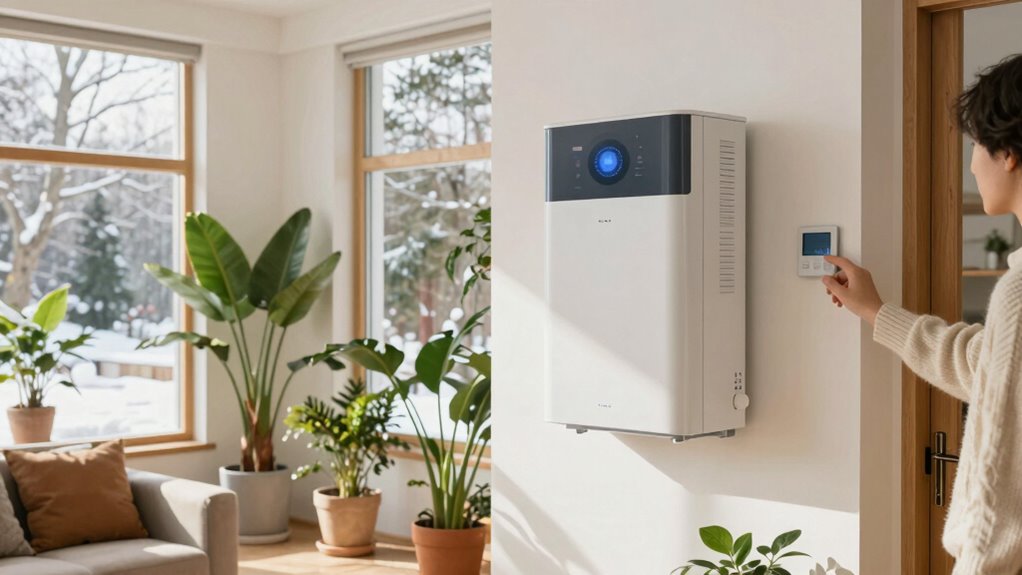
Have you ever wondered how homeowners are successfully using eco-friendly heating solutions? They often draw from historical innovations and cultural perspectives to make sustainable choices. Here are four real-life examples:
- Passive Solar Design: Many homes incorporate large south-facing windows, a concept rooted in historical architecture, to maximize natural heat during winter.
- Earth Sheltering: Some homes are built partially underground, inspired by ancient building techniques, providing natural insulation and reducing heating needs.
- Biomass Heating: In regions with strong cultural ties to wood use, homeowners install biomass stoves, transforming traditional practices into eco-friendly solutions.
- Heat Pumps: Modern adaptations of early refrigeration tech, heat pumps now serve as efficient, sustainable heating sources worldwide, blending innovation with cultural acceptance.
These examples showcase how history and culture shape eco-smart home heating today.
Future Trends in Sustainable Home Heating Technologies
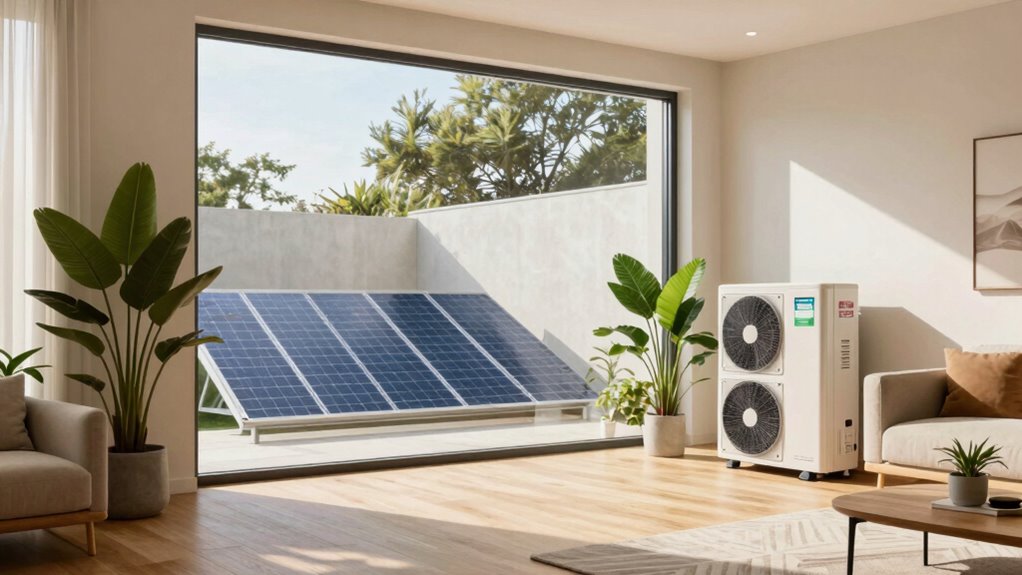
As technology continues to advance, the future of sustainable home heating is poised to become more efficient, affordable, and integrated with renewable energy sources. You’ll see smarter systems that adapt to your habits, like smart thermostats that learn your schedule to optimize energy use. Zoning strategies will allow you to control temperatures room-by-room, reducing waste and lowering costs. These innovations make it easier to minimize your carbon footprint while staying comfortable. Expect increased automation, seamless integration with solar or wind power, and improved energy storage solutions. This evolution will help you make smarter choices, reducing greenhouse gases and expenses over time. Here’s a quick look at upcoming trends:
| Technology | Benefit | Impact |
|---|---|---|
| Smart thermostats | Personalized, efficient heating | Energy savings and convenience |
| Zoning strategies | Targeted temperature control | Reduced waste and costs |
| Renewable integration | Use of solar/wind energy | Lower carbon footprint |
Final Tips for a Greener, Cost-Effective Heating System
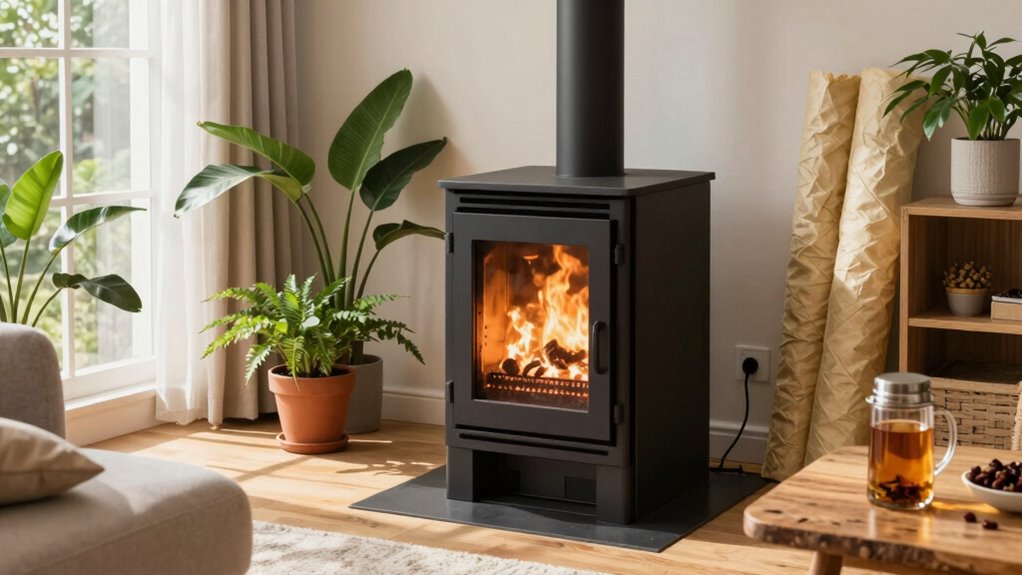
To make your heating system greener and more cost-effective, start by optimizing your insulation levels to reduce heat loss. Regular maintenance guarantees your system runs efficiently and prevents costly breakdowns. These simple steps can substantially lower your energy bills while helping the environment.
Optimize Insulation Levels
Optimizing insulation levels is a crucial step toward creating a greener, more cost-effective heating system. Proper insulation reduces heat loss and keeps your home warmer with less energy. To maximize efficiency, focus on:
- Installing high-quality window treatments like thermal curtains or shades to block drafts.
- Sealing gaps around windows, doors, and outlets using weatherstripping or caulking.
- Adding insulation to walls, attics, and floors to prevent heat from escaping.
- Regularly inspecting and upgrading sealing techniques to guarantee minimal air leaks.
Schedule Regular Maintenance
Have you scheduled regular maintenance for your heating system lately? Regular check-ups keep your system running efficiently, improving indoor air quality and reducing energy waste. During maintenance, technicians clean filters, inspect ducts, and fine-tune components, which lowers the risk of breakdowns. A well-maintained system not only performs better but also extends its lifespan, saving you money over time. Additionally, it helps prevent dust, mold, and allergens from circulating, enhancing indoor air quality. Scheduling routine maintenance is a simple yet effective way to keep your heating system eco-friendly and cost-efficient. Don’t wait for issues to arise—regular upkeep keeps your home comfortable, healthier, and more sustainable while trimming greenhouse costs.
Frequently Asked Questions
What Are the Common Maintenance Requirements for Eco-Friendly Heating Systems?
You should follow regular maintenance schedules to keep your eco-friendly heating system running efficiently. This includes checking and cleaning filters regularly, as dirty filters can reduce performance and increase energy use. Additionally, inspect components like pumps and thermostats periodically, and schedule professional tune-ups annually. By staying on top of filter replacement and maintenance, you guarantee your system remains eco-friendly, cost-effective, and operates smoothly for years to come.
How Do Weather Conditions Affect Renewable Home Heating Performance?
Weather variability and seasonal effects directly impact your renewable home heating performance. Colder temperatures increase your system’s workload, reducing efficiency, while milder weather helps it operate ideally. Wind, sunlight, and humidity also influence solar and wind-based systems, causing fluctuations. To maximize efficiency year-round, you should consider weather patterns, insulate your home well, and use supplementary heating during extreme conditions, ensuring consistent comfort despite changing weather.
Can Eco-Friendly Heating Systems Be Integrated With Existing Home Infrastructure?
You can absolutely blend eco-friendly heating systems with your current setup, especially with solar integration. Many systems are designed for retrofit compatibility, making upgrades smooth and hassle-free. You don’t have to overhaul everything; instead, you can enhance your existing infrastructure gradually. This approach not only preserves your current investments but also boosts your home’s efficiency, helping you save money while reducing your environmental footprint.
What Incentives or Rebates Are Available for Installing Green Heating Solutions?
You can take advantage of various financial incentives and government rebates when installing green heating solutions. Many local, state, and federal programs offer rebates that reduce your upfront costs, making eco-friendly systems more affordable. These incentives often cover solar, heat pumps, or biomass options. Be sure to check your area’s specific programs, as eligibility varies, and act quickly to maximize your savings while helping the environment.
How Long Is the Typical Lifespan of Renewable Heating Technology Systems?
Ever wonder how long your renewable heating system will last? Usually, these systems boast a lifespan of 20 to 30 years, thanks to their strong system durability. Solar efficiency plays a key role in maintaining this longevity, ensuring your investment keeps performing well over time. Proper maintenance can even extend their life, giving you peace of mind and maximizing your eco-friendly savings for decades to come.
Conclusion
While eco-friendly heating systems may require upfront effort and investment, they offer long-term savings and environmental benefits. Balancing the initial challenges with future gains, you can enjoy a warmer home that’s kinder to the planet. Just as sustainable choices demand dedication, the comfort and cost savings they bring make the effort worthwhile. Embrace the shift, knowing that your greener home is a step toward a healthier, more resilient future.