
TL;DR

Get garden gear delivered free with Prime
- Fast, free delivery on millions of items
- Prime Video, Amazon Music and more included
- Member-only deals all year
Gardening Know How reports that old tomato cages can be reused as frames for frost cloth or burlap to shield selected plants from winter weather. The cover should be breathable, secured to the ground and removed or aired during milder conditions; the method is not suitable for every plant or every freeze.
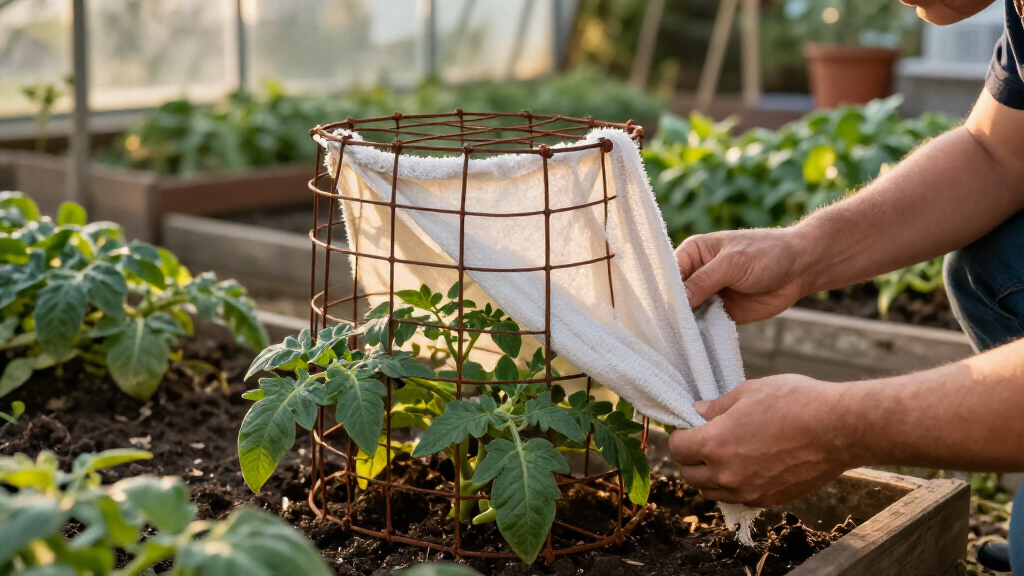
Gardening Know How has described a way to reuse old tomato cages as temporary frames for protecting selected garden plants from freezing weather. The report recommends covering a cleaned cage with breathable frost cloth or burlap, creating a barrier that stays off the plant’s branches and can be secured against wind.
The method repurposes a support gardeners might otherwise store after pulling up tomato plants. Set the cage over a plant with enough room for its branches to remain inside the wire, push its legs firmly into the ground and, if the site is exposed, tie the frame to a sturdy stake. The fabric can then be clipped to the cage and pinned down at soil level with landscape staples.
Cleaning the cage is part of the preparation. The report advises removing dried leaves and vines left from the growing season. If tomato plants had Septoria leaf spot or early blight, it recommends scrubbing the cage with diluted household bleach and rinsing it before reuse, to reduce the chance of carrying plant debris and disease into another season.
Gardening Know How advises against wrapping the frame in plastic. Its report says plants need airflow and that plastic can heat up quickly on mild afternoons; damp, still conditions can favor gray mold. Gardeners should check under the cover every few days, air it when needed and remove the temporary covering after a cold spell. The cage can remain in place for another weather dip.
A Second Use for Garden Cages
The approach offers a way to make use of equipment already on hand rather than buying a separate cover for every vulnerable plant. The report describes it as a low-cost option, not a guarantee against frost damage. A cage also holds fabric away from leaves and buds, addressing two problems the report identifies with fabric laid directly over a plant: cold can pass through at contact points, and heavy wet snow can weigh down covered branches.
The suggested use matters most for plants that are vulnerable in a particular garden or that need protection to preserve next year’s growth. Matching the cage to the plant and monitoring conditions remain necessary; one setup will not fit every shrub or prevent all winter injury.
Products Worth Considering

Sinimaka 10-Pack Twin-Wall Polycarbonate Greenhouse Panels, 8 × 4 ft

Weber Smokey Mountain Cooker 14 Charcoal Smoker

Orbit B-hyve XR 16-Zone Indoor/Outdoor Smart Sprinkler Controller
As an affiliate, we earn on qualifying purchases.
Plants the Report Identifies
Gardening Know How names bigleaf hydrangeas as a possible candidate because they form next year’s flower buds on old wood. Hard freezes can damage those buds even if the plant’s foliage returns, the report says. It also lists hybrid tea roses, perennials that are borderline hardy in a gardener’s USDA zone, and newly planted shrubs as examples that may benefit from protection.
Small evergreens such as boxwood may be exposed to winter burn from drying wind and sun; the report says burlap can help shield them without pressing directly on foliage. Suitability depends on the plant, local conditions and cage size. The article does not claim the method will save every plant or replace protection appropriate to a specific climate.
For additional insulation, the report suggests filling a sturdy cage with dry, loose leaves or straw after the plant has gone dormant, usually after several hard frosts. It says hydrangea buds can be surrounded with fill, while roses may need insulation around the crown and lower canes. Wet or tightly packed material against living foliage or a crown can stay soggy and contribute to rot, so the fill should be dry and removed gradually in spring.
““This trick won’t save everything.””
— Gardening Know How report
Protection Depends on Conditions
The report does not provide test results comparing cage covers with commercial frost tents or other plant covers, nor does it specify temperature thresholds at which the method will protect a given species. The amount of protection will depend on factors such as local weather, plant hardiness, the cover material, how securely it is fitted and whether wind or snow affects the setup. It is not a guarantee against freezing damage.
The report also does not give a single schedule for removing covers or adding insulation. Gardeners will need to monitor their plants and weather, avoid leaving a damp cover in place without airflow, and check that insulating fill stays dry. The article’s plant examples are suggestions rather than a site-specific assessment.
Check Covers Through Winter
Gardeners using the method should inspect the frame and covering during cold weather, make sure the fabric remains secured to the ground, and ventilate the shelter when conditions turn mild or damp. After a cold snap, the report says to remove the temporary cover while leaving the cage in place for possible later use.
If dry insulation has been added after dormancy, it should be kept loose and dry, then taken away gradually in spring as severe cold passes. The report offers no further product testing or follow-up findings; its guidance is a practical seasonal recommendation, with results dependent on local conditions and the plants being covered.
Key Questions
How do you turn an old tomato cage into a frost cover?
Remove old plant debris, clean and rinse the cage, then set it over the plant so branches remain inside the frame. Cover it with breathable frost cloth or burlap, attach the fabric to the cage and secure it at ground level.
Can I wrap the cage in plastic?
The Gardening Know How report advises against plastic wrap. It says plastic can heat up on mild afternoons and limit airflow; check beneath breathable covers regularly and air them if needed.
Which plants may benefit from a cage cover?
The report lists bigleaf hydrangeas, hybrid tea roses, borderline-hardy perennials, newly planted shrubs and small evergreens as possible candidates. Whether a plant needs protection depends on its hardiness and local conditions.
Can I add leaves or straw inside the cage?
The report suggests adding dry, loose leaves or straw after a plant goes dormant for extra insulation. Avoid wet or tightly packed fill against living foliage or a crown, where lingering moisture can contribute to rot.
Will a tomato cage cover prevent all frost damage?
No. The report explicitly cautions that the method will not save every plant. Its effectiveness depends on weather, the plant, the frame and cover, and how the shelter is maintained.
Source: gardeningknowhow.com