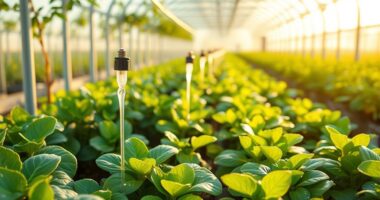
Switching to drip irrigation with automated timers can dramatically cut water waste and greenhouse gas emissions. This system keeps soil consistently moist, targets roots directly, and prevents overwatering. Using sensors and scheduling adjustments, especially during cooler times, further reduces unnecessary water use and energy consumption. By adopting these sustainable watering practices, you’ll help lower emissions and protect the environment. Continue exploring how you can make even bigger impacts through smarter watering strategies.

Get garden gear delivered free with Prime
- Fast, free delivery on millions of items
- Prime Video, Amazon Music and more included
- Member-only deals all year
Key Takeaways
- Implementing smart watering schedules during cooler parts of the day reduces evaporation and energy use.
- Using moisture sensors ensures watering only when soil moisture is low, preventing overwatering.
- Transitioning to drip irrigation directs water precisely to plant roots, minimizing runoff and waste.
- Incorporating rain collection systems decreases reliance on municipal water, lowering overall greenhouse emissions.
- Using timers and automation optimizes watering times, reducing unnecessary water and energy consumption.
automatic drip irrigation system with timers
As an affiliate, we earn on qualifying purchases.
As an affiliate, we earn on qualifying purchases.
How Do Watering Habits Affect Greenhouse Gas Emissions?
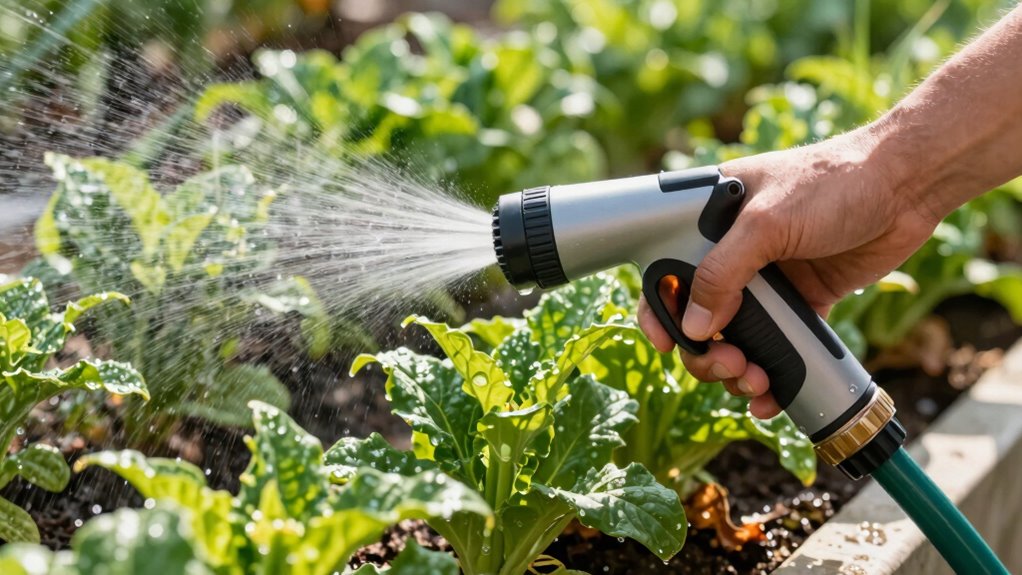
Have you ever wondered how your watering habits impact greenhouse gas emissions? When you water efficiently, you promote water conservation, which directly influences emission reduction. Overwatering wastes water and requires energy for treatment and transportation, leading to higher emissions. Conversely, using smart watering practices minimizes unnecessary water use, reducing the energy needed for pumping and distribution. This process can be optimized with appropriate watering techniques, which further decreases energy consumption. Implementing sustainable gardening methods can also enhance overall water efficiency. Additionally, understanding indoor air quality can help you create a healthier environment both inside and outside your home. This not only conserves water but also lessens the release of greenhouse gases like carbon dioxide and methane associated with these processes. Your choices—watering during cooler parts of the day or adjusting schedules—can considerably cut emissions. By improving your watering habits, you contribute to a healthier environment, lowering greenhouse gases and supporting sustainable water management efforts. Every small change makes a meaningful difference.
What Are the Benefits of Using Drip Irrigation and Timers?
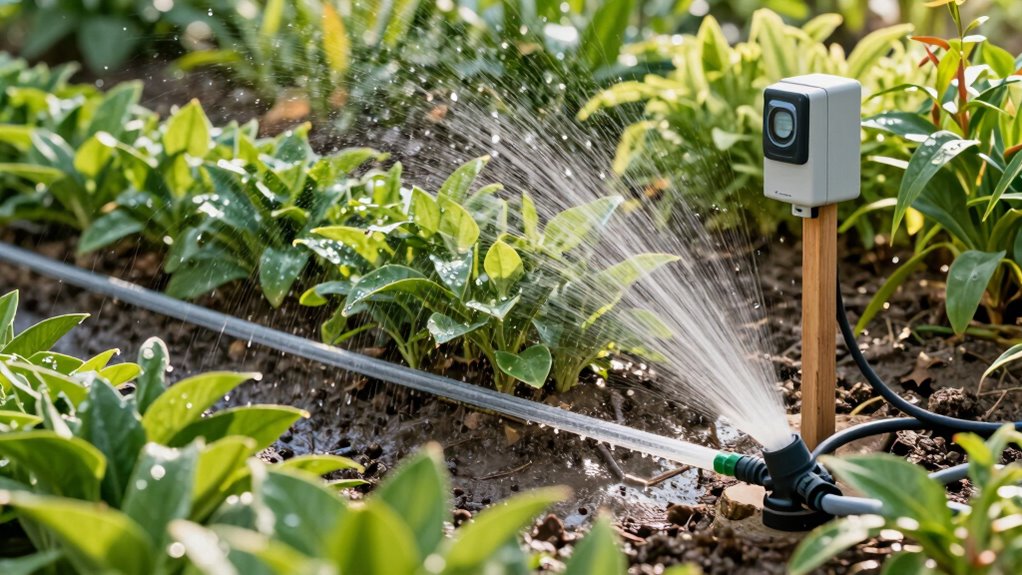
Using drip irrigation and timers offers significant benefits for water conservation and energy efficiency. They help maintain ideal soil moisture, reducing overwatering and runoff. Soil moisture control prevents plants from being under- or overwatered, promoting healthier growth. Timers automate watering schedules, ensuring plants get just enough water without waste. This precise control minimizes water use, conserving resources and lowering utility bills. The system’s targeted approach means water goes directly to roots, decreasing evaporation and runoff. You can customize watering times based on weather or soil conditions, further enhancing efficiency. Additionally, color accuracy in the system’s components can improve overall performance and longevity. Proper tool maintenance can also extend the life of irrigation components, ensuring consistent operation over time. Here’s a quick comparison:
| Feature | Benefit | Impact |
|---|---|---|
| Soil moisture control | Prevents over- and underwatering | Promotes healthy growth |
| Water conservation | Reduces unnecessary watering | Saves water and energy |
| Automation | Consistent watering schedule | Less manual effort |
| Energy efficiency | Less pump running time | Lowers energy costs |
How Can You Transition to More Sustainable Watering Practices?
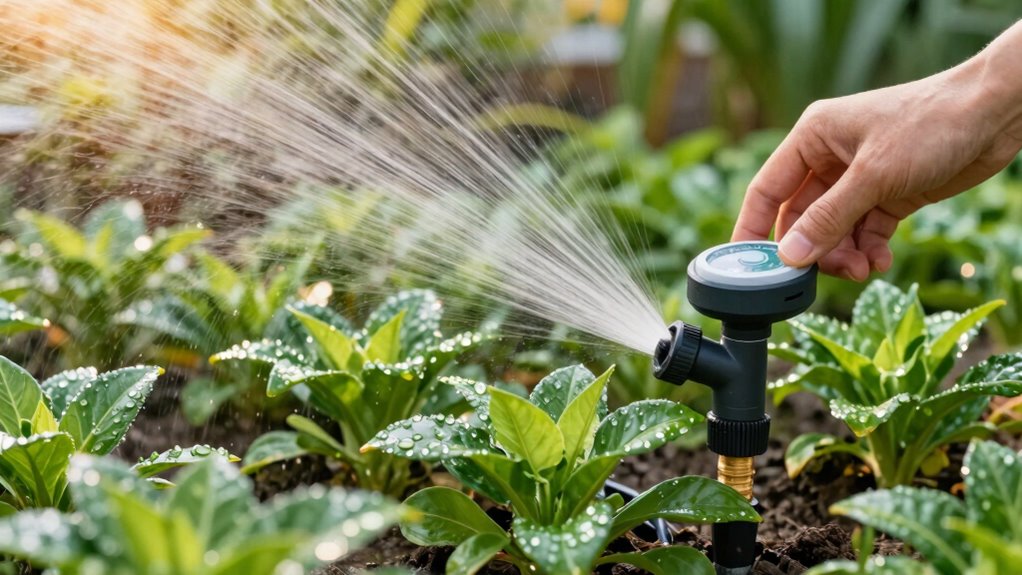
Shifting to more sustainable watering practices starts with evaluating your current system and identifying areas where water waste occurs. Begin by analyzing your soil moisture levels regularly; this helps prevent overwatering and guarantees plants get only what they need. Installing a rain collection system can considerably reduce reliance on municipal water sources, making your watering more eco-friendly. Use moisture sensors to monitor soil conditions, adjusting watering schedules accordingly. Incorporate mulch to retain soil moisture and reduce evaporation. Implementing these practices helps conserve water, minimizes runoff, and promotes healthier plants. Moving gradually allows you to fine-tune your system, making it more efficient and sustainable over time. Small, deliberate changes can make a big difference in reducing greenhouse waste from watering. Understanding water conservation is essential for creating lasting environmental impact, especially as water-efficient technologies become more accessible and affordable. Additionally, staying informed about AI-powered tools can help optimize watering schedules through data analysis and automation, further enhancing sustainable gardening efforts. Leveraging whole-home water systems can also improve overall water efficiency by managing multiple water sources and reducing waste at the source.
What Are Common Watering Mistakes That Waste Resources?
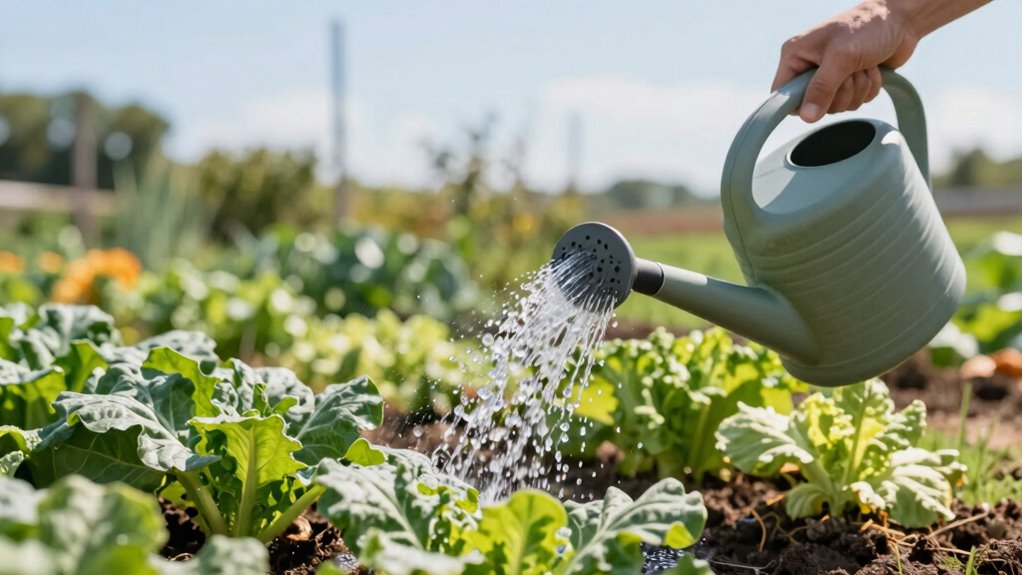
Many common watering mistakes lead to significant water waste, often without homeowners realizing the impact. Overwatering can cause soil moisture levels to become excessively high, which can drown plant roots and promote disease. Water runoff is another frequent problem, occurring when water is applied too quickly or in amounts that the soil can’t absorb. This runoff not only wastes water but also carries away nutrients, harming your plants and the environment. Additionally, watering at the wrong time—such as midday—causes more evaporation and less absorption. Ignoring these issues leads to inefficient watering, wasting resources and increasing your greenhouse footprint. To avoid these mistakes, focus on maintaining appropriate soil moisture levels and applying water slowly enough to prevent runoff. Proper watering techniques can also help conserve water and support sustainable resource management. Using watering schedules tailored to your specific plants and climate can further optimize water use and minimize waste. Being mindful of watering frequency can significantly improve water efficiency and reduce waste in your gardening practices. Regularly checking soil moisture with a soil moisture meter can help you accurately assess when watering is necessary, avoiding unnecessary waste.
How Can You Measure the Environmental Impact of Your Watering Changes?

To effectively gauge the environmental impact of your watering changes, you need measurable indicators that reflect water conservation and ecosystem health. Focus on soil moisture levels to see if plants receive enough water without excess. Monitor water runoff to identify areas where water flows away, wasting resources and risking erosion. Using tools like moisture meters and runoff collection can give you clear data. Additionally, tracking water conservation efforts can help you understand how your changes contribute to reducing overall water use. Incorporating ecosystem health indicators can further provide a comprehensive view of how your watering practices support environmental sustainability. Understanding fan culture and community engagement can also inspire more sustainable gardening practices through shared knowledge and collective efforts. Implementing best practices for water management can enhance your efforts and promote more sustainable gardening habits. Recognizing the importance of water-saving technologies can further optimize your watering strategies for greater environmental benefits.
Frequently Asked Questions
What Types of Plants Benefit Most From Efficient Watering Practices?
You’ll notice that drought-tolerant and native plants benefit most from efficient watering practices. These plants have higher plant resilience, meaning they adapt better to less frequent watering. By improving water absorption, they thrive with less water, reducing waste and supporting sustainability. Using targeted watering techniques helps such plants develop stronger root systems, making them more resilient to drought and less dependent on frequent watering, ultimately saving water and promoting healthier growth.
How Much Water Can Be Saved Annually With Proper Watering Adjustments?
You can save up to 30-50% of water annually by adjusting your watering habits. Proper plant hydration prevents overwatering myths that lead to waste, ensuring your plants get just what they need without excess runoff. By watering efficiently, you reduce greenhouse waste considerably. This simple change not only conserves water but also promotes healthier plants, saving money and helping the environment over time.
Are There Cost-Effective Tools for Small-Scale Sustainable Watering?
Yes, there are cost-effective tools for sustainable watering, like drip irrigation systems and rain barrels. Drip irrigation delivers water directly to plant roots, reducing waste and saving money over time. Rain barrels collect rainwater, providing free, eco-friendly water for your garden. Both options are affordable, easy to install, and help you conserve water while maintaining a healthy garden. Investing in these tools makes sustainable watering accessible for small-scale efforts.
How Do Climate Conditions Influence Watering Strategies?
Climate conditions directly influence your watering strategies by affecting soil moisture and evaporation rates. In hot, dry weather, evaporation rates increase, so you need to water more deeply and less frequently to maintain soil moisture. Conversely, in cooler or humid conditions, evaporation slows, allowing you to reduce watering. Adjust your schedule based on these factors to optimize water use, save resources, and support sustainable gardening.
Can Smart Technology Automate Eco-Friendly Watering for Beginners?
Smart technology makes eco-friendly watering easy, even for beginners. With sensor integration, these systems detect soil moisture levels and adjust watering schedules automatically, so you don’t have to keep a close eye on your garden. It’s a win-win — you save water and energy while keeping your plants healthy. Plus, it’s like having a green thumb on autopilot, making sustainable gardening simple and stress-free.
Conclusion
By switching to drip irrigation and timers, you can cut greenhouse gas emissions considerably—up to 50% in some cases. Small changes in your watering habits, like avoiding overwatering, make a big difference for the environment. Remember, inefficient watering wastes up to 30% of water resources and increases emissions. Taking these simple steps not only conserves water but also helps combat climate change, making your gardening more sustainable and eco-friendly.
Halloween Picks
halloween
As an affiliate, we earn on qualifying purchases.