To think about greenhouse growing as part of your home systems, consider integrating it with your energy setup using solar panels to power fans, heaters, and watering systems. Focus on energy-efficient designs like insulation and passive solar principles to minimize heat loss. Use smart technology to automate climate control, ensuring ideal plant growth while reducing waste. Planning for ongoing upgrades keeps your system sustainable and cost-effective. Keep exploring for tips on creating a fully eco-friendly, self-sufficient greenhouse environment.

Get garden gear delivered free with Prime
- Fast, free delivery on millions of items
- Prime Video, Amazon Music and more included
- Member-only deals all year
Key Takeaways
- Integrate solar power to sustainably energize greenhouse systems like heating, cooling, and irrigation.
- Design for energy efficiency with insulation, passive solar features, and thermal mass to minimize heat loss.
- Use smart technology and sensors for real-time environmental control and resource optimization.
- Plan for future upgrades with the latest renewable tech and energy-saving materials to ensure long-term sustainability.
- Incorporate greenhouse systems into home energy management for a cohesive, eco-friendly living environment.
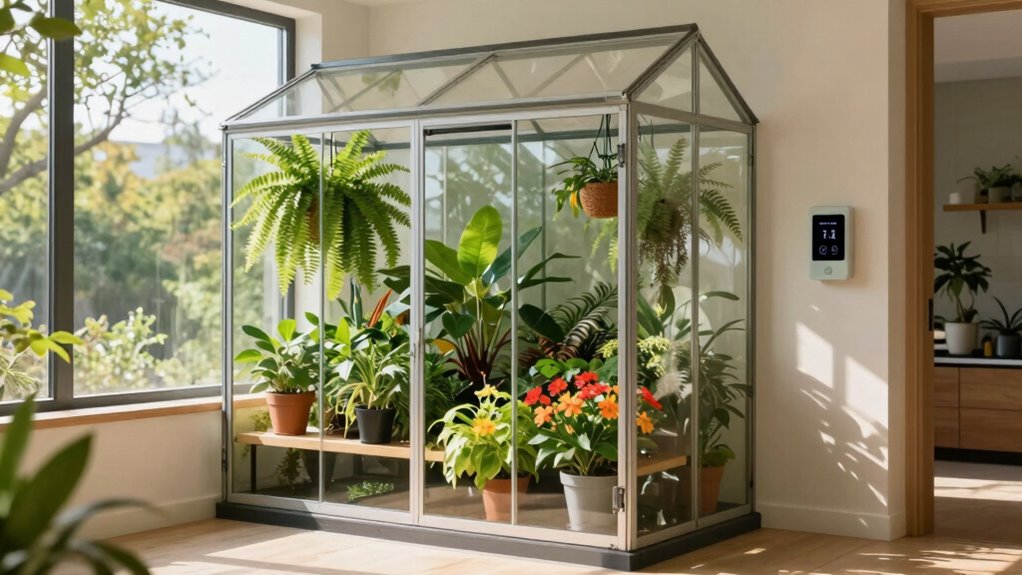
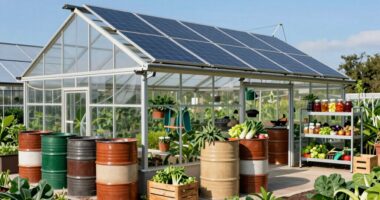
In today’s eco-conscious world, integrating a greenhouse into your home system is more than just a way to grow fresh produce—it’s a smart move toward sustainability and self-sufficiency. When planning your greenhouse, think beyond just the plants; consider how it can become an integral part of your overall home energy strategy. Solar integration plays a vital role here. By installing solar panels on your roof or nearby, you can power your greenhouse with renewable energy, reducing your carbon footprint and lowering energy costs. Solar-powered fans, heaters, and irrigation systems can operate seamlessly, making your greenhouse more efficient and eco-friendly.
Energy efficiency should be a top priority when designing your greenhouse. Opt for well-insulated walls and double-glazed windows to minimize heat loss during colder months. Proper insulation ensures that less energy is needed to maintain optimal temperatures, saving you money and reducing reliance on external power sources. Incorporate passive solar design principles—such as positioning your greenhouse to maximize sunlight exposure and using thermal mass materials like concrete or water barrels—to naturally regulate temperature fluctuations. This not only cuts down on energy consumption but also creates a more stable environment for your plants. In addition, designing your greenhouse with energy-efficient materials can further enhance its sustainability and performance.
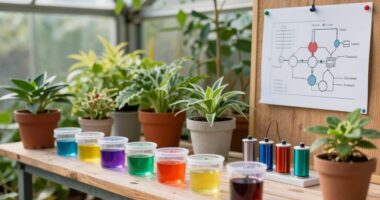
Additionally, integrating smart technology can significantly boost your greenhouse’s energy efficiency. Automated systems for heating, cooling, and watering allow you to precisely control conditions, preventing waste and optimizing plant growth. Sensors that monitor temperature, humidity, and light levels can connect to your home’s central system, enabling real-time adjustments that keep energy use minimal. When you combine solar integration with these smart systems, your greenhouse becomes a highly efficient, self-regulating space that aligns with your eco-friendly goals.
Thinking about your greenhouse as part of your home’s energy system also involves planning for future upgrades. As technology advances, new energy-saving devices and renewable options become available. Keeping an eye on developments in solar tech and energy-efficient materials ensures your greenhouse remains sustainable and cost-effective over time. Renewable energy sources such as solar power can further enhance your greenhouse’s sustainability. Remember, integrating a greenhouse isn’t just about adding a garden space—it’s an opportunity to enhance your entire home’s sustainability profile. With careful planning around solar integration and energy efficiency, you can create a resilient, environmentally friendly space that provides fresh produce while reducing your ecological impact.
As an affiliate, we earn on qualifying purchases.
Frequently Asked Questions
What Are the Best Plants for Beginner Greenhouse Growers?
For beginner greenhouse growers, the best plants for plant selection are easy-to-grow options like lettuce, herbs, radishes, and cherry tomatoes. These plants handle different growth stages well and are forgiving if you make mistakes. They thrive in controlled environments, making them perfect for learning. Start with these, monitor their growth stages, and gradually try more complex plants as you gain confidence and experience in your greenhouse.
How Much Space Is Needed for a Home Greenhouse System?
Think of your home greenhouse as a mini urban farm; it doesn’t need a sprawling estate. You can start with a compact setup, focusing on vertical farming to maximize space. An automated watering system helps manage moisture efficiently, so you don’t need extra hands. Even a small corner can yield fresh herbs or veggies, making your home a sustainable oasis without requiring a large footprint.
What Are the Initial Costs of Setting up a Home Greenhouse?
The initial costs of setting up a home greenhouse vary based on size and features, but a thorough cost analysis helps you plan your budget effectively. Expect expenses for structure materials, heating and lighting systems, and ventilation. By doing budget planning upfront, you can compare options, prioritize essentials, and avoid overspending, ensuring your greenhouse investment aligns with your financial goals and provides a sustainable start to your home growing system.
How Do I Control Pests in a Greenhouse Environment?
Pests in your greenhouse are like unwelcome guests at a party—you need effective strategies to keep them at bay. Use biological control methods, like introducing beneficial insects, to naturally reduce pest populations. Opt for pest-resistant varieties of plants to prevent infestations. Regularly inspect plants, keep the environment clean, and maintain proper humidity and airflow. These steps create a fortress, helping you control pests without harmful chemicals, ensuring your greenhouse thrives.
Can a Greenhouse Be Integrated With Existing Home Heating Systems?
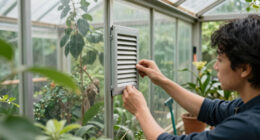
Yes, you can integrate a greenhouse with your home heating system to boost energy efficiency. Consider solar integration to harness renewable energy, reducing reliance on traditional heat sources. Installing a heat exchange system allows your greenhouse to share warmth with your home, saving energy and lowering costs. Proper insulation and automated vents help maintain consistent temperatures, making the setup more efficient and sustainable for year-round gardening.
Conclusion
By integrating greenhouse growing into your home systems, you tap into a sustainable cycle that benefits both you and the environment. Some believe it boosts mental well-being and food security, but science shows it also improves air quality and reduces carbon footprints. So, next time you step into your greenhouse, remember—you’re not just nurturing plants, but actively shaping a healthier, more resilient home ecosystem. It’s a small change with powerful, lasting impacts.
Halloween Picks
halloween
As an affiliate, we earn on qualifying purchases.