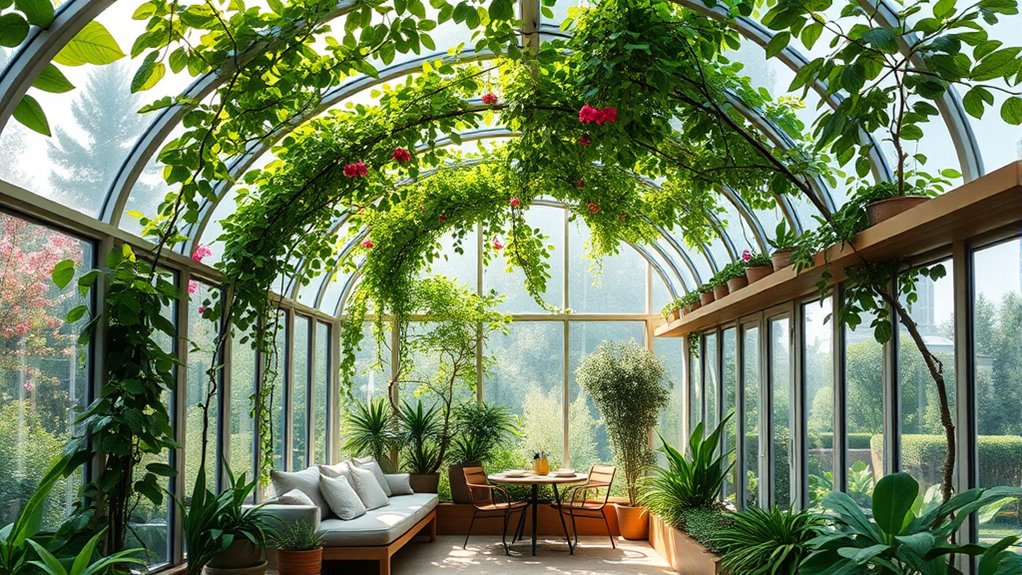

To design a greenhouse that doubles as living space, focus on maximizing natural light with large south-facing windows, and incorporate passive solar strategies like thermal mass and insulation to maintain a comfortable temperature year-round. Use durable, eco-friendly materials for framing and glazing, and consider converting existing structures to save costs. Incorporate built-in storage and flexible furniture to optimize space. Keep exploring for ideas on blending sustainability with comfort in your unique, eco-friendly retreat.
Key Takeaways
- Convert existing greenhouse structures to functional living spaces with integrated insulation, durable framing, and flexible interior layouts.
- Maximize passive solar heating through large south-facing windows and thermal mass materials like concrete or stone.
- Use eco-friendly, insulated materials such as double-glazed glass and treated wood to ensure safety and year-round comfort.
- Incorporate sustainable features like solar heating, natural ventilation, and recycled materials to reduce energy dependence.
- Design with multi-purpose spaces, built-in storage, and energy-efficient systems for comfort, functionality, and environmental harmony.
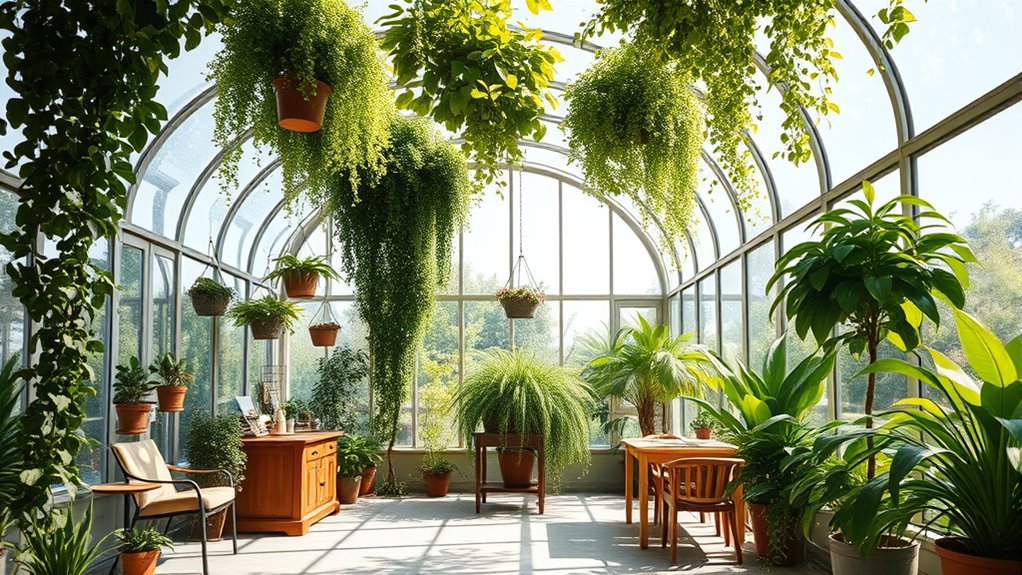
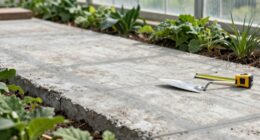
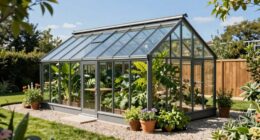
Transforming a greenhouse into a livable space offers a sustainable and innovative way to maximize your property’s potential. By converting an existing structure, you not only create a comfortable living environment but also harness natural resources to reduce energy costs. One of the key considerations in this transformation is incorporating solar heating, which utilizes the sun’s abundant energy to warm your space efficiently. Installing large, south-facing windows or glass walls allows sunlight to flood your interior, providing passive solar heat during the day. To optimize this effect, you can incorporate thermal mass elements like concrete or stone flooring that absorb heat during daylight hours and release it slowly at night, maintaining a consistent temperature. This eco-friendly approach minimizes reliance on traditional heating systems and enhances your home’s sustainability.
Transform your greenhouse into a sustainable living space with solar heating and passive design strategies.
Equally important are the structural materials you choose, as they determine the safety, insulation, and overall comfort of your livable greenhouse. Opt for durable, insulated materials that can withstand weather variations and provide thermal stability. For example, double-glazed glass panels or polycarbonate panels offer excellent insulation while maintaining transparency for maximum light transmission. When selecting framing materials, consider options like aluminum or treated wood, which provide strength and durability without adding excessive weight. Proper sealing and insulation around doors, windows, and joints are essential to prevent heat loss and drafts, ensuring your space remains cozy year-round. Additionally, understanding signs of spoilage in your building materials and insulation can help maintain a safe and healthy environment.
Designing your greenhouse to double as a living area also involves thoughtful interior planning. You’ll want to incorporate built-in storage, flexible furniture, and multi-functional spaces that make the most of every square foot. Using natural materials inside—such as bamboo, reclaimed wood, or recycled metal—can enhance the aesthetic while supporting your sustainability goals. Incorporate energy-efficient lighting and ventilation systems to maintain air quality and comfort, especially during cloudy days or seasonal changes. Smart climate controls can further optimize temperature and humidity levels, ensuring your living space stays comfortable without excessive energy use.
In essence, transforming a greenhouse into a cozy, sustainable living space requires balancing structural integrity, energy efficiency, and thoughtful design. Solar heating plays a central role, reducing your carbon footprint and lowering energy bills. Choosing the right structural materials ensures durability and insulation, enabling you to enjoy your new space all year round. With careful planning, your greenhouse can become a unique sanctuary that seamlessly blends nature, sustainability, and modern comfort.
Frequently Asked Questions
What Are the Best Materials for Climate Control in a Dual-Purpose Greenhouse?
You should choose materials like double-glazed glass or polycarbonate for the greenhouse, as they provide excellent thermal insulation and help maintain stable temperatures. For humidity regulation, consider using vapor-permeable materials like certain treated woods or specialized panels that allow moisture control. These materials work together to create a comfortable environment, keeping your space energy-efficient and suitable for both plants and living areas.
How Do I Ensure Proper Insulation Without Compromising Natural Light?
To guarantee proper insulation without sacrificing natural light, start with sleek, selective insulation techniques like insulated glass or polycarbonate panels. Use reflective coatings to bounce light inward while blocking heat loss. Install adjustable shading or venting systems to manage temperature swings. This way, you preserve natural light, maximize insulation, and create a cozy, climate-controlled environment that doubles as a stylish living space.
What Are the Legal Building Codes for Residential Greenhouses in Urban Areas?
You need to check local zoning restrictions and permit requirements before building your residential greenhouse in urban areas. Zoning laws dictate where greenhouses are allowed, their size, and whether they can be used as living space. You should contact your city’s planning department to understand these regulations, obtain necessary permits, and guarantee compliance. Doing this early helps prevent future legal issues and ensures your greenhouse meets all safety and building standards.
How Can I Integrate Sustainable Energy Sources Into the Greenhouse Design?
Think of your greenhouse as a symphony, where sustainable energy sources are the instruments. You can integrate solar panels on the roof to harness sunlight and install small wind turbines to capture breezes, ensuring a steady energy flow. These sources reduce reliance on the grid, making your space eco-friendly. Combining solar and wind power creates a harmonious environment, supporting both your plants and your living needs sustainably.
What Maintenance Routines Are Necessary for a Combined Living and Growing Space?
You should regularly inspect your space for pest management issues and address them promptly to protect your plants and living areas. Schedule weekly plant pruning to promote healthy growth and prevent overcrowding. Keep the environment clean by removing debris and fallen leaves. Check ventilation and humidity levels to prevent mold. Additionally, clean filters and solar panels to maintain energy efficiency, ensuring your combined living and growing space remains healthy and sustainable.
Conclusion
By blending a greenhouse with your living space, you create a cozy oasis nestled within a glass sanctuary. It’s like having a secret garden wrapped around your everyday life, where nature’s beauty blooms right outside your window. With thoughtful design, your home becomes a vibrant tapestry of lush greenery and warm comfort, turning ordinary walls into a living, breathing masterpiece. Embrace this harmony of habitat and home, and watch your world flourish with life and light.