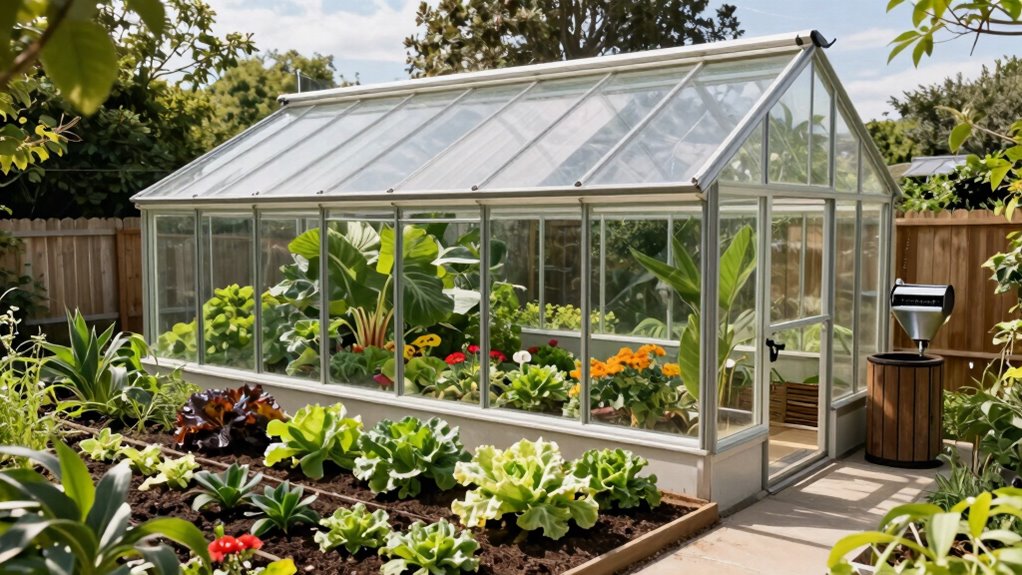
Greenhouses align perfectly with your modern homestead goals by boosting sustainability, resilience, and year-round food production. They let you harness renewable energy like solar power for ventilation, lighting, and heating, cutting reliance on external sources. You can conserve water through techniques like rainwater harvesting and drip irrigation, supporting eco-friendly practices. Plus, greenhouses create ideal environments for diverse crops, helping you grow fresh produce regardless of weather. Keep exploring to discover how these features can transform your homestead into a sustainable haven.

Get garden gear delivered free with Prime
- Fast, free delivery on millions of items
- Prime Video, Amazon Music and more included
- Member-only deals all year
Key Takeaways
- Greenhouses enable year-round crop production, supporting food sovereignty and reducing reliance on external food sources.
- They facilitate sustainable energy use through solar power, minimizing environmental impact and lowering long-term costs.
- Greenhouses promote water efficiency via targeted irrigation and rainwater harvesting, aligning with conservation goals.
- They create controlled environments for diverse crops, enhancing resilience and ecological balance on the homestead.
- Greenhouses serve as a practical foundation for integrating holistic sustainable practices, fostering resourcefulness and ecological harmony.
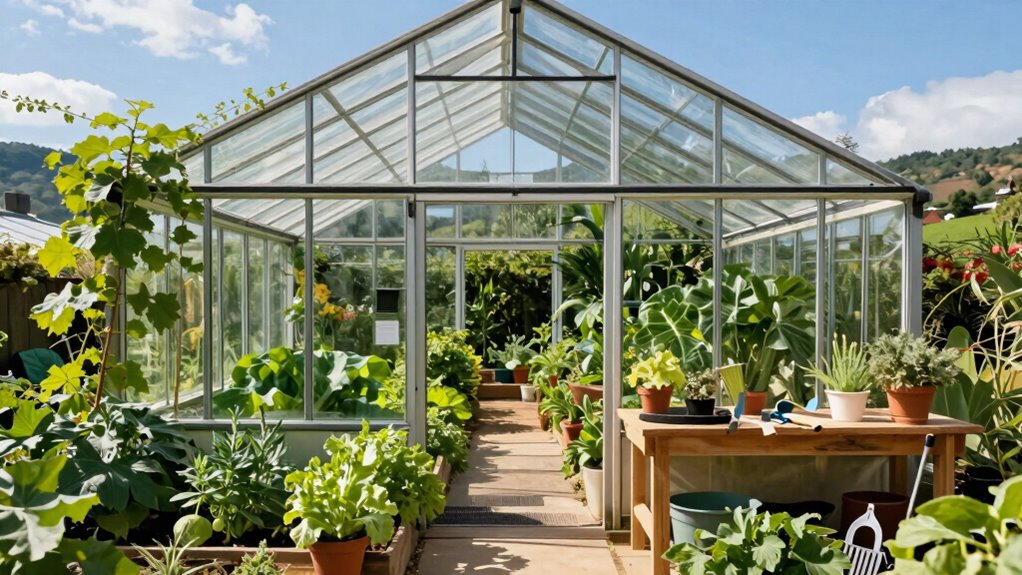
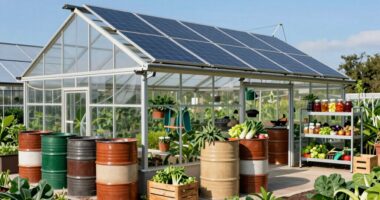
Greenhouses have become a cornerstone of modern homestead goals, offering a practical way to extend growing seasons and boost food security. As someone passionate about self-sufficiency, you recognize that a greenhouse isn’t just a garden extension—it’s a tool for sustainable living. By carefully designing your greenhouse with sustainable energy in mind, you can reduce reliance on external power sources. Solar panels can harness the sun’s energy to power ventilation systems, lighting, or heating, making your setup more eco-friendly and cost-effective in the long run. This integration of sustainable energy aligns perfectly with the broader goal of minimizing your homestead’s carbon footprint, ensuring you’re not only growing food but doing so responsibly.
Harness solar energy to power your greenhouse sustainably and reduce your homestead’s carbon footprint.
Water conservation is another critical aspect where greenhouses shine within modern homestead practices. Traditional gardening can be wasteful, but a greenhouse enables you to implement targeted watering techniques like drip irrigation or rainwater harvesting. These methods drastically reduce water consumption while maintaining critical moisture levels for your plants. You can also set up a system to recycle greywater or reuse collected rainwater, making your greenhouse a model of water efficiency. Such practices not only help conserve this essential resource but also lower your utility bills and lessen your environmental impact. In a time when water scarcity is a growing concern, incorporating water conservation strategies into your greenhouse design becomes indispensable. Additionally, utilizing water-efficient techniques can significantly enhance the sustainability of your homestead. Incorporating sustainable gardening practices further supports your goal of resourcefulness and ecological balance. Embracing water management strategies can help create a more resilient and environmentally conscious homestead. Utilizing water-saving methods can further optimize your resource use and reduce waste, making your efforts even more sustainable. Incorporating water recycling systems can also help you make the most of natural resources and reduce reliance on external water sources.
Beyond resource efficiency, greenhouses give you control over your environment, which is a key goal in modern homesteading. You can create microclimates tailored to specific plants, ensuring consistent yields regardless of outside weather fluctuations. This control also allows you to experiment with growing a wider variety of crops, including those that might not naturally thrive in your local climate. The ability to grow food year-round enhances your self-sufficiency and reduces dependency on store-bought produce, aligning perfectly with the homestead’s sustainable and resilient ethos.
Finally, greenhouses support a holistic approach to sustainable living. They enable you to practice composting, organic pest management, and soil regeneration within a contained environment. All these practices contribute to a healthier, more productive homestead that emphasizes resourcefulness and ecological balance. In essence, a greenhouse isn’t just about gardening—it’s a cornerstone for building a resilient, sustainable homestead that prioritizes resource conservation, energy efficiency, and food sovereignty. It’s a smart, practical investment that helps you live more in harmony with the environment while providing fresh, healthy food for your family year-round.
solar powered greenhouse ventilation fan
As an affiliate, we earn on qualifying purchases.
As an affiliate, we earn on qualifying purchases.
Frequently Asked Questions
What Are the Initial Costs of Building a Greenhouse?
The initial costs of building a greenhouse typically range from a few hundred to several thousand dollars, depending on your size and material choices. You should conduct a cost analysis, considering options like PVC, wood, or metal frames, and transparent coverings such as polycarbonate or glass. Your material choices greatly influence the overall expense, so balancing durability and budget helps guarantee your greenhouse aligns with your homestead goals.
How Do Greenhouses Impact Energy Consumption?
Greenhouses can increase your energy consumption if not managed properly, but with energy efficiency and insulation techniques, you can reduce this impact. Using double glazing, thermal curtains, and proper ventilation helps retain heat, minimizing heating needs. You actively control temperature fluctuations, making your greenhouse more energy-efficient. By focusing on insulation techniques, you optimize energy use, lowering your overall costs and making your homestead more sustainable and eco-friendly.
Can Greenhouses Be Used Year-Round in All Climates?
Yes, you can use greenhouses year-round in many climates, but it depends on your insulation and heating options. They support seasonal planting by extending your growing season, even through winter. Pest control is easier inside a greenhouse, helping you protect your crops year-round. With proper ventilation and temperature management, your greenhouse can thrive in various climates, making it a versatile tool for continuous, sustainable homestead growth.
What Are Common Challenges Faced With Greenhouse Maintenance?
Ever wonder if greenhouse maintenance is worth the effort? Common challenges include pest control, which can quickly become overwhelming if not managed properly, and soil management, as keeping the soil healthy and nutrient-rich requires consistent attention. You’ll need to regularly inspect for pests and adjust your soil practices to prevent issues. Staying vigilant and proactive helps guarantee your greenhouse remains productive and enjoyable year-round.
How Do Greenhouses Affect Local Biodiversity?
Greenhouses can impact local biodiversity by potentially introducing non-native species that may compete with native ones. This can disrupt ecosystem balance if invasive plants or pests escape and spread into surrounding areas. As you manage your greenhouse, it’s vital to prioritize native species and implement containment measures. Doing so helps protect local ecosystems, preserves native biodiversity, and maintains a healthy balance between your homestead and the natural environment.
Conclusion
Greenhouses are like the backbone of your modern homestead, seamlessly blending sustainability with self-sufficiency. They’re your personal oasis, turning your backyard into a thriving garden year-round. Embracing a greenhouse means nurturing growth, resilience, and independence—your homestead’s heartbeat. When you invest in this green haven, you’re planting seeds for a future rooted in abundance and harmony, making your homestead not just a place to live, but a sanctuary where nature and you flourish together.
Fall Picks
fall essentials
As an affiliate, we earn on qualifying purchases.