
To create safe homemade greenhouse cleaners, try mixing a solution of 1 part vinegar to 3 parts water to naturally disinfect surfaces and prevent disease. You can also dissolve a few tablespoons of baking soda in a gallon of water for gentle scrubbing, or combine lemon juice with water and dish soap for an effective citrus-based cleaner. These eco-friendly recipes not only keep your greenhouse spotless but also support healthier plants—discover more tips as you continue to explore.
Key Takeaways
- Use a vinegar-water solution (1 part vinegar to 3 parts water) for natural antimicrobial cleaning of surfaces.
- Dissolve baking soda in water to scrub and disinfect pots, floors, and hard surfaces gently.
- Prepare citrus-based disinfectants with lemon or lime juice mixed with water and dish soap for natural grime removal.
- Regularly clean greenhouse surfaces with these safe, homemade solutions to reduce pathogens and promote healthy plant growth.
- Avoid harsh chemicals by opting for eco-friendly recipes that prevent residue buildup and support pest control efforts.
Keeping your greenhouse clean is vital for healthy plant growth, and homemade cleaners offer a safe, cost-effective way to do it. When you take the time to regularly clean your greenhouse, you not only create a more inviting environment for your plants but also greatly reduce the risk of plant disease prevention. Pathogens like fungi, bacteria, and viruses can thrive in dirty, damp conditions, so maintaining a clean space helps keep these threats at bay. Using natural, homemade solutions ensures you’re not exposing your plants to harsh chemicals that could cause stress or damage, making your pest control efforts more effective and eco-friendly.
Regular greenhouse cleaning reduces disease risk and creates a healthier environment for your plants.
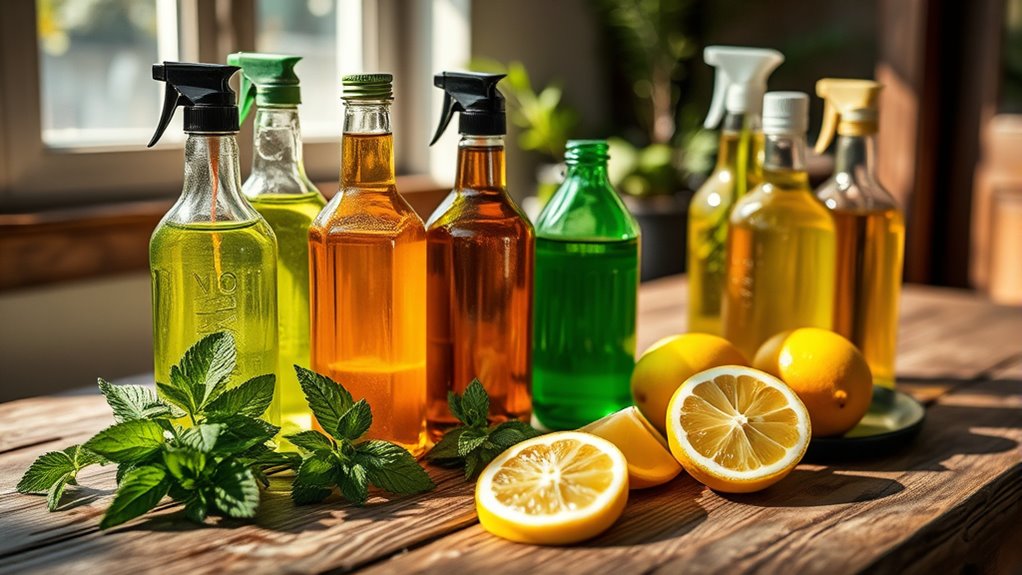
A simple yet effective homemade cleaner starts with a mixture of vinegar and water. Vinegar’s acidity makes it a natural antimicrobial agent that helps eliminate mold, mildew, and bacteria on surfaces. Mix one part white vinegar with three parts water, and use a spray bottle to apply it to greenhouse benches, tools, and windows. This solution supports plant disease prevention by reducing the presence of harmful microbes that could infect your plants. It’s also safe for most surfaces and won’t leave harmful residues. For stubborn stains or mold buildup, you can add a few drops of tea tree oil, which has natural antifungal properties, boosting your greenhouse pest control and plant disease prevention efforts.
Another effective homemade cleaner involves baking soda. Dissolve a few tablespoons of baking soda in a gallon of water and use it to scrub hard surfaces, floors, and pots. Baking soda’s gentle abrasive action removes dirt and residues without damaging your greenhouse structures, while its alkaline nature helps neutralize acidic fungal spores. Regular use of this solution helps create an environment less hospitable to pests and disease-causing organisms, which is fundamental for maintaining healthy plants.
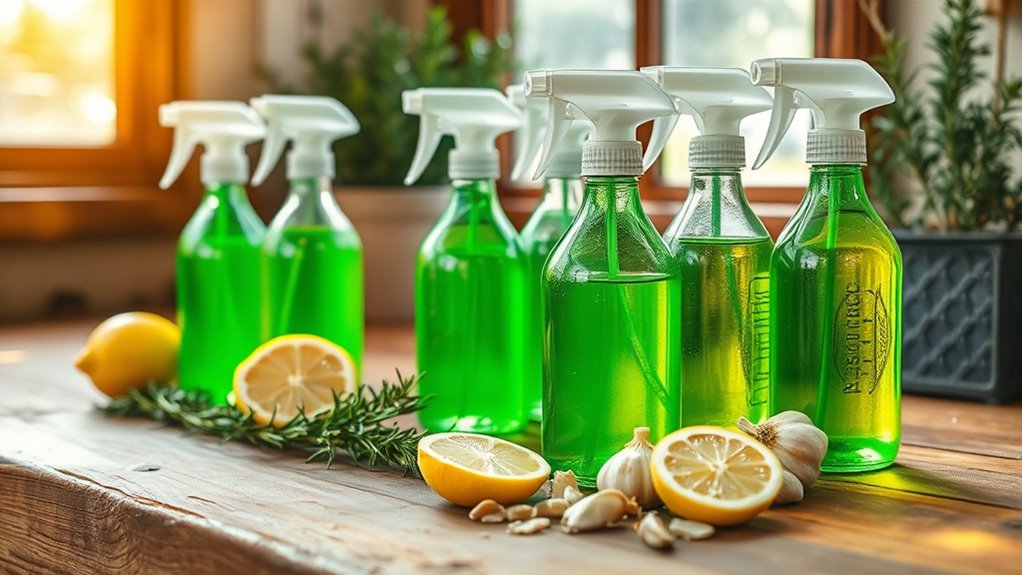
For a more complete cleaning, consider making a citrus-based solution. Citric acid from lemon or lime juice can help break down grime and disinfect surfaces naturally. Mix lemon juice with water and a splash of dish soap, then wipe down all surfaces. This not only cleans but also deodorizes your greenhouse, making it less attractive to pests. The natural acids in citrus also contribute to plant disease prevention by creating an environment where pathogens struggle to survive.
Frequently Asked Questions
Are Homemade Cleaners Effective Against Stubborn Algae?
Yes, homemade cleaners can be effective against stubborn algae, especially when you target algae residue with the right ingredients. Using a mixture of vinegar or baking soda combined with water often boosts cleaning effectiveness. You should let the solution sit on the algae residue for a few minutes before scrubbing. This approach helps break down the algae, making it easier to remove and leaving your greenhouse surfaces cleaner and algae-free.
Can These Recipes Be Used on Delicate Greenhouse Plants?
Yes, these homemade greenhouse cleaners are safe for delicate plants if you consider plant safety and chemical compatibility. You should test the solution on a small area first to prevent damage. Use gentle ingredients like vinegar or baking soda, avoiding harsh chemicals. Always dilute properly, and monitor your plants after cleaning. This way, you guarantee your plants stay healthy while maintaining a clean greenhouse environment.
How Often Should I Clean My Greenhouse Using Homemade Solutions?
Think of your greenhouse as a well-tuned orchestra; regular cleaning keeps everything harmonious. You should clean your greenhouse with homemade solutions every 4 to 6 weeks, depending on the environment and plant health. A consistent cleaning schedule minimizes pests and disease, while also reducing environmental impact by avoiding harsh chemicals. Keep an eye on your plants’ response, and adjust the routine if you notice any issues.
Are There Any Safety Tips for Children or Pets Around These Cleaners?
To guarantee child safety and pet safety around homemade cleaners, always store them out of reach and clearly label each container. Use non-toxic, plant-safe ingredients and avoid harsh chemicals. Before cleaning, keep children and pets away, and allow the area to dry completely. Educate family members about the importance of safety, and consider using natural alternatives to minimize any risks. Regularly inspect your greenhouse for potential hazards to keep everyone safe.
Can Homemade Cleaners Be Stored for Future Use?
Yes, you can store homemade cleaners for future use, but keep in mind the storage duration and container types. Use airtight, non-reactive containers like glass or plastic bottles to prevent contamination and leaks. Store them in a cool, dark place away from children and pets. Typically, homemade cleaners stay effective for a few weeks to a few months, so label your containers with the date to track freshness.
Conclusion
By using these safe, homemade cleaners, you nurture your greenhouse like a gentle gardener tending to precious blooms. Imagine your plants basking in a pristine, chemical-free haven, their leaves shimmering under the sun’s embrace. Just as a skilled artist cares for their canvas, your mindful cleaning preserves the beauty and health of your green sanctuary. Embrace these natural recipes, and watch your greenhouse flourish with vibrant life, a witness to your caring touch.