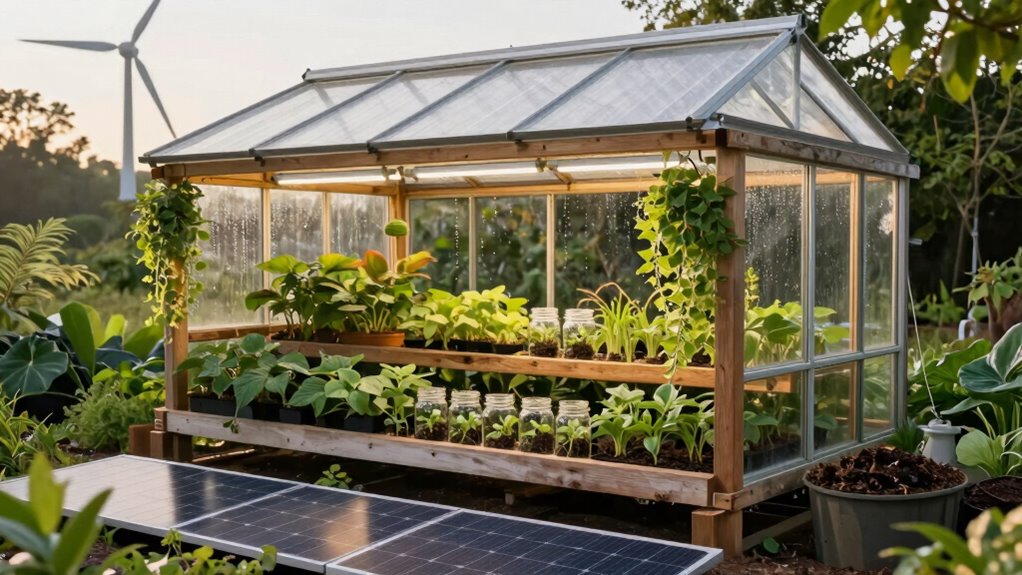

To plan your off-grid greenhouse upgrade in layers, start with renewable energy systems like solar water collectors and energy storage, ensuring reliable heat and power. Next, add smart controls and energy management tools to optimize usage. Then, incorporate environmental controls like automated vents and sensors for climate regulation. Finally, expand with additional renewable sources or water solutions as needed. Each layer builds on the last, creating a resilient system; keep exploring to discover how to perfect your setup.

Get garden gear delivered free with Prime
- Fast, free delivery on millions of items
- Prime Video, Amazon Music and more included
- Member-only deals all year
Key Takeaways
- Begin with establishing solar water systems and thermal storage for reliable heating and water supply.
- Implement energy storage solutions like batteries to ensure continuous power during low sunlight periods.
- Integrate smart energy management and control systems to optimize power use and system responsiveness.
- Incorporate environmental controls such as automated ventilation and climate sensors to improve plant health.
- Plan for ongoing upgrades like additional solar panels or rainwater harvesting to enhance resilience and efficiency.

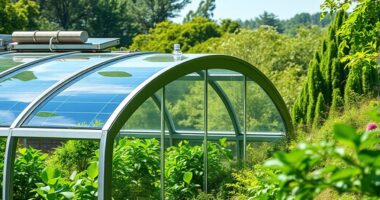
If you’re looking to boost your off-grid greenhouse’s efficiency, upgrading its systems is essential. One of the most effective ways to do this is by planning your upgrades in layers, starting with fundamental systems and building towards more advanced solutions. The first layer should focus on harnessing renewable energy, particularly solar water and energy storage. Solar water systems provide a reliable way to heat and supply water to your greenhouse without relying on external power sources. By installing solar water collectors, you can capture sunlight during the day and store it as thermal energy, ensuring a steady supply of hot water even when the sun isn’t shining. This reduces your dependence on fossil fuels or grid electricity, making your greenhouse more sustainable and self-sufficient.
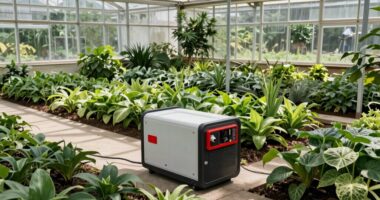
Once you’ve integrated solar water systems, the next layer involves energy storage. To maximize your off-grid capabilities, you need a robust energy storage solution. Batteries or other storage technologies allow you to save excess energy generated during the day for use at night or during cloudy days. Proper energy storage ensures you have a consistent power supply for essential systems like fans, grow lights, and irrigation pumps, regardless of weather conditions. This step is crucial because it stabilizes your energy flow and prevents disruptions that could harm your plants or compromise your greenhouse’s operations. Incorporating renewable energy sources into your setup further enhances your off-grid sustainability. Additionally, integrating energy management systems can optimize the use and distribution of stored power, making your setup even more efficient. Employing smart controls can further improve energy efficiency by adjusting system operation based on real-time data. Developing a comprehensive energy plan can help identify potential gaps and streamline your upgrade process.
After establishing reliable solar water and energy storage systems, you can move on to optimizing your environmental controls. This includes ventilation, heating, and cooling systems that work seamlessly with your energy setup. For example, you might install automated vents or fans powered by stored energy, which adjust based on temperature and humidity levels. Incorporating sensors that communicate with your energy storage ensures these systems operate efficiently, conserving power when necessary and providing comfort for your plants. As your system becomes more sophisticated, exploring energy efficiency strategies can help reduce overall power consumption and extend the lifespan of your storage solutions.
Finally, layering your upgrades means continuously refining and expanding your systems. As you become more comfortable managing your renewable setup, you can add solar panels for electricity generation, advanced water filtration, or even rainwater harvesting to further reduce reliance on external resources. Each layer builds upon the previous one, creating a resilient, efficient off-grid greenhouse. By thoughtfully planning these upgrades in layers, you ensure each system integrates smoothly, maximizing sustainability while minimizing costs and complexity. This approach not only enhances productivity but also makes your greenhouse more adaptable to changing conditions and future innovations.
solar water heater for greenhouse
As an affiliate, we earn on qualifying purchases.
As an affiliate, we earn on qualifying purchases.
Frequently Asked Questions
How Much Does a Layered Greenhouse Upgrade Typically Cost?
A layered greenhouse upgrade typically costs between $10,000 and $50,000, depending on size and complexity. You’ll need to invest in sustainable energy solutions like solar panels and water harvesting systems to maximize efficiency. These upgrades involve installing rainwater collection, renewable energy sources, and insulation. While the initial cost may seem high, the long-term savings on utilities and environmental benefits make it a worthwhile investment for off-grid sustainability.
What Are the Best Materials for Off-Grid Greenhouse Insulation?
For off-grid greenhouse insulation, you should choose materials with good insulation techniques and high material durability. Rigid foam boards, such as extruded polystyrene (XPS), are excellent because they provide strong insulation and resist moisture. Bubble wrap or reflective foil insulation can also work well for lightweight, temporary solutions. Consider combining these materials to maximize energy efficiency, ensuring your greenhouse stays warm during colder months and endures harsh environmental conditions.
How Long Does It Take to Complete the Upgrade Process?
It typically takes several weeks to a few months to complete your upgrade, depending on your project’s complexity. You’ll need time to optimize solar efficiency and improve water management systems. Like tuning a fine instrument, each layer of upgrade—insulation, ventilation, or solar panels—requires careful planning and execution. Rushing could hinder performance, so allocate ample time to guarantee your off-grid greenhouse functions smoothly and sustainably.
Can Existing Greenhouses Be Retrofitted With This Layered System?
Yes, you can retrofit existing greenhouses with this layered system. By applying historical techniques, you can integrate insulation, shading, and ventilation adjustments suitable for seasonal changes. You’ll need to evaluate your current setup and adapt these layers accordingly, making seasonal adjustments to optimize temperature control. This approach allows you to improve energy efficiency without rebuilding, ensuring your greenhouse stays productive year-round with minimal disruption.
What Are Common Challenges Faced During the Upgrade?
You’ll face challenges like climate adaptation, where adjusting your greenhouse to changing weather is tough, and water management, which is vital for sustainability. Upgrading in layers means you need to carefully plan for insulation, ventilation, and irrigation systems, ensuring they work together seamlessly. Expect issues with integrating new technology, maintaining consistent climate conditions, and managing water efficiently. Proper planning and flexible systems help you overcome these common hurdles.
Conclusion
So, after all this planning and layering, you might think you’re finally set to grow endlessly off-grid. Yet, the irony is, the more you upgrade, the more you realize how little control you truly have over nature’s unpredictable whims. Sometimes, the best-laid plans still hinge on luck—and that’s the real lesson: no matter how advanced your greenhouse, Mother Nature always has the final say. Embrace the chaos; it’s part of the journey.
Halloween Picks
halloween
As an affiliate, we earn on qualifying purchases.