TL;DR

Get garden gear delivered free with Prime
- Fast, free delivery on millions of items
- Prime Video, Amazon Music and more included
- Member-only deals all year
Gardening Know How describes how to grow houseplants and edible leaves from fruit seeds and vegetable scraps on a kitchen windowsill. Results vary: avocado and citrus seeds can produce attractive foliage, while apple and pear seedlings are unlikely to yield the same fruit as the parent.
Gardening Know How has published a guide to growing plants from fruit seeds and vegetable scraps on a kitchen windowsill, including citrus and avocado seedlings and regrowing leaves from cabbage bases. The methods offer a low-cost indoor gardening project, but the report cautions that plants grown from apple and pear seeds generally will not produce fruit like the fruit they came from.
For citrus, the guide recommends washing seeds to remove pulp and sowing them about one-third of an inch deep in moist potting soil. A clear cover can retain heat and moisture until growth appears. The report says to place the container on a sunny windowsill and remove the cover once the seedling emerges. With suitable care, it says a citrus seedling may reach about a foot tall in its first year; fruit, however, may take around a decade.
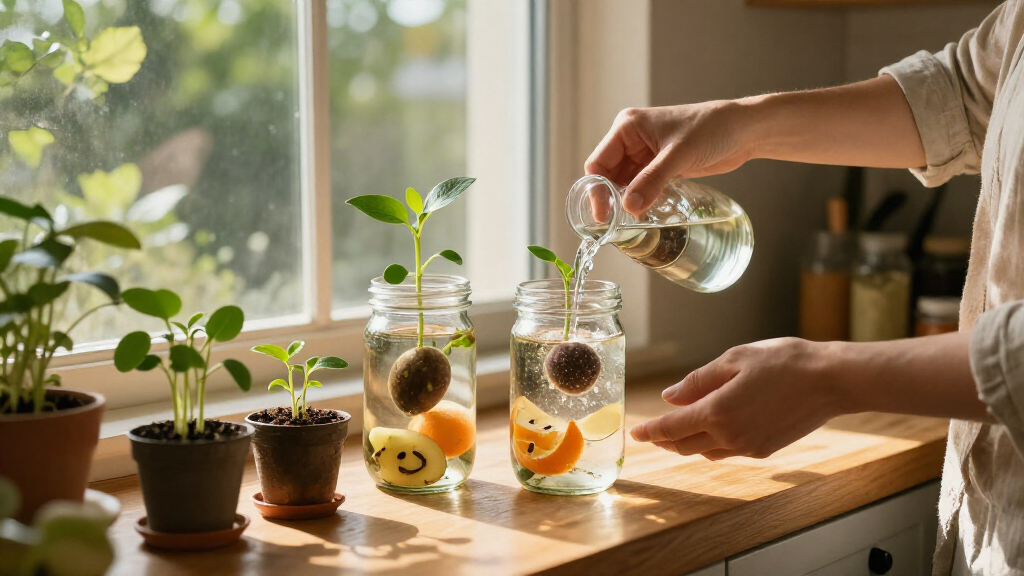
Avocado stones are started differently: suspend the broad bottom third in water, using toothpicks and a jar or a seed-starting vase. Keep the stone in a warm, bright spot with indirect light, change the water every two to five days, and maintain the water level. The guide says to transfer the stone to soil after it opens and has developed a couple of inches of roots and a visible shoot. It suggests pruning the top leaves when the stem reaches about six inches if a bushier plant is wanted.
For apples and pears, the report advises cleaning the seeds, selecting plump seeds that sink in water, then chilling them in a sealed bag with damp paper towel to mimic winter. It says a root may appear after about six weeks. The resulting seedlings can be grown as foliage plants or shaped as bonsai, but should not be treated as reliable fruit trees. The guide also mentions cabbage bases as a source of edible regrowth and carrot tops for flavorful foliage, including use in pesto.
A Low-Cost Windowsill Growing Project
The techniques make use of seeds and scraps that might otherwise be discarded, giving households a way to try indoor propagation with readily available materials. For readers with limited outdoor space, citrus and avocado seedlings can develop into foliage-focused houseplants, while cabbage regrowth can provide leaves for meals. The activity can also help children observe germination and root growth at home.
The practical value depends on expectations. The report presents these methods as ways to grow plants, not as a dependable route to free fruit. Citrus can take many years to fruit, and apple or pear seedlings may produce small, acidic fruit unlike their parent. Growing from scraps is therefore most predictable as an experiment or foliage project; the report does not establish how much edible produce a household can expect.
indoor seed starting pots with humidity dome for citrus seeds
As an affiliate, we earn on qualifying purchases.
As an affiliate, we earn on qualifying purchases.
Seeds, Scraps and Different Timelines
The report groups several methods that differ in how seeds begin growing. Citrus seeds are planted directly into moist soil, avocado stones are first sprouted in water, and apple and pear seeds are chilled before sowing. These steps reflect different requirements described in the guide: warmth and moisture for citrus, water and indirect light for avocado, and a cold period for apple and pear germination.
Growing a plant from a seed is not the same as cloning its parent. The report specifically warns that apple and pear seeds do not reliably reproduce the fruit variety from which they came. It describes bonsai as a suitable long-term use for those seedlings because of their roots and flexible branches. No comparative trial or success-rate data is provided, so the suggested timelines and outcomes are guidance from the gardening report rather than guarantees.
““While you’ll have to wait a decade or so for fruit, citrus trees make beautiful foliage-first houseplants.””
— Gardening Know How
Germination and Fruit Are Not Guaranteed
The report does not provide controlled success rates, independent testing, or details about how results vary by seed freshness, indoor temperature, or local growing conditions. Its timelines are approximate: an apple or pear seed may show a root around the sixth week, while an avocado stone can take up to two months to crack. Individual seeds may take longer or fail to grow.
It is also unclear how much edible harvest cabbage bases or carrot tops will produce, or for how long. The guide describes cabbage as a source of cut-and-come-again leaves, but gives no yield or duration. It does not claim that every fruit seed will grow true to type or that seedlings will eventually bear useful crops.
Watch for Roots and New Growth
For anyone trying the methods, the next steps are to monitor each setup for growth and adjust care to the plant: keep citrus soil moist under a temporary cover, refresh avocado water every few days, and check chilled apple and pear seeds and their damp paper regularly. Once seedlings develop, move them into suitable potting soil as described in the guide and continue to treat fruiting as uncertain, especially for apple and pear.
The source report does not announce a follow-up study or a measured harvest. Any assessment of success will depend on how individual seeds and scraps grow in home conditions.
Key Questions
Can I grow a citrus plant from a seed?
Yes. Gardening Know How recommends washing the seed and sowing it about one-third of an inch deep in moist potting soil. It describes citrus as a foliage houseplant, while warning that fruit may take around a decade.
How do I start an avocado stone?
Suspend the bottom third of a cleaned stone in water in a bright spot with indirect light. Change the water every two to five days, and transfer the stone to soil after it cracks and develops roots and a shoot.
Will an apple seed grow the same kind of apple?
Usually not, according to the report. Seed-grown apple and pear trees commonly produce small, acidic fruit rather than fruit matching the parent. The guide suggests growing them as ornamental plants or bonsai instead.
Can vegetable scraps grow edible leaves?
The report says cabbage bases can regrow leaves for salads and stir-fries, while carrot tops can provide foliage for pesto. It gives no expected yield or harvest period, so results may vary.
Source: rss
Halloween Picks
halloween
As an affiliate, we earn on qualifying purchases.