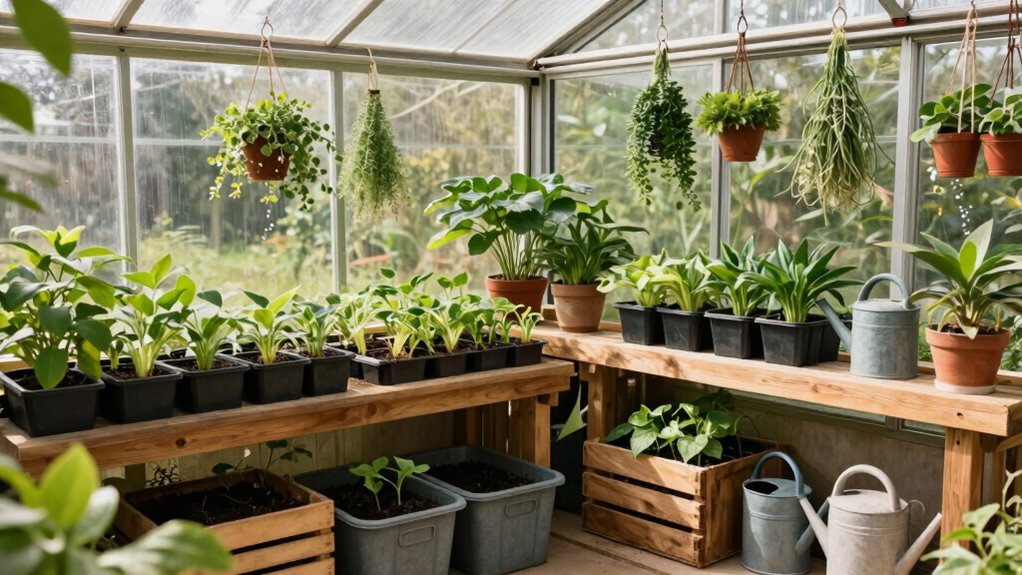
To build a low-waste greenhouse routine, start by composting vegetable scraps, leaves, and coffee grounds to create nutrient-rich soil, regularly turning the compost to speed up decomposition. Collect rainwater using gutters and rain barrels to water your plants naturally and sustainably. Combine these practices with energy-efficient tools and scheduled maintenance to keep your system eco-friendly. Continuing with these habits helps you develop a more sustainable approach to home gardening and waste reduction.

Get garden gear delivered free with Prime
- Fast, free delivery on millions of items
- Prime Video, Amazon Music and more included
- Member-only deals all year
Key Takeaways
- Implement composting to recycle vegetable scraps and garden waste into nutrient-rich soil for greenhouse plants.
- Collect and use rainwater to irrigate plants, reducing reliance on tap water and minimizing plastic waste.
- Regularly turn compost and maintain rainwater collection systems to ensure efficiency and sustainability.
- Incorporate eco-friendly tools and solar-powered watering systems to enhance energy efficiency.
- Establish a routine schedule for waste reduction activities to promote consistent sustainable gardening habits.
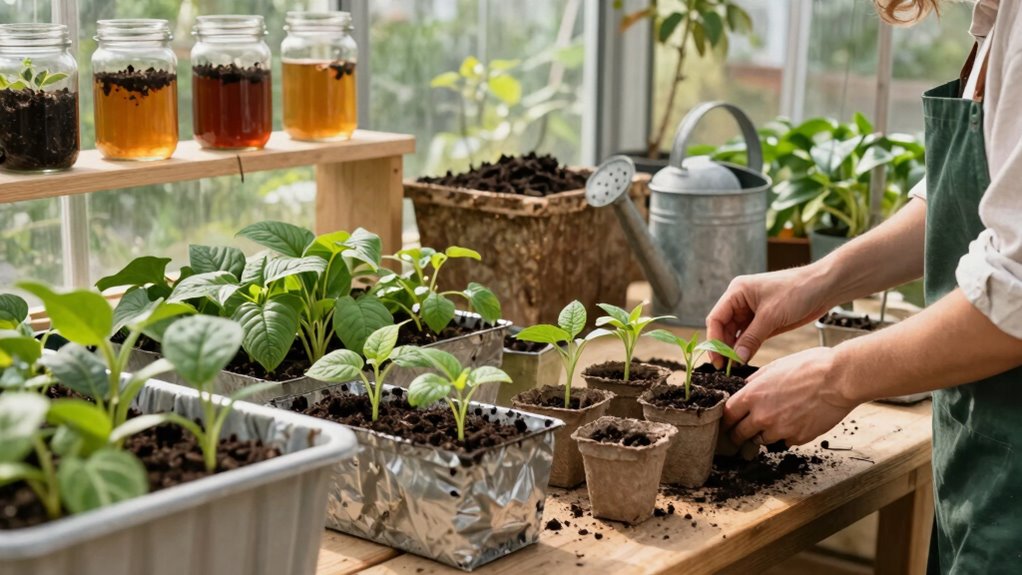
Have you ever wondered how to make your greenhouse more eco-friendly while reducing waste? Building a routine that minimizes your environmental impact starts with simple, effective strategies. One of the most impactful steps is integrating composting techniques into your daily gardening practices. Instead of tossing vegetable scraps, leaves, or coffee grounds into the trash, start composting them. Composting transforms organic waste into nutrient-rich soil that feeds your plants naturally, reducing landfill waste and decreasing the need for chemical fertilizers. To make this easy, set up a compost bin in a corner of your greenhouse or yard. Turn the compost regularly to aerate it and accelerate decomposition, and layer green materials (like vegetable scraps) with brown materials (like dried leaves or shredded paper). Over time, you’ll produce compost that improves soil health, creating a closed-loop cycle that minimizes waste and maximizes plant growth. Incorporating systems thinking into your routine can help you see how these practices work together as part of a sustainable system. Additionally, choosing eco-friendly materials for your compost bin can further enhance the environmental benefits of your setup. Utilizing composting as part of your routine also encourages mindfulness about waste reduction and resource reuse, reinforcing sustainable habits.
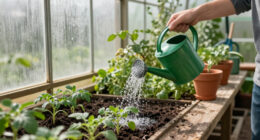
Another key technique is rainwater harvesting. Instead of relying solely on tap water, which can be resource-intensive, collect rainwater from your greenhouse roof. Install gutters and a rain barrel system to capture and store water for later use. Rainwater is free, naturally soft, and free of chemicals found in municipal water supplies, making it ideal for watering your plants. By using harvested rainwater, you cut down on plastic water bottles and reduce your overall water consumption. Plus, this practice helps prevent runoff that can carry pollutants into local waterways, contributing to a healthier environment. Make it a routine to check your rainwater collection system regularly, ensuring it’s clean and functioning properly. Use the stored water for your plants, and if you have excess, consider watering your garden beds or nearby plants outside your greenhouse. Establishing a consistent schedule for rainwater collection not only conserves resources but also simplifies your gardening routine.
Creating a closed-loop system by combining composting techniques with rainwater harvesting creates a sustainable cycle within your greenhouse routine. You generate less waste, reuse resources efficiently, and support healthy plant growth. To stay consistent, set a schedule for compost turning and rainwater collection. For example, you might check your compost bin weekly and empty the rain barrel after each rainfall. Additionally, researching environmentally friendly materials for your gardening tools and containers can further reduce your ecological footprint. Remember that incorporating energy-efficient practices, such as solar-powered watering systems, can also complement these routines and amplify your eco-friendly efforts. As you develop this routine, you’ll notice your greenhouse becoming more self-sufficient and environmentally friendly. These practices not only reduce waste but also foster a deeper connection with your gardening process, making your eco-friendly efforts more rewarding. By actively implementing composting techniques and harvesting rainwater, you’re taking meaningful steps toward a greener, more sustainable home greenhouse.
As an affiliate, we earn on qualifying purchases.
Frequently Asked Questions
How Can I Compost Greenhouse Waste Effectively?
To compost greenhouse waste effectively, start by choosing the right composting methods, like tumblers or traditional bins. Place your compost bin in a shady, well-drained spot to maintain ideal temperature and moisture. Regularly turn the compost to aerate it, balancing greens and browns like plant trimmings and dried leaves. This will help you create rich compost, reducing waste and enriching your greenhouse soil sustainably.
What Eco-Friendly Materials Are Best for Greenhouse Construction?
You’ll love how eco-friendly materials make your greenhouse both sustainable and stylish. Recycled plastics are a clever choice, turning waste into useful structure components, while bamboo framing offers a renewable, biodegradable alternative that’s surprisingly sturdy. Ironically, these green materials often outperform traditional options in durability and charm. By choosing recycled plastics and bamboo, you embrace eco-conscious design, reducing waste and supporting sustainability without sacrificing function or aesthetics.
How Do I Manage Pests Sustainably in My Greenhouse?
You manage pests sustainably by using integrated pest management (IPM) strategies, which combine monitoring, biological controls, and organic pest control methods. Regularly inspect your plants for signs of pests, introduce beneficial insects like ladybugs, and use organic sprays such as neem oil or insecticidal soap when needed. This approach minimizes chemical use, promotes plant health, and aligns with your goal of reducing waste and maintaining an eco-friendly greenhouse environment.
What Are the Best Water-Saving Techniques for a Greenhouse?
You can save water in your greenhouse by implementing drip irrigation systems, which deliver water directly to plant roots, reducing waste. Pair this with rainwater harvesting—collecting rainwater from your greenhouse roof—to create a sustainable supply. Think of it as hitting two birds with one stone: efficient watering and eco-friendly water use. These methods work hand in hand to keep your plants healthy while conserving precious water.
How Can I Recycle Old Greenhouse Supplies Safely?
You can recycle old greenhouse supplies safely by thoroughly cleaning and inspecting them before reuse. Consider greenhouse repurposing by transforming old frames into garden beds or compost bins. Use non-toxic paints or sealants to prevent chemical leaching. Upcycling materials like old plastic containers for watering or propagation is eco-friendly. Always check for damage or wear, ensuring safety and longevity, while reducing waste and giving your supplies a new purpose.
Conclusion
By establishing a greenhouse routine focused on reducing waste, you not only nurture healthier plants but also contribute to a more sustainable lifestyle. Did you know that households can cut food waste by up to 30% with simple composting and mindful practices? Implementing small daily habits—like harvesting only what you need and composting organic scraps—can make a big difference. Embrace these routine changes, and you’ll see your waste decrease while your garden flourishes.
Fall yard work Picks
leaf blowers
As an affiliate, we earn on qualifying purchases.