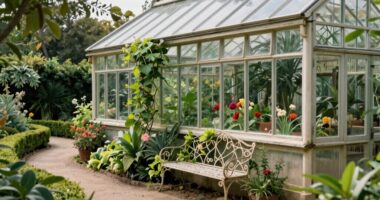
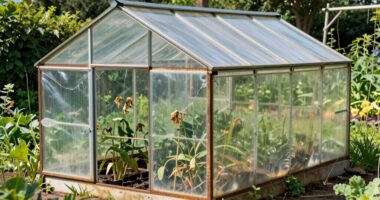
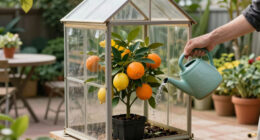
Understanding your climate zone is essential when designing a greenhouse. In cold areas, you’ll want high-quality insulation, double-glazed panels, and reliable heating systems. Warmer regions benefit from natural ventilation and reflective materials to keep temperatures stable. Variable climates require adaptable solutions like automated vents and renewable energy sources, such as solar panels. Recognizing these factors helps you choose the right materials, insulation, and ventilation, ensuring your greenhouse thrives year-round. Exploring these aspects further can help you optimize your setup.

Get garden gear delivered free — and shop member deals
- Fast, free delivery on millions of items
- Access to Prime Big Deal Days deals on October 6–7
- Prime Video, Amazon Music and more included
Key Takeaways
- Climate zones determine insulation, ventilation, and material choices to optimize energy efficiency and plant health.
- Design strategies vary: colder zones prioritize insulation and heating, while warmer zones focus on natural ventilation.
- Solar power integration depends on sun exposure, influencing renewable energy use and sustainability in greenhouse operations.
- Ventilation methods differ: natural airflow in warm regions and minimal ventilation in cold zones to retain heat.
- Material selection aligns with climate needs, using insulating panels for cold zones and reflective surfaces for warmer areas.

Understanding your climate zone is essential when designing a greenhouse because it directly influences the materials, insulation, and heating systems you’ll need. Different zones present unique challenges and opportunities, shaping how you plan for energy efficiency and plant health. For instance, in colder zones, you might prioritize high-quality insulation and reliable heating, while in warmer regions, maximizing natural ventilation becomes crucial. Recognizing these differences upfront helps you select the right strategies to create a thriving environment for your plants year-round.
One of the key considerations in colder or variable climates is harnessing renewable energy sources, especially solar power, to reduce your greenhouse’s operational costs. Solar panels can be integrated into your design to generate electricity that powers heating systems or supplemental lighting. When planning for solar power, consider the sun’s angle in your zone and the shading patterns from nearby structures or trees. Proper placement ensures maximum sunlight exposure, making your solar system more efficient. Using solar power not only decreases reliance on grid electricity but also aligns with sustainable gardening practices, helping you lower your carbon footprint.
Ventilation strategies play a vital role in maintaining optimal temperatures and humidity levels, regardless of your climate zone. In warm or humid areas, natural ventilation—like vents, exhaust fans, and open-ended sidewalls—allows hot air to escape and cooler air to circulate inside. This reduces heat buildup and prevents mold or mildew. Conversely, in colder zones, you might rely on minimal ventilation to retain heat but still need to ensure proper airflow to prevent stagnation and disease. Automated ventilation systems can be particularly beneficial, adjusting based on temperature and humidity sensors, thus maintaining consistent conditions without manual effort. Ventilation not only affects temperature regulation but also influences airflow, which is essential for plant transpiration and preventing pests.
Your choice of materials also depends heavily on your climate. In colder zones, double-glazed or insulated panels can substantially reduce heat loss. In warmer zones, lighter materials that reflect sunlight, such as white or reflective coatings, help keep temperatures down. Proper insulation paired with strategic ventilation creates a balanced environment, where plants can flourish without excessive energy input. Incorporating solar power into this setup can further offset the energy needed for heating and cooling, making your greenhouse more sustainable and cost-effective. Additionally, selecting projectors with high color accuracy ensures vibrant and true-to-life plant displays or educational content within your greenhouse space.
As an affiliate, we earn on qualifying purchases.
Frequently Asked Questions
How Do Climate Zones Affect Greenhouse Material Choices?
You should choose greenhouse materials based on your climate zone to guarantee proper climate adaptation and material durability. In colder zones, opt for insulated panels or double-layer glazing to retain heat, while in warmer areas, lightweight and UV-resistant materials help manage heat and sunlight. By selecting materials suited to your climate, you enhance your greenhouse’s efficiency and longevity, creating a stable environment for your plants regardless of external weather conditions.
Can Greenhouse Designs Be Customized for Microclimates?
Yes, you can modify greenhouse designs for microclimates, making up to 30% of your garden more productive. Microclimate adaptation allows you to create a personalized greenhouse tailored to your local conditions. By adjusting insulation, ventilation, and shading, you optimize plant growth and energy efficiency. This targeted approach ensures your greenhouse thrives, even in challenging microclimates, giving you better control and higher yields year-round.
What Are the Best Ventilation Strategies for Different Zones?
You should prioritize natural ventilation in moderate zones by opening vents or using sidewalls to promote airflow and reduce heat buildup. In hotter or more humid zones, mechanical exhaust systems work best to remove excess moisture and maintain ideal conditions. Combining both strategies can maximize airflow, prevent overheating, and guarantee your greenhouse stays healthy and productive regardless of the climate zone.
How Does Climate Variability Impact Greenhouse Insulation Needs?
Climate variability causes constant changes in temperature and weather, so your greenhouse’s insulation needs fluctuate accordingly. When the climate varies wildly, you’ll want versatile insulation that adapts to shifting conditions, ensuring ideal warmth and cooling. Proper insulation requirements depend on the degree of climate variability; high variability demands more robust, adaptable insulation to keep your plants protected and thriving, no matter what the weather throws your way.
Are There Specific Plants Suited to Particular Climate Zones?
Yes, you should select native plants and drought-tolerant species suited to your climate zone. These plants thrive best because they’re adapted to local conditions, reducing water needs and increasing resilience. When choosing plants, consider your specific climate zone’s temperature, humidity, and rainfall patterns. This targeted approach guarantees healthier growth, lowers maintenance, and maximizes your greenhouse’s success by aligning plant choices with your environment.
Conclusion
Just like the Phoenix rises from its ashes, your greenhouse can thrive by understanding your climate zone. When you tailor your design to your environment, you reveal the secret to sustainable growth and abundant harvests. Remember, nature’s wisdom guides us—embrace your climate’s unique traits, and your greenhouse will flourish. By aligning with nature’s cycle, you guarantee your garden’s resilience, turning challenges into opportunities, much like the mythic rebirth of the Phoenix.
Fall Picks
fall essentials
As an affiliate, we earn on qualifying purchases.