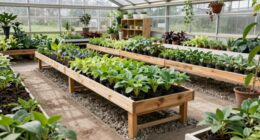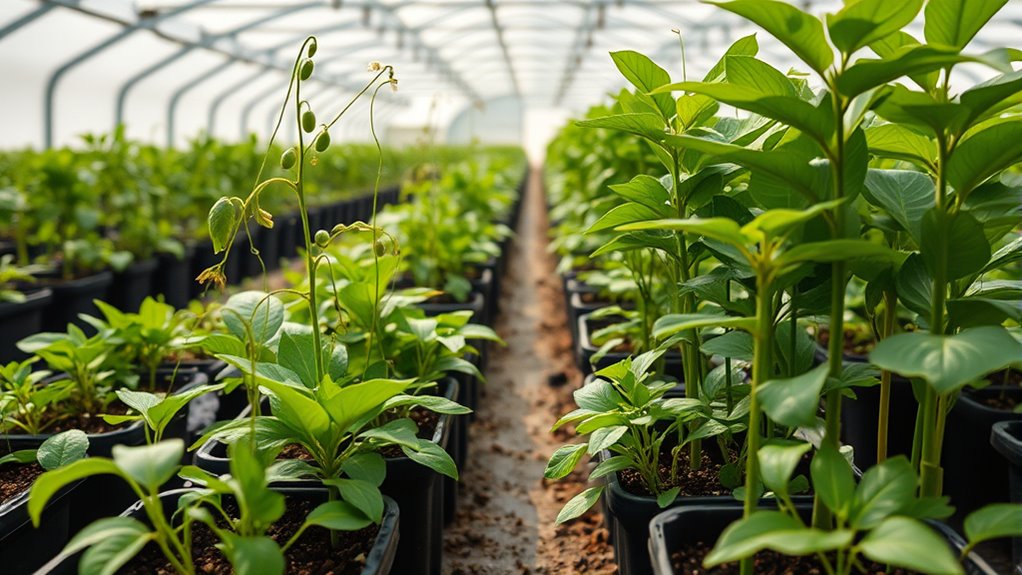

Growing plant-based proteins like beans and lentils in a greenhouse allows you to produce fresh, high-quality crops year-round, no matter the weather or season. With automated monitoring tools, you can quickly detect issues like temperature changes or soil moisture problems and act fast to prevent crop loss. This method also optimizes resources, reduces waste, and boosts efficiency. Keep exploring to discover how these strategies can help you grow successful, sustainable protein crops indoors.
Key Takeaways
- Greenhouses enable year-round cultivation of beans and lentils, independent of seasonal weather variations.
- Automated monitoring ensures optimal temperature and soil moisture, reducing crop stress and improving yield quality.
- Precise nutrient management supports healthy plant growth while minimizing environmental runoff and pollution.
- Environmental control systems increase operational efficiency, lowering labor costs and ensuring consistent crop production.
- Utilizing greenhouse technologies promotes sustainable, resource-efficient farming practices for plant-based protein crops.
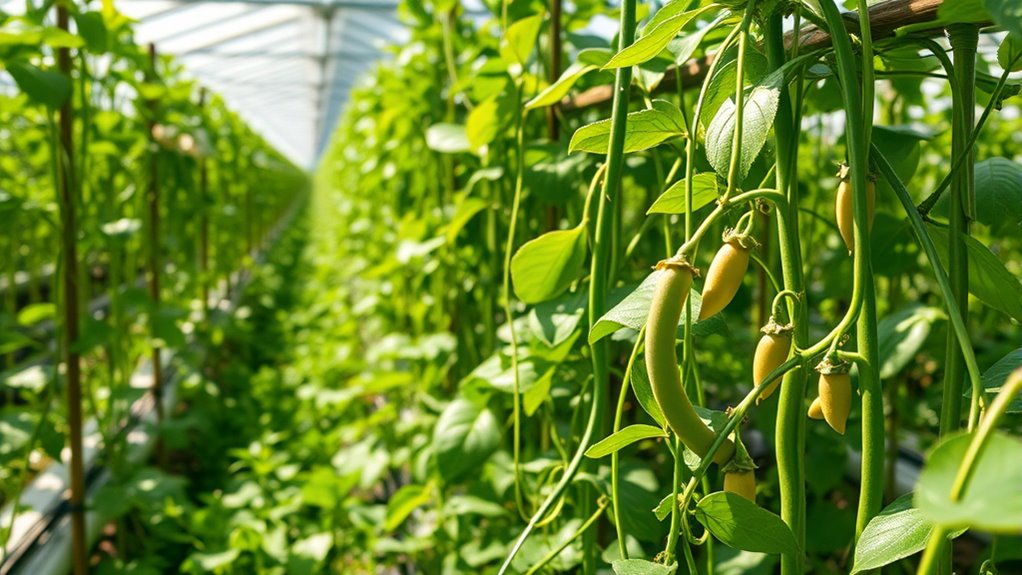
Growing plant-based proteins in a greenhouse gives you the advantage of year-round production. You’re no longer dependent on seasonal changes or unpredictable weather patterns, which often limit outdoor farming. Instead, you create an ideal environment where beans and lentils can grow consistently, increasing your overall efficiency and supply stability. Automated monitoring tools alert you to any issues, such as temperature spikes or soil moisture deficiencies, so you can intervene promptly. This level of control reduces waste and enhances the quality of your harvest, aligning with the principles of sustainable farming by making the most of resources. Additionally, understanding insurer’s financial stability can help ensure your investment in greenhouse technology remains secure over time. Furthermore, greenhouse automation allows you to implement precise nutrient management. You can deliver tailored fertilization schedules that meet the specific needs of your plant varieties, avoiding excesses that could harm the environment. This precision not only improves crop health but also reduces runoff and pollution, reinforcing your commitment to sustainability. As you refine your practices, you also minimize labor costs and manual oversight, making the entire process more efficient and economically viable. The integration of automation technology streamlines operations, freeing you to focus on optimizing crop quality and exploring innovative growing techniques.
Frequently Asked Questions
What Are the Latest Innovations in Greenhouse Technology for Protein Crops?
You should explore vertical farming systems that maximize space and yield for protein crops like beans and lentils. Automated climate control technology helps you maintain ideal temperature, humidity, and lighting, ensuring healthy growth. These innovations increase efficiency, reduce resource use, and improve crop quality. By integrating vertical farming and automation, you can boost protein production sustainably and year-round, making your greenhouse more productive and eco-friendly.
How Does Greenhouse Humidity Affect Bean and Lentil Growth?
Humidity control in your greenhouse is like maintaining a delicate balance beam; too high or low, and it can hinder bean and lentil growth. Proper humidity levels optimize plant transpiration, ensuring they absorb nutrients effectively. If humidity is too high, it can promote diseases, while too low causes stress and stunts growth. By managing humidity carefully, you promote healthy, robust plants and maximize your protein crop yields.
What Are Common Pests Specific to Greenhouse-Grown Legumes?
You should watch out for aphids, which are common pests in greenhouse-grown legumes. To manage them, use natural predators or insecticidal soap, ensuring effective aphid management. Additionally, prevent fungal diseases by controlling humidity and avoiding water on leaves. Regular inspection and good air circulation help keep pests and diseases at bay, promoting healthy bean and lentil growth in your greenhouse.
How Can Greenhouse Lighting Optimize Protein Yield?
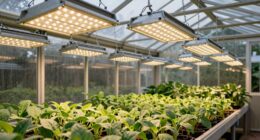
You can enhance protein yield in your greenhouse by adjusting LED spectrum and light intensity. Use full-spectrum LEDs to mimic natural sunlight, promoting healthy growth and protein development. Increase light intensity during key growth stages to boost photosynthesis and biomass production. Properly calibrated lighting guarantees your legumes receive the right signals for nutrient synthesis, leading to higher protein content and better crop quality. Consistent, targeted lighting maximizes your yield potential efficiently.
What Are the Cost Comparisons Between Greenhouse and Open-Field Cultivation?
Think of greenhouse cultivation as planting a seed of investment; it often costs more upfront, but yields faster and higher quality crops. Compared to open-field farming, greenhouses typically have higher initial setup and energy expenses, impacting economic feasibility. However, they reduce labor costs over time by enabling precise control, making them more cost-effective in the long run. Your decision depends on balancing these factors against your production goals.
Conclusion
As you nurture these beans and lentils in your greenhouse, remember the power you hold—like the farmers of old shaping a sustainable future. Your efforts plant the seeds of change, echoing the timeless story of growth and renewal. With each harvest, you become part of a larger movement, nourishing not just your table but the planet. Keep tending these life-giving plants; you’re helping write a brighter, greener chapter for generations to come.