
Solar dehydrators offer an eco-friendly and affordable way to preserve your greenhouse produce. By harnessing free sunlight, you can dry fruits, vegetables, and herbs without relying on electricity or artificial heat. These systems are simple, durable, and perfect for small-scale or off-grid settings. With proper airflow and temperature control, you can lock in nutrients and flavor. Keep exploring to discover how to set up and optimize your solar dehydration process effectively.
Key Takeaways
- Solar dehydrators efficiently preserve greenhouse produce by using renewable solar energy, extending shelf life without electricity.
- They maintain nutrient, flavor, and color quality better than other drying methods.
- Designed for gentle drying, suitable for herbs, fruits, vegetables, and chili peppers grown in greenhouses.
- Ideal for off-grid or rural settings, requiring minimal maintenance and no external power sources.
- Promote sustainable food preservation by reducing carbon footprint and conserving resources during drying.
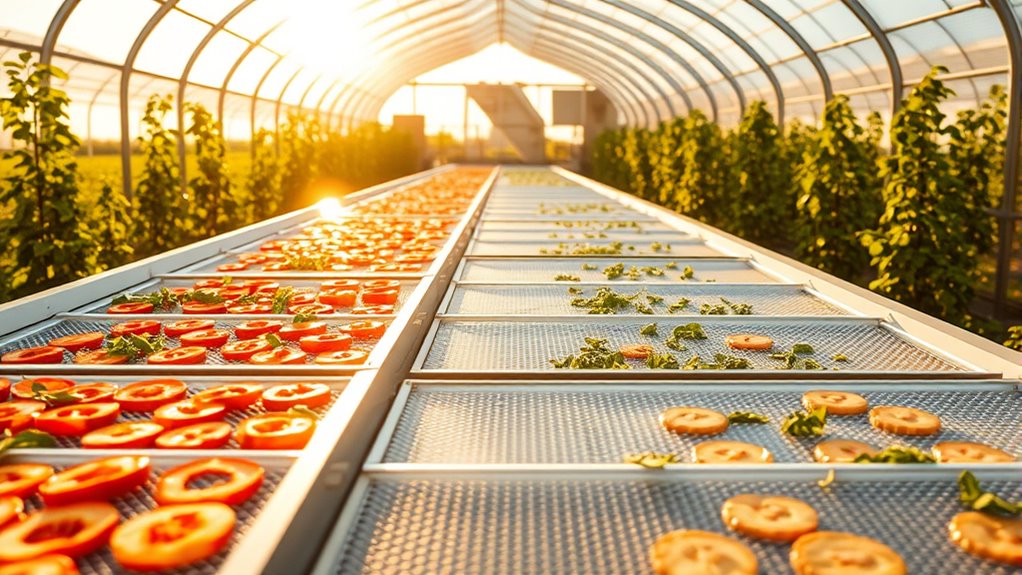
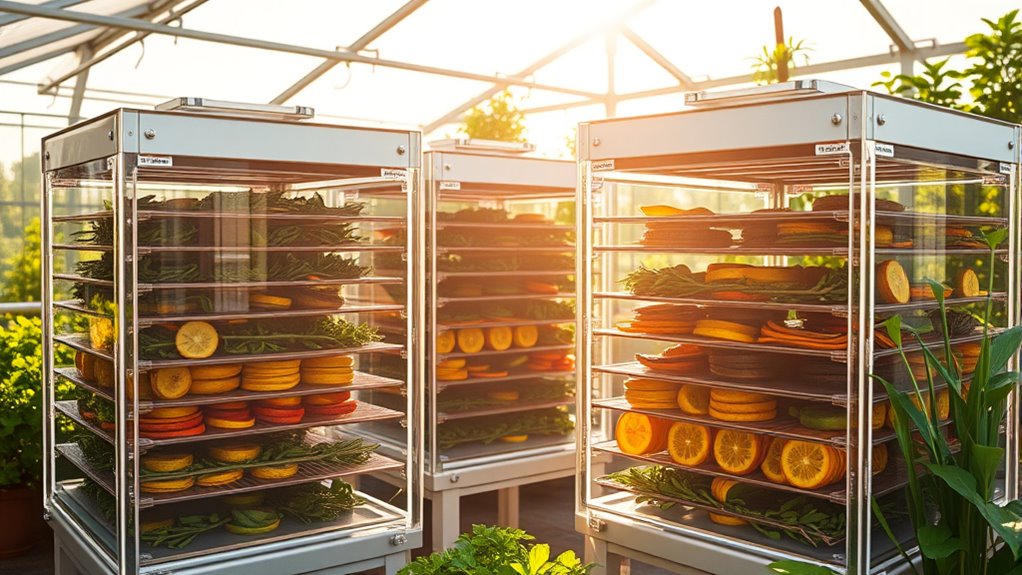
Solar dehydrators harness the power of the sun to dry fruits, vegetables, herbs, and other foods efficiently and sustainably. By using solar energy, you can transform fresh produce into long-lasting, nutrient-rich snacks without relying on electricity or artificial heat sources. This method of solar drying offers a practical way to preserve your harvest, especially if you’re growing your own food in a greenhouse or garden. Not only does solar dehydration extend the shelf life of your produce, but it also aligns with environmentally friendly practices, making it a smart choice for anyone committed to renewable preservation.
Harness the sun’s power to sustainably preserve your harvest with solar dehydration.
When you opt for a solar dehydrator, you’re harnessing renewable energy to dry your foods naturally. Unlike conventional dehydrators that require electrical power, solar dehydrators use the sun’s heat to evaporate moisture, reducing your carbon footprint. This process conserves resources and minimizes waste, ensuring that your preservation methods are eco-conscious. Plus, solar drying helps retain more of the original flavors, nutrients, and colors of your produce compared to other methods, making your preserved foods more appealing and nutritious.
Using a solar dehydrator is straightforward. You position your fruits or vegetables inside the device, which is designed to capture and concentrate sunlight while providing good airflow. As the sun shines, the dehydration process begins, gradually removing moisture and preventing mold or spoilage. Since you control the environment, you can set the temperature and airflow to suit different types of produce, ensuring even drying and ideal results. Solar dehydration is particularly effective for greenhouse produce because it allows you to process large quantities without extra energy costs, making it suitable for small-scale farmers or home gardeners.
Another advantage of solar drying is its versatility. You can dry a variety of foods, from herbs and chili peppers to sliced fruits and vegetable chips. The process is gentle enough to preserve delicate flavors and nutrients, making your preserved foods more flavorful and healthful. Additionally, since solar dehydrators are often constructed from simple, durable materials, they’re easy to build or purchase, and require minimal maintenance. This makes renewable preservation accessible and affordable, empowering you to take control of your food storage. Solar dehydration also offers a low-cost solution for sustainable food preservation, especially in off-grid or rural settings.
Frequently Asked Questions
Can Solar Dehydrators Be Used Indoors Safely?
Yes, you can use solar dehydrators indoors safely if you consider indoor safety and electrical concerns. Make sure the dehydrator is well-ventilated and placed in a dry, stable area. Check that any electrical components are properly insulated and away from moisture to prevent accidents. By following these precautions, you can enjoy the benefits of solar dehydration indoors without risking safety issues.
How Long Does Dehydration Typically Take in Solar Dehydrators?
You might be surprised how the dehydration duration in solar dehydrators varies, often depending on solar efficiency and the type of produce. Typically, it takes anywhere from 6 to 24 hours, with thinner slices drying faster. Keep in mind that sunny, warm days speed up the process, while humidity can slow it down. Monitoring your produce guarantees ideal dryness without over-drying, making solar dehydration both efficient and natural.
Are Solar Dehydrators Effective in Humid Climates?
Yes, solar dehydrators can be effective in humid climates, but humidity challenges may slow down dehydration and affect quality. You need to guarantee good airflow and possibly use desiccants or dehumidifiers to improve climate adaptability. Proper ventilation helps prevent mold and spoilage. With these adjustments, solar dehydrators can still work well, though they might take longer than in drier environments.
What Maintenance Is Required for Solar Dehydrators?
You need to regularly clean your dehydrator to guarantee it runs efficiently. This involves dehydrator cleaning of trays and vents to prevent mold and buildup. Additionally, solar panel upkeep is vital—check for dirt or debris that could block sunlight. Keep the solar panels free of dust and grime to maximize energy absorption. Regular maintenance will keep your solar dehydrator functioning at its best and prolong its lifespan.
Can Solar Dehydrators Preserve Nutrients Better Than Traditional Methods?
Like a gentle breeze preserves a summer day, solar dehydrators better retain nutrients and flavor than traditional methods. You’ll notice improved nutrient retention because they operate at lower temperatures, preventing nutrient loss. Plus, the slow, even drying process preserves the natural flavor of your produce. This eco-friendly approach guarantees your greenhouse harvest stays nutrient-rich and flavorful, giving you healthier, tastier dried foods without the degradation often caused by conventional dehydration techniques.
Conclusion
By using solar dehydrators, you can preserve your greenhouse produce naturally and efficiently. Did you know that solar dehydration can reduce energy costs by up to 80% compared to traditional methods? Not only does this save you money, but it also helps you enjoy fresh, healthy snacks year-round. So, embrace solar dehydration and make the most of your greenhouse bounty—it’s an eco-friendly, cost-effective way to extend your harvest’s lifespan.