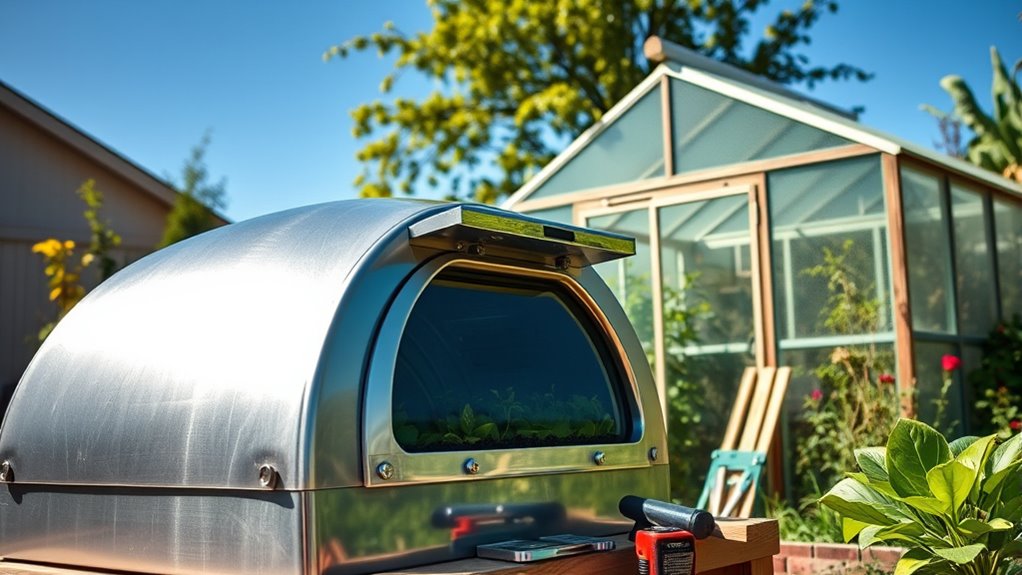

Building a solar oven next to your greenhouse boosts your growing season and lets you cook sustainably using renewable energy. Face the oven toward the sun, minimize shading, and use reflective surfaces like aluminum foil to maximize heat capture. Insulate thoroughly with materials like foam board or straw to retain heat, and seal all gaps for efficiency. To get the most from your setup and optimize performance, there’s more to contemplate—keep going to learn more.

Get garden gear delivered free with Prime
- Fast, free delivery on millions of items
- Prime Video, Amazon Music and more included
- Member-only deals all year
Key Takeaways
- Position the solar oven facing the sun and minimize shading from nearby structures or plants.
- Incorporate reflective surfaces like aluminum foil to maximize sunlight capture and heat reflection.
- Use durable, weatherproof materials for the exterior to withstand outdoor conditions and prolong lifespan.
- Insulate the oven with food-safe, effective materials to retain heat during cooking and overnight.
- Elevate the oven slightly off the ground and adjust angles throughout the day for optimal sunlight exposure.

Building a solar oven next to your greenhouse is an innovative way to maximize your gardening space and harness renewable energy. Not only does this setup allow you to extend your growing season, but it also opens up opportunities for solar cooking, reducing your reliance on traditional fuels. Designing an efficient solar oven involves careful consideration of materials and placement to guarantee optimal heat absorption and retention. One of the key components is oven insulation, which plays a critical role in maintaining high temperatures inside the oven during the day and evening hours.
When constructing your solar oven, start by choosing a reflective surface, such as reflective aluminum foil or painted white surfaces, to direct sunlight into the oven chamber. The interior should be insulated with materials like foam board, straw, or fiberglass to minimize heat loss. Proper insulation keeps the temperature stable, allowing you to cook or process foods efficiently even when the sun isn’t at its peak. To guarantee the oven works effectively, seal all gaps and joints tightly, preventing heat from escaping and enhancing overall performance.
Choose reflective surfaces and insulate well to maximize heat retention and efficiency.
Position your solar oven thoughtfully—ideally, it should face the sun for most of the day, with minimal shading from nearby objects or the greenhouse itself. Elevating the oven slightly off the ground can improve sun exposure and aid in heat circulation. As the sun moves, adjust the oven’s angle to maximize sunlight capture. This flexibility ensures consistent heating, which is essential for solar cooking tasks like boiling water, baking bread, or roasting vegetables.
Utilizing proper oven insulation not only conserves energy but also extends the cooking window, making your solar oven versatile for different foods and recipes. Insulation materials must be durable and safe for food contact if you’re planning to cook edible items. Remember that the outside of your oven can be covered with weatherproof materials to withstand outdoor conditions, ensuring longevity and minimal maintenance. Additionally, understanding the importance of high reflectivity in your oven’s design can significantly improve heat collection and efficiency.
As an affiliate, we earn on qualifying purchases.
Frequently Asked Questions
What Materials Are Best for Insulating the Solar Oven?
You should use materials like rigid foam board or mineral wool for insulating your solar oven, as they offer excellent insulation effectiveness and durability. These materials trap heat efficiently, keeping the oven hot longer, and withstand weathering over time. Avoid flimsy or porous options like fiberglass batting, which compromise insulation effectiveness and may degrade quickly. Prioritize sturdy, high-quality insulators to make certain your solar oven remains efficient and durable through many uses.
How Do I Prevent Overheating Inside the Solar Oven?
Imagine the gentle breeze flowing through your solar oven, preventing overheating. To do this, install effective ventilation strategies like adjustable vents or small exhaust openings. Keep a close eye on temperature monitoring with a thermometer to avoid excess heat buildup. This way, you maintain a steady, safe temperature inside, ensuring your oven works efficiently without risking damage or loss of heat, making your solar cooking experience smooth and enjoyable.
Can I Cook All Types of Food in a Solar Oven?
You can cook a wide variety of foods in a solar oven, thanks to its cooking versatility. However, for food safety, avoid high-risk items like raw meats unless you’re confident in proper temperatures and cooking times. Some delicate foods may not turn out well. Always use a thermometer to guarantee safety, and stick to recommended recipes for best results, keeping in mind the oven’s limitations.
What Is the Ideal Orientation for the Solar Oven Relative to the Greenhouse?
Ever wonder how to maximize your solar oven’s efficiency? You should position your solar oven with its reflective surface facing the sun, ideally aligned parallel to your greenhouse. Proper solar oven placement considers greenhouse alignment, ensuring maximum sunlight exposure throughout the day. Adjust the oven’s angle seasonally to catch the sun’s rays better. This setup helps harness more solar energy, making cooking easier and more sustainable for your greenhouse environment.
How Much Maintenance Does a Solar Oven Require Over Time?
A solar oven requires minimal maintenance over time. You should routinely clean the reflective surfaces to guarantee maximum efficiency and inspect components like hinges and seals for wear or damage. Checking for cracks or dirt buildup helps maintain performance. Usually, a quick wipe and visual inspection every few months suffice. This simple upkeep keeps your solar oven operating effectively, saving you time and ensuring consistent cooking or heating.
Conclusion
By building a solar oven next to your greenhouse, you harness renewable energy to cook and preserve your harvest efficiently. It’s an easy, sustainable addition that complements your gardening efforts. Imagine reducing your energy costs while enjoying fresh, homemade meals—who wouldn’t want that? So, why not take the plunge and create your solar oven today? It’s a simple step toward more eco-friendly gardening and a greener future.
Halloween Picks
halloween
As an affiliate, we earn on qualifying purchases.