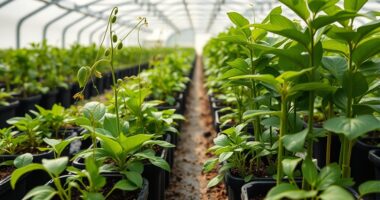
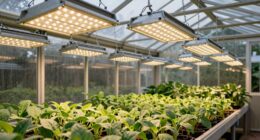
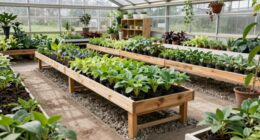
Using greenhouse projects, you can actively teach children about sustainability by involving them in hands-on activities like recycling, planting, and renewable energy models. These experiences help kids understand how their actions impact the environment and foster a sense of responsibility. By demonstrating concepts like waste reduction and renewable energy, you inspire curiosity and empower children to make eco-friendly choices. Keep exploring these approaches to help kids develop a caring, sustainable mindset.
Key Takeaways
- Engage children in hands-on activities like planting and recycling to foster environmental responsibility.
- Use models and interactive tools to demonstrate renewable energy concepts effectively.
- Connect actions such as waste separation and energy use to their environmental impact.
- Encourage curiosity about eco-friendly innovations and sustainable solutions.
- Promote collective responsibility through experiential learning that emphasizes the importance of small actions.
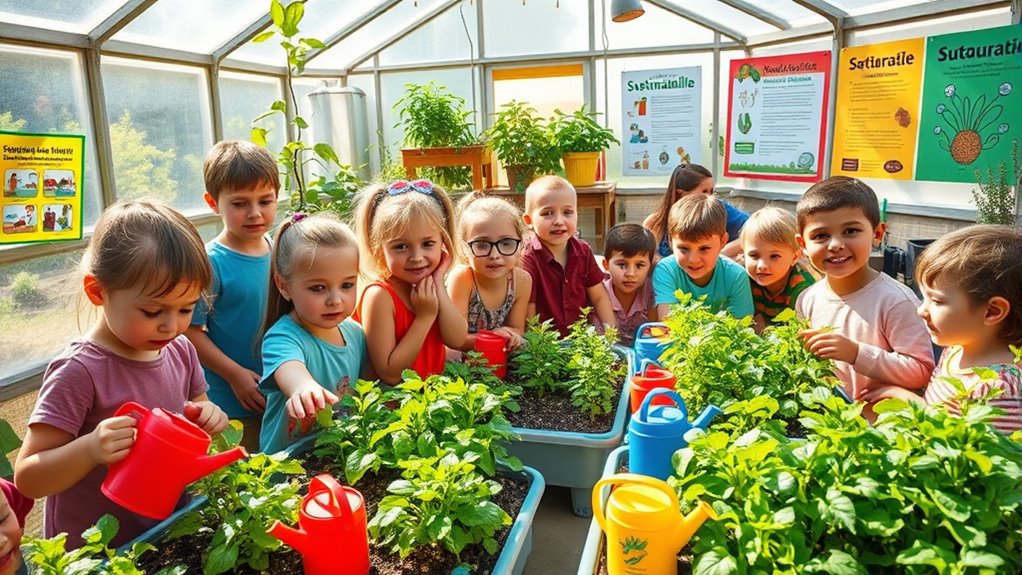
Have you ever wondered how to inspire the next generation to care for the planet? Teaching children about sustainability is more than just sharing facts; it’s about engaging them in meaningful actions that shape their mindset and habits. One powerful way to do this is through greenhouse projects, which provide hands-on experiences that highlight the importance of caring for the environment. When you introduce children to concepts like recycling habits and renewable energy within these projects, you give them practical tools to understand their impact and foster a sense of responsibility.
Start by encouraging children to develop recycling habits early on. Show them how separating waste effectively reduces landfill overflow and conserves natural resources. Use simple, relatable examples—like turning used jars into plant holders or creating art from recycled materials—to demonstrate that their small actions can make a difference. When kids see how recycling helps reduce pollution and saves energy, they become more motivated to adopt these habits in their daily lives. Reinforcing the idea that waste isn’t just trash but a resource that can be reused teaches them the value of mindful consumption and waste reduction.
Encourage kids to recycle with simple, creative projects that show waste can be reused and make a real difference.
In addition to recycling, introducing renewable energy concepts during greenhouse projects helps children grasp the importance of clean power sources. You might set up small solar-powered devices or wind turbine models, allowing kids to see how sunlight and wind can generate electricity. Explain how renewable energy reduces greenhouse gas emissions and lessens our reliance on fossil fuels, emphasizing that their choices can influence the planet’s future. Making these systems interactive keeps children engaged and helps them understand that sustainable energy isn’t just a distant idea but a practical, accessible solution. When kids learn that renewable energy can power homes, schools, and even transportation, it sparks their imagination about innovative ways to protect the environment.
These greenhouse projects also serve as an opportunity to teach children about the broader impact of their actions. When they see how recycling and renewable energy work together to reduce carbon footprints, they realize that sustainability isn’t a solitary effort but a collective one. By involving them in planting, composting, and energy-saving activities, you help them see that every small step counts. This experiential learning fosters a sense of empowerment and encourages them to become active participants in creating a healthier planet.
Ultimately, teaching children about sustainability through greenhouse projects makes the concepts concrete and relatable. When you connect their everyday actions to larger environmental issues, you cultivate curiosity, responsibility, and hope. By nurturing these values early, you help ensure that the next generation will grow up caring deeply about the planet and committed to making positive changes through recycling habits and renewable energy solutions. Incorporating knowledge about eco-friendly innovations, like renewable energy technologies, further enriches their understanding of sustainable development.
Frequently Asked Questions
How Can Parents Encourage Sustainable Habits at Home?
You can encourage sustainable habits at home by modeling good practices, like recycling habits and energy conservation. Explain why these actions matter and involve your children in everyday tasks, such as sorting recyclables or turning off lights when not in use. Make sustainability fun by setting goals and celebrating progress. Your active participation helps your children understand the importance of caring for the environment and develops their lifelong eco-friendly habits.
What Are Simple Greenhouse Projects for Preschoolers?
You can start simple greenhouse projects for preschoolers by helping them plant seeds in transparent containers to observe plant growth. Use recycled materials like plastic bottles or egg cartons to create mini greenhouses, teaching them about recycling crafts. Encourage kids to water their plants and watch them grow, fostering a sense of responsibility and curiosity about sustainability. These projects make learning fun and hands-on, instilling eco-friendly habits early on.
How Do Greenhouse Projects Impact Children’s Environmental Awareness?
Greenhouse projects massively boost your child’s environmental awareness, transforming them into eco superheroes! You’ll see their eco literacy development skyrocket as they understand how plants grow and how their actions impact the planet. These hands-on experiences foster a deep sense of environmental responsibility, making kids realize they’re essential stewards of Earth. By engaging in greenhouses, you’re planting lifelong values that shape them into conscious, caring custodians of our environment.
Are There Age-Appropriate Sustainability Activities for All Children?
Yes, there are age-appropriate sustainability activities for all children. For younger kids, you can teach simple recycling tips like sorting waste or making crafts from recycled materials. Older children can explore renewable resources by planting trees or creating energy-saving projects. These activities engage children actively, helping them understand environmental importance and develop sustainable habits early on, fostering lifelong responsibility for the planet.
How Can Schools Integrate Greenhouse Projects Into Science Curriculum?
You can seamlessly integrate greenhouse projects into your science curriculum by starting with urban agriculture basics and composting techniques. Imagine students discovering how plants grow in confined spaces, then applying composting methods to nourish them. This hands-on approach sparks curiosity and connects theoretical lessons to real-world sustainability. By designing experiments around urban farming, you encourage active learning and help students see the impact of eco-friendly practices firsthand.
Conclusion
By involving children in greenhouse projects, you plant seeds of awareness that will grow into a lush forest of sustainability. As they nurture plants and witness nature’s delicate balance, their understanding blossoms like a vibrant garden. Remember, you’re guiding young minds to become the roots of change, helping them cultivate a future where Earth’s health flourishes. Together, you’re lighting a spark that can ignite a brighter, greener tomorrow—one child, one plant at a time.