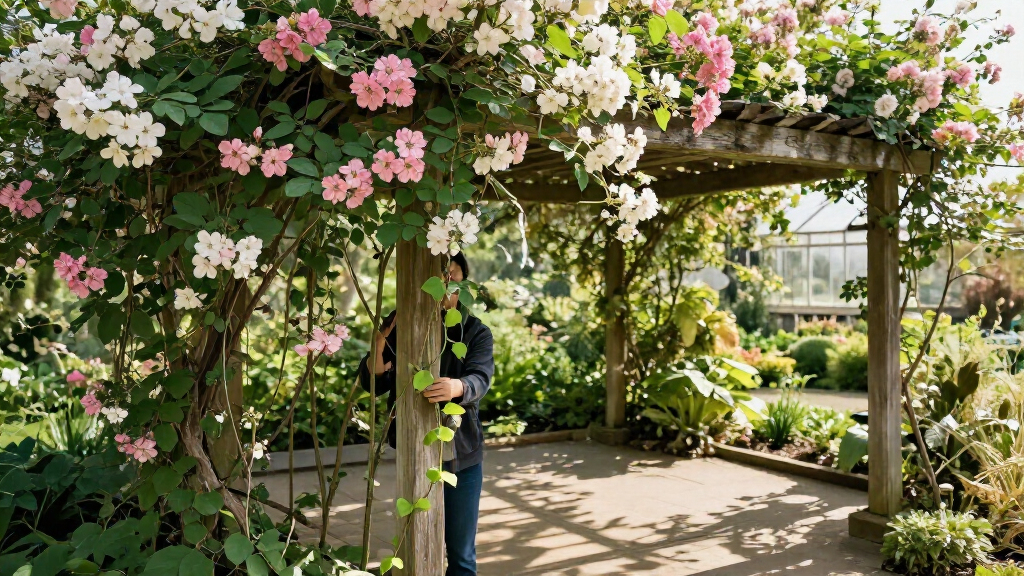
The best flowering vines overall in this lineup are the two-year-old Blue Moon Wisteria for a substantial perennial plant, while Confederate Jasmine stands out for evergreen foliage and fragrance. For a more beginner-friendly start from seed, Cardinal Climber offers a vigorous annual option, and Major Wheeler Honeysuckle suits gardeners seeking a perennial native-style climber. The main tradeoffs are seeds versus established plants, annual color versus long-term growth, and showy blooms versus space and pruning demands. Your climate, support structure, and appetite for maintenance matter as much as flower color. Read on for the full breakdown and guidance on matching each vine to its growing space.

Get garden gear delivered free with Prime
- Fast, free delivery on millions of items
- Prime Video, Amazon Music and more included
- Member-only deals all year
Complete the kit


Key Takeaways
- Plant format changes the wait: established vines such as Blue Moon Wisteria and the container-grown clematis give buyers a head start, while seed picks generally require more patience and early care.
- Annuals offer fast seasonal color, not permanence: Moonflower, morning glory, and Cardinal Climber can cover a support in one growing season, but they do not fill the same long-term role as perennial honeysuckle or clematis.
- Vigor is a tradeoff: Sweet Autumn Clematis and wisteria can make a strong display, but their growth calls for sturdy supports, room, and regular pruning.
- Flower timing can shape the garden: Moonflower is suited to evening fragrance, while most options here are chosen for daytime blooms or foliage and flowers across the growing season.
- The best fit depends on climate and placement: Mandevilla is a warm-weather choice often grown as a seasonal or container vine, while evergreen jasmine and Carolina Jasmine make more sense where local winter conditions suit them.
| Perfect Plants Confederate Jasmine Live Plant, 1 Gallon |  | Best for Fragrant Evergreen Coverage | Plant type: Jasmine vine | Container size: 1 gallon | Mature height: 10–12 ft | VIEW LATEST PRICE | See Our Full Breakdown |
| White Moonflower Vine Seeds, Fragrant Night-Blooming Climbing Vine |  | Best for Night-Blooming Fragrance | Seed count: 20+ | Flower color: White | Maximum vine height: Up to 15 ft | VIEW LATEST PRICE | See Our Full Breakdown |
| 50+ Dark Red Morning Glory Climbing Vine Seeds |  | Best for Fast Seasonal Color | Seed count: 50+ | Plant type: Annual | Mature size: 6–10 ft tall, 3–6 ft wide | VIEW LATEST PRICE | See Our Full Breakdown |
| 2 Red Coral Honeysuckle Live Plants, 5–9 Inches Tall |  | Best Live-Plant Starter Pair | Plant type: Red coral honeysuckle flowering vine | Quantity: 2 live plants | Plant height: Approximately 5–9 inches each | VIEW LATEST PRICE | See Our Full Breakdown |
| Japanese Wisteria Floribunda Seeds, Purple, 10 Pack |  | Best for Dramatic Perennial Potential | Plant type: Japanese wisteria (Floribunda) | Quantity: 10 seeds | Flower color: Purple | VIEW LATEST PRICE | See Our Full Breakdown |
| Blue Moon Wisteria Vine, 2-Year-Old Plant |  | Best for Repeat Summer Blooms | Scientific name: Wisteria macrostachya ‘Blue Moon’ | Plant age: 2 years | Flower color: Lilac-blue | VIEW LATEST PRICE | See Our Full Breakdown |
| Sweet Autumn Clematis (Clematis paniculata), White Flowers, 8-Inch Container |  | Best for Fragrant Fall Coverage | Plant type: Perennial vine | Flower color: White | Bloom period: September through October | VIEW LATEST PRICE | See Our Full Breakdown |
| Carolina Jasmine Evergreen Vine, 2-Pack |  | Best for Evergreen Coverage | Scientific name: Gelsemium sempervirens | Plant type: Evergreen vine | Blooming period: Summer | VIEW LATEST PRICE | See Our Full Breakdown |
| Seed Needs Cardinal Climber Flower Seeds, 2 Packs (200 Seeds) |  | Best Fast-Growing Annual | Botanical name: Ipomoea x multifida | Plant type: Annual flowering vine | Flower color and size: Red; about 1.5 inches | VIEW LATEST PRICE | See Our Full Breakdown |
| Marde Ross & Company Heavenly Blue Morning Glory Seeds, 250 Count |  | Best for Large Blue Flowers | Seed count: 250 | Flower color: Blue | Flower size: 4–5 inches | VIEW LATEST PRICE | See Our Full Breakdown |
| 2 Pink Mandevilla Vine Live Plants, 4–7 Inches Tall |  | Best for Pink Blooms in Warm Climates | Plant type: Mandevilla flowering vine | Quantity: 2 live plants | Plant height: 4–7 inches | VIEW LATEST PRICE | See Our Full Breakdown |
| Perennial Farm Clematis ‘Jackmanii’ Live Vine, 4-Quart Container |  | Best for Large, Long-Season Blooms | Plant type: Flowering vine | Flower color: Deep purple | Flower size: 5–6 inches | VIEW LATEST PRICE | See Our Full Breakdown |
| Major Wheeler Honeysuckle Live Plant in 2.5-Inch Pot |  | Best for Hardy, Support-Trained Climbing | Plant type: Honeysuckle (Lonicera) | Quantity: 1 live plant | Pot size: 2.5 inches | VIEW LATEST PRICE | See Our Full Breakdown |
| flowering vine | Plant type | Sunlight | Flower color |
|---|---|---|---|
| Perfect Plants Confederate Jas | Jasmine vine | Full sun to partial shade | — |
| White Moonflower Vine Seeds | — | Full sun | White |
| 50+ Dark Red Morning Glory Cli | Annual | — | — |
| 2 Red Coral Honeysuckle Live P | Red coral honeysuckle flowering vine | Full sun to partial shade | — |
| Japanese Wisteria Floribunda S | Japanese wisteria (Floribunda) | Full sun | Purple |
| Blue Moon Wisteria Vine | — | Full sun to partial shade | Lilac-blue |
| Sweet Autumn Clematis | Perennial vine | — | White |
| Carolina Jasmine Evergreen Vin | Evergreen vine | — | — |
| Seed Needs Cardinal Climber Fl | Annual flowering vine | — | — |
| Marde Ross & Company Heavenly | — | Full sun or part shade | Blue |
| 2 Pink Mandevilla Vine Live Pl | Mandevilla flowering vine | Full sun | Pink |
| Perennial Farm Clematis ‘Jackm | Flowering vine | Partial sun | Deep purple |
| Major Wheeler Honeysuckle Live | Honeysuckle (Lonicera) | Full sun to partial shade | — |
More Details on Our Top Picks
Perfect Plants Confederate Jasmine Live Plant, 1 Gallon
For buyers who want a flowering vine that can keep its foliage through the year, this 1-gallon Confederate jasmine is a more established starting point than the seed-grown moonflower or morning glory options. Its pale, pinwheel-shaped flowers are fragrant, and the vine can be trained across a fence or trellis as it grows to a listed 10–12 feet tall. Full sun to partial shade gives it more placement flexibility than the full-sun Japanese wisteria seeds. The tradeoff is uncertainty: the listing gives conflicting hardiness information, with one spec naming Zone 4 and another stating Zones 7–11, so I would verify local suitability before ordering. It also does not ship to California or Arizona. Choose it for evergreen structure and scent, not if you need clear climate guidance or live in a restricted state.
Pros:- Fragrant pale flowers add scent as well as color
- Evergreen foliage can provide climbing greenery beyond bloom time
- Full sun to partial shade allows more placement options than full-sun-only picks
- Live 1-gallon plant offers a head start compared with starting a vine from seed
Cons:- Hardiness information conflicts between Zone 4 and Zones 7–11
- Does not ship to California or Arizona
- Needs a fence, trellis, or other support to use its climbing growth
Best for: Gardeners seeking a fragrant, evergreen climbing vine for a fence or trellis who can confirm it suits their local climate.
Not ideal for: Buyers in California or Arizona, or gardeners who need reliable hardiness-zone information before selecting a plant.
- Plant type:Jasmine vine
- Container size:1 gallon
- Mature height:10–12 ft
- Mature width:4 ft
- Sunlight:Full sun to partial shade
- Blooming period:Spring and summer
- Soil and moisture:Loam; moderate watering
- Shipping restriction:Does not ship to California or Arizona
Our verdict“Choose this live jasmine for fragrant evergreen coverage if its shipping and climate restrictions work for your garden.”
White Moonflower Vine Seeds, Fragrant Night-Blooming Climbing Vine
This moonflower is the standout for gardeners who want blooms after dark: its white flowers open at night and are described as fragrant, giving it a different appeal from the spring-flowering Japanese wisteria. The vine can reach up to 15 feet, so it can cover a trellis or other tall support, but this is a seed-starting project rather than an instant screen like the live Confederate jasmine. Before planting, the seeds need to be scored and soaked, then sown half an inch deep. It suits warm-season gardens in Zones 8–11; elsewhere, it is listed as an annual, and it cannot tolerate freezing. I would pick it for summer evening interest, but skip it if you want an easy, low-preparation planting or a reliably perennial vine in a cold climate.
Pros:- Fragrant white flowers bloom at night
- Vine can climb up to 15 feet
- Can be grown as an annual outside Zones 8–11
- Seeds are listed as GMO-free
Cons:- Seeds must be scored and soaked before planting
- Cannot tolerate freezing
- Requires full sun and a climbing support for its tall growth
Best for: Gardeners in warm climates who enjoy evening garden time and are willing to prepare seeds before sowing.
Not ideal for: Buyers seeking a ready-to-plant live vine, a frost-tolerant perennial, or a seed variety that needs no preparation.
- Seed count:20+
- Flower color:White
- Maximum vine height:Up to 15 ft
- Blooming period:Summer
- Sunlight:Full sun
- Hardiness:Zones 8–11; annual elsewhere
- Seed preparation:Score and soak; plant 1/2 inch deep
- Watering:Moderate
Our verdict“Choose moonflower seeds for fragrant summer evenings if you have warmth, sun, and patience for seed preparation.”
50+ Dark Red Morning Glory Climbing Vine Seeds
These morning glory seeds make the most sense for gardeners who want a seasonal climber and a substantial seed packet: the listing includes 50+ seeds and describes vines reaching 6–10 feet, with flowers from summer into fall. That longer stated bloom window contrasts with the summer-only moonflower listing, though moonflower has the more distinctive night-blooming, fragrant display. Morning glory is listed for Zones 1–11, but as an annual, so a broad zone range does not mean it will return year after year. There is also a color discrepancy: the title says dark red, while the description lists purple, pink, blue, and white. I would choose this for trellises and cottage-garden color when flexibility matters more than a specific shade; buyers set on red blooms should confirm what to expect.
Pros:- Packet lists 50+ seeds for planting across several supports or garden areas
- Summer-to-fall bloom period extends seasonal color
- Climbing habit suits trellises and cottage gardens
- Seeds are listed as non-GMO
Cons:- Flower color is inconsistent between the dark-red title and the description’s color range
- Needs full sun and regular watering
- Listed as an annual rather than a returning perennial
Best for: Gardeners seeking an annual trellis vine with a long summer-to-fall display and enough seeds for multiple planting spots.
Not ideal for: Buyers who need a confirmed dark-red flower color, want fragrant night blooms, or cannot provide full sun and regular watering.
- Seed count:50+
- Plant type:Annual
- Mature size:6–10 ft tall, 3–6 ft wide
- Sun exposure:Full sun, 6–8 hours daily
- Bloom time:Summer to fall
- Flower colors listed:Purple, pink, blue, and white; title says dark red
- Soil:Moist, well-draining; sandy soil also listed
- Watering:Regular
Our verdict“Pick these morning glories for plentiful seasonal climbing color, but not if a dependable dark-red bloom is your priority.”
2 Red Coral Honeysuckle Live Plants, 5–9 Inches Tall
This pair of live coral honeysuckle starters is a practical choice for buyers who want two plants without beginning with seeds. At roughly 5–9 inches tall, they are still small, so expect to give them time, regular water, and support before they fill a trellis. Compared with the single 1-gallon Confederate jasmine, this set gives you two planting positions, while the jasmine listing offers clearer height and width expectations and fragrant pale flowers. Coral honeysuckle can go in a garden or container and accepts full sun to partial shade, which helps with placement. The main drawback is conflicting hardiness guidance: the description says Zones 5–9, while the specs say Zones 8–11. I would buy only after checking the seller’s guidance for your region, and skip it if you need a mature vine right away.
Pros:- Includes two live potted starter plants
- Suitable for outdoor gardens and containers
- Full sun to partial shade gives placement flexibility
- Climbing vines can be trained on trellises and other supports
Cons:- Plants are only about 5–9 inches tall and need time to establish
- Hardiness information conflicts between Zones 5–9 and Zones 8–11
- Needs regular watering and well-draining soil
Best for: Gardeners who want two small live climbing vines to train in containers or outdoor beds and can provide regular care as they establish.
Not ideal for: Buyers who need an established, fast-covering vine or require consistent hardiness-zone information before planting.
- Plant type:Red coral honeysuckle flowering vine
- Quantity:2 live plants
- Plant height:Approximately 5–9 inches each
- Growing locations:Outdoor gardens, containers, trellises, and landscapes
- Sunlight:Full sun to partial shade
- Soil:Well-draining
- Watering:Regular; moderate moisture
- Hardiness information:Conflicting: Zones 5–9 in description; Zones 8–11 in specs
Our verdict“Choose this pair if you want two trainable live starters and can resolve the hardiness-zone conflict before planting.”
Japanese Wisteria Floribunda Seeds, Purple, 10 Pack
Japanese wisteria is the ambitious choice in this group: the listing describes a perennial climbing vine with fragrant, cascading purple flowers and a possible height of 29 feet. That scale offers more long-term vertical impact than the 6–10-foot morning glory, but these are seeds, not an established vine, so the listed mature size is a future possibility rather than immediate coverage. The spring bloom period also differs from the moonflower’s summer, night-opening display. This pack contains 10 seeds and calls for full sun, well-drained soil, and regular watering. I would reserve it for gardeners prepared to support a large, persistent climber and wait for it to develop; a small garden or anyone seeking quick flowers is better served by a smaller seasonal vine.
Pros:- Perennial climbing habit can provide lasting garden structure
- Fragrant purple flowers are described as cascading
- Listed height of 29 feet offers substantial vertical reach
- Pack includes 10 seeds and is listed as GMO-free
Cons:- Starting from seed means the listed mature size is not immediate coverage
- A 29-foot potential height requires ample space and strong support
- Requires full sun, well-drained soil, and regular watering
Best for: Patient gardeners with full sun, well-drained soil, and ample room for a large perennial vine to climb.
Not ideal for: Small-space gardeners, seed-starting novices seeking quick results, or anyone unable to provide regular watering and substantial support.
- Plant type:Japanese wisteria (Floribunda)
- Quantity:10 seeds
- Flower color:Purple
- Expected plant height:29 ft
- Blooming period:Spring
- Sunlight:Full sun
- Soil:Average soil with good drainage
- Moisture:Regular watering
Our verdict“Choose Japanese wisteria seeds for a patient, long-term project with room for a large flowering climber.”
Blue Moon Wisteria Vine, 2-Year-Old Plant
Blue Moon wisteria is the standout for gardeners who want a substantial woody vine and more than one chance at a summer display. Its fragrant lilac-blue flower clusters can reach a foot long, and blooms may repeat up to three times—unlike Sweet Autumn Clematis, which concentrates its fragrant flowers in fall. The two-year-old plant is a live-plant option rather than a seed-starting project, though it will still need time and room to establish.
That scale comes with a real commitment: it can reach 25 feet, so a sturdy support and regular space management matter. It also flowers best with ample sunlight, making it less flexible than the shade-tolerant Carolina jasmine. I’d choose it for a strong, seasonal focal point, not for a small trellis or a low-effort container spot.
Pros:- Fragrant lilac-blue flower clusters can grow up to a foot long
- May bloom up to three times during summer
- Hardy across USDA zones 4–9
- Attracts hummingbirds and butterflies
Cons:- Vigorous growth calls for sturdy support and room to manage the vine
- Ample sunlight is needed for the strongest flowering
Best for: Gardeners in zones 4–9 with a sturdy arbor or trellis who want fragrant, potentially repeat summer blooms from a long-lived vine.
Not ideal for: People with small gardens, lightweight supports, or mostly shaded planting areas; its vigorous growth and sunlight needs can be hard to accommodate.
- Scientific name:Wisteria macrostachya ‘Blue Moon’
- Plant age:2 years
- Flower color:Lilac-blue
- Flowering period:Summer; may bloom up to 3 times
- Flower cluster length:Up to 1 foot
- Mature height:About 25 feet
- Sunlight:Full sun to partial shade
- USDA hardiness zone:4–9
- Soil and moisture:Loam; moderate watering
Our verdict“Choose Blue Moon wisteria if you have room and strong support for a fragrant, cold-hardy vine with the possibility of repeated summer blooms.”
Sweet Autumn Clematis (Clematis paniculata), White Flowers, 8-Inch Container
Sweet Autumn Clematis earns its place by extending the flowering season: its fragrant white blooms arrive from September through October, when Blue Moon wisteria is listed for summer flowering. The flowers are smaller, at about one inch, but appear in the season-specific window that makes this a useful choice for gardeners seeking late color rather than large, showy clusters. It arrives rooted in an 8-inch container, so buyers start with a plant instead of waiting for seeds to germinate.
Its stated low-maintenance character and sun-to-part-shade range suit a less hands-on planting plan. The tradeoff is incomplete sizing information: mature height and width aren’t provided, which makes placement and support planning less certain than with the 25-foot wisteria. Evergreen behavior may also vary by climate. I’d favor this clematis for a fall-focused garden, not for buyers who need predictable dimensions or year-round foliage.
Pros:- Fragrant white flowers bloom from September through October
- Rooted plant arrives in an 8-inch container
- Perennial vine suited to repeat garden use
- Grows in full sun to part shade
Cons:- Mature height and width are not specified
- May remain evergreen only in milder climates
Best for: Gardeners in zones 4–8 who want a rooted perennial vine with fragrant white flowers in early fall and can accommodate uncertain mature dimensions.
Not ideal for: Buyers who need a known final height and width, or those in colder areas expecting evergreen foliage through winter.
- Plant type:Perennial vine
- Flower color:White
- Bloom period:September through October
- Flower size:About 1 inch
- Sunlight exposure:Full sun to part shade
- USDA hardiness zone:4–8
- Soil type:Sandy soil
- Container size:8 inches
- Item weight:5 pounds
Our verdict“Pick Sweet Autumn Clematis for fragrant late-season flowers from a rooted plant, provided you can plan around unspecified mature size.”
Carolina Jasmine Evergreen Vine, 2-Pack
Carolina jasmine is the foliage-first pick here: its evergreen growth can provide coverage beyond the summer flowering window, while its bright yellow blooms add seasonal color. That gives it a different job from Cardinal Climber, whose red flowers and leafy growth are annual and fade in cooler weather. A two-plant pack also gives buyers a starting point for covering more than one section of a wall, fence, or trellis.
The listed range of full sun to shade offers flexibility, but the plants still call for nutrient-rich, moist soil and moderate watering. They arrive in small biodegradable 2-by-2-inch containers, so prompt unpacking and attentive establishment are part of the plan. One specification lists an expected height of just one foot, leaving the mature climbing scale unclear. I’d choose this for year-round foliage potential, but not if a known mature height is a must.
Pros:- Evergreen foliage offers coverage outside the bloom season
- Bright yellow summer flowers add seasonal color
- Two plants are included
- Listed for conditions from full sun to shade
Cons:- Small 2-by-2-inch containers mean plants need careful establishment
- Requires moist, nutrient-rich soil and moderate watering
- Listed expected height of one foot does not clarify mature climbing size
Best for: Gardeners seeking two small evergreen vines for walls, fences, or trellises, with the time to establish them in moist, nutrient-rich soil.
Not ideal for: Buyers who need a clearly stated mature climbing height or want a large, established plant ready to cover a structure quickly.
- Scientific name:Gelsemium sempervirens
- Plant type:Evergreen vine
- Blooming period:Summer
- Sunlight exposure:Full sun to shade
- USDA hardiness zone:3–10
- Expected plant height:1 foot (listed)
- Soil and moisture:Nutrient-rich, moist soil; moderate watering
- Unit count:2
- Container:Biodegradable, 2 × 2 inches
Our verdict“Choose this two-pack for evergreen foliage and summer yellow flowers if you can nurture small plants and don’t need a reliable mature-height figure.”
Seed Needs Cardinal Climber Flower Seeds, 2 Packs (200 Seeds)
Cardinal Climber is the annual choice for quick, leafy coverage and red trumpet-shaped flowers from summer into fall. Its stated height of up to 15 feet gives it more reach than Heavenly Blue Morning Glory, which is listed at up to 12 feet, while the 200 seeds offer multiple chances to sow or fill a larger area. Flowers attract a range of pollinators, including hummingbirds, making this a useful option for a sunny fence or trellis that needs seasonal color.
The main tradeoff is its annual life cycle: foliage and blooms wilt in cooler weather, so it won’t provide the perennial presence of Sweet Autumn Clematis or the evergreen coverage promised by Carolina jasmine. It also needs full sun and regular watering. I’d choose it for a fast seasonal screen, not for a permanent planting or a site that dries out easily.
Pros:- Fast-growing annual can reach up to 15 feet
- Red trumpet-shaped flowers bloom from summer to fall
- 200 seeds provide material for multiple sowings or a larger planting
- Flowers attract butterflies, bees, ladybugs, and hummingbirds
Cons:- Annual foliage and flowers wilt in cooler weather
- Needs full sun and regular watering
- Not suited to buyers wanting established live plants
Best for: Gardeners who want a sunny, seasonal trellis or fence cover, enjoy growing from seed, and can provide regular watering.
Not ideal for: Buyers seeking winter coverage, a perennial vine, or a flowering climber for a shaded or dry planting spot.
- Botanical name:Ipomoea x multifida
- Plant type:Annual flowering vine
- Flower color and size:Red; about 1.5 inches
- Bloom period:Summer to fall
- Sunlight exposure:Full sun
- Expected plant height:Up to 15 feet
- USDA hardiness zones:3–7
- Seed quantity:200 seeds (2 packs)
- Moisture needs:Regular watering
Our verdict“Pick Cardinal Climber for fast seasonal coverage and red flowers if you’re happy to sow seeds and replant in later seasons.”
Marde Ross & Company Heavenly Blue Morning Glory Seeds, 250 Count
Heavenly Blue Morning Glory is the best fit in this group for gardeners prioritizing flower size and a vivid blue color. Its trumpet-shaped blooms measure 4–5 inches, far larger than the one-inch flowers listed for Sweet Autumn Clematis. The vines can reach 12 feet and bloom from summer to fall, while 250 seeds give seed growers plenty to sow. Unlike Cardinal Climber, it is listed for full sun or part shade, offering a little more flexibility in exposure.
These are seeds, not established plants, and they need regular watering after sowing outdoors in spring once frost has passed. The supplied details don’t promise perennial coverage, so I’d treat this as a seasonal flowering vine rather than a permanent screen like Carolina jasmine. Its broad stated hardiness range does not change the practical need to follow the frost-free sowing guidance. Choose it for large blue blooms, not for a low-watering or instant-cover planting.
Pros:- Large 4–5-inch vivid blue trumpet-shaped flowers
- Vines can reach up to 12 feet
- 250 untreated, non-GMO, neonicotinoid-free seeds
- Listed for full sun or part shade
Cons:- Requires regular watering
- Needs spring sowing outdoors after frost, rather than providing an established plant
- Does not offer the evergreen coverage listed for Carolina jasmine
Best for: Seed-growing gardeners who want large blue summer-to-fall flowers on a vine up to 12 feet tall and can water regularly.
Not ideal for: Buyers wanting an established perennial or evergreen plant, or gardeners unable to keep newly sown vines regularly watered.
- Seed count:250
- Flower color:Blue
- Flower size:4–5 inches
- Plant height:Up to 12 feet
- Germination time:5–10 days
- Bloom period:Summer to fall
- Sunlight:Full sun or part shade
- Seed treatment:Untreated, non-GMO, neonicotinoid-free
- Planting season:Spring, outdoors after frost
Our verdict“Choose Heavenly Blue Morning Glory if large blue flowers matter more than having an established, low-maintenance, year-round vine.”
2 Pink Mandevilla Vine Live Plants, 4–7 Inches Tall
These two young pink mandevilla vines suit gardeners who want a tropical look and can give the plants a sunny, warm setting. Their small 4–7-inch size makes them easier to position in a hanging basket or beside a trellis, but they will need time and support to fill out. Compared with the fully rooted, 4-quart Perennial Farm Clematis ‘Jackmanii’, this set arrives without pots and is a smaller start; in return, it offers two plants and pink blooms rather than a single established vine with large purple flowers. Mandevilla is limited to hardiness zones 9–11, so gardeners in colder regions will need a suitable indoor overwintering plan or should choose a hardier option. Full sun and well-drained soil help make this a better fit for warm patios than shaded sites.
Pros:- Includes two live plants, giving buyers more than one planting position.
- Pink flowering vines suit trellises and hanging baskets.
- Compact 4–7-inch plants are easier to place in a small patio setup.
- Mandevilla is described as a long-blooming flowering vine.
Cons:- Plants arrive without pots, so buyers need containers or a prepared planting site.
- Hardiness is limited to zones 9–11, restricting outdoor use in colder regions.
- At 4–7 inches tall, the vines need time to establish and cover a support.
Best for: Gardeners in zones 9–11 who want two compact pink vines for a sunny patio, trellis, or hanging baskets.
Not ideal for: Gardeners in colder climates without an indoor overwintering setup, or buyers who want a large potted vine ready to plant immediately.
- Plant type:Mandevilla flowering vine
- Quantity:2 live plants
- Plant height:4–7 inches
- Flower color:Pink
- Sunlight:Full sun
- Soil:Well-drained
- Hardiness zones:9–11
- Pot included:No
- Suggested support:Trellis or hanging basket
Our verdict“Choose this pair for pink, warm-climate container or trellis planting, but skip it if you need a cold-hardy vine or an established potted specimen.”
Perennial Farm Clematis ‘Jackmanii’ Live Vine, 4-Quart Container
For a garden support that needs bold color, ‘Jackmanii’ clematis brings deep purple flowers measuring 5–6 inches across and a bloom season described as running from late spring into fall. Its fully rooted 4-quart container gives buyers a more established planting start than the 4–7-inch, pot-free Mandevilla pair, while its expected 10–12-foot height suits a fence, arch, or substantial trellis. It also differs from Major Wheeler honeysuckle: this clematis is the better choice when large purple flowers are the priority, rather than a climbing vine selected for seasonal tubular blooms. The tradeoff is that it needs even moisture and a support with room for substantial growth. It may arrive dormant and trimmed when shipped from November through March, and shipping is unavailable to some states, so check timing and delivery eligibility before choosing it.
Pros:- Large 5–6-inch deep purple blooms create a strong focal point on garden supports.
- Fully rooted plant arrives in a 4-quart container.
- Blooming period is listed from late spring into fall.
- Expected height of 10–12 feet suits fences, arches, and tall trellises.
Cons:- May arrive dormant and trimmed when shipped from November through March.
- Shipping is unavailable to some states.
- Needs a substantial support and evenly moist soil as it grows.
Best for: Gardeners seeking a rooted, large-flowered clematis for a tall trellis, fence, or garden arch, especially in a suitable shipping region.
Not ideal for: Buyers with limited support space, those unable to maintain even soil moisture, or gardeners who need a vine shipped to an excluded state.
- Plant type:Flowering vine
- Flower color:Deep purple
- Flower size:5–6 inches
- Blooming period:Spring to fall
- Flowering months:June, July, and September
- Expected height:10–12 feet
- Container size:4 quarts
- Sunlight:Partial sun
- USDA hardiness zone:4
Our verdict“Pick ‘Jackmanii’ for an established, tall-growing clematis with large purple flowers, provided its shipping limits and moisture needs suit your garden.”
Major Wheeler Honeysuckle Live Plant in 2.5-Inch Pot
Major Wheeler honeysuckle is the most climate-flexible pick among these three, with a listed range of USDA zones 4–9. That makes it a more practical choice for many temperate gardens than the warm-climate Mandevilla, though it arrives as a single plant in a small 2.5-inch nursery pot rather than as two plants or a 4-quart specimen. Its climbing habit can be trained along a fence, trellis, or arch, while the seasonal tubular flowers offer a different look from the large, deep purple blooms of ‘Jackmanii’ clematis. This is a sensible option when hardiness and support-trained growth matter more than an immediately substantial planting. It still needs a climbing structure, regular watering, and well-draining soil; the provided details do not specify a flower color or a particular bloom duration.
Pros:- Listed for USDA hardiness zones 4–9, broader than the Mandevilla option.
- Climbing growth can be trained along trellises, fences, and arches.
- Seasonal tubular flowers provide a distinct alternative to clematis’s large blooms.
- Arrives in a 2.5-inch nursery pot.
Cons:- Includes only one plant in a small pot, so it will need time to establish and cover a support.
- Requires a trellis, fence, arch, or other structure for climbing growth.
- Needs regular watering and well-draining soil, and flower color and bloom months are not specified.
Best for: Gardeners in zones 4–9 who want a hardy honeysuckle to train on a fence, trellis, arch, or suitable container support.
Not ideal for: Buyers who want multiple plants, a large established vine, or detailed specifications for flower color and bloom timing.
- Plant type:Honeysuckle (Lonicera)
- Quantity:1 live plant
- Pot size:2.5 inches
- Growth habit:Climbing vine
- Sunlight:Full sun to partial shade
- USDA hardiness zones:4–9
- Soil:Well-draining
- Watering:Regular watering with good drainage
- Suggested uses:Trellis, fence, arch, or container
Our verdict“Choose Major Wheeler if you want a zone 4–9 climbing vine for a support and can wait for a small potted plant to grow in.”

How We Picked
I ranked these 13 flowering vines by how well their growth habit, bloom appeal, and supplied format match common garden needs. I gave weight to whether a buyer receives seeds or a live plant, how long-term the vine can be, the likely demands on trellis space and pruning, and whether its flowers or fragrance offer a distinct reason to choose it. A plant’s role matters: a fast annual seed mix is not directly interchangeable with a perennial in a nursery container.
The ranking favors options with a clear use case and a practical balance of visual payoff, growing commitment, and versatility. Blue Moon Wisteria leads for buyers seeking a more established perennial; Confederate Jasmine follows for evergreen foliage and scent. Seed-grown annuals rank lower for long-term structure, not because they lack color, but because they require starting and seasonal replanting. I also account for potential drawbacks, including vigorous growth, regional hardiness, and the need to confirm plant identity and local suitability before planting.
| flowering vine | Sunlight | Flower color |
|---|---|---|
| Perfect Plants Confederate Jas | Full sun to partial shade | — |
| White Moonflower Vine Seeds | Full sun | White |
| 50+ Dark Red Morning Glory Cli | — | — |
| 2 Red Coral Honeysuckle Live P | Full sun to partial shade | — |
| Japanese Wisteria Floribunda S | Full sun | Purple |
| Blue Moon Wisteria Vine | Full sun to partial shade | Lilac-blue |
| Sweet Autumn Clematis | — | White |
| Carolina Jasmine Evergreen Vin | — | — |
| Seed Needs Cardinal Climber Fl | — | — |
| Marde Ross & Company Heavenly | Full sun or part shade | Blue |
| 2 Pink Mandevilla Vine Live Pl | Full sun | Pink |
| Perennial Farm Clematis ‘Jackm | Partial sun | Deep purple |
| Major Wheeler Honeysuckle Live | Full sun to partial shade | — |
Factors to Consider When Choosing Best Flowering Vines
Choosing among flowering vines is less about finding the most dramatic bloom and more about matching a plant’s life cycle and growth habit to your space. I would decide on support, climate, and the level of upkeep first, then narrow the list by flower color and fragrance.
Choose Annual Color or a Perennial Framework
Annual vines can deliver a lot of growth in one season and suit temporary screens, rental gardens, or a trellis that needs quick color. Their limitation is that the display usually needs to be started again the following year. Perennials take longer to establish, but can become a recurring part of the garden structure. Avoid choosing a vigorous perennial solely for its flowers if you cannot give it room or prune it. If you want seasonal flexibility, annual seeds may be a better fit than committing a permanent planting spot.
Match the Vine to Its Support and Available Space
A vine’s eventual weight and spread should determine the support, not the other way around. Lightweight annuals may suit netting or a modest trellis, while woody or highly vigorous vines need strong, stable structures that can carry mature growth. Check whether the plant climbs by twining, tendrils, or by needing to be tied in; a bare wall may not work for every growth habit. A common mistake is planting close to gutters, siding, or small trees, where stems can spread into places that are hard to manage. Leave access for pruning and inspection as the vine grows.
Check Winter Conditions Before Choosing an Evergreen or Tender Vine
Hardiness varies by species and by local exposure, so a broad label like “perennial” does not promise year-round survival in every garden. Compare the plant’s recommended hardiness range with your area, and account for wind, drainage, and cold pockets around buildings. Tender options such as Mandevilla are often better suited to warm climates or container growing with seasonal shelter. Evergreen vines may lose leaves or suffer damage in colder conditions even when the roots survive. If you are unsure, consult regional extension guidance rather than relying on a generic plant listing.
Decide Whether Flowers, Fragrance, or Foliage Matter Most
Bloom color is only one part of a vine’s value: fragrance, flowering time, and evergreen leaves can change how useful it feels in the garden. Night-blooming flowers suit patios and evening seating areas, while a daytime display is easier to enjoy from windows and paths used throughout the day. Fragrance can be a drawback near bedroom windows or for people sensitive to strong scents. Some vines provide a longer foliage season even when they are not in flower, while annuals may offer a concentrated burst of blooms. Pick the feature you will notice most often instead of assuming a striking flower photo tells the whole story.
Choose Seeds or Live Plants Based on Your Time and Patience
Seeds offer more control over when to start a vine and can be practical when you want to cover several supports, but germination and early establishment take attention. Live plants shorten the setup period, yet a small pot or young plant is not a mature, flowering specimen. Check the listed container size and plant dimensions so expectations match what arrives. Starting seeds indoors may help in short-season regions, though it adds equipment and timing decisions. Pay more for an established plant when you value a head start; choose seed when you are comfortable tending seedlings and waiting for growth.
Plan for Pruning, Spread, and Responsible Planting
Fast coverage can become a maintenance problem if a vine outgrows its support or escapes its intended area. Before planting, check local guidance for invasiveness and avoid letting seed-bearing vines spread beyond the garden. Pruning needs vary: some plants flower on new growth, while others may lose future blooms if cut at the wrong time. Identify the vine accurately and follow species-specific pruning advice rather than trimming all climbers alike. A compact planting site favors a restrained or container-grown choice over a vigorous vine that needs repeated shaping.
Frequently Asked Questions
Which flowering vine should I choose if I want blooms this season?
A live plant gives you a head start over seed, but a young plant may still need time to establish before it flowers. Among these picks, look first at the plant’s size and growing season rather than assuming any container plant will bloom immediately. Seeds such as morning glory or Cardinal Climber can grow quickly in warm conditions, though germination and flowering dates depend on sowing time and climate. Follow the seller’s planting instructions and check whether your frost-free season is long enough. If immediate flowers are the priority, buying a larger, actively growing plant from a local nursery may be more reliable.
Can I grow Mandevilla or jasmine in a cold-winter climate?
It depends on the species, your hardiness zone, and whether you can protect the plant. Mandevilla is commonly treated as a warm-climate vine or grown in a container that can be moved to shelter before cold weather. Jasmine types differ, so verify the exact plant’s hardiness information rather than relying on the common name alone. A sheltered wall may reduce exposure but does not replace a suitable climate range. If winter survival is a priority, choose a vine confirmed for your region or plan to grow a tender selection as a seasonal container plant.
Are wisteria vines suitable for a small trellis or balcony?
Usually, wisteria is a poor match for a small, lightweight support because mature growth can become heavy and sprawling. It needs a sturdy structure and regular pruning, and it may outgrow a confined space if left unchecked. A container can limit the planting footprint, but it does not remove the need for strong support or ongoing care. For a balcony, check building rules and use a vine whose mature size and support needs fit the space. Gardeners wanting a lower-commitment display may prefer an annual seed-grown climber.
Which vines are best for a fragrant evening seating area?
White Moonflower is the clearest match in this lineup for evening fragrance because its flowers open at night. Confederate Jasmine is another fragrant option, though its blooming schedule and suitability depend on local growing conditions. Place scented vines where you can enjoy them without blocking a path or crowding a seating area. Strong fragrance can be unwelcome for people who are sensitive to it, so planting at a little distance may be wise. Check the species’ light and climate needs before choosing based on scent alone.
How can I tell whether a flowering vine will become invasive in my area?
Common names and seller descriptions do not always reveal a plant’s local impact, and the same species can behave differently across climates. Search the botanical name through your state or regional invasive-species resources before planting. Ask a local extension service or nursery if the vine spreads aggressively by seed, runners, or stems in your area. Keep vigorous plants within a managed support and remove unwanted seedlings before they establish. When local guidance flags a species as invasive, choose a non-invasive alternative even if the original vine is easy to grow.
Conclusion
For most buyers seeking a lasting flowering climber, I would start with Blue Moon Wisteria as the best overall pick, provided there is room for a sturdy support and regular pruning. Cardinal Climber seeds are my best-value choice for seasonal color across a larger area, while Confederate Jasmine is the best premium-style option for buyers who value evergreen foliage and fragrance. Beginners who want a manageable first season can start with annual seeds, especially Cardinal Climber, and follow the packet’s sowing directions. For specific needs, choose Moonflower for evening blooms, Major Wheeler Honeysuckle for a perennial option, or Mandevilla for warm-climate containers. Match the vine to your winter temperatures, support, and available time before placing an order.
Fall yard work Picks
leaf blowers
As an affiliate, we earn on qualifying purchases.