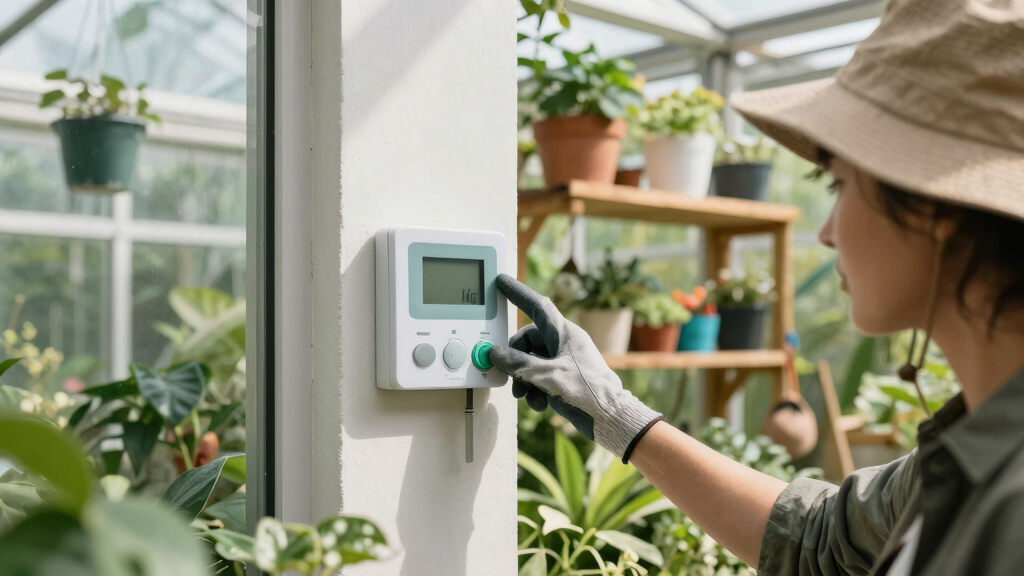

For anyone managing a greenhouse remotely, choosing the right alarm system is essential to protect plants and equipment from temperature swings, humidity issues, or power outages. The Govee WiFi Thermometer Hygrometer H5179 stands out as the best overall for its seamless app alerts and reliable connectivity, while the YoLink Freezer Thermometer Hygrometer Kit offers exceptional long-range coverage for larger setups. However, tradeoffs include varying sensor ranges, alert customization, and connectivity options, which can influence your choice. Continue reading for a detailed breakdown of the top options and how to select the best alarm for your needs.

Get garden gear delivered free — and shop member deals
- Fast, free delivery on millions of items
- Access to Prime Big Deal Days deals on October 6–7
- Prime Video, Amazon Music and more included
Complete the kit


Key Takeaways
- Longer sensor ranges are vital for large or multiple greenhouse setups to ensure full coverage.
- WiFi alarms generally offer more frequent updates and app notifications compared to cellular or RF options.
- Power backup features are crucial for maintaining alerts during outages, especially in remote locations.
- Pricing varies significantly based on sensor count, connectivity type, and included features, impacting overall value.
- Ease of setup and app usability heavily influence long-term satisfaction, especially for non-technical users.
| Govee WiFi Thermometer Hygrometer H5179 with App Notification Alert |  | Best Overall for Indoor Air Quality Monitoring | Connectivity: WiFi, Bluetooth | Display Type: Digital | Power Source: 3 AA batteries (included) | VIEW LATEST PRICE | See Our Full Breakdown |
| YoLink Freezer Thermometer Hygrometer Kit: 3-Pack + Hub | 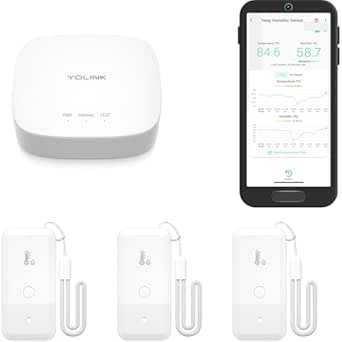 | Best for Long-Range Outdoor and Remote Monitoring | Technology: LoRa | Connectivity: LoRa | Power Source: 6 AA batteries (included) | VIEW LATEST PRICE | See Our Full Breakdown |
| MOCREO 2000ft Remote Temperature Humidity Monitor, 3 Sensors, Freeze Alert |  | Best for Remote, Unpowered Locations with Loud Alarms | Range: 2000 ft line of sight | Sensors: 3 battery-powered sensors | Alarm Volume: 90 dB | VIEW LATEST PRICE | See Our Full Breakdown |
| Cellular Temperature Monitor, Power Outage Alarm & Humidity Sensor |  | Best for Off-Grid and Cellular-Dependent Monitoring | Service Duration: 2 years | Connectivity: Cellular | Power Source: Rechargeable | VIEW LATEST PRICE | See Our Full Breakdown |
| eMylo WiFi Thermometer Hygrometer with App Alerts, 3.2” Backlit Display |  | Best for Indoor Use with Large Display and Voice Control | Battery: 3 AAA batteries | Temperature Range: 14.2°F to 140°F | Temperature Accuracy: ±1.8°F | VIEW LATEST PRICE | See Our Full Breakdown |
| 4G Cellular Temperature Monitor for RV and Pet Safety |  | Best for Remote Locations Without WiFi or Cellular Coverage | Cellular Service Duration: 2 years included | Network Compatibility: Major providers in U.S., Canada, Mexico, and 47 countries | Sensor Type: Swiss high-precision temperature & humidity sensor | VIEW LATEST PRICE | See Our Full Breakdown |
| GoveeLife WiFi Thermometer Hygrometer 5-in-1, 3-Pack with Gateway |  | Best for Whole-Greenhouse Monitoring with Visual Clarity | Functionality: 5-in-1 multifunctional device | Range: 1640 ft via gateway | Display: 3.7-inch high-contrast LCD | VIEW LATEST PRICE | See Our Full Breakdown |
| MOCREO WiFi Remote Thermometer with Freezer Alarm and Long Range Sensors |  | Best for Long-Range Outdoor and Indoor Monitoring with Proactive Alerts | Temperature Range: -4°F to 131°F | Accuracy: ±0.9°F | Wireless Range: up to 1640 ft (1/3 mile) | VIEW LATEST PRICE | See Our Full Breakdown |
| remote greenhouse alarm | Connectivity | Temperature Range | Power Source |
|---|---|---|---|
| Govee WiFi Thermometer Hygrome | WiFi, Bluetooth | Up to 140°F | 3 AA batteries (included) |
| YoLink Freezer Thermometer Hyg | LoRa | -20°C to 54°C (-4°F to 129°F) | 6 AA batteries (included) |
| MOCREO 2000ft Remote Temperatu | WiFi | — | — |
| Cellular Temperature Monitor | Cellular | — | Rechargeable |
| eMylo WiFi Thermometer Hygrome | — | 14.2°F to 140°F | — |
| 4G Cellular Temperature Monito | — | — | Battery (2 batteries included) |
| GoveeLife WiFi Thermometer Hyg | WiFi, Bluetooth | -4°F to 140°F | — |
| MOCREO WiFi Remote Thermometer | — | -4°F to 131°F | — |
More Details on Our Top Picks
Govee WiFi Thermometer Hygrometer H5179 with App Notification Alert
This pick stands out for its combination of real-time WiFi connectivity, customizable alerts, and data export capabilities, making it a versatile choice for indoor greenhouse environments. Unlike the YoLink Kit, which excels in outdoor and long-range applications, the Govee H5179 offers immediate, in-home monitoring with a user-friendly app interface. Its quick response time and accurate readings ensure you stay informed about your greenhouse climate, but reliance on 2.4GHz WiFi and batteries means it’s not entirely maintenance-free. The app notifications make it ideal for growers who want instant updates without complex setup.
Pros:- Real-time temperature and humidity updates via WiFi
- Customizable alert notifications for immediate action
- Data storage with export options for trend analysis
Cons:- WiFi does not support 5G networks, potentially limiting speed
- Bluetooth alerts require proximity, not remote notifications
Best for: Indoor growers seeking reliable, real-time climate data with easy access via smartphone
Not ideal for: Gardeners who need outdoor or long-range monitoring without WiFi, as it won’t work well outside local network zones
- Connectivity:WiFi, Bluetooth
- Display Type:Digital
- Power Source:3 AA batteries (included)
- Temperature Range:Up to 140°F
- Response Time:2 seconds
- Battery Life:6 months
- Data Storage Duration:2 years
Our verdict“This is best suited for indoor greenhouse owners prioritizing ease of use and detailed data management.”
YoLink Freezer Thermometer Hygrometer Kit: 3-Pack + Hub
Compared with the MOCREO 2000ft Remote Monitor, which offers similar long-distance data transmission, the YoLink kit provides a more flexible, WiFi-free setup using LoRa technology. Its ability to operate over distances up to 5,000 feet makes it ideal for outdoor or large greenhouse environments where WiFi coverage is spotty or unavailable. While the sensors lack displays and rely solely on the app, the high precision and long battery life—up to five years—reduce maintenance demands. This kit is perfect for those who want to monitor environmental conditions in hard-to-reach areas without WiFi dependence, but it’s not designed for indoor fridge or freezer safety.
Pros:- Long-range LoRa technology enables monitoring over miles
- High measurement accuracy for temperature and humidity
- Battery life up to 5 years reduces upkeep
Cons:- Sensors lack local displays, requiring app access for readings
- Limited alert options via SMS (only 5 per month per device)
Best for: Outdoor growers or large-scale greenhouse operators needing long-range, low-maintenance monitoring
Not ideal for: Indoor hobbyists who want a simple, plug-and-play device with a display, as it requires app access and lacks a local display
- Technology:LoRa
- Connectivity:LoRa
- Power Source:6 AA batteries (included)
- Temperature Range:-20°C to 54°C (-4°F to 129°F)
- Humidity Range:0% to 100%
- Battery Life:Up to 5 years
- Included Items:1 Hub, 3 Sensors
Our verdict“This kit is best for outdoor or expansive greenhouse setups that need reliable long-distance environmental monitoring without WiFi dependency.”
MOCREO 2000ft Remote Temperature Humidity Monitor, 3 Sensors, Freeze Alert
This model shines in environments where power is limited or absent, thanks to its battery-powered sensors and loud 90 dB alarm. Its long-range capability of up to 2000 feet makes it suitable for monitoring cold storage, barns, or remote greenhouses. Compared to the Cellular Temperature Monitor, which relies on cellular coverage, the MOCREO system offers a straightforward, line-of-sight-based solution with no ongoing subscription fees. However, the need for clear sightlines and the sensors’ lack of waterproofing mean it’s less suited for wet environments or indoor refrigerator use. Its detailed climate metrics, like dew point and vapor pressure deficit, make it ideal for serious growers managing complex conditions.
Pros:- Long-range sensors up to 2000 ft line of sight
- Loud 90 dB alarm for immediate alerts
- No subscription fees with extensive data storage
Cons:- Sensors are not waterproof, risking damage in wet areas
- Requires unobstructed line of sight for optimal range
Best for: Growers with remote or unpowered spaces needing loud alerts and long-range data transmission
Not ideal for: Indoor or wet environments where sensors could be exposed to moisture, as they are not waterproof
- Range:2000 ft line of sight
- Sensors:3 battery-powered sensors
- Alarm Volume:90 dB
- Connectivity:WiFi
- Data Storage:Up to 2 years
- Expandable Sensors:Up to 100
Our verdict“This system fits best for remote locations where loud alarms and long-distance monitoring are paramount, not for indoor or wet environments.”
Cellular Temperature Monitor, Power Outage Alarm & Humidity Sensor
The Necto cellular monitor offers a unique solution for environments where WiFi is unreliable or unavailable, such as remote properties or mobile setups. Its cellular connectivity, combined with a rechargeable battery, ensures continuous monitoring even during power outages. Compared to WiFi-based options like the Govee H5179, this device eliminates the dependency on local network infrastructure, although it comes with ongoing subscription costs after the initial two years. Ideal for those who need peace of mind in off-grid or mobile scenarios, yet less suitable for indoor use in WiFi-rich environments.
Pros:- Two-year cellular service included with no hidden fees
- Real-time alerts for temperature, humidity, and power outages
- Rechargeable battery supports continuous operation during outages
Cons:- Requires ongoing subscription renewal after 2 years
- Indoor use only, limited to cellular network coverage
Best for: Rural homes, RV owners, or those needing cellular independence for remote climate monitoring
Not ideal for: Indoor users with stable WiFi, as it’s designed for cellular coverage and involves subscription fees
- Service Duration:2 years
- Connectivity:Cellular
- Power Source:Rechargeable
- Upper Temperature Range:120 °F
- Monitoring Frequency:Every 10 seconds
- Data Storage:1 year
Our verdict“This device is perfect for off-grid or mobile setups where cellular coverage and power outage alerts are critical, but unnecessary for WiFi-enabled homes.”
eMylo WiFi Thermometer Hygrometer with App Alerts, 3.2” Backlit Display
This model stands out for its large, backlit display and compatibility with voice assistants like Alexa and Google, making it easy to monitor your greenhouse at a glance. Compared to the Govee H5179, which offers app notifications, the eMylo’s prominent display provides instant readings without unlocking your phone. Its WiFi connectivity and data export features suit indoor growers who want straightforward, visual climate management. However, it’s limited to indoor use and relies on 2.4GHz WiFi, which might be less reliable in some setups. The battery life varies with usage, so frequent alerts can reduce longevity.
Pros:- Large, easy-to-read backlit display
- Remote monitoring with real-time alerts via app
- Voice control compatibility with Alexa and Google Assistant
Cons:- Limited to WiFi 2.4GHz networks, which may have connectivity issues
- Battery life depends on usage intensity
Best for: Indoor growers or hobbyists who prefer a large, easy-to-read display with voice command compatibility
Not ideal for: Outdoor or large-scale greenhouse owners needing long-range or outdoor-rated sensors, as it’s designed for indoor environments
- Battery:3 AAA batteries
- Temperature Range:14.2°F to 140°F
- Temperature Accuracy:±1.8°F
- Humidity Range:0% to 99%
- Humidity Accuracy:±5%
- Display Size:3.2 inches
Our verdict“Ideal for indoor growers who prioritize visual clarity and voice control, but not suited for outdoor or large-scale environments.”
4G Cellular Temperature Monitor for RV and Pet Safety
This cellular monitor stands out for its ability to provide real-time alerts via app, SMS, and email without relying on WiFi, making it ideal for remote greenhouses or storage units where network stability is uncertain. Compared with WiFi-based options like the GoveeLife 5-in-1, this device offers broader coverage in areas lacking stable internet, thanks to its cellular connectivity and Swiss high-precision sensors. The bright OLED display offers immediate local readings, but the reliance on cellular service means ongoing costs after the initial two-year plan, and it’s limited to indoor environments. Its flexible power modes suit both travel and long-term monitoring, but the need for a service plan renewal adds complexity. This pick is perfect for those wanting dependable remote alerts in areas with cellular coverage but who accept the ongoing expense and indoor-only use.
Pros:- Supports real-time alerts via app, SMS, and email for immediate action
- Swiss high-precision sensors for accurate temperature and humidity readings
- Bright OLED display for quick local environment checks
- Flexible power modes suitable for travel or long-term storage
Cons:- Requires cellular service plan renewal after two years, adding ongoing costs
- Limited to indoor use, so not suitable for outdoor greenhouses
- Price not specified, which may influence value perception
Best for: Greenhouse growers or storage managers in rural or remote areas needing cellular alerts without WiFi dependency
Not ideal for: Urban gardeners with reliable WiFi, or users seeking outdoor monitoring; it’s not weatherproof for outdoor environments
- Cellular Service Duration:2 years included
- Network Compatibility:Major providers in U.S., Canada, Mexico, and 47 countries
- Sensor Type:Swiss high-precision temperature & humidity sensor
- Display:OLED
- Power Source:Battery (2 batteries included)
- Maximum Temperature:212 °F
- Indoor/Outdoor:Indoor
- Rechargeable:Yes
- Battery Life (Standby Mode):Up to 20 days
Our verdict“This device is best suited for remote or rural greenhouse setups where cellular coverage is available and internet is unreliable.”
GoveeLife WiFi Thermometer Hygrometer 5-in-1, 3-Pack with Gateway
This 3-pack offers comprehensive climate monitoring with a large, high-contrast LCD display and color-coded comfort indicators, making it easier to interpret environmental conditions at a glance compared to the smaller displays of the MOCREO WiFi Remote Thermometer. Its long-range connectivity (up to 1640 ft with a gateway) makes it suitable for larger greenhouses or multiple storage areas, although it requires the gateway for weather forecast features, which adds setup complexity. While the high-precision sensors provide accurate temperature and humidity readings, the need for app setup and potential battery life variation may pose minor inconveniences. This system makes the most sense for users who want a visually accessible, whole-area view of environmental conditions with customizable alerts, especially in settings where WiFi is stable and extensive coverage is needed.
Pros:- Large 3.7-inch LCD with clear, color-coded indicators for quick assessment
- Long-range wireless connectivity up to 1640 ft via gateway for broad coverage
- High-precision sensors with accuracy within ±0.36°F and ±2% RH
- Multiple sensors in a pack reduce the need for multiple devices
Cons:- Requires gateway for weather forecast and some advanced features, increasing setup complexity
- Battery life may vary depending on usage and connectivity
- Some features require app setup, which could be a learning curve for beginners
Best for: Large greenhouse operators or wine cellar managers seeking detailed, whole-space climate insights with easy-to-read displays
Not ideal for: Small indoor gardens or users without WiFi or who prefer simple, single-sensor setups; the gateway requirement may complicate small-scale use
- Functionality:5-in-1 multifunctional device
- Range:1640 ft via gateway
- Display:3.7-inch high-contrast LCD
- Temperature Accuracy:±0.36°F
- Humidity Accuracy:±2% RH
- Temperature Range:-4°F to 140°F
- Humidity Range:0% to 99% RH
- Power:2 AA batteries, up to 2 years
- Connectivity:WiFi, Bluetooth
Our verdict“This system offers precise, easy-to-read environmental data ideal for larger greenhouses or storage spaces where visual clarity and extensive coverage matter most.”
MOCREO WiFi Remote Thermometer with Freezer Alarm and Long Range Sensors
This thermometer excels in long-range monitoring, with a wireless range up to 1/3 mile, making it stand out among compact indoor options like the GoveeLife. Its IP66 waterproof sensors are suitable for outdoor greenhouses, refrigerators, or RVs, providing reliable data in humid or challenging environments. The real-time alerts via app, email, and sound ensure proactive management, though signal interference can occur inside fully enclosed metal containers, similar to other long-range systems like the eMylo. Battery life of up to 2 years reduces maintenance needs, but frequent sensor placement in outdoor settings may require additional setup and calibration. This pick is most suitable for users who need dependable, long-distance environmental data without the constant need for WiFi or internet connection, and are comfortable with occasional signal obstacles.
Pros:- Wireless range up to 1/3 mile for outdoor or large-area use
- Waterproof IP66 sensors withstand humid or wet conditions
- Real-time alerts via multiple channels for proactive management
- Battery life up to 2 years minimizes maintenance
Cons:- Potential signal interference inside fully enclosed metal containers or dense environments
- Requires Wi-Fi or Ethernet connection for full functionality and data export
- Sensor placement outside may need calibration and careful positioning
Best for: Farmers, outdoor greenhouse owners, or RV travelers needing reliable long-distance temperature alerts in challenging environments
Not ideal for: Urban indoor gardeners in enclosed spaces or users seeking WiFi-dependent, app-only systems; interference issues may limit effectiveness indoors
- Temperature Range:-4°F to 131°F
- Accuracy:±0.9°F
- Wireless Range:up to 1640 ft (1/3 mile)
- Battery Life:up to 2 years
- Sensor Compatibility:BLE and LoRa sensors
- Waterproof Rating:IP66
Our verdict“This long-range system is ideal for outdoor greenhouses or RV setups where environmental conditions are hard to reach and require proactive, remote alerts.”
How We Picked
Products were selected based on their ability to reliably monitor temperature and humidity remotely, with a focus on connectivity options like WiFi, cellular, and RF. We prioritized ease of use, alert customization, sensor range, build quality, and value for money. Each model was evaluated for its ability to perform consistently in a greenhouse environment, including how well it manages power outages and how straightforward the setup process is. The ranking reflects a balance between performance, versatility, and price, aiming to recommend options suited for different types of growers and remote monitoring needs.| remote greenhouse alarm | Connectivity |
|---|---|
| Govee WiFi Thermometer Hygrome | WiFi, Bluetooth |
| YoLink Freezer Thermometer Hyg | LoRa |
| MOCREO 2000ft Remote Temperatu | WiFi |
| Cellular Temperature Monitor | Cellular |
| eMylo WiFi Thermometer Hygrome | — |
| 4G Cellular Temperature Monito | — |
| GoveeLife WiFi Thermometer Hyg | WiFi, Bluetooth |
| MOCREO WiFi Remote Thermometer | — |
Factors to Consider When Choosing Best Remote Greenhouse Alarms
Choosing the best remote greenhouse alarm involves weighing several key factors beyond just sensor accuracy. Understanding your greenhouse size, connectivity needs, and budget will help narrow down the options. Properly assessing these elements ensures you select an alarm system that provides reliable alerts, easy management, and peace of mind, whether you grow small-scale or operate larger facilities.Connectivity Type and Range
Deciding between WiFi, cellular, or RF connectivity is fundamental. WiFi alarms often provide real-time notifications via apps, but depend on stable internet, which can be problematic in remote locations. Cellular systems add a layer of independence from local internet, making them ideal for remote or large-scale greenhouses, but usually come at a higher cost. RF-based alarms typically have limited ranges and fewer features but can be reliable within a confined space. Matching the connection type to your greenhouse’s size and available infrastructure is key to effective monitoring.
Sensor Accuracy and Reliability
Accurate sensors are necessary to detect critical changes in temperature and humidity that could harm plants or equipment. Look for models with proven calibration and consistent readings, especially in fluctuating outdoor conditions. Some systems include multiple sensors, which is advantageous for larger or segmented greenhouses. However, keep in mind that more sensors often mean higher costs and increased complexity, so balancing coverage with simplicity is important.
Power Options and Battery Life
Reliable power sources are essential, especially in locations prone to outages. Many alarms operate on batteries, with some offering long-lasting or replaceable options, while others include backup power features. Cellular models with external power adapters tend to be more dependable for continuous operation. If your greenhouse experiences frequent power interruptions, investing in alarms with battery backups or solar power can prevent blind spots in monitoring.
Ease of Use and App Features
An intuitive app interface and straightforward setup are vital for hassle-free operation. Look for alarms with clear notifications, customizable alert thresholds, and easy sensor management. Some systems also offer historical data logs, which help track environmental trends over time. Complex or clunky apps can frustrate users and lead to missed alerts, so prioritizing user experience is worth the investment.
Cost and Overall Value
Pricing varies widely based on sensor count, connectivity, and features. While budget options can be tempting, they may lack critical capabilities like remote notifications or reliable range. Conversely, premium systems often include advanced features such as multiple alerts, backup connectivity, and dedicated support, which can justify higher prices for serious growers. Assess your specific needs and budget to find a system that offers the best balance of features and affordability.
Frequently Asked Questions
How important is WiFi versus cellular connectivity for greenhouse alarms?
WiFi connectivity is generally sufficient for most small to medium-sized greenhouses that have a reliable internet connection, offering frequent updates and easy app access. However, for larger or remote greenhouses where WiFi may be unstable or unavailable, cellular alarms provide independence from local internet and ensure alerts continue during outages. The choice depends on your greenhouse’s location, infrastructure, and the level of remote monitoring required.
Can these alarms detect issues other than temperature and humidity?
Most remote greenhouse alarms focus on temperature and humidity because these are critical for plant health. Some models include additional sensors for detecting power outages, water leaks, or even light levels. However, specialized environmental issues like pest infestations or soil moisture typically require separate systems. When selecting a system, consider what environmental parameters are most vital for your operations and whether multi-sensor options cover those needs effectively.
What should I do if my alarm system experiences a false alert?
False alerts often stem from sensor calibration issues, connectivity glitches, or environmental factors like sudden temperature changes. Regularly calibrate sensors and set appropriate alert thresholds to prevent unnecessary notifications. Additionally, choose alarms with customizable alerts and test the system periodically to confirm proper operation. Clear communication settings and backup options can also help verify alerts and reduce false alarms’ impact.
Are cellular alarms more expensive to operate than WiFi models?
Generally, cellular alarms tend to have higher ongoing costs due to data plans and equipment expenses, especially for larger setups with multiple sensors. WiFi models often rely on existing internet connections, making them more cost-effective in terms of monthly expenses. However, cellular alarms offer greater independence and reliability in remote areas, which can justify the higher operational costs for critical or large-scale greenhouses.
How do I choose the right number of sensors for my greenhouse?
The number of sensors needed depends on the size and layout of your greenhouse. For a small setup, one or two sensors may suffice, but larger or segmented greenhouses require multiple sensors to ensure full coverage and early detection of environmental issues. Consider placing sensors in different zones, especially where temperature or humidity fluctuations are common. Balancing coverage with cost and complexity is key to designing an effective remote monitoring system.
Conclusion
For small to medium greenhouses, the Govee WiFi Thermometer Hygrometer H5179 offers a reliable, user-friendly experience and excellent value, making it ideal for most hobbyists and small growers. Larger operations or remote setups should consider the YoLink Freezer Thermometer Hygrometer Kit for its extended sensor range and cellular options, ensuring comprehensive coverage and consistent alerts. Budget-conscious buyers can find suitable options among basic WiFi models, while those seeking advanced features and rugged build quality should consider premium systems with multiple sensors and backup power. Ultimately, identifying your greenhouse size, connectivity needs, and budget will ensure you select the best alarm system for your environment.
Halloween Picks
halloween
As an affiliate, we earn on qualifying purchases.