The best greenhouse hygrometers pair useful humidity readings with a design suited to your greenhouse’s heat, moisture, and monitoring needs. My best overall pick is the X-Sense Smart Wi-Fi Thermometer Hygrometer with 3 Sensors and Base Station, since its multiple sensors can help track conditions across separate growing areas. The SwitchBot IP65 stands out for protection against wet environments, while the TempPro TP50 offers a simpler, screen-based option without app monitoring. The main tradeoffs are remote alerts versus straightforward local readings, and multi-sensor coverage versus weather resistance. Read on for the full breakdown and help matching a hygrometer to your setup.

Get garden gear delivered free with Prime
- Fast, free delivery on millions of items
- Prime Video, Amazon Music and more included
- Member-only deals all year
Complete the kit


Key Takeaways
- Multi-zone coverage distinguishes the X-Sense set: three sensors and a base station suit growers who need to compare separate areas, though a single-display device is simpler for one small greenhouse.
- Ingress protection matters in wet spaces: the SwitchBot IP65 and TempPro IPX5 models are more directly suited to damp conditions than devices described for indoor use; protection ratings still do not mean every unit can be exposed to water without limits.
- Remote access comes with setup tradeoffs: Wi-Fi options such as the Govee models can send app alerts, while Bluetooth choices are more dependent on nearby phone range.
- Solar-assisted models reduce battery attention: Baldr and HomGar offer a different power approach, but growers should check whether their greenhouse has enough light for the intended placement.
- Simple displays remain useful: TempPro TP50, the two-pack options, and the Brannan dial model can suit growers who prioritize at-a-glance readings over connected features, though their coverage and alert capabilities differ.
| X-Sense Smart Wi-Fi Thermometer Hygrometer with 3 Sensors and Base Station |  | Best for Multi-Zone Greenhouses | Included sensors: 3 sensors and 1 base station | Temperature accuracy: ±0.36°F (±0.2°C) | Humidity accuracy: ±2% RH | VIEW LATEST PRICE | See Our Full Breakdown |
| TempPro TempAir Digital Hygrometer and Indoor Thermometer |  | Best for Beginners | Temperature accuracy: ±1°F | Humidity accuracy: ±2% to 3% RH | Refresh rate: Every 10 seconds | VIEW LATEST PRICE | See Our Full Breakdown |
| Baldr Bluetooth Thermometer and Hygrometer with Solar Power and App |  | Best Screen-Free Solar-Assisted Pick | Connectivity: Bluetooth | Temperature accuracy: ±0.9°F (±0.5°C) | Humidity accuracy: ±3% RH (40%–70% RH) | VIEW LATEST PRICE | See Our Full Breakdown |
| JEDEW Digital Hygrometer Thermometer, 2-Pack |  | Best Value for Two-Point Checks | Quantity: 2 | Temperature range: 32°F to 158°F (0°C to 70°C) | Humidity range: 10% to 99% RH | VIEW LATEST PRICE | See Our Full Breakdown |
| Govee H5179 WiFi Thermometer and Hygrometer with App Alerts |  | Best for Remote Alerts | Connectivity: Wi-Fi and Bluetooth; does not support 5 GHz Wi-Fi | Temperature accuracy: ±0.54°F (±0.3°C) | Humidity accuracy: ±3% RH | VIEW LATEST PRICE | See Our Full Breakdown |
| TempPro TempAir Digital Indoor Thermometer and Hygrometer, IPX5 Waterproof |  | Best for Splash-Prone Greenhouses | Temperature accuracy: ±1°F | Humidity accuracy: ±2% RH | Reading update: Every 10 seconds | VIEW LATEST PRICE | See Our Full Breakdown |
| Antonki 2-Pack Indoor Thermometer and Hygrometer |  | Best for Monitoring Two Greenhouse Zones | Quantity: 2 units | Temperature range: -58°F to 158°F | Humidity range: 10% to 99% RH | VIEW LATEST PRICE | See Our Full Breakdown |
| TempPro TP50 Digital Hygrometer and Indoor Thermometer |  | Best Simple Greenhouse Check-In | Temperature accuracy: ±1°F | Humidity accuracy: ±2–3% RH | Update interval: Every 10 seconds | VIEW LATEST PRICE | See Our Full Breakdown |
| VIVOSUN Digital Indoor Hygrometer and Thermometer with App Control |  | Best for VPD and Grow-System Monitoring | Channels: Dual channel with optional external sensor probe | Temperature accuracy: ±0.5°C (±0.9°F) | Humidity accuracy: ±5% RH | VIEW LATEST PRICE | See Our Full Breakdown |
| Govee H5074 Smart Bluetooth Thermometer and Hygrometer | 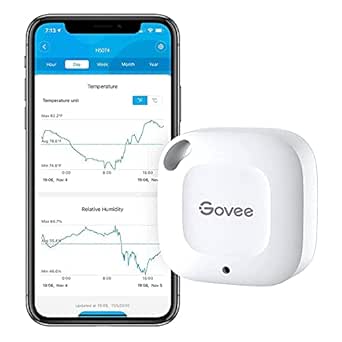 | Best for Fast Bluetooth Updates | Connectivity: Bluetooth, not Wi-Fi | Bluetooth range: Up to 262 feet without obstacles | Temperature accuracy: ±0.54°F | VIEW LATEST PRICE | See Our Full Breakdown |
| HomGar Bluetooth Thermometer Hygrometer with Solar-Assisted Power |  | Best for Hub-Free Bluetooth Monitoring | Temperature range: -22°F to 140°F (-30°C to 60°C) | Humidity range: 1–99% RH | Temperature accuracy: ±0.9°F (±0.5°C) | VIEW LATEST PRICE | See Our Full Breakdown |
| Govee H5051 WiFi Indoor Thermometer and Hygrometer with LCD and App Alerts |  | Best for Wi-Fi History and Threshold Alerts | Model: H5051 | Connectivity: 2.4 GHz Wi-Fi and Bluetooth | Display: LCD | VIEW LATEST PRICE | See Our Full Breakdown |
| SwitchBot IP65 Wireless Indoor/Outdoor Hygrometer and Thermometer |  | Best for Exposed Greenhouse Conditions | Model: W3400010 | Protection: IP65 | Bluetooth range: Up to 394 ft without obstacles | VIEW LATEST PRICE | See Our Full Breakdown |
| TempPro TP49 Digital Hygrometer and Indoor Thermometer, 3-Pack |  | Best Value for Multi-Zone Checks | Quantity: 3 hygrometers | Temperature accuracy: ±1°F | Humidity accuracy: ±2% to 3% RH | VIEW LATEST PRICE | See Our Full Breakdown |
| Brannan Maximum-Minimum Thermometer and Hygrometer with Gilt Dial | 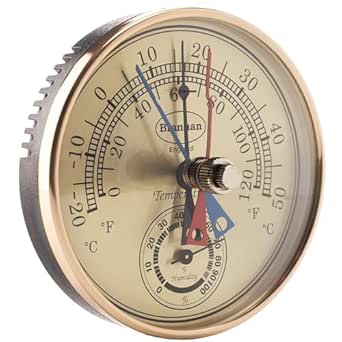 | Best Analog Pick for Temperature Extremes | Model: 12/413/3 | Mounting: Wall mount | Temperature range: -20 to +50 °C/°F | VIEW LATEST PRICE | See Our Full Breakdown |
| greenhouse hygrometer | Temperature accuracy | Humidity accuracy |
|---|---|---|
| X-Sense Smart Wi-Fi Thermomete | ±0.36°F (±0.2°C) | ±2% RH |
| TempPro TempAir Digital Hygrom | ±1°F | ±2% to 3% RH |
| Baldr Bluetooth Thermometer an | ±0.9°F (±0.5°C) | ±3% RH (40%–70% RH) |
| JEDEW Digital Hygrometer Therm | ±1°F | ±3% RH |
| Govee H5179 WiFi Thermometer a | ±0.54°F (±0.3°C) | ±3% RH |
| TempPro TempAir Digital Indoor | ±1°F | ±2% RH |
| Antonki 2-Pack Indoor Thermome | ±2°F | ±5% RH |
| TempPro TP50 Digital Hygromete | ±1°F | ±2–3% RH |
| VIVOSUN Digital Indoor Hygrome | ±0.5°C (±0.9°F) | ±5% RH |
| Govee H5074 Smart Bluetooth Th | ±0.54°F | ±3% RH |
| HomGar Bluetooth Thermometer H | ±0.9°F (±0.5°C) | ±3% in the 40–70% RH range |
| Govee H5051 WiFi Indoor Thermo | ±0.54°F (±0.3°C) | ±3% |
| SwitchBot IP65 Wireless Indoor | — | — |
| TempPro TP49 Digital Hygromete | ±1°F | ±2% to 3% RH |
| Brannan Maximum-Minimum Thermo | — | — |
More Details on Our Top Picks
X-Sense Smart Wi-Fi Thermometer Hygrometer with 3 Sensors and Base Station
The X-Sense is the most capable pick here for tracking several greenhouse areas at once: its three sensors report temperature, humidity, dew point, and VPD, giving plant growers more context than the basic readings on the TempPro TempAir. App alerts and historical trends can help connect environmental swings to watering or ventilation changes, while the stated 1,700-foot wireless range offers flexibility for spread-out setups. That reach and analysis come with a more involved system, though. Full app functionality depends on the SBS50 base station, and sensor batteries need periodic replacement. Unlike the standalone JEDEW two-pack, this is a better fit for growers who will use remote monitoring and multiple zones; it is excessive for someone who only wants a quick reading beside a seed tray.
Pros:- Includes three sensors for comparing conditions across greenhouse zones.
- Reports dew point and VPD alongside temperature and humidity.
- App supports real-time alerts and historical data visualization.
- Specified wireless range is up to 1,700 feet.
Cons:- Full app functionality and alerts require the SBS50 base station.
- The product data lists a limit of 10 thermo-hygrometers per base station, despite the broader system description mentioning up to 50 devices.
- Battery life is specified as up to one year, so batteries require regular replacement.
Best for: Greenhouse growers who want app-based alerts and simultaneous readings from several growing zones.
Not ideal for: Buyers who want a simple, self-contained display or do not want to rely on a separate SBS50 base station for app features.
- Included sensors:3 sensors and 1 base station
- Temperature accuracy:±0.36°F (±0.2°C)
- Humidity accuracy:±2% RH
- Additional readings:Dew point and VPD
- Connectivity:Wi-Fi
- Wireless range:Up to 1,700 ft (500 m)
- Battery life:Up to 1 year
- Battery type:3 AAA batteries
Our verdict“Choose the X-Sense if you want multi-zone greenhouse data and app alerts, but skip it if a simple standalone hygrometer will do.”
TempPro TempAir Digital Hygrometer and Indoor Thermometer
The TempPro TempAir suits growers who want a straightforward check of greenhouse conditions without setting up an app or hub. Its large LCD digits and dry, comfortable, or wet icons make a quick glance easier than interpreting the app-only Baldr sensor, especially for a beginner who is still learning humidity patterns. Readings refresh every 10 seconds, and the tabletop, magnetic, and hanging options provide more placement flexibility than the freestanding JEDEW units. The tradeoff is that this is a local monitor, not a remote alert system, and its humidity accuracy is listed as ±2% to 3% RH. I’d pick it for a small greenhouse where someone checks conditions in person, not for a structure that needs monitoring while unattended.
Pros:- Large LCD digits are easy to read at a glance.
- Condition icons provide a simple visual cue for dry, comfortable, or wet readings.
- Updates readings every 10 seconds.
- Can sit on a surface, attach magnetically, or hang.
Cons:- Provides no app alerts or historical trend tracking.
- Humidity accuracy is specified as ±2% to 3% RH.
- Its indoor-monitor design may not suit growers seeking a purpose-built outdoor-rated sensor.
Best for: New greenhouse owners who want a legible, at-a-glance temperature and humidity check with flexible placement.
Not ideal for: Growers who need remote alerts, saved trends, or continuous monitoring while away from the greenhouse.
- Temperature accuracy:±1°F
- Humidity accuracy:±2% to 3% RH
- Refresh rate:Every 10 seconds
- Display:LCD with large digits
- Temperature range:Up to 158°F
- Mounting options:Tabletop stand, magnetic back, or hanging mount
- Battery:1.5-volt alkaline
- Dimensions:0.7 × 2.6 inches
Our verdict“Pick the TempAir for easy local readings in a small greenhouse, but choose a connected model if you need remote monitoring.”
Baldr Bluetooth Thermometer and Hygrometer with Solar Power and App
The Baldr Bluetooth sensor is a strong match for growers who prefer phone-based monitoring and want to avoid relying solely on disposable batteries. Its solar-assisted power works alongside an AA battery, while the app supplies live readings, custom alerts, trend charts, and up to two years of stored data. Guest access also lets another person check conditions without creating an account. Compared with the Govee H5179, Baldr offers solar assistance and longer specified storage, but it lacks a built-in screen and has a shorter stated open-area range of up to 260 feet. The humidity accuracy is ±3% RH within the stated 40%–70% range, so this is better for tracking general greenhouse trends than for growers who need a readable local display or app-free checks.
Pros:- Combines a solar panel with an AA alkaline battery.
- App offers live readings, alerts, charts, and data export.
- Stores up to two years of data.
- Guest Mode allows shared live access without an account.
Cons:- No built-in display; readings require the phone app.
- Bluetooth range is specified as up to 260 feet in open areas.
- Humidity accuracy is specified as ±3% RH only within 40%–70% RH.
Best for: Growers who check greenhouse conditions on a phone, want long-term trend records, and can place the sensor where solar assistance is useful.
Not ideal for: Buyers who want readings on the device itself, need monitoring beyond Bluetooth range, or require specified humidity accuracy outside 40%–70% RH.
- Connectivity:Bluetooth
- Temperature accuracy:±0.9°F (±0.5°C)
- Humidity accuracy:±3% RH (40%–70% RH)
- Refresh interval:2 seconds
- Wireless range:Up to 260 ft in open areas
- Power:Solar panel and 1 AA alkaline battery
- Data storage:Up to 2 years
- Display and mounting:No screen; tabletop or hanging
Our verdict“Choose Baldr if phone-based trends and solar-assisted power matter more than a screen or longer-range connectivity.”
JEDEW Digital Hygrometer Thermometer, 2-Pack
The JEDEW two-pack makes it easy to compare conditions at two spots without buying a connected system. That is useful in a greenhouse where humidity near the floor may differ from readings by the roof vent. Each compact unit updates every 10 seconds and supports Fahrenheit or Celsius; the included tape gives another mounting option beyond the freestanding design. Compared with the TempPro TempAir, JEDEW provides a second monitor but gives up its large, easy-to-read display and placement versatility. Accuracy is more basic at ±1°F and ±3% RH, and LR44 button cells will need replacement. I’d choose this set for simple local comparisons, but not for growers who need alerts, saved readings, or a display meant to be read from across a greenhouse.
Pros:- Two units allow simultaneous readings in separate greenhouse zones.
- Displays temperature in Fahrenheit or Celsius.
- Updates readings every 10 seconds.
- Includes a spare LR44 battery and double-sided tape.
Cons:- Humidity accuracy is specified as ±3% RH.
- Small format may be harder to read from a distance than the TempPro TempAir.
- Uses LR44 button cells, with battery life specified as up to 10 months per cell.
Best for: Budget-conscious growers who want to compare temperature and humidity at two greenhouse locations without using an app.
Not ideal for: Growers who need remote alerts, stronger stated humidity accuracy, or large displays that are easy to read from a distance.
- Quantity:2
- Temperature range:32°F to 158°F (0°C to 70°C)
- Humidity range:10% to 99% RH
- Temperature accuracy:±1°F
- Humidity accuracy:±3% RH
- Update interval:10 seconds
- Power:LR44 button cells
- Battery life:Up to 10 months per LR44 cell
Our verdict“Choose the JEDEW set for inexpensive two-point checks, but look elsewhere for remote monitoring or easier long-distance readability.”
Govee H5179 WiFi Thermometer and Hygrometer with App Alerts
The Govee H5179 is the more practical connected pick for growers who want to check conditions away from the greenhouse. It combines Wi-Fi and Bluetooth, refreshes readings every two seconds, and supports preset-range app alerts plus historical data export. Compared with the Baldr, it does not offer solar-assisted power or two years of stored data on the device, but its Wi-Fi connection gives remote access that a Bluetooth-only sensor cannot provide. There are some setup and placement limits: it does not support 5 GHz Wi-Fi, and the product data says temperature and humidity alerts can only be configured over Bluetooth. Its indoor-use designation also makes it a poor match for growers seeking a sensor specifically rated for exposed outdoor conditions.
Pros:- Wi-Fi and Bluetooth support app-based monitoring.
- Refreshes readings every two seconds.
- Preset-range alerts can flag changing conditions.
- Online history and export support help track trends over time.
Cons:- Does not support 5 GHz Wi-Fi.
- Temperature and humidity alerts can only be configured over Bluetooth.
- Designed for indoor use, which limits its suitability for exposed greenhouse locations.
Best for: Greenhouse owners who want Wi-Fi-based remote checks, quick updates, and app notifications for preset environmental ranges.
Not ideal for: Growers using only 5 GHz Wi-Fi, seeking solar-assisted power, or needing a sensor specified for outdoor exposure.
- Connectivity:Wi-Fi and Bluetooth; does not support 5 GHz Wi-Fi
- Temperature accuracy:±0.54°F (±0.3°C)
- Humidity accuracy:±3% RH
- Refresh rate:2 seconds
- Temperature range:Up to 140°F
- Data storage:20 days online; export up to 2 years
- Power:3 included AA batteries
- Battery life:6 months
Our verdict“Choose the Govee H5179 for remote app monitoring over compatible Wi-Fi, but skip it if your greenhouse sensor needs an outdoor-use designation.”
TempPro TempAir Digital Indoor Thermometer and Hygrometer, IPX5 Waterproof
The TempPro TempAir is the clearest fit here when a greenhouse’s humidity and occasional splashes make a standard indoor sensor feel vulnerable. Its IPX5 waterproof design adds protection, while stated accuracy of ±2% RH and readings every 10 seconds give growers a useful local check on changing conditions. The 24-hour high-and-low memory helps reveal overnight swings without needing an app. Compared with the TempPro TP50, this model adds water resistance, but the TP50 has a broader stated upper temperature limit and a familiar compact format. The tradeoff is that TempAir is still described as an indoor device, not a sensor for direct exposure to weather or irrigation spray. Its comfort icons are a quick guide, not greenhouse-specific growing targets.
Pros:- IPX5 waterproof design suits humid spaces and incidental splashes.
- Stores 24-hour temperature and humidity highs and lows.
- Large LCD and comfort icons make conditions quick to scan.
- Magnetic back and stand allow flexible placement.
Cons:- Specified for indoor use, so it is not a weather-exposed greenhouse sensor.
- Requires a AAA battery for power.
- Comfort indicators may not match the humidity targets of particular plants.
Best for: Greenhouse growers who want a readable local display and added protection from damp air or incidental splashes.
Not ideal for: Growers who need app alerts, remote records, or a sensor rated for outdoor exposure.
- Temperature accuracy:±1°F
- Humidity accuracy:±2% RH
- Reading update:Every 10 seconds
- Records:24-hour temperature and humidity max/min
- Display:Digital LCD with comfort indicators
- Temperature range:Up to 140°F
- Power:1 AAA battery, included
- Mounting:Magnetic back and stand
Our verdict“Choose the TempAir if splash resistance and a straightforward local display matter more than remote monitoring.”
Antonki 2-Pack Indoor Thermometer and Hygrometer
The Antonki 2-Pack makes the most sense when the question is whether conditions differ between a seedling bench and the rest of the greenhouse. Two separate units let you compare locations without buying a single-channel sensor plus probe, though their ±5% RH accuracy is looser than the TempPro TempAir’s stated ±2% RH. That gap matters if you are making close humidity adjustments; Antonki is better for spotting broad differences than fine control. Each small display can stand, hang, or attach magnetically, so placement is easier than with a unit limited to one mounting style. Readings may fluctuate for three to five minutes after startup, so avoid judging conditions immediately after moving or powering one on.
Pros:- Two units support side-by-side monitoring of separate zones.
- Large LCD displays are easy to read at close range.
- Kickstand, magnetic back, and hanging hole offer several placement options.
- CR2032 batteries are included.
Cons:- Humidity accuracy is stated as ±5% RH, less precise than the TempPro TempAir.
- Readings can fluctuate for three to five minutes after startup.
- No stated high/low memory or remote monitoring features.
Best for: Growers who want a low-complexity pair of displays to compare humidity in two greenhouse areas.
Not ideal for: Growers who need tighter humidity accuracy, immediate stable readings, or app-based tracking.
- Quantity:2 units
- Temperature range:-58°F to 158°F
- Humidity range:10% to 99% RH
- Temperature accuracy:±2°F
- Humidity accuracy:±5% RH
- Mounting:Tabletop stand, magnetic back, and hanging hole
- Dimensions:2.3 × 2.76 inches
- Battery:CR2032, included
Our verdict“Pick the Antonki pair for simple two-zone comparisons, but choose a more precise model for tighter humidity management.”
TempPro TP50 Digital Hygrometer and Indoor Thermometer
The TempPro TP50 is a straightforward pick for growers who want current readings and a quick sense of whether humidity is trending high or low. Its 10-second updates and high/low records make it more informative than the basic Antonki displays, while DRY, COMFORT, and WET labels give a fast visual summary. The stated ±2–3% RH accuracy is also tighter than Antonki’s ±5% RH, though the TP50 lacks the TempAir’s IPX5 water resistance. That makes placement the main tradeoff: keep it away from direct water and treat it as an indoor monitor. A stand and magnetic back offer useful flexibility, but the supplied data gives only an upper temperature limit, not a complete operating range.
Pros:- Updates temperature and humidity readings every 10 seconds.
- Records high and low temperature and humidity readings.
- DRY, COMFORT, and WET indicators make a quick scan easier.
- Stand and magnetic back support flexible placement.
Cons:- Designed for indoor monitoring and has no stated waterproof rating.
- The supplied temperature specification lists only an upper limit.
- Requires an AAA battery.
Best for: Growers who want a simple, locally readable monitor with humidity summaries and daily high/low context.
Not ideal for: Growers who need splash protection, remote alerts, or a fully stated temperature operating range.
- Temperature accuracy:±1°F
- Humidity accuracy:±2–3% RH
- Update interval:Every 10 seconds
- Operating humidity:10%–99% RH
- Upper temperature limit:158°F
- Mounting:Tabletop stand and magnetic back
- Display indicators:DRY, COMFORT, and WET
- Power:1 AAA battery
Our verdict“Choose the TP50 for simple local monitoring and high/low memory, unless water resistance is a priority.”
VIVOSUN Digital Indoor Hygrometer and Thermometer with App Control
The VIVOSUN VS-THB1 is the most grow-oriented choice in this group because its LCD reports VPD alongside temperature and humidity, giving plant-focused growers more context than the TP50’s DRY, COMFORT, and WET labels. Bluetooth app access adds threshold alerts and two years of data storage, while an optional external probe can monitor a second location. That makes it more useful for reviewing trends than the TempPro TempAir, which keeps its records on the device. The compromise is its ±5% RH accuracy, which is less precise than the TempAir’s stated figure, and app features depend on a Bluetooth connection rather than Wi-Fi. Compatibility with other equipment is also limited to selected VIVOSUN systems.
Pros:- LCD displays VPD as well as temperature and humidity.
- Optional external probe enables dual-channel monitoring.
- Bluetooth app supports threshold alerts and two years of data storage.
- Can be placed on a surface, mounted on a wall, or hung.
Cons:- Humidity accuracy is stated as ±5% RH.
- Remote app monitoring and alerts depend on Bluetooth connectivity.
- Integration is limited to compatible VIVOSUN GrowHub and SGS devices.
Best for: VIVOSUN users and growers tracking VPD or comparing a main greenhouse area with a second probe location.
Not ideal for: Growers who need Wi-Fi access from outside Bluetooth range, tighter stated humidity accuracy, or broad third-party integration.
- Channels:Dual channel with optional external sensor probe
- Temperature accuracy:±0.5°C (±0.9°F)
- Humidity accuracy:±5% RH
- Operating humidity:0–95% RH
- Upper temperature limit:122°F
- Connectivity:Bluetooth
- App features:Remote monitoring and threshold alerts
- Data storage:2 years free
Our verdict“Choose the VS-THB1 if VPD, stored trends, and VIVOSUN compatibility matter more than Wi-Fi reach or tighter humidity accuracy.”
Govee H5074 Smart Bluetooth Thermometer and Hygrometer
The Govee H5074 suits growers who want frequent readings and app alerts without adding a Wi-Fi hub. It updates every two seconds, faster than the 10-second TempPro TP50 and TempAir, and its stated ±0.54°F temperature accuracy is particularly tight. The app can alert you when readings leave preset ranges, with 20 days stored on the sensor and export options for up to two years of records. Its small size helps when space is limited, but Bluetooth-only connectivity means you need to be within range for live access; the stated 262-foot reach assumes no obstacles. Compared with the VIVOSUN, this Govee offers quicker updates but lacks VPD display and optional dual-channel sensing.
Pros:- Updates readings every two seconds.
- Stated temperature accuracy is ±0.54°F.
- App alerts can flag readings outside preset ranges.
- Stores 20 days on-device and supports exporting up to two years of records.
Cons:- Bluetooth-only connectivity does not provide Wi-Fi remote access.
- The 262-foot range is stated for unobstructed conditions.
- Operating humidity is specified as 20%–80% RH.
Best for: Growers who want rapid Bluetooth readings and alerts while staying within sensor range of their phone.
Not ideal for: Growers who need Wi-Fi remote access, dual-channel monitoring, or operation outside the stated 20%–80% RH range.
- Connectivity:Bluetooth, not Wi-Fi
- Bluetooth range:Up to 262 feet without obstacles
- Temperature accuracy:±0.54°F
- Humidity accuracy:±3% RH
- Reading interval:Every 2 seconds
- On-device storage:20 days
- Operating humidity:20%–80% RH
- Dimensions:1.57 × 1.57 inches
Our verdict“Pick the H5074 for fast local Bluetooth monitoring and alerts, but choose Wi-Fi or dual-channel hardware for broader coverage.”
HomGar Bluetooth Thermometer Hygrometer with Solar-Assisted Power
The HomGar suits greenhouse owners who want readings on a phone without adding a Wi-Fi hub or creating an account. Its 260-foot Bluetooth range offers more placement flexibility than a basic local-only display such as the TempPro TP49, while solar-assisted power can reduce how often its three AAA batteries need replacing. A 10-second refresh rate and humidity accuracy of ±3% in the stated 40–70% RH band are useful for routine checks, though the accuracy figure is specifically limited to that humidity range. The tradeoff is that this is an indoor-only sensor, and alerts work only while the app is active. I’d choose it for convenient phone access, not unattended greenhouse warnings or a standalone readout.
Pros:- Connects directly by Bluetooth without a hub or account registration
- 260-foot stated wireless range offers flexible sensor placement
- Solar-assisted power can reduce AAA battery replacement frequency
- Measures temperature and humidity with a 10-second refresh rate
Cons:- Indoor-only design is not suited to exposed greenhouse conditions
- Alerts work only while the app is actively running
- A smartphone is needed to view data and configure the device
Best for: Greenhouse growers who want hub-free phone monitoring and a sensor placed within Bluetooth range
Not ideal for: Growers needing weatherproof outdoor placement, alerts that run independently of the app, or readings without a smartphone
- Temperature range:-22°F to 140°F (-30°C to 60°C)
- Humidity range:1–99% RH
- Temperature accuracy:±0.9°F (±0.5°C)
- Humidity accuracy:±3% in the 40–70% RH range
- Wireless range:260 ft
- Connectivity:Bluetooth
- Power:Solar panel and 3 AAA batteries
- Mounting:Tabletop
Our verdict“Choose the HomGar for hub-free phone monitoring and solar-assisted power, but skip it if your greenhouse sensor must be weatherproof or send unattended alerts.”
Govee H5051 WiFi Indoor Thermometer and Hygrometer with LCD and App Alerts
For growers who want to review changing greenhouse conditions rather than just check a live number, the Govee H5051 pairs an LCD display with app history and CSV export covering over two years. Wi-Fi gives it a remote-monitoring advantage over the HomGar Bluetooth Thermometer Hygrometer, which depends on nearby phone connectivity; preset threshold alerts can also flag conditions that move outside a chosen range. Its stated ±3% humidity accuracy and three-second response time support frequent checks, and adhesive or tabletop placement makes setup adaptable. The main limitation is the indoor-only design: it is not the pick for an exposed, damp greenhouse location. It also connects only to 2.4 GHz Wi-Fi, so growers using a 5 GHz-only network should look elsewhere.
Pros:- Wi-Fi and Bluetooth connectivity support remote and nearby monitoring
- Preset app alerts can flag readings outside selected thresholds
- Stores over two years of historical data with CSV export
- LCD, adhesive tape, and tabletop stand provide practical display and placement options
Cons:- Indoor-use design is not specified as weatherproof
- Does not support 5 GHz Wi-Fi
- Requires three AAA batteries
Best for: Growers with a 2.4 GHz Wi-Fi network who want remote checks, threshold alerts, and exportable history
Not ideal for: People monitoring an exposed greenhouse zone or using only a 5 GHz Wi-Fi network
- Model:H5051
- Connectivity:2.4 GHz Wi-Fi and Bluetooth
- Display:LCD
- Temperature accuracy:±0.54°F (±0.3°C)
- Humidity accuracy:±3%
- Response time:3 seconds
- Data storage:Over 2 years, with CSV export
- Power and mounting:3 AAA batteries; adhesive tape or tabletop stand
Our verdict“Pick the Govee H5051 when Wi-Fi alerts and long-term, exportable records matter more than weatherproof greenhouse placement.”
SwitchBot IP65 Wireless Indoor/Outdoor Hygrometer and Thermometer
The SwitchBot is the strongest fit here for a sensor that may face dust or water: its IP65-rated housing is a practical advantage over indoor-only picks such as the Govee H5051. It also goes beyond basic humidity readings, reporting dew point, VPD, and absolute humidity—useful measures for growers tracking moisture stress and condensation risk. The stated ±1.8% RH accuracy and four-second sampling interval give it a more measurement-focused profile than the simpler TempPro TP49 three-pack. Bluetooth range reaches 394 feet only without obstacles, so greenhouse framing and other barriers can reduce reach. Onboard history lasts up to 68 days, while push notifications require a separate SwitchBot Hub; choose it for environmental data and durable placement, not standalone remote alerts.
Pros:- IP65 rating supports indoor or outdoor placement
- Reports temperature, humidity, dew point, VPD, and absolute humidity
- Stated humidity accuracy is ±1.8% RH
- Supports CSV export and up to 68 days of onboard storage
Cons:- Push notifications require a SwitchBot Hub
- 394-foot Bluetooth range is specified for unobstructed conditions
- Onboard storage is limited to 68 days
Best for: Greenhouse growers who need a weather-resistant sensor and want VPD or dew point alongside temperature and humidity
Not ideal for: Buyers who need push alerts without a hub, long-term onboard records beyond 68 days, or reliable range through obstacles
- Model:W3400010
- Protection:IP65
- Bluetooth range:Up to 394 ft without obstacles
- Operating humidity:0–100% RH
- Temperature upper limit:140°F
- Accuracy:Temperature ±0.2°C; humidity ±1.8% RH
- Sampling and storage:4-second sampling; up to 68 days onboard
- Power and size:2 AAA batteries; 1.1 × 2.4 in; 44 g
Our verdict“Choose the SwitchBot for weather-resistant greenhouse placement and added moisture metrics, provided you can accept its hub requirement for push alerts.”
TempPro TP49 Digital Hygrometer and Indoor Thermometer, 3-Pack
The TP49’s case for a greenhouse is simple: three separate displays let you compare conditions near seedlings, vents, and a central bench without relying on an app. Its face icons translate readings into quick dry, comfortable, or wet cues, making it easier to spot a broad humidity pattern at a glance than with the more data-heavy SwitchBot IP65. Each unit refreshes every 10 seconds and can sit on a surface, attach magnetically, or hang on a wall. That flexibility helps when testing several spots before settling on permanent sensor positions. The tradeoff is the lack of stated weatherproofing, and its ±2–3% RH accuracy is less precise than the SwitchBot’s specification. I’d choose this set for simple indoor zone checks, not outdoor exposure or app-based records.
Pros:- Three units make it possible to monitor several locations at once
- Face icons provide a quick visual humidity cue
- Large LCD digits are easy to scan
- Tabletop, magnetic, and hanging placement options add flexibility
Cons:- No weatherproofing is stated, so exposed placement is a poor fit
- Humidity accuracy is specified as ±2% to 3% RH
- Does not provide app monitoring or historical data
Best for: Growers who want to compare conditions across three sheltered greenhouse areas using simple local displays
Not ideal for: Buyers needing weatherproof sensors, app history, remote alerts, or a single sensor with VPD readings
- Quantity:3 hygrometers
- Temperature accuracy:±1°F
- Humidity accuracy:±2% to 3% RH
- Operating humidity:10–99% RH
- Upper temperature range:158°F
- Refresh rate:10 seconds
- Display and mounting:Large-digit LCD; tabletop stand, magnetic back, or hanging mount
- Power and dimensions:3 AAA batteries included per unit; 2.2 × 2.6 in
Our verdict“Choose the TP49 three-pack for straightforward comparisons across sheltered greenhouse zones, not for remote monitoring or wet conditions.”
Brannan Maximum-Minimum Thermometer and Hygrometer with Gilt Dial
The Brannan offers a different kind of greenhouse monitoring: a wall-mounted analog dial shows current temperature and humidity, while resettable indicators retain maximum and minimum temperatures. That record of temperature extremes can be more useful for spotting a cold night or hot afternoon than the live-only readout on the TempPro TP49. It also avoids batteries, apps, and wireless setup, making it a straightforward choice for a fixed indoor location. The tradeoff is that it provides no digital history, remote alerts, or stated temperature accuracy, and its 100 mm dial packs the information into a compact face. I’d pick it for a sheltered greenhouse where a quick local check and temperature highs and lows are the priority, rather than detailed humidity tracking.
Pros:- Displays current temperature and humidity on a wall-mounted dial
- Resettable indicators track maximum and minimum temperatures
- Measures humidity across a stated 0–100% RH range
- Does not require batteries or app connectivity
Cons:- Indoor-use design is not specified as weatherproof
- Compact 100 mm dial may be harder to read from a distance
- No stated accuracy figures or digital data history
Best for: Growers who want a battery-free wall display and resettable records of daily temperature highs and lows
Not ideal for: Buyers who need remote alerts, downloadable records, precise stated accuracy, or a large display readable from a distance
- Model:12/413/3
- Mounting:Wall mount
- Temperature range:-20 to +50 °C/°F
- Humidity range:0–100% RH
- Maximum/minimum tracking:Resettable temperature indicators
- Dimensions:100 mm diameter × 40 mm
- Weight:3.52 ounces
- Materials and finish:Gilt bezel and black plastic case; bronze-effect color
Our verdict“Choose the Brannan for simple, battery-free greenhouse checks and temperature extremes, but look elsewhere for precise digital tracking or remote alerts.”
How We Picked
I compared these 15 options by how well their features address greenhouse conditions rather than treating every indoor thermometer as equally suited to the job. The main criteria were stated moisture protection, sensor count and placement flexibility, the clarity of local readings, app connectivity and alerts, power approach, and the effort required to maintain or move each unit. I also considered whether a model’s design fits a small hobby greenhouse, a larger multi-zone space, or a grower who wants a basic reading without a phone.
The ranking favors options with a clear greenhouse advantage, such as multiple sensors, protection against wet conditions, or genuinely useful remote monitoring. Straightforward and multi-pack models remain valuable when simplicity or coverage matters more than smart features, but they rank below picks with stronger greenhouse-specific flexibility. Product names and stated features guide these distinctions; I do not treat indoor-use labeling as proof of outdoor durability, and buyers should check operating limits and placement guidance before installing any hygrometer in a harsh environment.
Factors to Consider When Choosing Best Greenhouse Hygrometers
Choosing a greenhouse hygrometer is less about chasing the most features and more about matching the monitor to the space and the decisions you need to make. These broader checks can help prevent common mismatches that product specs alone may not reveal.
Match Moisture Protection to the Installation Spot
A greenhouse can expose a monitor to condensation, misting, and splashes that a dry indoor room does not. Start by deciding whether the device will sit near a watering area, beneath roof drips, or in a sheltered position away from direct moisture. An IP rating or stated water resistance gives more useful guidance than a general indoor label, but it does not mean the unit can be submerged or left in any weather. Avoid placing a sensor where water can pool around its casing or where sunlight heats it directly. If the greenhouse is routinely damp, favor protection and a sheltered mounting position over extra app features. For less exposed spaces, a basic indoor model may be adequate if its operating guidance suits the conditions.
Decide Whether You Need One Reading or Several Zones
Humidity can vary between a propagation bench, a densely planted corner, and the greenhouse door. One sensor gives a useful snapshot, but it may not represent the conditions affecting every plant. Multi-sensor sets or separate devices help reveal those differences and can make ventilation or misting decisions more targeted. Before buying several units, identify the specific zones you want to compare; otherwise, extra readings may add clutter without changing your routine. Keep sensors at plant level when that is the environment you care about, and avoid locations affected by a heater, fan, or direct spray. For a compact greenhouse with broadly similar conditions, one well-placed monitor can be easier to interpret.
Choose Connectivity Based on How You Respond to Readings
Wi-Fi and app alerts help when you are away from the greenhouse and can act on a sudden humidity or temperature change. Bluetooth can provide convenient nearby checks, but its usefulness depends on phone range and whether you visit the space regularly. A screen-first unit is often more practical if you inspect plants in person and want a quick glance without opening an app. Connected features also bring setup, network, and notification considerations, so do not pay attention to connectivity unless it changes how you manage the greenhouse. Check whether the system needs a hub or stable Wi-Fi before choosing it for a remote or poorly connected structure. Alerts are most useful when their thresholds match your plants and the greenhouse’s normal daily swings.
Think Through Power, Display, and Ongoing Attention
Battery-powered monitors are easy to place, but regular checks and replacement batteries become part of their upkeep. Solar-assisted power can reduce that burden, though a shaded greenhouse may not provide enough light for the device’s intended use. A clear local display helps with quick checks, while an app can preserve readings and make remote monitoring easier. Maximum-minimum instruments can show how conditions have shifted between visits, but their reading style may be less immediate than a digital screen. Consider whether you will actually review stored data or only need to know the current conditions. The simplest setup that supports your routine is often easier to maintain than a feature-heavy system you rarely consult.
Use Accuracy Claims and Placement Carefully
A hygrometer reading is only useful when the sensor is placed and interpreted well. Avoid mounting it against cold glazing, beside a humidifier, or in a direct stream from a fan, since those spots can skew the picture of the wider growing area. If several monitors disagree, compare them side by side in the same sheltered location before changing greenhouse settings. Small differences between devices do not automatically mean one is defective; sensor tolerance, placement, and response time can all play a role. For sensitive crops, check the manufacturer’s stated accuracy and any calibration guidance rather than relying on display precision alone. Use trends and repeated readings to guide adjustments instead of reacting to a single fluctuation.
Spend for Coverage or Protection, Not Feature Count
Paying more makes sense when the added capability solves a real greenhouse problem, such as monitoring several zones or receiving alerts while away. A basic monitor can be the better choice when you have one small space and check it daily. Likewise, a multi-pack helps only if the sensors will be placed in meaningful locations, not clustered together. Avoid assuming that a smart device is automatically more durable or more accurate than a simpler model. Compare the complete setup, including any base station, network requirements, and ongoing power needs. The best fit is the one whose readings you can trust and act on with minimal friction.
Frequently Asked Questions
Can I use an indoor hygrometer in a greenhouse?
Sometimes, but the greenhouse environment can be harsher than the room a general indoor monitor is designed for. Check its operating temperature range and any stated moisture or splash protection before placing it near condensation or irrigation. A sheltered position away from direct spray may make an indoor-use model more suitable for a hobby greenhouse. If the unit will face frequent dampness, a model with a stated protection rating is a safer match. Do not treat an indoor label as evidence of weatherproofing.
Is Wi-Fi worth choosing over Bluetooth for greenhouse monitoring?
Wi-Fi is useful when you want readings or alerts while away from the greenhouse, provided the location has a dependable connection. Bluetooth may be enough if you usually check conditions in person and your phone can connect nearby. Think about whether you can respond to alerts; notifications add little value if you cannot adjust ventilation or watering remotely. Also confirm whether the device needs a hub, app account, or specific network setup. For a simple daily check, a clear local display may be less complicated than either connection type.
How many hygrometers should I place in my greenhouse?
One can be enough for a small greenhouse with fairly uniform airflow and planting. Add sensors when separate areas may have different conditions, such as a propagation zone, a dense canopy, or a space near ventilation. Place each one where it represents the plants you want to monitor rather than putting all units together. Comparing zones can show whether one general reading is hiding a localized problem. If the readings do not lead to different care decisions, more sensors may not be worth the added upkeep.
Should I prioritize an IP rating or remote alerts?
Prioritize protection when the monitor will be exposed to splashes, persistent dampness, or a location where condensation is likely. Remote alerts matter more when you are away often and can act on changes from a distance. These features solve different problems, and one does not replace the other. Check the exact rating and product guidance rather than assuming that a connected monitor can handle wet conditions. If your greenhouse is both damp and unattended for long periods, look for a model whose protection and connectivity both fit the installation.
Do I need a hygrometer with a historical or maximum-minimum record?
History helps if you want to understand overnight changes or compare conditions before and after adjusting ventilation. A current-reading display may be enough when you visit frequently and make decisions based on what is happening now. Maximum-minimum readings can show that a brief extreme occurred between visits, while app histories may make patterns easier to review over time. Decide whether you will use those records to change your routine before choosing a more involved device. Consistent placement matters more than a long record from a sensor sitting in an unrepresentative spot.
Conclusion
For most growers who want to monitor several areas, I’d choose the X-Sense three-sensor set as the best overall. The TempPro TP50 is my best value-style pick for straightforward local checks, while the SwitchBot IP65 is the best fit for a wetter installation where stated protection is a priority. Beginners who want a simple display can start with the TempPro TP50 or compare the two-pack options when they need coverage in more than one spot. For remote monitoring, consider the Wi-Fi Govee or X-Sense options; for solar-assisted power, look at Baldr or HomGar, and for a classic maximum-minimum dial, Brannan serves a distinct preference. Choose based on the greenhouse’s dampness, the number of zones you need to track, and whether you will act on app alerts.