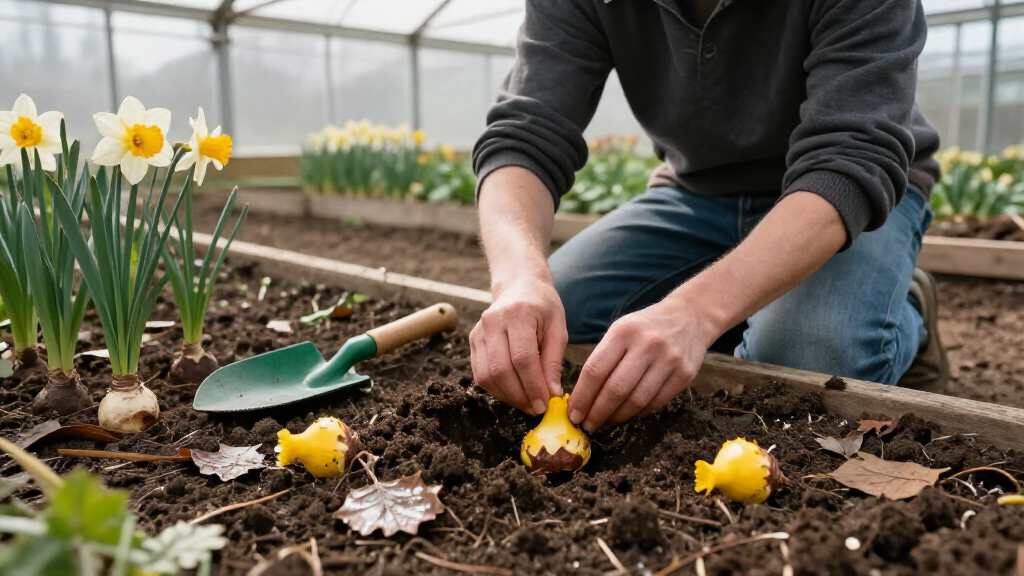
The best daffodil bulbs overall are Dutch Master Trumpet Daffodil Bulbs, 100 Count, 12/14 cm: their classic yellow trumpet form and generous quantity suit broad, natural-looking plantings. For more variety, 50 Mixed Large-Cupped Daffodil Bulbs offer a varied display, while Garden State Bulb Double Mixed Daffodils are a stronger pick for gardeners who want layered, ruffled flowers. The main tradeoff is choosing between a consistent, familiar look and a mixed assortment with more variation in bloom shape and color. Pack size, bulb caliber, and whether you want daffodils alone or a companion-bulb mix also affect the fit. Read on for the full comparison, selection criteria, and advice for matching bulbs to your planting plans.

Get garden gear delivered free with Prime
- Fast, free delivery on millions of items
- Prime Video, Amazon Music and more included
- Member-only deals all year
Complete the kit


Key Takeaways
- Dutch Master Trumpet Daffodils, 100 Count lead for large plantings because the classic yellow trumpet style is easy to repeat across a lawn edge or border.
- Large-cupped and mixed assortments favor gardeners who value variation; their bloom colors and forms may be less uniform than a single trumpet cultivar.
- Double daffodils offer a more layered flower shape, but buyers choosing them are prioritizing appearance over the simple, consistent look of classic yellow trumpets.
- Pack sizes range from 10 bulbs to 100, so the best fit depends on bed area and desired density—not simply on choosing the largest bag.
- The Potluck daffodil and muscari mix is the lineup’s distinct companion-flower option; it differs from products that contain daffodils alone.
| 10 Pink Champagne Double Daffodil Bulbs, White and Pink Ruffled Narcissus |  | Best for Distinctive Double Blooms | Quantity: 10 bulbs | Flower type: Double daffodil | Flower colors: White, rosy pink, and yellow | VIEW LATEST PRICE | See Our Full Breakdown |
| Dutch Master Trumpet Daffodil Bulbs, 100 Count, 12/14 cm |  | Best for Large Classic Yellow Plantings | Bulb count: 100 | Bulb size: 12/14 cm | Flower color and type: Yellow trumpet | VIEW LATEST PRICE | See Our Full Breakdown |
| 50 Mixed Large-Cupped Daffodil Bulbs for Planting |  | Best Mid-Sized Mixed Assortment | Quantity: 50 bulbs | Flower type: Mixed large-cupped Narcissus | Bulb size: 12/14 | VIEW LATEST PRICE | See Our Full Breakdown |
| Willard & May 100 Mixed Daffodil Bulbs |  | Best for Broad Variety in a Large Planting | Quantity: 100 bulbs | Flower types: Trumpet, large-cup, and multi-flowering | Flower colors: Yellow, cream, and bicolor | VIEW LATEST PRICE | See Our Full Breakdown |
| Garden State Bulb Mixed Daffodil Bulbs, Fall Planting, Bag of 25 |  | Best for Small, Flexible Plantings | Quantity: 25 bulbs | Bulb size: 12/14 cm (5–5.5 inches) | Colors: White, orange, pink, and yellow | VIEW LATEST PRICE | See Our Full Breakdown |
| Potluck Planting Daffodil and Muscari Flower Bulb Mix, 25 Bulbs |  | Best for a Coordinated Mixed Planting | Bulb count: 25 total | Included varieties: 10 Golden Echo daffodils, 10 Rip Van Winkle daffodils, 5 blue grape muscari | Planting period: Fall | VIEW LATEST PRICE | See Our Full Breakdown |
| Garden State Bulb Double Mixed Daffodil Bulbs, 14/16 cm, 25 Count |  | Best for Double-Bloom Variety | Quantity: 25 bulbs | Bulb size: 14/16 cm circumference | Flower colors: White, yellow, orange, and pink | VIEW LATEST PRICE | See Our Full Breakdown |
| Yellow Dutch Master Classic Daffodils – 50 Perennial & Naturalizing Flower Bulbs |  | Best for Naturalizing a Larger Yellow Display | Bulb count: 50 | Color: Yellow | Blooming period: Spring | VIEW LATEST PRICE | See Our Full Breakdown |
| Dutch Master Yellow Daffodil Bulbs, 25 Count |  | Best for a Straightforward Mid-Spring Planting | Bulb quantity: 25 | Bloom color: Yellow | Bloom time: Mid-spring | VIEW LATEST PRICE | See Our Full Breakdown |
| Tended Bloom Mixed Daffodil Bulbs, 10 Count |  | Best Compact Mix for Wildlife-Visited Gardens | Quantity: 10 bulbs | Color: Multi | Blooming period: Spring | VIEW LATEST PRICE | See Our Full Breakdown |
| Willard & May Dutch Master Yellow Daffodil Bulbs, 50 Count |  | Best for a Classic Yellow Display | Quantity: 50 bulbs | Bulb size: 10/12 cm | Bloom color: Yellow | VIEW LATEST PRICE | See Our Full Breakdown |
| Willard & May Mixed Daffodil Bulbs, 100 Count |  | Best for a Varied, High-Volume Planting | Quantity: 100 bulbs | Plant type: Daffodil (Narcissus) | Varieties: Trumpet, large-cup, and multi-flowering | VIEW LATEST PRICE | See Our Full Breakdown |
| 10 Dutch Master Yellow Trumpet Daffodil Bulbs |  | Best Small Pack for Naturalizing | Quantity: 10 bulbs | Bloom color: Golden yellow | Bloom period: Early to mid-spring, depending on climate | VIEW LATEST PRICE | See Our Full Breakdown |
| Fortune Daffodil Bulbs, 25-Pack |  | Best for Two-Tone Spring Flowers | Quantity: 25 bulbs | Bulb size: 12/14 cm | Flower color: Yellow with soft orange cups | VIEW LATEST PRICE | See Our Full Breakdown |
| Willard & May Mixed Daffodil Bulbs, 50-Pack |  | Best Mid-Size Mixed Pack | Quantity: 50 bulbs | Flower type: Daffodil (Narcissus) | Colors: Yellow, white, and bi-color | VIEW LATEST PRICE | See Our Full Breakdown |
| daffodil bulb | Quantity | Hardiness | Planting period | Sunlight |
|---|---|---|---|---|
| 10 Pink Champagne Double Daffo | 10 bulbs | USDA Zones 3–8 | — | — |
| Dutch Master Trumpet Daffodil | — | USDA Zones 2–10 | — | — |
| 50 Mixed Large-Cupped Daffodil | 50 bulbs | USDA Zones 3–8 | — | — |
| Willard & May 100 Mixed Daffod | 100 bulbs | USDA Zones 3–8 | September to December | Partial sun |
| Garden State Bulb Mixed Daffod | 25 bulbs | USDA Zones 2–9 | Fall | — |
| Potluck Planting Daffodil and | — | — | Fall | Full sun to partial shade |
| Garden State Bulb Double Mixed | 25 bulbs | — | Fall | Full sun to partial shade |
| Yellow Dutch Master Classic Da | — | — | Spring, as listed | Partial sun |
| Dutch Master Yellow Daffodil B | — | — | — | — |
| Tended Bloom Mixed Daffodil Bu | 10 bulbs | — | Fall | Full sun to partial shade |
| Willard & May Dutch Master Yel | 50 bulbs | USDA zone 3 | September to December | — |
| Willard & May Mixed Daffodil B | 100 bulbs | USDA zones 3–8 | September through December | Partial sun |
| 10 Dutch Master Yellow Trumpet | 10 bulbs | USDA zones 3–8 | — | Full sun to partial shade |
| Fortune Daffodil Bulbs | 25 bulbs | USDA zones 3–9 | — | — |
| Willard & May Mixed Daffodil B | 50 bulbs | USDA zones 3–8 | September to December | Partial sun; full sun or light shade |
More Details on Our Top Picks
10 Pink Champagne Double Daffodil Bulbs, White and Pink Ruffled Narcissus
Pink Champagne is the choice here for gardeners who want daffodils to read as a feature flower, not just a sweep of spring yellow. Its ruffled rosy-pink centers, white outer petals, and yellow accents offer more visual detail than the straightforward trumpet blooms of Dutch Master. At 16–18 inches, it fits borders and containers while also supplying stems for cut arrangements. The bulbs are listed as deer resistant and suitable for naturalizing in Zones 3–8, though the pack contains only 10, so it suits a focused planting rather than a large drift. It needs fall planting and well-drained soil; buyers seeking a low-cost, broad-color mass display may prefer the 50 Mixed Large-Cupped Daffodil Bulbs instead.
Pros:- Double flowers combine white petals with ruffled rosy-pink centers and yellow accents.
- 16–18-inch height works in borders, containers, and cut arrangements.
- Listed as deer resistant and suitable for naturalizing.
- Hardy in USDA Zones 3–8.
Cons:- The 10-bulb pack is better for a small display than a broad mass planting.
- Requires fall planting and well-drained soil.
Best for: Gardeners planting a small, colorful feature group for borders, containers, or cut flowers who want double pink-and-white blooms.
Not ideal for: Buyers who want a large, uniform yellow planting or need bulbs for wet, poorly drained soil.
- Quantity:10 bulbs
- Flower type:Double daffodil
- Flower colors:White, rosy pink, and yellow
- Mature height:16–18 inches
- Bloom period:Mid to late spring
- Planting depth and season:6 inches; fall
- Light and soil:Full sun to partial shade; well-drained soil
- Hardiness:USDA Zones 3–8
Our verdict“Choose Pink Champagne for a compact planting with unusually detailed pink-and-white double blooms, not for a large, uniform daffodil sweep.”
Dutch Master Trumpet Daffodil Bulbs, 100 Count, 12/14 cm
For buyers who want a wide, recognizable sweep of yellow, this 100-bulb Dutch Master pack has a clearer purpose than the smaller mixed assortments. Its trumpet flowers can reach 5 inches across, and sturdy 18–20-inch stems give a planting presence that shorter options, such as Garden State Bulb Mixed Daffodil Bulbs, may not match consistently. The bulbs are described as heirloom and organic, and they can stay in the ground and multiply, making this a practical choice for a lasting mass display. The tradeoff is limited color variety: this is a classic yellow trumpet, not a mixed palette. The listed partial-shade exposure and sandy-soil preference also make it less flexible for gardeners whose site has different conditions.
Pros:- Large yellow trumpet blooms can reach 5 inches across.
- A 100-bulb count supports broad group planting.
- Sturdy stems grow 18–20 inches tall.
- Bulbs can remain in the ground and multiply over time.
Cons:- The single yellow flower color offers less variety than mixed assortments.
- May need dividing after two to three years as bulbs multiply.
- Bulbs are described as sensitive to extreme heat or cold during shipping.
Best for: Gardeners in Zones 2–10 who want a substantial, mostly uniform yellow trumpet display that can naturalize over time.
Not ideal for: Buyers seeking multiple flower colors, compact plants, or a mix that suits varied garden conditions.
- Bulb count:100
- Bulb size:12/14 cm
- Flower color and type:Yellow trumpet
- Flower diameter:Up to 5 inches
- Expected plant height:18–20 inches
- Bloom season:Spring
- Hardiness:USDA Zones 2–10
- Planting and site:Fall planting; partial shade; sandy soil
Our verdict“Pick Dutch Master for a large, enduring yellow trumpet display; choose a mixed pack if color variety matters more than uniformity.”
50 Mixed Large-Cupped Daffodil Bulbs for Planting
This 50-bulb assortment is a useful middle ground between the 10-bulb Pink Champagne pack and the 100-bulb Willard & May mix: enough bulbs to make a noticeable planting, without committing to a very large batch. Mixed large-cupped flowers bring variation in color and shape, while an approximately four-week display from early to mid spring gives the bed a defined season. At about 18 inches tall, the plants suit beds, borders, containers, and cutting. Deer and rabbit resistance adds practical value, but repeat blooms depend on well-drained soil and leaving the foliage to die back naturally. That post-bloom foliage can be untidy, and the mix is less predictable than Dutch Master’s single-color trumpet flowers. It is best for gardeners who welcome variety and can wait for the leaves to fade.
Pros:- 50 bulbs create a more substantial display than small feature packs.
- Mixed large-cupped flowers vary in color and shape.
- Listed as resistant to deer and rabbits.
- Approximately four weeks of early-to-mid-spring bloom.
Cons:- Well-drained soil is needed; excessive moisture is unsuitable.
- Foliage must die back naturally to support repeat blooms.
- Mixed colors and shapes are less uniform than Dutch Master trumpet daffodils.
Best for: Gardeners who want a varied, medium-sized spring planting for beds or containers and can leave foliage in place after flowering.
Not ideal for: Those who need a consistent flower color, have waterlogged soil, or plan to remove foliage soon after bloom.
- Quantity:50 bulbs
- Flower type:Mixed large-cupped Narcissus
- Bulb size:12/14
- Mature height:About 18 inches
- Bloom period and duration:Early to mid spring; approximately four weeks
- Planting depth and season:6–8 inches; fall
- Light and soil:Full sun to partial shade; well-drained soil
- Hardiness:USDA Zones 3–8
Our verdict“Choose this assortment for a varied, mid-sized spring display if you can accommodate its drainage needs and post-bloom foliage.”
Willard & May 100 Mixed Daffodil Bulbs
Among these options, the Willard & May pack is the one I’d favor for gardeners who want 100 bulbs with several flower forms, rather than a single cultivar repeated across the bed. The mix includes trumpet, large-cup, and multi-flowering daffodils in yellow, cream, and bicolor tones, giving a broad planting more variation than the 100-count Dutch Master pack, which focuses on yellow trumpets. Its cold tolerance for Zones 3–8, resistance to deer and rodents, and ability to naturalize suit an outdoor planting intended to return. The product data lists spring-to-fall bloom season, but does not give a more precise flowering window or plant height, so buyers seeking predictable timing may prefer the 50 Mixed Large-Cupped assortment, which specifies early-to-mid-spring bloom. This pack is outdoor-focused and calls for fall planting.
Pros:- Includes trumpet, large-cup, and multi-flowering varieties.
- Mixed yellow, cream, and bicolor flowers create a varied display.
- Listed as deer and rodent resistant.
- Cold tolerant in USDA Zones 3–8 and able to naturalize.
Cons:- The assortment is intended for outdoor planting.
- Fall planting is recommended, so it is not a ready-to-plant spring option.
- The supplied product data does not specify mature height or a precise bloom window.
Best for: Gardeners planting a large outdoor area who want varied flower forms and colors, along with bulbs suited to naturalizing.
Not ideal for: Buyers who need a precise bloom window, known mature height, or a daffodil assortment for indoor use.
- Quantity:100 bulbs
- Flower types:Trumpet, large-cup, and multi-flowering
- Flower colors:Yellow, cream, and bicolor
- Hardiness:USDA Zones 3–8
- Planting period:September to December
- Sunlight:Partial sun
- Moisture needs:Little to no watering
- Use:Outdoor planting
Our verdict“Choose this pack for a large, varied outdoor planting that can naturalize, but opt for a more specifically described assortment if bloom timing matters.”
Garden State Bulb Mixed Daffodil Bulbs, Fall Planting, Bag of 25
With 25 mixed bulbs, this Garden State pack suits a smaller bed, a container group, or a first try at daffodils better than the 50-bulb large-cupped assortment. Its expected height range of 10–18 inches gives it more scope for compact placements, while the listed white, orange, pink, and yellow colors offer variety without requiring a 100-bulb commitment. The bulbs are suited to full sun or partial shade and Zones 2–9, a broader stated range than Pink Champagne’s Zones 3–8. The tradeoff is that the variety mix can differ between packages, so buyers cannot plan around a guaranteed color or flower form. Fall planting and well-drained soil are required, and the product data describes this as an outdoor assortment even though containers are listed as a possible use.
Pros:- A 25-bulb pack suits smaller gardens and limited planting areas.
- Listed colors include white, orange, pink, and yellow.
- 10–18-inch height range offers flexibility for containers and borders.
- Hardy in USDA Zones 2–9 and suited to full sun or partial shade.
Cons:- The variety mix may differ between packages.
- Requires fall planting in well-drained soil.
- Listed for outdoor use, so it is not a dedicated indoor-growing option.
Best for: Gardeners who want a manageable 25-bulb assortment for a small outdoor bed or container planting, with a broad range of possible colors.
Not ideal for: Buyers who need a consistent named variety or exact color mix, or who cannot plant in fall.
- Quantity:25 bulbs
- Bulb size:12/14 cm (5–5.5 inches)
- Colors:White, orange, pink, and yellow
- Expected height:10–18 inches
- Bloom period:Spring
- Planting period:Fall
- Light and soil:Full sun to partial shade; loam
- Hardiness:USDA Zones 2–9
Our verdict“Pick this pack for a smaller, flexible outdoor planting if you are comfortable with the color and variety mix changing between bags.”
Potluck Planting Daffodil and Muscari Flower Bulb Mix, 25 Bulbs
For gardeners who want daffodils with a contrasting spring accent, this set pairs 20 daffodils—10 Golden Echo and 10 Rip Van Winkle—with five blue grape muscari. That gives a small bed more color and variety than the single-color Dutch Master Yellow Daffodil Bulbs, 25 Count, while keeping the planting focused on spring bloomers. Fragrant flowers and a stated height of about 12 inches suit borders where a lower display is preferable to the taller Tended Bloom mix. The tradeoff is that only 20 of the 25 bulbs are daffodils, so it is less suited to buyers aiming for a solid daffodil mass. It also calls for fall planting and moist, well-drained soil; the broad zones 3–10 range does not remove that soil requirement.
Pros:- Combines two daffodil varieties with blue grape muscari for a coordinated planting.
- Fragrant blooms add scent as well as spring color.
- About 12 inches tall, making it suitable for shorter borders.
- Listed for hardiness zones 3–10 and full sun to partial shade.
Cons:- Only 20 of the 25 bulbs are daffodils.
- Requires fall planting to produce spring blooms.
- Needs moist, well-drained soil rather than persistently wet ground.
Best for: Gardeners planting a compact spring border who want daffodils paired with blue muscari and appreciate fragrant blooms.
Not ideal for: Buyers who want 25 daffodils in one color or a large, uniform daffodil display.
- Bulb count:25 total
- Included varieties:10 Golden Echo daffodils, 10 Rip Van Winkle daffodils, 5 blue grape muscari
- Planting period:Fall
- Expected bloom period:Spring
- Sunlight:Full sun to partial shade
- Soil:Moist, well-drained
- Hardiness zones:3–10
- Expected height:12 inches
Our verdict“Choose this mix for a smaller, fragrant spring display with blue accents, not for a uniform planting of daffodils.”
Garden State Bulb Double Mixed Daffodil Bulbs, 14/16 cm, 25 Count
This assortment is the pick for gardeners who prefer full, layered double flowers over the classic trumpet look of Dutch Master. Its 25 bulbs can produce blooms in white, yellow, orange, and soft pink, bringing more color variation than the single-yellow Dutch Master Yellow Daffodil Bulbs, 25 Count. The listed 14–16 cm bulb circumference and 14–16-inch mature height give it a substantial presence in beds, containers, or cut-flower arrangements. It is also described as deer and squirrel resistant and able to multiply over time. The main compromise is predictability: the assortment can vary between packages, so it is a poor fit for a carefully color-matched plan. Fall planting and well-drained soil are still required, despite the stated tolerance for dry conditions once growing.
Pros:- Double flowers come in white, yellow, orange, and soft pink.
- Suitable for both containers and cut-flower use.
- Listed as deer and squirrel resistant.
- Bulbs may multiply over time and need little to no water.
Cons:- The color assortment varies between packages.
- Requires fall planting and well-drained soil.
- Double-flower selection is less suited to buyers seeking a classic trumpet daffodil form.
Best for: Gardeners seeking a colorful mix of double daffodils for containers, cutting, or a varied spring border.
Not ideal for: Gardeners who need specific flower colors or a uniform, repeatable planting scheme.
- Quantity:25 bulbs
- Bulb size:14/16 cm circumference
- Flower colors:White, yellow, orange, and pink
- Blooming period:Spring
- Planting period:Fall
- Mature height:14–16 inches
- USDA hardiness zones:2–9
- Sunlight:Full sun to partial shade
Our verdict“Pick this assortment for varied, full double blooms, but skip it if you need exact colors or a consistent layout.”
Yellow Dutch Master Classic Daffodils – 50 Perennial & Naturalizing Flower Bulbs
With 50 classic yellow bulbs, this pack is suited to gardeners who want a broad, simple display that can spread over time. Its naturalizing habit is the key difference from the 25-count Dutch Master Yellow Daffodil Bulbs: it starts with twice as many bulbs, and the product says they can multiply each year. Low water needs also make it a practical choice for plantings that are not regularly irrigated. The tradeoffs are a narrower growing profile and a planting-detail mismatch in the supplied information: it lists partial sun, sandy soil, and zones 3–8, while its planting period is given as spring, unlike the fall recommendation for several other bulbs here. Buyers should check local planting guidance and soil fit before choosing it, especially for heavy clay or deeply shaded sites.
Pros:- Includes 50 yellow bulbs for a broader initial planting.
- Described as perennial and naturalizing, with bulbs multiplying over time.
- Little to no watering is listed as a care requirement.
- Organic material feature is specified.
Cons:- Only yellow flowers are included, limiting color variety.
- Listed for sandy soil and partial sun, so it may not suit heavy clay or full shade.
- The supplied planting period is spring, unlike the fall guidance for several other products.
Best for: Gardeners who want a larger, single-color yellow planting that can naturalize and need little routine watering.
Not ideal for: Buyers seeking mixed colors, planting guidance that clearly specifies fall, or bulbs for heavy clay and full shade.
- Bulb count:50
- Color:Yellow
- Blooming period:Spring
- Planting period:Spring, as listed
- Sunlight:Partial sun
- Soil type:Sandy
- USDA hardiness zones:3–8
- Water needs:Little to no watering
Our verdict“Choose this pack for a low-water, naturalizing yellow display if its sandy-soil and partial-sun requirements fit your garden.”
Dutch Master Yellow Daffodil Bulbs, 25 Count
This is the more focused option for gardeners who want 25 yellow Dutch Master daffodils and clear spacing and depth guidance rather than a mixed assortment. The specified 6–8-inch planting depth and 4–6-inch spacing help turn a bag of bulbs into a practical planting plan. Its mid-spring bloom timing also gives buyers a defined seasonal window, while the 3–8 hardiness range overlaps with the larger 50-bulb yellow Dutch Master pack. Compared with that naturalizing option, this product provides fewer bulbs and lists moderate watering rather than little to no watering. It is better suited to a measured, smaller planting than a broad naturalized drift. Fall planting is required, and partial sun is the listed exposure, so it is not the strongest choice for a fully shaded spot.
Pros:- Provides 25 bulbs of one yellow variety for a consistent display.
- Mid-spring bloom timing is specified.
- Planting depth and spacing are provided to guide layout.
- Listed for USDA hardiness zones 3–8.
Cons:- Requires fall planting.
- Moderate watering is listed, unlike the low-water 50-bulb Dutch Master pack.
- Single-color flowers offer less variety than mixed bulb assortments.
Best for: Gardeners who want a defined planting of yellow daffodils and value stated bulb depth, spacing, and mid-spring timing.
Not ideal for: Buyers planning a large naturalized display, wanting mixed colors, or gardening in full shade.
- Bulb quantity:25
- Bloom color:Yellow
- Bloom time:Mid-spring
- Planting season:Fall
- Planting depth:6–8 inches
- Planting spacing:4–6 inches
- Expected height:12–18 inches
- USDA hardiness zones:3–8
Our verdict“Choose this 25-bulb pack for a clearly laid-out mid-spring yellow planting, not for a large naturalized drift.”
Tended Bloom Mixed Daffodil Bulbs, 10 Count
For a small planting where color variety matters more than bulb count, this 10-bulb mix offers multicolor spring flowers on stems about 18 inches tall. It is listed as deer and rabbit resistant, and the pack also describes resistance to rodents and squirrels, making it more appealing for gardens where browsing is a concern than the mixed double Garden State Bulb Double Mixed Daffodil Bulbs, which specifies deer and squirrel resistance. Its stated bloom duration of up to four weeks gives the display a defined window, and bulbs can return when foliage is allowed to mature naturally. That last condition is a real garden-planning tradeoff: foliage cannot be cut back early if reliable return is the goal. With only 10 bulbs, this is a modest accent planting, not a substitute for the 25- or 50-bulb packs.
Pros:- Mixed colors create more variety than single-yellow Dutch Master packs.
- Listed as resistant to deer, rabbits, rodents, and squirrels.
- Flowers may last up to four weeks.
- Can return year after year when foliage is allowed to mature naturally.
Cons:- Ten bulbs make this a small-scale planting.
- Fall planting and well-drained soil are required.
- Foliage must mature naturally for reliable return.
Best for: Gardeners with limited planting space who want mixed-color daffodils and need listed resistance to deer and rabbits.
Not ideal for: Buyers seeking a large mass planting or those who need to remove bulb foliage soon after flowering.
- Quantity:10 bulbs
- Color:Multi
- Blooming period:Spring
- Bloom duration:Up to 4 weeks
- Expected height:About 18 inches
- Planting period:Fall
- Sunlight:Full sun to partial shade
- USDA hardiness zones:3–9
Our verdict“Choose this compact mix for a wildlife-visited garden where color and browsing resistance matter more than planting volume.”
Willard & May Dutch Master Yellow Daffodil Bulbs, 50 Count
I’d choose this 50-bulb pack for a coordinated spring display: its large yellow trumpet blooms and sturdy stems offer a bolder, more uniform look than the mixed-color Willard & May 50-Pack. At about 45 cm tall, the flowers can anchor a border or add height to a container planting. The listed USDA zone 3 hardiness and low water needs also suit gardeners looking for bulbs that ask for little attention after planting. The tradeoff is that this pick sticks to one color and form, while the Willard & May Mixed Daffodil Bulbs, 100 Count offers several bloom types and colors. It also needs fall planting, with bulbs set about 10 cm deep and apart, so it’s not a quick spring-season purchase.
Pros:- 50 bulbs support a substantial, coordinated yellow display.
- Large trumpet blooms and sturdy stems create a strong border presence.
- Suitable for beds, borders, pots, and containers.
- Listed as hardy to USDA zone 3 with little to no watering needed.
Cons:- Offers only yellow trumpet daffodils rather than a varied mix.
- Fall planting from September through December is needed for spring flowers.
- Bulbs need about 10 cm of depth and spacing, which takes planning across a large bed.
Best for: Gardeners who want a sizable, consistent planting of classic yellow trumpet daffodils for beds, borders, or containers.
Not ideal for: Buyers seeking varied flower colors or forms, or gardeners who have missed the fall planting window.
- Quantity:50 bulbs
- Bulb size:10/12 cm
- Bloom color:Yellow
- Mature height:About 45 cm
- Planting period:September to December
- Planting depth and spacing:About 10 cm each
- Sun exposure:Full sun or partial shade
- Hardiness:USDA zone 3
Our verdict“Choose this pack for a broad, classic yellow planting; pick the Willard & May Mixed Daffodil Bulbs, 100 Count if color and flower-form variety matter more.”
Willard & May Mixed Daffodil Bulbs, 100 Count
For gardeners covering a large bed or naturalizing an open area, I’d put this 100-bulb assortment ahead of smaller mixed packs. It combines trumpet, large-cup, and multi-flowering daffodils in yellow, cream, and bi-color, giving the planting more visual variation than the single-color Dutch Master Yellow 50-count pack. The assortment is also listed as deer and rodent resistant, cold hardy in zones 3–8, and able to naturalize, which suits a low-watering outdoor planting. Its scale is the main advantage, but also the catch: it may be more bulbs than a small border or a few containers need. The listing specifies partial sun and fall planting from September through December, so it’s a less flexible choice for sunny-only sites or gardeners buying outside the planting season.
Pros:- 100 bulbs provide substantial coverage for large beds or naturalized areas.
- Mixes trumpet, large-cup, and multi-flowering forms.
- Yellow, cream, and bi-color blooms provide more variety than a single-color pack.
- Listed as deer and rodent resistant, hardy in zones 3–8, and low-water.
Cons:- The large quantity can exceed the needs of small gardens or a few planters.
- Partial sun is the listed exposure, which may not suit every planting site.
- Planting is limited to the September–December window for the stated seasonal schedule.
Best for: Gardeners filling a large garden bed or naturalizing area who want multiple daffodil forms and colors in one planting.
Not ideal for: Container gardeners or owners of small beds who need a modest quantity, and gardeners whose planting site gets only full sun.
- Quantity:100 bulbs
- Plant type:Daffodil (Narcissus)
- Varieties:Trumpet, large-cup, and multi-flowering
- Bloom colors:Yellow, cream, and bi-color
- Hardiness:USDA zones 3–8
- Planting period:September through December
- Sunlight:Partial sun
- Water needs:Little to no watering
Our verdict“Choose this assortment for broad coverage and several daffodil styles; choose the Willard & May Mixed Daffodil Bulbs, 50-Pack for a smaller mixed planting.”
10 Dutch Master Yellow Trumpet Daffodil Bulbs
This 10-bulb pack makes more sense for a compact planting or a first try at naturalizing than the Willard & May Dutch Master 50-count pack, which is better suited to covering a wider area. The golden-yellow trumpet flowers bloom in early to mid-spring, and multiple blooms per stem can make a small group look fuller than its bulb count suggests. At 16–18 inches tall, the plants fit beds, borders, and containers without the height of the 45 cm Willard & May option. They’re listed as hardy in zones 3–8 and suited to full sun or partial shade. The tradeoff is the small quantity: it won’t create a broad display by itself. Planting also takes care, since the bulbs need 6 inches of depth, 4–6 inches of spacing, and well-drained soil.
Pros:- Small quantity suits compact gardens and trial plantings.
- Multiple blooms per stem can give clusters a fuller appearance.
- Suitable for beds, borders, containers, and naturalizing.
- Listed as hardy in zones 3–8 and tolerant of full sun to partial shade.
Cons:- Ten bulbs are not enough for broad coverage without buying additional packs.
- Requires planting 6 inches deep with 4–6 inches between bulbs.
- Needs well-drained soil and moderate moisture during growth.
Best for: Gardeners wanting a small cluster of yellow trumpet daffodils for a container, border accent, or trial naturalizing patch.
Not ideal for: Anyone filling a large bed or seeking a dense mass planting from a single pack.
- Quantity:10 bulbs
- Bloom color:Golden yellow
- Bloom period:Early to mid-spring, depending on climate
- Plant height:16–18 inches
- Hardiness:USDA zones 3–8
- Sunlight:Full sun to partial shade
- Planting depth:6 inches
- Planting spacing:4–6 inches apart
Our verdict“Pick this pack for a compact yellow accent or small naturalizing trial; choose the 50-count Willard & May Dutch Master pack for a larger, more continuous display.”
Fortune Daffodil Bulbs, 25-Pack
I’d choose Fortune for gardeners who want yellow daffodils with a softer accent rather than the uniform trumpet look of the 10 Dutch Master Yellow Trumpet Daffodil Bulbs. Its yellow petals and soft orange cups add color contrast while keeping the familiar daffodil shape, and the listed bloom duration of up to four weeks gives a planting a defined spring display. The 25 large 12/14 cm bulbs are a middle ground between a small trial pack and the 50-count Dutch Master option. Fortune also suits containers, cut flowers, and naturalizing, with listed hardiness in zones 3–9. The main tradeoff is that it asks for more attention to moisture: the soil should stay moist but drain well, and the plants need full sun to partial shade for the stated growing conditions.
Pros:- Yellow petals with soft orange cups add contrast without relying on mixed varieties.
- 25 large bulbs offer a moderate planting size.
- Listed bloom duration is up to four weeks.
- Suitable for containers, cut flowers, and naturalizing, with hardiness listed through zone 9.
Cons:- Needs moist, well-drained soil and moderate watering.
- The two-tone flowers do not match a uniform yellow planting.
- Listed for full sun to partial shade rather than deeply shaded sites.
Best for: Gardeners who want a mid-sized planting of two-tone yellow and orange daffodils for containers, cutting, or naturalizing.
Not ideal for: Gardeners looking for a pure-yellow trumpet display or a planting that can be left in dry soil during growth.
- Quantity:25 bulbs
- Bulb size:12/14 cm
- Flower color:Yellow with soft orange cups
- Blooming period:Spring
- Bloom duration:Up to 4 weeks
- Mature height:12–18 inches
- Hardiness:USDA zones 3–9
- Watering needs:Moderate; soil should be moist and well-drained
Our verdict“Choose Fortune for a medium-sized planting with distinctive two-tone flowers; choose Dutch Master Yellow Trumpets for a simpler, all-yellow display.”
Willard & May Mixed Daffodil Bulbs, 50-Pack
This is the more manageable mixed option for gardeners who want color variety without committing to the 100 bulbs in the Willard & May Mixed Daffodil Bulbs, 100 Count. The 50-bulb blend of yellow, white, and bi-color flowers can bring variation to a border, pathway, bed, or planter, while its zone 3–8 hardiness suits a broad range of cold-winter gardens. The listing also describes the bulbs as deer, rabbit, and rodent resistant and low-water, which may appeal to gardeners building an outdoor planting with limited ongoing care. Unlike the 10 Dutch Master Yellow Trumpet pack, this is meant for broader mixed-color coverage, not a small, uniform accent. It still requires a fall planting window and well-drained soil, and the listing’s broad bloom-period wording does not promise a precise bloom schedule.
Pros:- 50 bulbs provide a middle ground between a small pack and a 100-bulb assortment.
- Yellow, white, and bi-color flowers add variation to beds and borders.
- Listed as hardy in USDA zones 3–8 and requiring little to no watering.
- Described as resistant to deer, rabbits, and rodents.
Cons:- Mixed colors do not create a uniform single-color display.
- Planting is specified for September through December.
- Requires well-drained soil, and the bloom-period listing does not give a precise schedule.
Best for: Gardeners who want mixed daffodil colors across a medium-size bed, border, pathway, or group of planters.
Not ideal for: Buyers who want one consistent flower color or need bulbs that can be planted outside the September–December window.
- Quantity:50 bulbs
- Flower type:Daffodil (Narcissus)
- Colors:Yellow, white, and bi-color
- Hardiness:USDA zones 3–8
- Expected bloom period:Spring to fall, as listed
- Planting period:September to December
- Sunlight:Partial sun; full sun or light shade
- Water needs:Little to no watering
Our verdict“Choose this pack for a medium-sized, mixed-color planting; choose the 100-count assortment for more coverage and additional flower forms.”
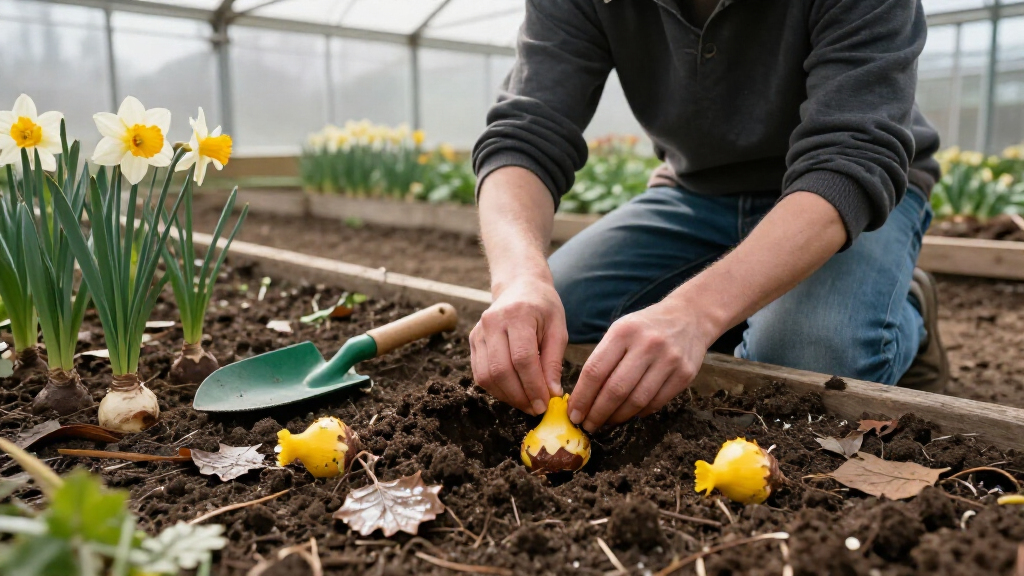
How We Picked
I compared these 15 listings by the factors that change a planting decision: flower form and color, quantity, stated bulb size where provided, and whether a pack offers a single recognizable type or a mixed assortment. I also considered how clearly each option serves a use—such as a large naturalized display, a smaller trial planting, a double-flower feature, or a mixed spring scene. A listed 14/16 cm or 12/14 cm bulb size gives buyers more sizing information than a listing without a stated caliber, but it does not by itself guarantee bloom performance.
The ranking favors options with a clear purpose and a useful balance of planting scale, recognizable flower style, and buyer flexibility. The Dutch Master 100-count pack ranks first for its straightforward, repeatable look and broad coverage; mixed large-cupped bulbs and double mixes follow for gardeners who put variety or flower shape first. Smaller packs rank well for targeted beds and trial plantings, while similar Dutch Master and mixed listings are separated by quantity, assortment, or the specific use they suggest. Product names alone do not establish growing results, so I avoid claims about bloom strength or long-term performance that the listing details do not support.
| daffodil bulb | Hardiness | Planting period | Sunlight |
|---|---|---|---|
| 10 Pink Champagne Double Daffo | USDA Zones 3–8 | — | — |
| Dutch Master Trumpet Daffodil | USDA Zones 2–10 | — | — |
| 50 Mixed Large-Cupped Daffodil | USDA Zones 3–8 | — | — |
| Willard & May 100 Mixed Daffod | USDA Zones 3–8 | September to December | Partial sun |
| Garden State Bulb Mixed Daffod | USDA Zones 2–9 | Fall | — |
| Potluck Planting Daffodil and | — | Fall | Full sun to partial shade |
| Garden State Bulb Double Mixed | — | Fall | Full sun to partial shade |
| Yellow Dutch Master Classic Da | — | Spring, as listed | Partial sun |
| Dutch Master Yellow Daffodil B | — | — | — |
| Tended Bloom Mixed Daffodil Bu | — | Fall | Full sun to partial shade |
| Willard & May Dutch Master Yel | USDA zone 3 | September to December | — |
| Willard & May Mixed Daffodil B | USDA zones 3–8 | September through December | Partial sun |
| 10 Dutch Master Yellow Trumpet | USDA zones 3–8 | — | Full sun to partial shade |
| Fortune Daffodil Bulbs | USDA zones 3–9 | — | — |
| Willard & May Mixed Daffodil B | USDA zones 3–8 | September to December | Partial sun; full sun or light shade |
Factors to Consider When Choosing Best Daffodil Bulbs
Before choosing from these daffodils, match the bulb pack to the space, visual effect, and planting plan you actually have. A bigger assortment is not automatically a better buy if the flowers will be scattered too thinly or the mix does not suit your preferred look.
Choose a flower style before choosing a pack size
Classic trumpet daffodils create a more consistent display, while mixed and large-cupped assortments bring greater variation in flower form or color. Double varieties are a distinct choice for gardeners who want fuller, layered blooms rather than the familiar single trumpet silhouette. Decide whether the planting should read as one coordinated sweep or as a collection of different flowers. A mix can look lively, but it may not deliver a uniform color block. If a specific color or shape is central to your plan, favor a clearly named type over a broadly described mix.
Estimate coverage instead of buying by the biggest number
Pack count matters only alongside the area you intend to plant and how dense you want the result to look. A 100-bulb pack is better suited to a broad border or naturalized area than a small container, while a 10- or 25-bulb pack can serve a focused bed or a first trial. Before ordering, sketch the planting area and check the seller’s spacing guidance for the selected variety. Planting too few bulbs across a large space can leave the display looking scattered. Buying far more than the site can accommodate may force awkward spacing or leave bulbs unused.
Treat listed bulb caliber as useful information, not a guarantee
Some listings state a bulb size, such as 12/14 cm or 14/16 cm, while others do not provide that detail. A stated caliber helps you compare the size specification offered by sellers, but it cannot promise a particular bloom count, flower size, or return in later years. Check that the size refers to the bulb and compare like with like when that information is available. If the listing omits caliber, weigh the pack’s stated variety and quantity rather than guessing at bulb size. For a large order, reading the listing carefully matters more than inferring quality from a number alone.
Check the planting season and local growing conditions
Daffodil bulbs are generally planted in fall for spring flowering, but the right timing depends on local conditions and the supplier’s directions. Confirm the planting window for your region before ordering, especially if bulbs may arrive close to freezing weather or after the ground has become difficult to work. Site conditions matter too: drainage, sun exposure, and competition from nearby roots can affect how well a planting establishes. Do not assume every garden bed is suitable just because daffodils are often used in borders and lawns. Follow the variety-specific instructions and adapt the site rather than relying on pack size to solve a poor planting location.
Decide whether companion flowers belong in the same planting
The Potluck option pairs daffodils with muscari, unlike the daffodil-only packs in this lineup. A companion mix can make a planting feel more varied without requiring you to select and coordinate separate products. The tradeoff is less control over where each flower type appears and how much of the display comes from each. If you want a deliberate color pattern or need to keep plants in separate areas, buying bulbs separately gives you more control. Check the package contents and planting directions so the companion bulbs fit the space and flowering plan you have in mind.
Spend more attention on fit than on a long-term promise
When comparing packs, prioritize a clearly identified flower type, a quantity suited to the site, and useful listing details such as bulb caliber when supplied. A description that calls bulbs perennial or naturalizing signals the intended use, but it does not remove the need to match soil, drainage, and climate to the planting. If you are new to bulbs, a smaller, clearly named pack can limit the consequences of a poor site choice while you learn what works in your garden. For an established large bed, a bulk pack may make the layout easier to repeat. Avoid paying for a feature you will not use, such as a broad mixed assortment when consistency is your main goal.
Frequently Asked Questions
Should I choose a Dutch Master pack or a mixed daffodil assortment?
Choose Dutch Master if you want the familiar yellow trumpet form repeated throughout the planting. A mixed assortment makes more sense when variety in flower shape or color matters more than uniformity. The 100-count Dutch Master pack suits a broader display, while a mixed pack can make a smaller or more varied garden feel less predictable. Check the listing details because “mixed” does not tell you exactly which cultivars or proportions are included. If you need a specific color scheme, a named single type is the safer choice.
Is a 10- or 25-bulb pack enough for a noticeable display?
It can be enough for a focused cluster, a small border section, or a trial planting, but it may look sparse if spread over a large lawn or bed. Plan the area first, then use the seller’s spacing guidance to estimate how many bulbs it can hold. Grouping a smaller pack in one area generally creates a clearer visual effect than scattering it widely. Larger packs are more practical when you want a broad, repeated sweep. The right count depends on the site and the density you want, not a universal minimum.
Does a listed 14/16 cm bulb size mean the flowers will be better?
A stated caliber gives you a bulb-size specification to compare, but it is not a guarantee of flower quality or future performance. The number does not tell you how the bulbs were stored, whether the site suits the variety, or how the planting will perform over time. It is useful when comparing listings that provide similar sizing information. If another listing does not state caliber, do not assume it contains smaller bulbs; the detail is simply unavailable. Use size alongside variety, pack quantity, and planting needs rather than as the sole deciding factor.
Should I buy a daffodil and muscari mix or plant the two flowers separately?
A combined mix is convenient if you want both flower types in one spring planting and are comfortable with the arrangement supplied. Separate purchases give you more control over spacing, placement, and the proportion of each flower in the bed. That control can matter in formal borders or where one plant needs to occupy a distinct area. The Potluck mix is the lineup’s option for buyers seeking a combined planting. Check its contents and directions before ordering, since a mixed pack may not match a precise color or layout plan.
When should I order daffodil bulbs, and what if they arrive before I can plant?
Daffodil bulbs are typically planted in fall, but regional weather and the supplier’s guidance determine the suitable window. Check the expected delivery period and local planting conditions before placing an order, particularly if the ground may freeze or become waterlogged. If bulbs arrive early, follow the seller’s storage directions and keep them in the conditions specified rather than leaving them in a warm, damp place. Do not hold them indefinitely while waiting for an ideal weekend. If planting conditions are already unsuitable, contact the supplier for advice specific to that shipment.
Conclusion
For most gardeners planning a substantial, coordinated display, I recommend Dutch Master Trumpet Daffodils, 100 Count as the best overall pick. For value through planting scale, compare the larger packs—especially the Willard & May 100 Mixed Daffodils—with your preferred look and available space rather than choosing on count alone. Gardeners seeking a more distinctive flower shape should choose the Garden State Bulb Double Mixed Daffodils as the premium-style option, while beginners may prefer a smaller, clearly named pack such as 10 Dutch Master Yellow Trumpet Daffodils to test a site. For a varied display, choose the large-cupped mix; for daffodils paired with another spring flower, choose the Potluck daffodil and muscari mix. The best fit comes down to whether you value consistency, variety, flower form, or companion planting most.