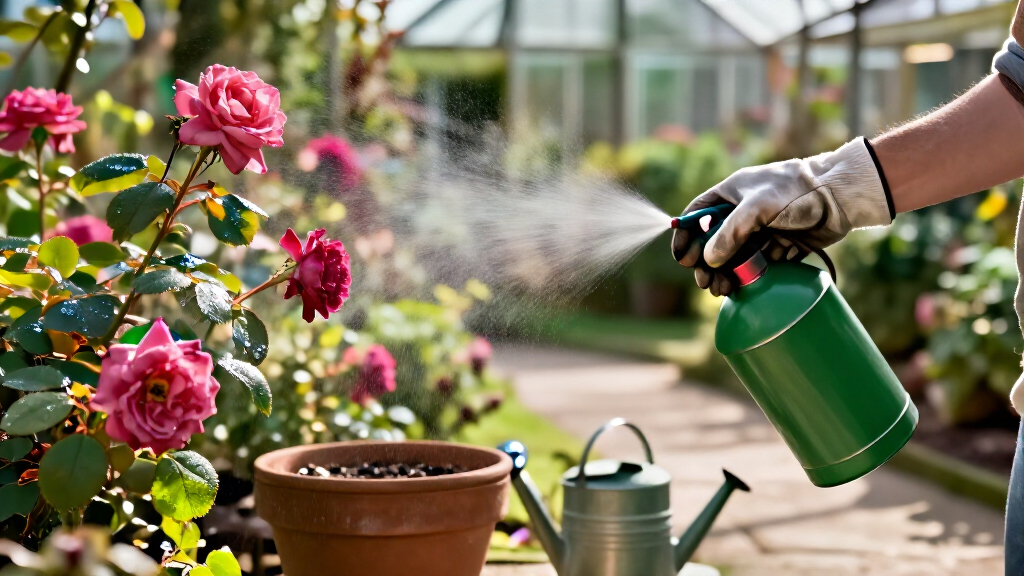
The best rose care products depend on whether your main need is feeding, pest control, or disease management. I name Miracle-Gro Water Soluble Rose Plant Food my best overall pick for straightforward, targeted feeding, while Jobe’s Organics Granular Rose and Flower Fertilizer stands out for gardeners seeking an organic granular option and Bonide Captain Jack’s Rose Rx 4-in-1 for a broad spray approach to common rose problems. The main tradeoff is convenience versus control: all-in-one treatments cover more concerns, while single-purpose products let you treat only what your roses need. Application frequency, systemic versus contact action, and organic preferences also shape the choice. Read on for my full comparison and guidance on matching a product to your garden.

Get garden gear delivered free with Prime
- Fast, free delivery on millions of items
- Prime Video, Amazon Music and more included
- Member-only deals all year
Complete the kit


Key Takeaways
- Feeding and plant protection are different jobs: Miracle-Gro Water Soluble Rose Plant Food is a focused fertilizer, while BioAdvanced All-in-One products combine care functions that may suit gardeners seeking fewer separate applications.
- Granular and water-soluble fertilizers fit different routines: Scotts Rose & Bloom Continuous Release Plant Food and Jobe’s Organics Granular Rose and Flower Fertilizer suit gardeners who prefer soil-applied feeding; Miracle-Gro fits those willing to mix and apply a soluble feed.
- Organic preference narrows the field: Jobe’s Organics and Espoma Rose-Tone give organic-minded buyers dedicated fertilizer options, while many pest and disease products in this lineup prioritize targeted treatment instead.
- Sprays and systemic treatments are not interchangeable: Bonide Captain Jack’s Rose Rx and BioAdvanced Rose & Flower Insect Killer Spray are foliar options; systemic drenches and granules call for a different application style and label-led use.
- Broad coverage comes with a tradeoff: All-in-one formulas reduce the number of separate products, but single-purpose fertilizers and disease controls make it easier to avoid treating concerns your roses do not have.




| rose care product | Brand | Form | Protection duration |
|---|---|---|---|
| Miracle-Gro Water Soluble Rose | Miracle-Gro | Water-soluble powder | — |
| Bonide Captain Jack’s Rose Rx | Bonide | Ready-to-use spray | — |
| BioAdvanced All-in-One Rose an | BioAdvanced | Liquid concentrate | Up to 6 weeks |
| Scotts Rose & Bloom Continuous | Scotts | Granules | — |
| Jobe’s Organics Granular Rose | Jobe’s Organics | Granules | — |
| Great Big Roses Fertilizer Boo | — | — | — |
| Farmer’s Secret Rose Booster F | Farmer’s Secret | — | — |
| Bonide Rose Shield Systemic Ro | Bonide | Concentrate | Up to 6 weeks |
| Bonide Rose Rx Systemic Drench | Bonide | — | Up to 6 weeks |
| BioAdvanced Disease Control Co | BioAdvanced | — | Up to 2 weeks once dry |
| BioAdvanced Rose & Flower Inse | BioAdvanced | Ready-to-use spray | Up to 14 days |
| BioAdvanced All-in-One Rose an | BioAdvanced | Ready-to-use liquid spray | Up to 14 days |
| BioAdvanced 2-in-1 Systemic Ro | BioAdvanced | Granules | Up to 8 weeks |
| BioAdvanced All-in-One Rose an | BioAdvanced | Granules | Up to 6 weeks |
| Espoma Organic Rose-Tone Ferti | Espoma | Granules | — |
More Details on Our Top Picks
Miracle-Gro Water Soluble Rose Plant Food, 1.5 lb
Miracle-Gro Water Soluble Rose Plant Food suits rose growers who want feed delivered with their regular watering. Its water-soluble powder provides nutrients quickly, and the choice of a watering can or garden feeder makes it adaptable to small beds and larger plantings. Compared with Scotts Rose & Bloom Continuous Release Plant Food, which feeds for up to two months, this requires a fresh application every 7 to 14 days. That shorter interval gives growers more control over feeding but adds upkeep. The 1.5-pound package covers approximately 600 square feet when used as directed, so it can serve a substantial planting without a bulky granular application. This is a fertilizer, not pest or disease control; choose Bonide Captain Jack’s Rose Rx instead if those problems are your priority.
Pros:- Water-soluble formula delivers nutrients with a watering session
- Suitable for all types of roses
- Can be applied with a watering can or garden feeder
- Approximately 600 square feet of coverage when used as directed
Cons:- Needs reapplication every 7 to 14 days
- Requires measuring and mixing before application
- Provides nutrition only, not pest or disease control
Best for: Rose growers who water regularly and want a fast-feeding powder they can apply with either a watering can or garden feeder.
Not ideal for: Gardeners who prefer infrequent feeding or want one product to address insects and fungal diseases as well as nutrition.
- Brand:Miracle-Gro
- Form:Water-soluble powder
- Package weight:1.5 lb
- Coverage:Approximately 600 sq. ft.
- Application methods:Watering can or garden feeder
- Outdoor mixing ratio:1.5 tbsp per 1.5 gal of water
- Indoor mixing ratio:0.5 tsp per 1 gal of water
- Feeding frequency:Every 7 to 14 days
- Target plants:Roses
Our verdict“Choose this powder if you want quick, flexible rose feeding and are comfortable adding it to your routine every week or two.”
Bonide Captain Jack’s Rose Rx 4-in-1 Insect and Disease Control Spray, 32 oz
Bonide Captain Jack’s Rose Rx is the lineup’s most convenient choice for treating several listed garden problems without mixing a concentrate. Its ready-to-use neem oil spray targets listed insects, mites, nematodes, and common fungal diseases, and its organic-gardening approval may suit growers who want that option. Compared with BioAdvanced All-in-One Rose and Flower Care Concentrate, it does not combine pest control with fertilizer or offer systemic protection for up to six weeks; instead, it can be used across a wider range of plants, including houseplants, fruits, and vegetables. The tradeoff is repeat spraying: applications may be needed every 7 to 14 days depending on the issue. It treats neither rose nutrition nor every possible pest, so check the label for the specific problem before applying.
Pros:- Ready-to-use spray requires no dilution
- Neem oil formula serves as fungicide, insecticide, miticide, and nematicide for listed problems
- Approved for organic gardening
- Usable on roses and a range of other indoor and outdoor plants
Cons:- May require repeat applications every 7 to 14 days depending on the issue
- Does not provide fertilizer or nutrition
- Only addresses listed pests and diseases
Best for: Organic-minded gardeners who want a ready-to-spray option for listed pests and fungal issues across roses and other indoor or outdoor plants.
Not ideal for: Rose growers seeking fertilizer, longer-lasting systemic protection, or a treatment that does not require regular spraying.
- Brand:Bonide
- Volume:32 fluid ounces
- Form:Ready-to-use spray
- Active ingredient:Cold-pressed neem oil
- Functions:Fungicide, insecticide, miticide, and nematicide
- Organic gardening:Approved for organic gardening
- Repeat application:Every 7 to 14 days, depending on the issue
- Model number:820
Our verdict“Pick this spray for convenient, organic-gardening-compatible treatment of listed rose pests and diseases, not for feeding or long intervals between applications.”
BioAdvanced All-in-One Rose and Flower Care Concentrate, 32 oz
BioAdvanced All-in-One Rose and Flower Care Concentrate is for growers who would rather combine feeding and listed pest and disease control in one soil application than keep a spray routine. Mix and pour application avoids spraying, while the systemic, rain-resistant formula provides protection for up to six weeks. Against Miracle-Gro Water Soluble Rose Plant Food, this adds insect and disease control and asks for less frequent attention, but it is more limited by location restrictions and its active ingredients. Compared with Bonide Captain Jack’s Rose Rx, it offers a longer protection window but is not the organic-gardening choice. Its coverage applies only to listed pests and diseases, and the product is not available in several states, with restrictions in Florida. Check local availability and label directions before choosing it.
Pros:- Combines fertilizer with listed insect and disease control
- Systemic, rain-resistant protection lasts up to six weeks
- Mix-and-pour application avoids spraying
- Formulated to promote strong roots and blooms
Cons:- Not for sale in several states, with Florida restrictions
- Controls only pests and diseases listed on the label
- Contains imidacloprid and tebuconazole, so it does not suit buyers seeking an organic option
Best for: Rose and flower gardeners who want to combine feeding with longer-lasting systemic control and prefer a mix-and-pour soil application over spraying.
Not ideal for: Organic gardeners, buyers in restricted states, or anyone whose pest or disease problem is not listed on the product label.
- Brand:BioAdvanced
- Volume:32 fluid ounces
- Form:Liquid concentrate
- Active ingredients:Imidacloprid 0.15%; tebuconazole 0.80%
- Protection duration:Up to 6 weeks
- Application:Mix and pour; no spraying required
- Target plants:Roses and flowers
- Model number:701260B
Our verdict“Choose this concentrate if you want one soil-applied product for feeding and listed problems, provided it is permitted where you live.”
Scotts Rose & Bloom Continuous Release Plant Food, 3 lbs.
Scotts Rose & Bloom Continuous Release Plant Food makes sense for gardeners who want to feed roses without mixing a solution or returning to the task every week or two. Apply the granules directly to soil, and the formula feeds for up to two months while supporting blooms on roses, annuals, and perennials. That longer interval sets it apart from Miracle-Gro Water Soluble Rose Plant Food, which acts quickly but needs repeat applications every 7 to 14 days. It also covers more flowering plant types than a rose-focused fertilizer such as Jobe’s Organics Granular Rose and Flower Fertilizer. The compromise is less application flexibility: it is a granular, soil-applied feed rather than a liquid you can deliver while watering. It provides nutrition, not pest or disease control.
Pros:- Feeds for up to two months
- Granules apply directly to soil without mixing
- Suitable for roses, annuals, and perennials
- Formulated not to burn plants when used as directed
Cons:- Granular application offers less flexibility than a water-soluble feed
- Does not control insects or diseases
- The feeding interval can be less adaptable than more frequent liquid applications
Best for: Busy gardeners with roses and mixed flower beds who prefer a direct-to-soil feed that can last up to two months.
Not ideal for: Growers who want a liquid feed applied with watering, organic certification, or a product that also controls pests and diseases.
- Brand:Scotts
- Form:Granules
- Package weight:3 lb
- Item weight:3.7 pounds
- Formula:12-4-8
- Feeding duration:Up to 2 months
- Target plants:Roses, annuals, and perennials
- Application:Apply directly to soil
Our verdict“Choose these granules if low-maintenance feeding for roses and other flowering plants matters more than liquid application or pest control.”
Jobe’s Organics Granular Rose and Flower Fertilizer, 4 lb
Jobe’s Organics Granular Rose and Flower Fertilizer is the clear fit for growers who want an OMRI-listed organic fertilizer in a measurable granular form. Its 3-4-3 formula targets roses and a range of flowering shrubs, including hydrangeas, hibiscus, and azaleas, making it more versatile across ornamental beds than Miracle-Gro Water Soluble Rose Plant Food, which is listed for roses. Compared with Scotts Rose & Bloom Continuous Release Plant Food, Jobe’s offers the organic-gardening distinction but calls for reapplication every six weeks or as needed during blooming season, rather than feeding for up to two months. The granules are straightforward to measure and are guaranteed not to burn when used as directed. This is a fertilizer, not a pest or disease treatment, and its schedule still requires seasonal follow-through.
Pros:- OMRI listed for organic gardening
- 3-4-3 formula for roses and flowering shrubs
- Granular form is easy to measure
- Guaranteed not to burn when used as directed
Cons:- Requires reapplication every six weeks or as needed during blooming season
- Does not control pests or diseases
- Granules are not suited to buyers who prefer fertilizer mixed into watering
Best for: Organic gardeners tending roses alongside flowering shrubs who want an OMRI-listed granular fertilizer with a stated application schedule.
Not ideal for: Gardeners who want extended feeding with fewer applications, a liquid fertilizer, or combined pest and disease care.
- Brand:Jobe’s Organics
- Form:Granules
- Weight:4 pounds
- NPK:3-4-3
- Application frequency:Every 6 weeks or as needed during blooming season
- Target plants:Roses, hydrangeas, hibiscus, azaleas, and other flowering shrubs
- Organic certification:OMRI listed
- Application:Measure and apply granular fertilizer
Our verdict“Choose Jobe’s if organic certification and feeding both roses and flowering shrubs matter more than longer intervals between applications.”
Great Big Roses Fertilizer Booster for Rose & Flower Gardens – 32 Ounce
I’d choose Great Big Roses Fertilizer Booster when a rose bed already has a regular fertilizer routine and needs an added liquid supplement. Its humic acids, seaweed extract, and more than 70 chelated trace minerals are intended to work alongside existing fertilizers, unlike Farmer’s Secret Rose Booster, which is presented as a standalone rose-focused feeding option. The concentrate can be used around roses as well as other garden plants, making it a flexible choice for mixed beds and containers.
The tradeoff is the mixing: each application calls for 4 ounces per gallon, and the bottle provides eight applications, so it takes more concentrate per batch than Farmer’s Secret. I’d skip it if you want a simple, ready-to-use product or a fertilizer that replaces your current feeding plan.
Pros:- Combines humic acids, seaweed extract, and more than 70 chelated trace minerals.
- Designed to supplement an existing organic fertilizer routine.
- Can be used on roses and a range of other garden plants.
- One container provides eight applications at the stated mix ratio.
Cons:- Requires measuring and mixing before every application.
- Uses 4 ounces of concentrate per gallon, so the container provides only eight applications.
- Works as a supplement rather than a replacement for a regular fertilizer.
Best for: Rose gardeners who already fertilize and want a liquid supplement they can also use on mixed flower beds, containers, and other listed garden plants.
Not ideal for: Gardeners seeking a standalone rose fertilizer or a ready-to-use option; this booster needs dilution and is intended to complement existing fertilizer.
- Size:32 ounces
- Applications per container:8
- Mix ratio:4 ounces of concentrate per gallon of water
- Key ingredients:Humic acids, seaweed extract, and more than 70 chelated trace minerals
- Application approach:Dilute and apply to the root zone
- Suitable plants:Roses, flowers, hydrangeas, citrus, fruit trees, and other garden plants
Our verdict“Choose this supplement if you want to add a broadly usable liquid booster to an existing rose-feeding routine.”
Farmer’s Secret Rose Booster Fertilizer (8 oz) – Super Concentrated, Formulated for All Types of Roses
Farmer’s Secret Rose Booster is the most rose-specific feeding option in this group: it is formulated for different rose varieties and growth stages, with a small dose of 2 teaspoons per gallon. That makes it a more targeted routine than Great Big Roses Fertilizer Booster, which is designed to supplement existing fertilizer and serve a wider range of plants. The concentrated formula also means a small bottle can make multiple diluted batches.
Its schedule calls for weekly application, so this is better for gardeners willing to keep up with regular feeding than for anyone wanting a less frequent routine. Careful measuring matters, too; the product warns that over-application can damage plants. I’d choose it for a dedicated rose collection, but skip it if you prefer a broad-use booster or don’t want to measure and apply fertilizer each week.
Pros:- Formulated specifically for roses at different growth stages.
- Uses only 2 teaspoons of concentrate per gallon of water.
- Suitable for all rose varieties, according to the product description.
- Made in Kentucky and described as professionally formulated.
Cons:- Requires careful measurement because over-application can damage plants.
- Weekly applications call for a consistent feeding routine.
- The 8-ounce bottle is less suited to gardeners seeking a larger-format concentrate.
Best for: Rose growers who want a concentrated, rose-formulated liquid feed and can follow a weekly application schedule.
Not ideal for: Gardeners who want an all-purpose supplement, infrequent feeding, or a product that does not require precise dilution.
- Brand:Farmer’s Secret
- Model number:FSRose
- Unit count:7.98 fluid ounces
- Item weight:8 ounces
- Mixing ratio:2 teaspoons per 1 gallon of water
- Application method:Dilute and spray
- Coverage:Medium
- Target species:Roses
Our verdict“Pick Farmer’s Secret if you want a concentrated liquid feed focused on roses and are comfortable applying it weekly.”
Bonide Rose Shield Systemic Rose & Flower Drench, 40 oz
Bonide Rose Shield Systemic Rose & Flower Drench suits gardeners looking for a single soil-applied treatment that targets both listed insects and diseases. The concentrate is poured around plant bases rather than sprayed across foliage, and the stated protection lasts up to six weeks. Compared with BioAdvanced Disease Control Concentrate, Rose Shield also targets insects; BioAdvanced is a fungicide focused on disease control and uses a spray application.
The broader target list comes with a serious pollinator caveat: the label says not to apply while bees or other pollinators are foraging. It also requires repeat treatment during the season, and its systemic approach may not suit gardeners who prefer to avoid such products. I’d favor it over the smaller Bonide Rose Rx Systemic Drench when treating more roses, since the 40-ounce container is listed for up to 20.
Pros:- Targets listed insects and plant diseases in one systemic concentrate.
- Provides protection for up to six weeks per application.
- Soil drench application avoids spraying foliage.
- One 40-ounce container treats up to 20 roses.
Cons:- Can harm bees and other pollinators; application timing requires care.
- Needs reapplication every six weeks during the growing season.
- Its systemic insect-and-disease approach may be more than needed for gardeners addressing disease alone.
Best for: Rose growers managing listed insect and disease problems across a larger planting who can follow label directions and avoid application during pollinator foraging.
Not ideal for: Pollinator-conscious gardeners who want to avoid products that can harm bees, or anyone seeking a disease-only spray or ready-to-use treatment.
- Brand:Bonide
- Volume:40 fluid ounces
- Form:Concentrate
- Application:Mix and pour around plant bases
- Protection duration:Up to 6 weeks
- Coverage:Up to 20 roses
- Listed targets:Japanese beetles, borers, aphids, black spot, powdery mildew, rust, and other listed pests and diseases
- Model number:947
Our verdict“Choose Rose Shield for larger rose plantings with listed pest and disease concerns if its pollinator warning fits your garden practices.”
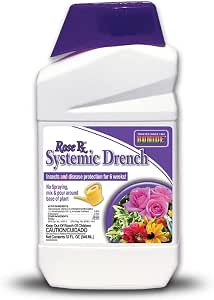
Bonide Rose Rx Systemic Drench, 32 oz
Bonide Rose Rx Systemic Drench offers the same basic appeal as Rose Shield: a pour-at-the-base treatment for listed insect and disease problems, with protection lasting up to six weeks. Its 32-ounce size is listed to treat up to 16 roses, making it a more modest fit than the 40-ounce Bonide Rose Shield Systemic Drench, which covers up to 20. Both require attention to the same pollinator warning and a repeat schedule during the growing season.
This is a practical choice when a soil drench is preferable to spraying, but the product details provide less specificity about its targets than Rose Shield’s listed pest and disease examples. For a disease-only approach, BioAdvanced Disease Control Concentrate is a clearer alternative, though it requires spraying and does not offer the same insect-control positioning. I’d skip Rose Rx if pollinator exposure is a concern or if you only need fungal disease control.
Pros:- Targets insects and plant diseases with one systemic treatment.
- Pour-around-the-base application avoids spraying.
- Protection lasts up to six weeks per application.
- Suitable for roses and other listed ornamental plants.
Cons:- Can harm bees and other pollinators; do not apply while they are foraging.
- Requires reapplication every six weeks during the growing season.
- Treats up to 16 roses per quart, fewer than the 20 listed for Bonide Rose Shield.
Best for: Rose and ornamental gardeners with a smaller planting who want a soil-applied systemic treatment for listed insect and disease issues.
Not ideal for: Gardeners prioritizing pollinator protection, treating more than 16 roses per quart, or seeking a disease-focused spray instead of a systemic drench.
- Brand:Bonide
- Volume:32 fluid ounces
- Weight:2.4 pounds
- Protection duration:Up to 6 weeks
- Coverage:Up to 16 roses per quart
- Application:Pour around the base of plants
- Target plants:Roses, flowers, ornamentals, azaleas, camellias, and shrubs
- Targets:Insects and plant diseases
Our verdict“Choose Rose Rx for a smaller rose or ornamental planting if you want a systemic drench and can follow its pollinator precautions.”
BioAdvanced Disease Control Concentrate for Roses, Flowers & Shrubs, 32 oz
BioAdvanced Disease Control Concentrate is the clearest pick here for gardeners focused on fungal and other listed plant diseases rather than insect control. Its tebuconazole formula targets problems such as black spot and powdery mildew, and the concentrate makes up to 42 gallons of spray. Once dry, the treatment is rainproof and lasts up to two weeks. That shorter stated protection window sets it apart from both Bonide systemic drenches, which list up to six weeks but also target insects and carry a pollinator warning.
The tradeoff is the spray routine: application takes more preparation than pouring a drench around the plant base, and treatment is for outdoor use. Houseplants must be treated outside, and the product is not for sale in New York. I’d choose it when disease control is the main need; for combined insect and disease treatment, compare the Bonide options instead.
Pros:- Targets multiple listed diseases, including black spot and powdery mildew.
- A 32-ounce bottle makes up to 42 gallons of spray.
- Protection is rainproof once dry and lasts up to two weeks.
- Can be used on outdoor roses, flowers, trees, shrubs, vines, and houseplants treated outside.
Cons:- Disease control requires spray application rather than a pour-at-the-base drench.
- Protection lasts up to two weeks, shorter than the six-week period listed for Bonide Rose Shield.
- For outdoor use only; houseplants must be treated outside.
- Not for sale in New York.
Best for: Gardeners seeking a concentrated outdoor spray for listed rose and ornamental plant diseases, including black spot and powdery mildew.
Not ideal for: Buyers who need insect control, prefer a soil drench, want longer protection between treatments, or need a product available in New York.
- Brand:BioAdvanced
- Item type:Fungicide concentrate
- Volume:32 fluid ounces
- Item weight:2 pounds
- Active ingredient:Tebuconazole 2.9%
- Coverage:Makes up to 42 gallons of spray
- Protection duration:Up to 2 weeks once dry
- Target diseases:Black spot, powdery mildew, crabapple scab, boxwood blight, and other listed diseases
- Use:Outdoor plants; houseplants must be treated outside
Our verdict“Choose this concentrate if listed plant diseases are your main concern and you’re prepared to mix and apply an outdoor spray.”
BioAdvanced Rose & Flower Insect Killer Spray, 24 oz
I’d choose this ready-to-use spray when visible insect damage is the immediate problem and I want a product focused on listed pests rather than disease control. It kills more than 100 listed insects on contact, including aphids and Japanese beetles, and offers protection for up to 14 days. Compared with BioAdvanced All-in-One Rose and Flower Plant Care Spray, this formula is the narrower choice: it targets insects but doesn’t claim control of black spot or powdery mildew. The tradeoff is hands-on coverage; leaves need an even coating, so treating several large shrubs takes more effort than applying granules such as BioAdvanced 2-in-1 Systemic Rose and Flower Care Granules. I’d also match the pest to the product’s label rather than assume it controls every insect.
Pros:- Ready-to-use sprayer avoids measuring or mixing
- Kills more than 100 listed insect pests on contact
- Protection lasts up to 14 days
- Can be used on roses, flowers, shrubs, and vegetable gardens
Cons:- Does not provide the disease control offered by BioAdvanced All-in-One Rose and Flower Plant Care Spray
- Leaves need even coverage, making application labor-intensive on many plants
- Effectiveness is limited to pests listed on the product label
Best for: Rose growers who have identified a listed insect pest and want a ready-to-spray contact treatment for a small or moderate number of outdoor plants.
Not ideal for: Gardeners seeking disease control, longer intervals between applications, or a treatment that avoids coating foliage by hand.
- Brand:BioAdvanced
- Volume:24 fl oz
- Form:Ready-to-use spray
- Active ingredient:Cyfluthrin 0.003%
- Protection duration:Up to 14 days
- EPA registration number:92564-18
Our verdict“Choose this spray for quick, direct treatment of listed insect pests when disease control and soil application are not priorities.”
BioAdvanced All-in-One Rose and Flower Plant Care Spray, 24 fl oz
This is the most versatile spray in this group for growers dealing with insects, mites, and listed diseases at the same time. Its ready-to-use format covers problems such as black spot, powdery mildew, rust, and scab, while protection lasts up to 14 days. Rainproof protection begins within four hours, which gives the treatment time to set before ordinary weather interrupts it. By contrast, BioAdvanced Rose & Flower Insect Killer Spray focuses on insects, so it makes more sense when disease isn’t part of the problem. This broader coverage comes with a specific application constraint: spray only when pollinators are not present, and use it only on listed outdoor plants. Compared with systemic granules, this spray also requires foliage coverage and repeated attention as protection wears off.
Pros:- Combines control of listed insects, mites, and diseases
- Ready-to-use format requires no mixing
- Rainproof protection begins within four hours
- Protection lasts up to 14 days
Cons:- Must be applied when pollinators are not present
- Limited to outdoor use on plants listed on the label
- Requires foliage spraying and more frequent attention than longer-lasting granules
Best for: Rose gardeners managing a mix of listed insect, mite, and fungal disease problems who prefer one ready-to-use foliar spray.
Not ideal for: Pollinator-conscious gardeners who cannot time applications for when pollinators are absent, or anyone seeking a no-spray soil treatment.
- Brand:BioAdvanced
- Volume:24 fl oz
- Form:Ready-to-use liquid spray
- Active ingredients:Bifenthrin 0.0134%; Myclobutanil 0.0124%
- Protection duration:Up to 14 days
- Rainproof protection begins:Within 4 hours
- EPA registration number:92564-84
Our verdict“Pick this when several listed rose problems need treatment with one spray and you can follow its pollinator timing directions.”
BioAdvanced 2-in-1 Systemic Rose and Flower Care Granules, 5 lb
For established rose beds, these soil-applied granules trade quick foliar treatment for less frequent insect-control upkeep. Water them in after application, and the product provides rainproof protection against listed pests for up to eight weeks while also fertilizing. A five-pound container is described as treating up to 40 rose bushes, making it a more practical fit for a sizeable planting than a small ready-to-use spray such as BioAdvanced Rose & Flower Insect Killer Spray. It does not cover the disease problems addressed by BioAdvanced All-in-One Rose and Flower Care Granules, though, so it is a narrower option than that combination product. I’d check local sale restrictions before choosing it; state and Florida limitations may rule it out, and its pest control is label-specific.
Pros:- Combines fertilizer with control of listed insect pests
- No spraying is required
- Rainproof protection lasts up to eight weeks
- One container treats up to 40 rose bushes
Cons:- Does not provide the disease control of BioAdvanced All-in-One Rose and Flower Care Granules
- Not available in several states, with Florida restrictions applying
- Controls only listed pests
Best for: Gardeners with multiple rose bushes who want soil-applied fertilizer and listed insect control without routine leaf spraying.
Not ideal for: Buyers who need disease control, live in a restricted area, or want a product that treats pests beyond those listed on its label.
- Brand:BioAdvanced
- Form:Granules
- Weight:5 lb
- Coverage:Up to 40 rose bushes
- Protection duration:Up to 8 weeks
- Active ingredient:Imidacloprid 0.22%
- EPA registration number:92564-23
Our verdict“Choose these granules for a larger rose planting when long-lasting listed insect control matters more than disease protection.”
BioAdvanced All-in-One Rose and Flower Care Granules, 4 lb
I’d rank this above insect-only granules for gardeners who want a single soil-applied product to address fertilizing, listed insects, and listed diseases. Its systemic, rain-resistant formula provides protection for up to six weeks without requiring foliage spraying. Compared with BioAdvanced 2-in-1 Systemic Rose and Flower Care Granules, it adds disease control, but gives up some duration: the 2-in-1 product lists protection for up to eight weeks and focuses on insects. Espoma Organic Rose-Tone Fertilizer is a better fit for someone seeking an organic-gardening-approved fertilizer without insecticide or fungicide; this BioAdvanced formula prioritizes broader pest and disease coverage instead. Its limits matter: control applies only to listed problems, and New York and Florida restrictions can affect availability.
Pros:- Combines fertilizer, insect control, and disease control
- No foliage spraying is required
- Rain-resistant systemic protection lasts up to six weeks
- Suitable for roses, flowers, and several shrubs
Cons:- Protection lasts less time than BioAdvanced 2-in-1 Systemic Rose and Flower Care Granules
- Not for sale in New York, with Florida restrictions applying
- Controls only listed pests and diseases
Best for: Rose growers who prefer soil application and want fertilizer plus control of listed insect and disease problems in one product.
Not ideal for: Gardeners seeking an organic fertilizer-only approach, longer protection focused on insects, or an option permitted in New York.
- Brand:BioAdvanced
- Form:Granules
- Weight:4 lb
- Uses:Fertilizer, insect control, and disease control
- Protection duration:Up to 6 weeks
- Active ingredients:Acephate 1.50%; Tebuconazole 0.48%
- EPA registration number:192-223-92564
- Model number:701116E
Our verdict“Choose these granules when you want soil-applied fertilizer with both listed insect and disease control, and local restrictions allow use.”
Espoma Organic Rose-Tone Fertilizer, 4-3-2, 4 lb Bags, Pack of 2
Espoma Rose-Tone is the clear choice here for gardeners who want to feed roses without adding insecticide or disease-control ingredients. This granular 4-3-2 fertilizer is approved for organic gardening and also suits flowering plants such as viburnum, bougainvillea, and clematis. Apply it around the drip line monthly during the growing season, then water; there’s no mixing step. That routine is more hands-on than the longer protection interval of BioAdvanced 2-in-1 Systemic Rose and Flower Care Granules, but it serves a different purpose: Rose-Tone is a fertilizer, not a pest-treatment substitute. Compared with the all-in-one BioAdvanced granules, it avoids combining feed with insect and disease control, which may suit a fertilizer-only plan but leaves those problems to be handled separately.
Pros:- Approved for organic gardening
- Ready-to-use granules need no mixing
- Suitable for roses and several other flowering plants
- Monthly drip-line application is straightforward
Cons:- Requires monthly application during the growing season
- Does not provide insect or disease control like BioAdvanced All-in-One Rose and Flower Care Granules
- Must be watered in after application
Best for: Organic-gardening rose growers who want a ready-to-apply granular fertilizer for roses and other flowering plants.
Not ideal for: Gardeners looking for built-in insect or disease control, or anyone unwilling to apply fertilizer monthly during the growing season.
- Brand:Espoma
- Fertilizer analysis:4-3-2
- Form:Granules
- Pack size:2 bags
- Weight:4 lb per bag
- Calcium:5%
- Application:Monthly during the growing season; apply around the drip line and water
- Organic gardening:Approved
Our verdict“Choose Rose-Tone for routine organic-gardening-approved feeding when you prefer fertilizer alone over combined pest-control products.”

How We Picked
I compared these 15 products by the rose-care job they serve, their application format, and how clearly a buyer can match them to a specific garden need. For fertilizers, I looked at differences among water-soluble, granular, continuous-release, concentrated, and organic formulas. For sprays, drenches, and granules aimed at pests or disease, I focused on the type of application and breadth of care claims, with the product label as the guide for target problems and use.
The ranking favors useful fit over the number of claims: a strong general-purpose choice earns a higher place when it serves a common need without asking every gardener to buy a multi-function treatment. Specialized products rank well when they solve a distinct problem or offer a clear format advantage, but broad treatments sit lower when a buyer may not need every function. I also weighed ease of use, flexibility, and the tradeoff between targeted care and fewer applications; I did not treat fertilizer, insect control, and disease control as substitutes for one another.
| rose care product | Form | Protection duration |
|---|---|---|
| Miracle-Gro Water Soluble Rose | Water-soluble powder | — |
| Bonide Captain Jack’s Rose Rx | Ready-to-use spray | — |
| BioAdvanced All-in-One Rose an | Liquid concentrate | Up to 6 weeks |
| Scotts Rose & Bloom Continuous | Granules | — |
| Jobe’s Organics Granular Rose | Granules | — |
| Great Big Roses Fertilizer Boo | — | — |
| Farmer’s Secret Rose Booster F | — | — |
| Bonide Rose Shield Systemic Ro | Concentrate | Up to 6 weeks |
| Bonide Rose Rx Systemic Drench | — | Up to 6 weeks |
| BioAdvanced Disease Control Co | — | Up to 2 weeks once dry |
| BioAdvanced Rose & Flower Inse | Ready-to-use spray | Up to 14 days |
| BioAdvanced All-in-One Rose an | Ready-to-use liquid spray | Up to 14 days |
| BioAdvanced 2-in-1 Systemic Ro | Granules | Up to 8 weeks |
| BioAdvanced All-in-One Rose an | Granules | Up to 6 weeks |
| Espoma Organic Rose-Tone Ferti | Granules | — |
Factors to Consider When Choosing Best Rose Care Products
Before choosing among the best rose care products, identify the problem you are trying to solve and how you want to apply a treatment. These broader decisions can prevent mismatched purchases and unnecessary applications.
Match the product to the problem
Start by separating nutrition needs from pest or disease symptoms. A fertilizer supports plant growth, but it will not replace a treatment labeled for a specific insect or disease. Likewise, an insect spray is not a substitute for feeding roses. Misdiagnosing the issue can lead to repeated applications without addressing the cause, so check leaves, stems, and growing conditions before buying. If symptoms are unclear, choose a product only after confirming that its label covers the problem you have identified.
Choose a format you can apply consistently
Water-soluble feeds require mixing and a repeatable watering routine, while granular products are applied to soil and may suit gardeners who prefer not to prepare a liquid solution each time. Sprays can reach foliage directly, but coverage and weather conditions affect application. Drenches and systemic granules use a different route and may involve different timing or precautions. The easiest format is the one you can apply as directed, not necessarily the one with the shortest instruction list. Check the label for frequency, watering, protective measures, and any limits on use around people, pets, or beneficial insects.
Decide whether broad coverage is worth it
All-in-one treatments can reduce the number of separate products in a shed, but broad coverage is useful only when its labeled functions match your actual needs. A single-purpose product can make more sense when you are addressing one known issue or want to avoid applying ingredients for unrelated concerns. Do not select a broad formula simply because it sounds more complete. Compare each claimed function with the problem in your garden and read the directions for the intended plants and conditions. For routine care, a focused fertilizer may be a more appropriate purchase than a combined treatment.
Weigh organic preference against application style
Organic-minded gardeners may prefer products such as Jobe’s Organics or Espoma Rose-Tone for feeding, but the word organic does not remove the need to follow directions. Think about the form you want to handle, how it fits your garden routine, and what the label says about application. Some buyers value a granular soil application; others prefer a concentrated liquid or ready-to-use spray. Avoid assuming that all organic fertilizers work at the same pace or suit every soil. Use the label and your garden’s needs to guide frequency rather than applying more in pursuit of faster growth.
Use the label to set expectations and timing
Rose products can differ in how often they are applied, where they are used, and which plants or problems they cover. Those details affect the amount of effort and the results a gardener can reasonably expect. Read the product label before purchase if you need a specific application schedule or have nearby edible plants, pollinators, children, or pets. Avoid combining products unless their instructions permit it, since overlapping treatments can create unnecessary exposure or plant stress. Keep a simple record of applications so you can follow intervals and avoid repeating a treatment too soon.
Buy for your garden size and storage habits
A larger container can suit a rose bed with many plants, but it may be awkward for a small patio collection or a gardener who uses a product only once in a season. Concentrates reduce storage bulk but require accurate measuring and mixing; ready-to-use sprays trade compact storage for immediate application. Consider how many roses you maintain, whether you can store products safely, and whether you will finish a container according to its label. Buying several overlapping treatments can leave you with unused product and make care harder to track. A small, purposeful toolkit is often easier to manage than a shelf of products covering the same job.
Frequently Asked Questions
Can I use a rose fertilizer and a pest or disease treatment at the same time?
Do not assume that two rose products can be mixed or applied together just because both are labeled for roses. Their instructions may set different timing, watering, or application requirements, and some treatments may not be compatible. Read both labels for mixing directions, intervals, and any warnings about plant stress or environmental conditions. When instructions do not clearly allow simultaneous use, apply them separately as directed or contact the manufacturer for guidance. Keep a written note of each application to avoid accidental repeat treatment.
Should I choose a systemic treatment or a foliar spray?
The choice depends on the target problem and the product label, not simply on which format sounds stronger. A foliar spray is applied to plant surfaces and may suit a problem that the label says to treat directly on leaves or stems. Systemic drenches and granules follow different application routes and have their own timing and precautions. Check which pests or diseases each product lists, whether it covers the affected plant, and how long you must wait between applications. If you cannot identify the problem, confirm it before choosing either type.
Is a granular rose fertilizer better than a water-soluble one?
Neither format is automatically better; the practical difference is how it fits your routine. Granular feeds such as Jobe’s Organics or Scotts suit gardeners who prefer applying fertilizer to the soil rather than mixing a solution. Miracle-Gro’s water-soluble format suits someone comfortable measuring and mixing during watering. Compare label directions for frequency and application amount, since those details affect ongoing effort. Also account for the number of roses you feed: a format that is easy for a large bed may feel like extra work for a few container plants.
Do I need an all-in-one rose care product if I already fertilize?
Not automatically. Fertilizer addresses plant nutrition, while an all-in-one treatment may include additional functions that matter only if its label covers a problem in your garden. Adding a combined product without a clear need can mean applying treatment you did not intend to use. First identify whether your concern is feeding, insects, or disease, then compare the label’s claims and directions with that concern. If you only need nutrition, a dedicated fertilizer may be the simpler choice.
Which option makes sense for a few roses in containers?
For a small container collection, prioritize manageable quantities, clear measuring instructions, and a format that is easy to apply without leftover product becoming a storage problem. A soluble fertilizer can be convenient if you already water with a measured solution, while a granular product may suit a less frequent soil application. For pest or disease issues, choose a spray or other treatment only when its label covers the confirmed problem and container-grown roses. Do not apply a product more often simply because pots dry out faster; follow its directions. Check whether the label gives instructions for container plants.
Conclusion
For most gardeners seeking a dedicated feed, I recommend Miracle-Gro Water Soluble Rose Plant Food as the best overall starting point; it has a focused role and a familiar mix-and-apply format. Scotts Rose & Bloom Continuous Release Plant Food is my best value-style pick for buyers who want a granular feeding routine, while Great Big Roses Fertilizer Booster is the premium-leaning choice for gardeners specifically seeking a booster product. Beginners should start with one clearly labeled product that matches their immediate need rather than a shelf of overlapping treatments. For organic feeding, compare Jobe’s Organics with Espoma Rose-Tone; for a broad spray approach, look at Bonide Captain Jack’s Rose Rx; and for a confirmed, specific pest or disease concern, choose the treatment whose label matches it. The right pick is the one that fits your roses, your application routine, and the problem you actually need to address.
Columbus Day / Indigenous Peoples' Day Picks
long weekend sales
As an affiliate, we earn on qualifying purchases.