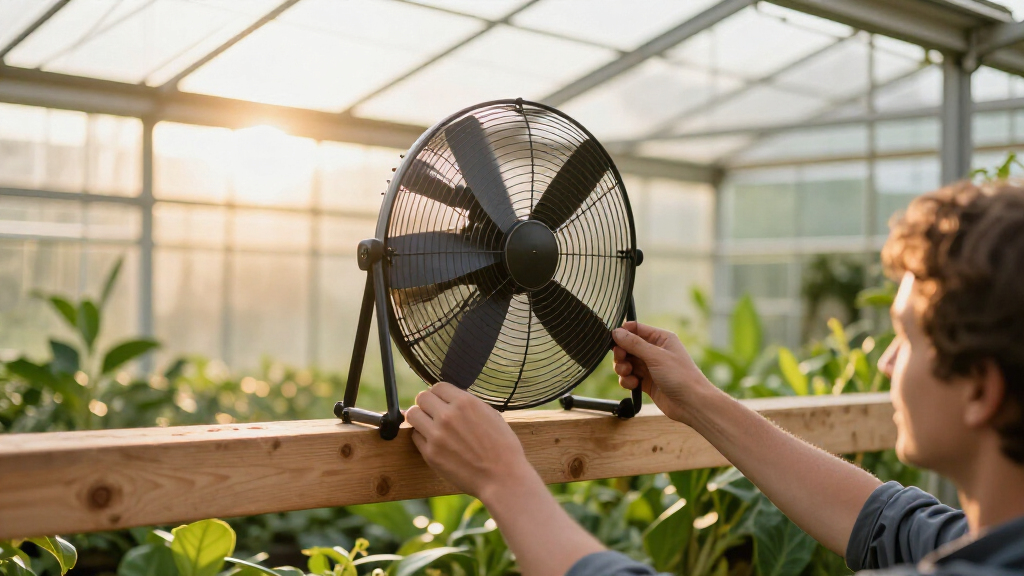

Solar-powered greenhouse fans solve a problem every grower runs into: heat buildup with no convenient power outlet nearby. After comparing 15 of the most popular options, the 12″ Solar Exhaust Fan with Smart Thermostat and Battery stands out as the best overall pick because it combines automatic temperature control with all-day runtime — the two features that matter most in a greenhouse. If budget is the driver, the WECOOL 15W Dual Exhaust & Intake Fan delivers genuine cross-ventilation at a fraction of the price, while the Solar Exhaust Fan with Battery & Dual Solar Panels is the strongest choice for larger structures that need serious air movement. The main tradeoff in this category is simple: cheap fans only run when the sun shines, while battery-backed models keep air moving through cool mornings and cloudy afternoons — usually for double the price. Read on for the full breakdown of all 15 fans.

Get garden gear delivered free with Prime
- Fast, free delivery on millions of items
- Prime Video, Amazon Music and more included
- Member-only deals all year
Complete the kit


Key Takeaways
- Battery backup was the single biggest differentiator: fans with built-in batteries (the Ropelux dual-fan model and both thermostat-equipped units) kept running 8–60 hours after sundown, while panel-direct fans like the WECOOL and 8″ 18W units stalled on overcast days.
- Smart thermostats appeared on only two products in the lineup, and they changed the category — automatic on/off control prevents the overcooling and plant stress that plague timer-only or always-on fans.
- Dual-fan kits (Ropelux, Fanspex, and the 7.5-inch 2-pack) consistently moved more air per dollar than single large fans, but they require two wall penetrations instead of one.
- Waterproofing ratings varied wildly, from basic splash resistance to IPX7 — a real issue because greenhouse interiors are humid year-round, not occasionally damp.
- The cheapest kits often omit mounting hardware, extension cords, and charge controllers, adding $20–40 in hidden costs before the fan works as advertised.


More Details on Our Top Picks
18″ Solar Fan, 35W Solar Powered Cordless Greenhouse Fan with Rechargeable Battery
Among every fan in this roundup, this 18-inch model offers the broadest combination of power and independence. Its 49,400 mAh battery dwarfs the 18,000 mAh pack in the Ropelux dual-fan unit, stretching runtime to a claimed 60 hours on low — enough to coast through several cloudy days without airflow dropping to zero, which is the single biggest weakness of battery-free kits like the Fanspex 3 Fan. The 360° tilt and cordless design also make it the only option here that works as flexibly inside the greenhouse as outside it, and the USB port is a handy bonus for charging a phone during a long session among the tomatoes.
The tradeoff is weight. At 13.22 pounds, it is far heavier than the wall-mounted exhaust units, so it is a positioned fan, not a grab-and-go one.
Pros:- Massive 49,400 mAh battery with up to 60 hours of runtime
- Quiet yet powerful airflow from an 18-inch head
- All-metal frame that is waterproof, dustproof, and rustproof
- Doubles as a USB power bank for devices
Cons:- At 13.22 pounds it is the heaviest option in this lineup
- Battery needs sunlight or an outlet to recharge between cycles
Best for: Greenhouse owners who want high-volume air circulation that keeps running through cloudy stretches and overnight
Not ideal for: Buyers who need a permanent wall-mounted exhaust solution — this is a portable floor or bench fan, not a ventilation fixture
- Power:35W solar panel
- Size:18 inches
- Battery Capacity:49,400 mAh
- Runtime:8-60 hours
- Weight:13.22 pounds
- Material:Metal
- Weather Resistance:Waterproof, dustproof, rustproof
Our verdict“If you want one fan that handles serious airflow day and night without wiring, this is the one to buy.”
5″ Solar Chicken Coop Fan Kit, 35W Solar Powered Exhaust and Intake Greenhouse Fan
This kit delivers the same 35W panel wattage as the far larger 18-inch cordless fan above, but puts every watt straight into the fan instead of a battery — which is exactly why it costs less and moves air the moment the sun hits. The exhaust-plus-intake pairing creates genuine cross-ventilation, something single-fan units like the Ropelux dual exhaust cannot manage on their own. With an IP67 rating and a 16.5-foot cord, mounting is genuinely flexible: panel in the sun, fan where the stale air lives.
The obvious limitation is that airflow stops at dusk. Compared with the Solar Exhaust Fan with Battery and Dual Panels, you give up night operation entirely — but you also skip the cost and eventual replacement of a battery pack, which many owners never miss.
Pros:- Full 35W of solar input at a budget price point
- IP67 waterproof rating for permanent outdoor mounting
- 16.5 ft cord allows panel placement far from the fan
- No battery to degrade or replace over time
Cons:- Airflow drops sharply on overcast days
- Zero nighttime operation without a battery
- Only suited to spaces up to about 220 sq ft
Best for: Budget-minded owners of small greenhouses, coops, or sheds up to 220 sq ft who only need daytime ventilation
Not ideal for: Anyone growing heat-sensitive plants overnight — with no battery, airflow stops the moment the sun sets
- Maximum Power:35 watts
- Fan Speed:3800 RPM
- Waterproof Rating:IP67
- Cord Length:16.5 ft
- Coverage:Up to 220 sq ft
- Weight:2.59 kg (5.7 lbs)
Our verdict“The smartest spend if daytime-only ventilation is enough for your small greenhouse or coop.”
Solar Exhaust Fan with Battery & Dual Solar Panels for Greenhouse, Shed
At 1020 CFM, this wall-mounted unit nearly doubles the 540 CFM of the Fanspex 3 Fan Kit, making it the clear pick when a greenhouse is too big for compact kits to matter. The dual 20W panels can be angled independently — a genuine advantage over fixed single-panel rivals — and the 60Wh battery keeps air moving after sunset, so it competes directly with the 18-inch cordless fan while moving air through a wall instead of around a bench. The remote with 12 speeds and a timer means no trudging through humid rows to make adjustments.
Two caveats: it must be wall-mounted, so renters and shed-owners with thin panels should look elsewhere, and 50 dB is audible in a quiet greenhouse — quieter than most AC fans, but not whisper-level like the Ropelux at 36-40 dB.
Pros:- 1020 CFM airflow, the highest capacity in this batch
- Dual adjustable 20W panels maximize solar harvest
- 60Wh battery keeps the fan running at night
- Remote control with 12 speeds and timer functions
Cons:- Requires permanent wall mounting with adequate space
- 50 dB noise is noticeable in quiet settings
Best for: Owners of large greenhouses or sheds who need serious exhaust volume plus overnight operation
Not ideal for: Small coops and compact greenhouses — the extra CFM and mounting requirements are overkill, and quieter compact kits do the job for less
- Air Flow Capacity:1020 CFM
- Solar Panels:Dual 20W
- Battery:60Wh rechargeable
- Speed Settings:12
- Noise Level:50 dB
- Mounting:Wall mount
- Fan Speed:1250 RPM
Our verdict“The most ventilation per panel in this lineup — buy it if your space is big enough to need it.”
Fanspex Solar 3 Fan Kit Waterproof for Chicken Coop, Greenhouse & Shed
Where the 5-inch Coop Fan Kit concentrates everything into one exhaust point, the Fanspex takes the opposite approach: three separate high-velocity fans spreading 540 CFM across different spots in a greenhouse or coop. For long structures with stagnant corners, that distributed airflow often feels more effective than a single stronger fan. The fans spin at a brisk 3500 RPM, and the build — monocrystalline silicon panel with tempered glass and anodized aluminum — is more robust than the plastic-bodied Ropelux unit.
The familiar solar tradeoff applies: no battery means no airflow at night or during heavy rain, and a 25W panel split across three fans gives each motor less headroom than dedicated single-fan kits. Installation across three mounting points also takes more effort than a one-and-done unit.
Pros:- Three fans allow airflow across multiple zones
- Tempered glass and anodized aluminum construction
- 3500 RPM high-velocity output per fan
- Waterproofed for permanent outdoor mounting
Cons:- No battery backup for night or rainy-day operation
- Self-installation of three fans is more involved than single-fan kits
Best for: Owners of long or L-shaped greenhouses and coops with multiple hot spots that one fan can’t reach
Not ideal for: Anyone needing overnight ventilation or a plug-free single-room solution — three separate installs and no battery add friction
- Fan Configuration:3 high-velocity fans
- Panel Wattage:25 watts
- Total Air Flow:540 CFM
- Fan Speed:3500 RPM
- Voltage:12 volts
- Materials:Monocrystalline silicon, tempered glass, anodized aluminum
- Mounting:Wall mount
Our verdict“Choose this when one fan can’t cover your whole structure — three smaller airstreams beat one big one in awkward layouts.”
Ropelux Solar Powered Dual Exhaust Fans with 18000mAh Battery & 2 Timers
This is the pick I would point to for chickens, rabbits, or pets, because it nails the two things animal spaces demand: quiet operation and overnight reliability. At 36-40 dB it runs noticeably softer than the 50 dB dual-panel exhaust fan, so it won’t stress skittish animals, and the 18,000 mAh battery is sized for true 24/7 operation rather than the daylight-only duty of the Fanspex kit. The two timer modes — day plus 3 or 6 hours — let you stretch stored power through the early evening, a smarter approach than the all-or-nothing switch on cheaper battery-free kits.
Against the 18-inch cordless fan, it trades raw airflow for a slim ABS housing that mounts nearly anywhere. The 10-hour battery-only limit means extended storms will still test it, and there’s no remote.
Pros:- Whisper-quiet 36-40 dB operation suitable for animals
- 18,000 mAh battery supports 24/7 running
- Two timer modes conserve battery on short winter days
- Slim ABS housing installs almost anywhere
Cons:- Battery lasts only about 10 hours without sunlight
- No remote control or smart scheduling features
Best for: Chicken keepers and pet owners who need quiet, continuous ventilation in a coop or hutch without mains power
Not ideal for: Large greenhouses needing high CFM — the dual compact fans move far less air than the 1020 CFM wall unit
- Power Source:Solar with 18,000 mAh battery
- Fan Design:Dual exhaust fans
- Battery Capacity:18,000 mAh
- Timer Modes:Day + 3 hours, Day + 6 hours
- Noise Level:36-40 dB
- Material:ABS plastic
- Dimensions:16.3″ L x 1.18″ W x 7.09″ H
Our verdict“The safest choice for animals that need gentle, round-the-clock airflow — skip it for big-airflow jobs.”
Solar Exhaust Fan 12″ for Greenhouse with Smart Thermostat and Battery
Most of the fans in this roundup are built for coops and sheds, but this 12-inch unit is one of the few genuinely sized for a real greenhouse. At 720 CFM, it moves roughly 70% more air than the 25W Solar Exhaust Fan with 8″ Ventilation Vent, which matters when you’re fighting heat buildup over dozens of plants rather than a few nesting boxes. The bifacial dual panels capture reflected light from greenhouse surfaces, and the smart thermostat lets it run automatically once temperatures climb.
The tradeoff is complexity. The 5000mAh battery only sustains about six hours of nighttime ventilation, so it won’t carry you through a long summer night, and setup is more involved than plug-and-play kits like the 7.5-inch Solar Chicken Coop Fan 2 Pack. If you need serious airflow and hands-off operation, though, nothing else in this batch competes.
Pros:- 720 CFM airflow handles large greenhouse volumes
- Bifacial panels boost power generation inside reflective greenhouse environments
- Adjustable thermostat enables fully automatic temperature-triggered operation
- Battery backup keeps air moving after sunset
Cons:- Six-hour battery life falls short on long nights
- Cloudy days sharply reduce performance
- Installation demands more technical skill than simpler kits
Best for: Owners of medium-to-large greenhouses who need high-volume automatic ventilation during heat spikes
Not ideal for: Anyone wanting simple nighttime coverage — the battery runs out after six hours and installation requires wiring skills
- Blade Diameter:12 inches
- Airflow:720 CFM
- Total Power:Up to 48W (2x 30W bifacial panels)
- Battery Capacity:5000mAh (up to 6 hours)
- Waterproof Rating:IP44
- Cable Length:14.8 ft
Our verdict“Buy this if your greenhouse is big enough that smaller fans like the 7.5-inch two-pack simply can’t move enough air.”
7.5-inch Solar Chicken Coop Fan 2 Pack, 15W Solar Powered Greenhouse Fans
This kit’s core advantage is architecture, not raw power. Two fans let you create a genuine cross-breeze — one exhausting stale air, one drawing fresh air in — something single-fan options like the Solar Fan 30W with IPX7 rating can’t replicate. The split design means each panel mounts where sun exposure is best while the fans sit where airflow is needed, and the IP67 aluminum build outclasses the IP44 rating on the larger 12-inch thermostat fan for withstanding driving rain.
The honest limitation: with no battery, both fans go silent at dusk. That’s fine for cooling — greenhouses overheat during the day — but if you need overnight humidity control, the Solar-Powered Chicken Coop Exhaust Fan with Battery & Smart Sensing covers that gap better. Think of this as daylight-only ventilation done properly.
Pros:- Two-fan setup enables genuine cross-ventilation rather than one-way exhaust
- IP67 rating with heavy-duty aluminum survives harsh outdoor weather
- Split design allows panels and fans to be positioned independently
- No batteries to degrade or replace over time
Cons:- Daylight-only operation with zero battery backup
- Fan speed fluctuates with cloud cover
- Coverage tops out around 210 sq ft
Best for: Small greenhouse or coop owners who want a true exhaust-and-intake airflow loop for daytime heat relief
Not ideal for: Anyone needing nighttime ventilation or consistent airflow on heavily overcast days
- Fan Size:7.5 inches (2 fans)
- Power:15W per fan
- Maximum Speed:3200 rpm
- Coverage Area:Up to 20 m² (~210 sq ft)
- Waterproof Rating:IP67
- Material:Heavy-duty aluminum
Our verdict“The strongest pick here for creating real air exchange in a small structure, as long as you accept it sleeps when the sun does.”
Solar Exhaust Fan, 25W Solar Panel + 8″ Ventilation Vent Fan with Power Adapter
What sets this one apart is the included power adapter. Every other battery-free fan in this roundup — including the 7.5-inch two-pack and the 30W IPX7 Solar Fan — stops dead when clouds roll in. This model simply switches to grid power, giving you continuous ventilation regardless of weather. At 430 CFM from a single 8-inch blade, it sits comfortably between the small dual-fan kits and the 720 CFM 12-inch thermostat fan, and the anti-backflow valve prevents cold air from reversing in at night, a detail cheaper kits skip.
The catch is that hybrid capability means hybrid installation: you’ll need drilling and an electrical connection to use the adapter, which undercuts the no-wiring appeal of solar. And with only a single speed setting, there’s no tuning airflow to conditions. For sheds and greenhouses near a power source, that flexibility wins.
Pros:- Runs on solar or the included power adapter for uninterrupted airflow
- Anti-backflow valve keeps cold air out when the fan is idle
- Quiet at 36 dB, quieter than most high-CFM alternatives
- Adjustable brackets simplify aiming the airflow
Cons:- Single fixed speed with no adjustment
- Installation requires drilling and an electrical connection for adapter use
- 36 dB noise is audible in very quiet spaces
Best for: Greenhouse or shed owners with access to an outlet who refuse to let cloudy weather stall ventilation
Not ideal for: Remote off-grid structures — running the adapter defeats the purpose and requires electrical work
- Wattage:25W
- Airflow:430 CFM
- Fan Size:8 inches
- Speed:2300 rpm (single speed)
- Noise Level:36 dB
- Voltage:12V DC
- Mounting:Wall mount
Our verdict“The most reliable choice in this batch if you can plug in — solar when the sun shines, grid power when it doesn’t.”
Solar-Powered Chicken Coop Exhaust Fan with Battery & Smart Sensing, 25W Solar Panel, Dual 4.7-inch Fans
Where most kits here are dumb fans that spin when the sun shines, this one thinks for itself. The infrared auto-sensing mode starts and stops ventilation based on occupancy or heat presence, and the timer and high/low modes give you real control over how energy gets spent. Compared with the 30W IPX7 Solar Fan, which runs flat-out whenever there’s sunlight, this system stretches a modest 2500mAh battery across the hours that matter most.
Don’t expect brute force, though. The dual 4.7-inch blades suit coops, hutches, and small greenhouse corners, not the open bays that the 12-inch thermostat fan covers. Cold-weather buyers should also know lithium battery output dips in freezing conditions, which undercuts its winter reliability. But for small-space odor and heat control with minimal user intervention, its mode flexibility is unmatched in this group.
Pros:- Auto-sensing mode conserves battery by running only when needed
- Multiple modes (high/low, timer, auto-sense) offer genuine control
- Long 3m cables on both sides allow flexible panel and fan placement
- IP65 waterproofing handles outdoor mounting
Cons:- 2500mAh battery is small and weakens in freezing temperatures
- Dual 4.7-inch fans limit it to small enclosures
- Still sunlight-dependent for recharging
Best for: Small coop or pet-shelter owners who want set-and-forget ventilation without running wiring
Not ideal for: Large greenhouse owners — the compact dual fans lack the CFM to condition bigger spaces
- Power:25W solar panel
- Fan Size:2 x 4.7 inches
- Voltage:12V DC
- Battery Capacity:2500mAh
- Waterproof Rating:IP65
- Modes:High/Low, Timer, Auto-Sense
- Cable Length:3m fan-to-controller, 3m controller-to-panel
Our verdict“The smartest small-fan option here — pick it for automation in a coop, not for raw airflow in a big greenhouse.”
Solar Fan 30W Solar Powered Ventilation Fan with IPX7 Waterproof Rating
If your greenhouse deals with heavy rain, misting systems, or persistent humidity, the IPX7 rating here is the headline feature — these fans can survive temporary submersion, a claim the IP44-rated 12-inch thermostat fan and IP65-rated smart-sensing model can’t make. Pair that with a 30W monocrystalline panel, the most efficient panel type in this batch, and you get dependable automatic operation in genuinely soggy conditions.
The simplicity cuts both ways. There’s no battery, no thermostat, no modes — it spins in sun and stops in shade, just like the 7.5-inch two-pack but with a single fan instead of a cross-flow pair. Published specs are also thin, with no CFM figure, so sizing your space involves guesswork. Treat it as a fit-and-forget humidity fighter for small structures rather than a precision climate tool.
Pros:- IPX7 waterproofing handles direct water exposure better than any fan in this batch
- 30W monocrystalline panel delivers efficient charging in variable light
- Automatic sunlight activation needs no switches or settings
- Complete kit includes mounting hardware
Cons:- No battery means it stops completely overnight
- Performance drops noticeably in weak sunlight
- No published CFM rating makes sizing uncertain
Best for: Growers in rainy or humid climates who need a rugged, zero-maintenance fan for a small greenhouse
Not ideal for: Anyone who wants nighttime operation, airflow specs, or adjustable settings before buying
- Maximum Power:30W monocrystalline panel
- Fan Configuration:2 x 5-inch weatherproof fans
- Waterproof Rating:IPX7
- Panel Dimensions:13″L x 10″W x 0.7″H
- Operation:Automatic sunlight activation
- Battery:None included
Our verdict“The most weatherproof fan of the group — ideal where rain and humidity kill lesser fans, as long as daylight-only operation fits your needs.”
WECOOL Solar Exhaust Fan, 15W Dual Exhaust & Intake Ventilation Fan
Most fans in this category only push air out, but the WECOOL’s dual intake and exhaust modes let me redirect airflow depending on where heat actually builds up in a small greenhouse or coop. That flexibility is unusual at this price, and compared with the pricier 25W kit with 12,000mAh battery, the tradeoff is obvious: no stored power, so airflow stops when clouds roll in. Installation is where this pick earns its keep — no wiring, wall mount, push-button control — making it a genuinely low-effort entry point. The whisper-quiet motor is a real advantage if animals are nearby, since louder units can stress poultry. What I can’t ignore is the fixed speed and 15W ceiling; for anything beyond a small shed or coop, this will feel underpowered.
Pros:- Dual intake and exhaust modes for directional airflow control
- Whisper-quiet operation safe around pets and poultry
- No wiring or assembly — mounts straight to a wall
- Instant high-RPM cooling for its size class
Cons:- No battery, so it stops working when sunlight fades
- Single fixed speed with no adjustment
- Outdoor use only and underpowered for larger greenhouses
Best for: Budget-minded owners of small coops or sheds who want simple, reversible airflow without wiring
Not ideal for: Anyone needing overnight ventilation or cooling for structures larger than a small shed — it stops at sunset and 15W caps its reach
- Power Source:Solar Powered
- Wattage:15 watts
- Mounting Type:Wall Mount
- Control Method:Push Button
- Airflow Modes:Intake and Exhaust
- Indoor/Outdoor Usage:Outdoor
Our verdict“A sensible low-cost pick for small outdoor structures where daytime-only, reversible airflow is enough.”
25W Solar Powered Exhaust Fan Kit with 12000mAh Battery
This kit answers the biggest complaint I have about cheaper solar fans like the WECOOL 15W: what happens after dark. With a 12,000mAh battery delivering up to 12 hours of runtime, it keeps ventilating through the evening, which matters because greenhouse heat stress doesn’t always follow the sun. Airflow of 180 CFM at 2,600 RPM puts it well ahead of the dual 5-inch fan set (200 CFM claimed across two small fans), and the IP54 metal housing handles ordinary weather. The catch is that the operation modes take some learning — it’s not a push-button-and-forget unit — and IP54 is splash resistance, not submersion protection, so exposure placement still matters. Compared with the thermostat-controlled greenhouse fan, it’s simpler in function but lacks automatic temperature triggering.
Pros:- Up to 12 hours of ventilation from the 12,000mAh battery
- 180 CFM airflow handles medium-sized structures
- Durable metal construction with IP54 weather resistance
- Includes mounting hardware for straightforward installation
Cons:- Operation modes add complexity compared with simple push-button rivals
- 12-hour battery ceiling limits continuous multi-day cloudy use
- IP54 rating is not fully waterproof
Best for: Owners of coops, greenhouses, and attics who need evening ventilation without running electrical lines
Not ideal for: Buyers wanting set-and-forget simplicity or full waterproofing — the mode system takes learning and IP54 won’t survive driving rain
- Maximum Power:25 watts
- Battery Capacity:12,000mAh
- Speed:2,600 RPM
- Airflow:180 CFM
- Waterproof Rating:IP54
- Dimensions:15″L x 15″W x 5″H
- Cord Length:3.28 ft
- Material:Metal
Our verdict“The strongest value if overnight runtime matters more to you than smart automation.”
Solar Powered Fan, 8 Inch, 18W IP65 Portable Solar Panel
What sets this 8-inch unit apart is placement freedom: a 14-foot cable and foldable 18W panel mean the fan can sit deep inside a greenhouse while the panel chases sun elsewhere. That beats the 25W battery kit’s 3.28-foot cord, which forces the panel and fan to live close together. The IP65 rating also edges out most rivals here, and the brushless DC motor promises quieter, longer-lasting operation than brushed alternatives. The honest tradeoff is the absence of any battery — it runs on sunny and cloudy days but not at night or in rain, so it’s a pure daylight solution. The single speed setting also limits fine control compared with multi-mode units. For buyers whose heat problem is strictly a midday problem, that tradeoff is easy to accept.
Pros:- 14-foot cable and foldable panel allow remote panel placement
- IP65 waterproofing with tempered glass panel
- Brushless DC motor runs quietly with a long service life
- Works on cloudy days, not just direct sun
Cons:- No battery means no night or rainy-day operation
- Single fixed speed limits airflow tuning
- Outdoor use only
Best for: Greenhouse and pet-house owners who need to separate fan location from panel location
Not ideal for: Anyone relying on nighttime cooling or continuous airflow — with no battery, it’s daylight-only
- Fan Size:8 inches
- Wattage:18W
- Panel Type:Monocrystalline, foldable
- Voltage:12V
- Waterproof Rating:IP65
- Cable Length:14 ft
- Motor Type:Brushless DC
Our verdict“Pick this when panel placement flexibility matters more than after-dark runtime.”
Solar Exhaust Fan for Greenhouse with Smart Thermostat and Battery
This is the closest thing to a hands-off climate system in this batch. The adjustable thermostat automatically switches the fan on and off at set temperatures, which no other pick here does — the 25W battery kit requires manual mode changes, and the WECOOL is push-button only. With dual 20W bifacial panels, a 6,600mAh battery, and 254 CFM of airflow covering up to 1,900 cubic feet, it handles serious greenhouse heat loads and keeps running into the night by shifting power sources automatically. Two caveats temper my enthusiasm: the setup is more involved and assumes some technical comfort, and the battery is modest relative to the fan’s appetite, so extended cloudy stretches can drain it. For growers who can’t check temperatures daily, though, that automation justifies the premium.
Pros:- Adjustable thermostat automates fan operation by temperature
- Dual 20W bifacial panels harvest light from both sides
- 254 CFM airflow covers spaces up to 1,900 ft³
- Automatic power switching extends operation into nighttime
Cons:- More complex installation than simpler rivals
- Battery life suffers during prolonged cloudy weather
- Airflow ceiling limits use in larger structures
Best for: Serious greenhouse growers who want temperature-triggered ventilation without daily manual intervention
Not ideal for: Non-technical buyers or those venting very large spaces — setup demands patience and 1,900 ft³ is the practical ceiling
- Maximum Power:40 watts (dual 20W panels)
- Panel Type:Bifacial monocrystalline
- Battery Capacity:6,600mAh
- Airflow:254 CFM
- Coverage:Up to 1,900 ft³
- Materials:Aluminum, monocrystalline silicon, tempered glass
Our verdict“The right choice when automatic temperature control is worth extra setup effort and cost.”
Solar Powered Fan with Dual 5-inch Waterproof Fans and Mounting Kits
Two separate fans beat one when the goal is cross ventilation — position one high to exhaust hot air, one low to draw fresh air in, and you get circulation a single unit like the WECOOL 15W can’t match. The standout spec here is the IPX7 waterproof rating, which outclasses the IP54 on the 25W battery kit and even the IP65 on the 8-inch portable; this set shrugs off real soaking. Combined 200 CFM and a quiet 40 dB operation make it pleasant for small coops and pet enclosures. The limitation is structural: it’s realistically suited to spaces around 6ft x 6ft, and with no battery, both fans sleep at sundown. Compared with the thermostat model, there’s no automation — just push-button on/off — but also far less setup.
Pros:- Dual fans enable true cross ventilation setups
- IPX7 waterproofing handles harsh outdoor exposure
- Quiet 40 dB operation suitable near animals
- Adjustable mounting options with included kits
Cons:- Only practical for spaces up to about 6ft x 6ft
- No battery, so no nighttime airflow
- Single power level with no speed control
Best for: Owners of small coops, sheds, or pet houses who want two-point airflow in wet outdoor conditions
Not ideal for: Anyone venting spaces larger than roughly 6ft x 6ft or needing nighttime operation
- Power Source:Solar Powered
- Wattage:25 watts
- Fan Configuration:Dual 5-inch waterproof fans
- Air Flow Capacity:200 CFM combined
- Waterproof Rating:IPX7
- Noise Level:40 dB
- Voltage:12 volts
- Installation Type:Wall Mount
Our verdict“A durable two-fan solution for small, weather-exposed spaces where cross airflow matters more than runtime.”
How We Picked
I evaluated each fan through the lens of what actually determines greenhouse ventilation success. Airflow relative to greenhouse size came first: a small 4.7-inch fan cannot meaningfully ventilate a 10×12 structure, so I matched each model to the space it can realistically serve. Battery capacity and runtime came second, because solar-only fans stop exactly when evening humidity peaks — the moment plants need air movement most. I weighted models with rechargeable batteries, and credited those with thermostats or timers that regulate output automatically.
From there, I compared weatherproofing (IP ratings and gasketing), panel wattage relative to fan draw, installation complexity, and total cost of ownership — including the brackets, cords, and adapters some kits leave out. Products ranked higher when their spec sheet translated into fewer grower headaches, not just bigger numbers. That is why a thermostat-equipped 12-inch unit outranks a higher-CFM dumb fan, and why budget picks earned their spots through honest tradeoffs rather than inflated claims.
Factors to Consider When Choosing Solar-powered Greenhouse Fans
Before choosing a fan, it helps to understand where buyers most often go wrong with greenhouse ventilation. These five factors shaped my rankings and should shape your decision too.Match CFM to Your Greenhouse Volume, Not Your Budget
The most common mistake is buying a fan that is too small. Greenhouse ventilation is typically sized in air changes per minute, and growers should target a full air exchange every one to two minutes in summer. That means a small 6×8 greenhouse may need 400–600 CFM, which no single 4.7-inch solar fan can deliver — this is exactly why dual-fan kits ranked well despite their modest individual outputs. A useful shortcut: multiply your greenhouse’s cubic footage by one, and shop for that CFM figure, then add 20% if you grow in a hot climate. Undersized fans fail silently — the greenhouse stays warm, plants stress, and the buyer blames solar power rather than sizing. When in doubt, buy one step larger than your calculation suggests, because excess airflow can be throttled back but missing airflow cannot be added.
Battery Backup: The Feature That Separates Serious Fans From Toys
Panel-direct solar fans only spin when sunlight hits the panel, which means they stop during the exact hours when humidity climbs and fungal pressure peaks. A battery-backed system decouples ventilation from the sun, running through the evening, early morning, and cloudy stretches. The tradeoff is real: battery models cost roughly 40–100% more, add weight, and eventually need battery replacement (typically every two to four years depending on chemistry and cycling). Buyers in humid climates or those growing mildew-sensitive crops like cucumbers should treat a battery as non-negotiable. If your greenhouse only overheats during midday sun, a panel-direct fan is genuinely fine and saves money. Match battery capacity to your evening length — an 18,000mAh pack like the Ropelux unit covers a long night, while small 6,000mAh packs may quit before dawn in winter.
Thermostats and Timers: Why Automation Earns Its Price
Manual solar fans run at whatever speed the sun dictates, which overcools a greenhouse on mild days and under-ventilates on hot ones. A smart thermostat fixes this by spinning the fan only above a set temperature, preserving heat in early spring and reacting instantly to afternoon spikes. Timers offer a cheaper middle ground — the two-timer setup on the Ropelux model lets you schedule ventilation windows without temperature sensing. The mistake to avoid is assuming any automation equals good automation: some budget “smart” fans have crude 5-degree hysteresis, causing rapid on/off cycling that shortens motor life. If a product does not publish its temperature deadband, treat the thermostat as a bonus rather than a selling point. For growers who work away from home during the day, automation is worth paying extra for; for hobbyists who are around, it is a convenience rather than a requirement.
Weatherproofing and Build Quality for Humid Environments
A greenhouse interior is a permanently humid environment, so an outdoor fan that survives rain on a shed may still corrode inside a greenhouse. Look for IP65 or better on the fan body and pay attention to the panel’s sealing too — connectors are the most common failure point, not the motor. Stainless mounting hardware matters more than buyers expect; the galvanized screws included with cheap kits rust within a season in greenhouse air. Anti-backflow valves, like the one included with the 25W 8-inch kit, prevent cold night air from backdrafting through the fan when it is off — a small feature that protects seedlings in shoulder seasons. Plastic housings are actually preferable to unpainted metal here, since they cannot corrode. Check whether the grille is removable for cleaning, because dust and spider webs accumulate quickly and quietly reduce airflow.
Hidden Costs and Kit Completeness
The sticker price rarely tells the whole story. Several budget kits ship with a solar panel, a fan, and nothing else — no extension cord, no mounting brackets, no charge controller — which can add $20–40 before the system works. The 16.5-foot cord on the 5-inch dual kit is a good example of thoughtful completeness; other kits assume your panel sits inches from your vent opening, which is rarely true in practice. Before buying, tally what is included versus what your installation actually requires: panel-to-fan distance, wall thickness, and whether you need intake fans to create cross-flow (a single exhaust fan without an intake pulls very little air). Warranties also vary sharply, from 90 days on generic imports to two years on established brands, and solar fan failures tend to show up in year one. A slightly pricier kit with real support is usually the better long-run purchase.
Frequently Asked Questions
Can a solar fan actually cool a greenhouse, or just move air around?
A solar fan will not lower air below the outside temperature — that requires evaporative or shade solutions — but it can hold your greenhouse close to ambient, which is often a 15–30 degree improvement over an unventilated structure. The key is airflow volume matched to your space: a single small fan in a large greenhouse will barely register, while a properly sized 12-inch unit or a dual-fan kit can achieve the near-ambient results most growers want. Pair any fan with shade cloth for the biggest temperature drop. Think of solar fans as heat management rather than air conditioning, and size your expectations the same way you size your CFM.
Is a battery worth the extra cost if my greenhouse only overheats at midday?
If your overheating problem is strictly a midday sun problem, a panel-direct fan is well matched to it, since peak solar input coincides with peak heat. The catch is that greenhouses rarely behave that cleanly — warm overcast afternoons, late-afternoon heat spikes, and evening humidity all fall outside direct-sun hours. Batteries also let timers and thermostats function overnight, which pure solar fans cannot do. My honest rule: if you grow anything prone to powdery mildew or botrytis, get a battery. If you are only fighting afternoon heat in a dry climate, save the money and put it toward a bigger fan instead.
Do I need an intake fan, or is one exhaust fan enough?
A single exhaust fan without an intake path moves far less air than its rating suggests, because it creates negative pressure it cannot sustain. You need either a passive intake vent — roughly twice the exhaust opening area, positioned low on the opposite wall — or an active intake fan like those included in the dual exhaust-and-intake kits in this roundup. The dual-fan approach delivers true cross-ventilation and predictable air exchange, at the cost of a second wall penetration and slightly higher price. For most small to mid-size greenhouses, the exhaust-plus-passive-vent approach is the best value. Skip the second fan only if your greenhouse already has louvered vents or gable openings.
How much sun does the solar panel need to keep the fan running well?
Most panels in this category need 4–6 hours of direct sun daily to run their fans at full speed and charge a battery if one is present. Partial shade does not stop the fan entirely — it throttles output, often to 30–50% of rated speed, which may or may not be enough depending on your CFM margin. Panel placement matters as much as panel wattage: a 35W panel angled poorly can underperform a 15W panel aimed correctly. Aim for south-facing placement (north-facing if you are in the southern hemisphere), tilted near your latitude, and check for shadow patterns across seasons, since a tree that is bare in spring may shade the panel fully by summer.
What size solar fan do I need for my greenhouse?
Start by calculating your greenhouse’s cubic footage (length x width x average height), then target one full air exchange per minute in summer — that is your minimum CFM. A 6×8 greenhouse with 7-foot walls needs roughly 350–500 CFM, which realistically means a 10–12 inch fan or a dual-fan kit rather than a single small unit. Larger 10×12 and up structures should be looking at the biggest battery-backed models in this roundup or multiple fans working in concert. Add 20% to your target if you live in a hot southern climate or grow dense canopies. When a listing does not state CFM, treat fan diameter as the honest proxy: a 5-inch fan moves a trickle, a 12-inch fan moves serious air.
Conclusion
The right pick depends less on spec sheets and more on what kind of grower you are. For most people, the 12″ Solar Exhaust Fan with Smart Thermostat and Battery is the best overall choice — it automates ventilation, runs independently of the sun, and is sized for a real greenhouse rather than a toy structure. Best value goes to the WECOOL 15W Dual Exhaust & Intake Fan, which delivers genuine cross-ventilation for the price of a single premium fan, provided you accept sun-only operation. Best premium pick is the Solar Exhaust Fan with Battery & Dual Solar Panels, which offers the most robust power system in the lineup for larger or hotter greenhouses. Beginners should start with the 7.5-inch 2-pack: it is cheap, forgiving to install, and teaches you your greenhouse’s airflow needs before you invest more. For specific needs, the Ropelux dual-fan with 18,000mAh battery and timers suits overnight-sensitive crops and humid climates, while the portable 18″ 35W cordless fan with 360° tilt is the pick for growers who want movable spot ventilation rather than a permanently installed system. Whatever you choose, size for your actual greenhouse volume first — every ranking here assumes the fan matches the space it serves.
Halloween Picks
halloween
As an affiliate, we earn on qualifying purchases.