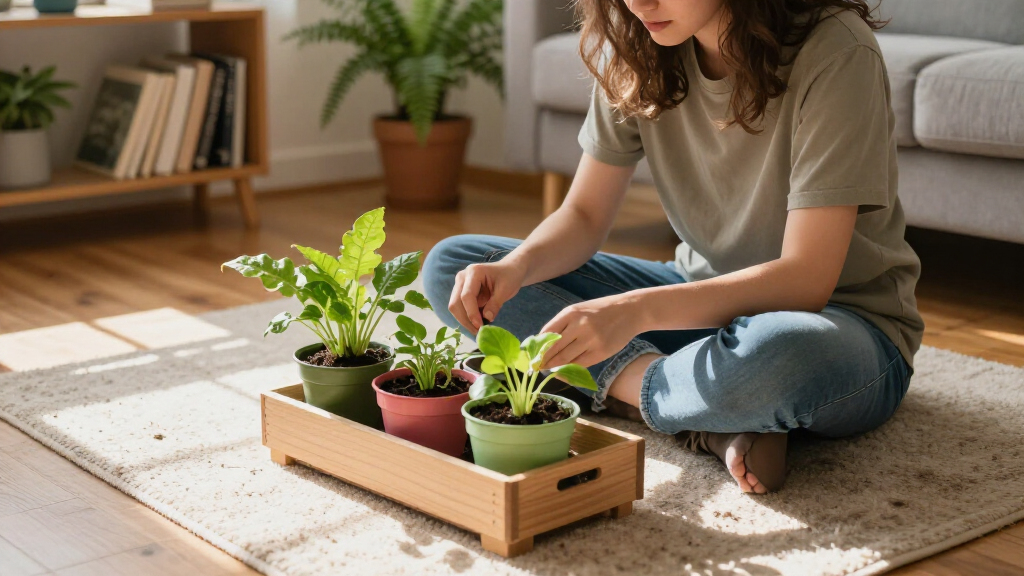

When I set out to compare indoor gardening kits for students, I quickly realized the category splits into two very different philosophies: observation-first kits built around transparent planters that let kids literally watch roots develop, and growth-first kits that prioritize lights, humidity domes, and greenhouse systems to actually get plants thriving on a windowsill-less dorm or classroom shelf. The right choice depends on whether the student in your life is doing a one-week science observation or a semester-long growing project.

Get garden gear delivered free with Prime
- Fast, free delivery on millions of items
- Prime Video, Amazon Music and more included
- Member-only deals all year
My top pick is the Kids Gardening Kit with LED Grow Light & Root Viewer, because it’s the only option here that combines both philosophies — a see-through root viewer plus a full-spectrum grow light — at a student-friendly price. For younger elementary students, the Root Viewer Kit with six seed varieties wins on variety and sticker-driven engagement, while budget-limited teachers should look at the Educational Insights Sprout & Grow Window, a classroom classic that costs less than a pizza. The main tradeoffs you’ll be weighing throughout this roundup: seed variety versus included lighting, and hands-on simplicity versus long-term growing success.
Complete the kit


Key Takeaways
- Only one kit (the B0FZBRJF8K Kids Gardening Kit) includes both a root viewer and a grow light, making it the most complete single-purchase option for students without a sunny window.
- Seed variety matters for engagement: the Root Viewer Kit includes six seed types versus just two (carrot and kale) in my top pick, so restless learners may prefer variety over lighting.
- Cheap observation kits like the Sprout & Grow Window are ideal for classroom demos but require a bright windowsill — they have no grow light, so growth stalls in dim rooms.
- The MIXC 6-pack is the only option designed for serious propagation volume (six trays, drainage, humidity domes), making it best for older students running experiments, not elementary kids.
- Every kit here demands patience — several seed types take weeks to sprout — so match the kit to the student’s attention span, not just their age.
| Kids Gardening Kit with LED Grow Light & Root Viewer |  | Best Overall | Seed Packets: Carrot & Kale | Lighting: Full-spectrum LED grow light included | Includes: Root viewer, soil tablets, water dropper, instructions | VIEW LATEST PRICE | See Our Full Breakdown |
| Root Viewer Kit for Kids with 6 Seed Varieties – STEM Gardening Science Kit |  | Best for Younger Students | Seed Varieties: Kidney Bean, Pea, Soya-Bean, Radish, Chili, Carrot | Age Range: 5-12 years | Planters: Transparent root-viewing planters | VIEW LATEST PRICE | See Our Full Breakdown |
| MIXC 6 Pack Seed Starter Kit with Grow Light, Vented Humidity Dome |  | Best for Older Students and Serious Projects | Tray Count: 6 propagation trays | Dome Size: 1.5 x 1.5 x 2 inches (WxDxH) each | Lighting: Full-spectrum LED included | VIEW LATEST PRICE | See Our Full Breakdown |
| Educational Insights Sprout & Grow Window – See-Through Sprouts Growing Kit |  | Best Budget Classroom Pick | Ages: 5+ | Seeds Included: Bean & pea packets | Includes: See-through planter, enriched soil, instructions, journal | VIEW LATEST PRICE | See Our Full Breakdown |
| Kids Plant Growing Kit with Greenhouse, Irrigation, and Grow Light |  | Best Premium All-in-One | Kit Type: All-in-one plant growing kit | Greenhouse: Included enclosure | Irrigation: Upgraded self-watering system | VIEW LATEST PRICE | See Our Full Breakdown |
| indoor gardening kits for student | Lighting |
|---|---|
| Kids Gardening Kit with LED Gr | Full-spectrum LED grow light included |
| Root Viewer Kit for Kids with | None included — bright window required |
| MIXC 6 Pack Seed Starter Kit w | Full-spectrum LED included |
| Educational Insights Sprout & | None — bright window required |
| Kids Plant Growing Kit with Gr | Grow light included |
More Details on Our Top Picks
Kids Gardening Kit with LED Grow Light & Root Viewer
This kit earns my top spot because it solves the single biggest failure point of student gardening projects: the lack of a sunny window. Most dorm rooms and classrooms simply don’t get the light seedlings need, and every other budget kit in this lineup quietly assumes you’ll provide it. By bundling a full-spectrum LED grow light with a transparent root viewer, soil tablets, and a water dropper, this option removes that assumption entirely. The student unboxes it, assembles in under thirty seconds with no tools, and has a functioning micro-garden regardless of where the shelf sits.
Compared with the Root Viewer Kit below, this pick offers less seed variety — just carrot and kale versus six seed types — but the trade is worth it for most students. Six varieties don’t help much if four of them die in a dim room, whereas two varieties under a proper LED have dramatically better survival odds. That success matters educationally too: a student who watches something actually grow to harvest stays engaged; a student staring at ungerminated soil checks out.
The honest limitations are its small scale and its dependence on the light being used correctly. This won’t feed anyone, and a student who forgets to power the LED on a consistent schedule will see leggy, weak seedlings. Parents of younger children should also expect to manage the light routine for the first couple of weeks. Still, for a self-contained, plug-and-grow learning tool, this option stands out for balancing education and practicality better than anything else here.
Pros:- Combines a root viewer and full-spectrum LED grow light in one affordable package
- Everything included: soil tablets, water dropper, seeds, and instructions
- Tool-free assembly in under 30 seconds — genuinely student-independent
- Compact footprint fits a desk, bookshelf, or classroom counter
Cons:- Only two seed packets (carrot and kale), so variety seekers will need extras
- Very small growing capacity — this is a learning tool, not a food source
- Seedling success still depends on consistent LED usage
Best for: Elementary and middle school students in dorms, apartments, or classrooms without reliable natural light
Not ideal for: Older students or hobbyists wanting multiple plant varieties or larger harvests
- Seed Packets:Carrot & Kale
- Lighting:Full-spectrum LED grow light included
- Includes:Root viewer, soil tablets, water dropper, instructions
- Assembly:No tools required, under 30 seconds
- Grow Options:Herbs, vegetables, flowers
- Best Setting:Desks and shelves without natural light
Our verdict“The most complete single-purchase kit for students because it adds the one thing every cheaper competitor omits: a grow light.”
Root Viewer Kit for Kids with 6 Seed Varieties – STEM Gardening Science Kit
Where my top pick optimizes for growing conditions, this kit optimizes for curiosity and variety. Six seed types — kidney bean, pea, soybean, radish, chili, and carrot — means six different germination timelines, root structures, and eventually six different plants a child can compare side by side. That’s a genuine science lesson baked into the product design: a student can watch a radish sprint up in days while a chili seedling dawdles for weeks, and learn firsthand why germination rates vary by species.
The transparent planters do the same root-observation work as the Educational Insights Sprout & Grow Window, but with far more content. Compared with that single-window kit, this option gives a child multiple planters to label and personalize with the included stickers, which sounds trivial but matters enormously for the five-to-twelve age range — ownership drives care, and care drives results. Customizable labels also open the door to a running observation journal without any extra purchases.
The tradeoff is the same one that affects the Sprout & Grow Window: there’s no grow light, so this kit needs a genuinely bright windowsill or it will disappoint. Some seeds also take weeks to sprout, and younger children may lose interest without adult encouragement. For a parent or teacher willing to provide light and a little structure, though, this model offers the richest observation experience of any kit in this lineup.
Pros:- Six seed varieties enable side-by-side growth and germination comparisons
- Transparent plantters make root systems visible throughout the entire growth cycle
- Sticker and label customization builds ownership and engagement
- Seeds are edible plants, so the project ends with something to actually eat
Cons:- No grow light included — placement near a bright window is basically mandatory
- Several seed types germinate slowly, testing younger kids’ patience
- Requires consistent care from the child or a supervising adult
Best for: Parents of kids aged 5-12 who want a multi-week STEM project with real variety
Not ideal for: Students without a bright window, or anyone wanting a light-included, set-and-forget setup
- Seed Varieties:Kidney Bean, Pea, Soya-Bean, Radish, Chili, Carrot
- Age Range:5-12 years
- Planters:Transparent root-viewing planters
- Extras:Colorful stickers, customizable labels
- Lighting:None included — bright window required
- Educational Focus:Plant growth, root systems, patience
Our verdict“The best choice for younger students because variety and personalization keep kids invested where single-seed kits lose them.”
MIXC 6 Pack Seed Starter Kit with Grow Light, Vented Humidity Dome
This is the odd one out in my lineup, and deliberately so: it’s the only option designed for propagation at scale rather than casual observation. Six vented humidity domes, drainage systems, thicker reusable PVC, and an included full-spectrum LED light make this a working nursery — the kind of thing a high schooler running a biology fair project on germination rates, or a college student starting apartment herbs from seed, actually needs. Compared with my top pick’s single root viewer, this kit lets a student run six parallel experiments with controlled variables, which is real scientific methodology, not just gardening.
The vented domes deserve explanation, because they’re the key differentiator. Adjustable vents let the grower manage humidity as seedlings mature — closed for germination, gradually opened to harden plants off. That’s a teachable skill the toy-oriented kits in this roundup never touch. The side-grip design also makes transplanting far less traumatic for seedling roots, which matters if the project continues outdoors or into larger pots.
The drawbacks are real, though. Seed variety isn’t included in any meaningful educational sense — this is hardware, not a curated science kit, so there are no stickers, journals, or kid-friendly instructions. The listing is also thin on light intensity and duration specs, meaning a student will need to research photoperiods themselves (which, admittedly, some students will enjoy). And the six-tray footprint is bulkier than anything else here. For a ten-year-old, skip it; for a fourteen-year-old with a hypothesis to test, nothing else in this roundup comes close.
Pros:- Six separate trays enable controlled, multi-variable science experiments
- Adjustable humidity dome vents teach genuine seedling-management skills
- Reusable thick PVC construction survives multiple growing cycles
- Drainage and side-grip design make transplanting clean and root-safe
Cons:- No seeds, journal, or kid-facing educational materials included
- Light intensity and duration specs are poorly documented
- Bulkier footprint than single-planter kits — not desk-friendly
Best for: High school and college students running germination experiments or starting many plants from seed
Not ideal for: Younger children and anyone wanting an out-of-the-box educational experience with instructions
- Tray Count:6 propagation trays
- Dome Size:1.5 x 1.5 x 2 inches (WxDxH) each
- Lighting:Full-spectrum LED included
- Domes:Vented, adjustable humidity control
- Material:Thicker, reusable PVC
- Drainage:Yes, built into each tray
- Seeds Included:No — bring your own
Our verdict“The best pick for older students because it treats gardening as experimental methodology rather than a one-off craft project.”
Educational Insights Sprout & Grow Window – See-Through Sprouts Growing Kit
There’s a reason this kit has been around long enough to become a classroom staple: it does one thing, cheaply and reliably. A single self-supporting transparent window planter, bean and pea seeds, enriched soil, instructions, and an activity journal — that’s the entire package, and for teachers buying for thirty students or parents wanting a low-risk first gardening experiment, that simplicity is the selling point. Beans and peas are the two fastest, most reliable sprouters in this entire roundup, germinating in days rather than weeks, which means a classroom of kids sees results before the unit ends.
Compared with the Root Viewer Kit, this option trades variety for reliability and price. Six seed types are more interesting, but two fast sprouters in a proven format mean fewer disappointed children. The included journal also sets it apart: it’s the only kit here with structured observation activities built in, which turns passive watching into actual data collection — exactly what a classroom teacher needs.
The limitations follow from the price. There’s no grow light, so a bright windowsill is required, and the grow space is a single planter, so this is a one-and-done observation project rather than an ongoing garden. Younger children need supervision since the window can be knocked over. But as an affordable entry point or a bulk classroom buy, this model makes the most sense for buyers who value proven simplicity over features.
Pros:- Fastest, most reliable sprouting seeds (beans and peas) in the roundup
- Includes structured observation journal and activities, not just parts
- Self-supporting design sits securely on windowsills and counters
- Lowest-cost complete kit here — practical for classroom multiples
Cons:- Single planter with only two seed types limits repeat interest
- No grow light — a genuinely sunny window is non-negotiable
- Requires adult supervision for younger children
Best for: Teachers buying in bulk for classrooms and parents wanting an inexpensive first growing experiment
Not ideal for: Students wanting a sustained garden or anyone without a bright window
- Ages:5+
- Seeds Included:Bean & pea packets
- Includes:See-through planter, enriched soil, instructions, journal
- Design:Self-supporting transparent window
- Lighting:None — bright window required
- Setting:Classroom or home windowsill
- Germination Speed:Fast (days, not weeks)
Our verdict“The budget pick that earns its classroom-classic status through fast results and built-in activities rather than features.”
Kids Plant Growing Kit with Greenhouse, Irrigation, and Grow Light
This kit takes the most ambitious approach in the lineup: instead of a planter or a tray, it gives a child a complete miniature ecosystem — a greenhouse enclosure, an upgraded irrigation system, and a grow light. That combination teaches systems thinking in a way none of the other kits manage: the student isn’t just growing a plant, they’re managing humidity, water delivery, and light as interacting variables. If my MIXC pick is propagation for scientists, this one is environmental science for kids.
Compared with my top pick, this option covers the full plant life cycle from planting to flowering rather than stopping at seedling observation, and the greenhouse gives it a sturdier growth trajectory than an open root viewer. The irrigation system also reduces the single most common kid-gardening failure: over- or under-watering. The kit’s framing around emotional well-being is more than marketing, too — tending a living thing on a daily schedule genuinely builds routine and reduces stress, which several studies on school gardening programs support.
But ambition has costs. This is the most feature-heavy option here, and features demand management: a child will need supervision for watering calibration and light scheduling, at least initially. The irrigation system, while helpful, adds parts that can be misplaced or misused. And unlike the Root Viewer Kit, there’s no transparent side profile for watching roots develop — the greenhouse prioritizes what happens above the soil. For a family wanting a long-haul project with adult involvement, this pick makes the most sense; for a hands-off gift, it’s the wrong choice.
Pros:- Greenhouse, irrigation, and grow light create a complete self-managed growing environment
- Covers the entire life cycle from seed to flower, not just germination
- Irrigation system reduces the over-watering mistakes that kill most kid gardens
- Daily-care routine supports emotional well-being and responsibility-building
Cons:- Most supervision-intensive kit here — adults need to stay involved
- Irrigation components add complexity and potential failure points
- No transparent root-viewing angle like the observation-focused kits
Best for: Families wanting a long-term, parent-supported project that covers the full growth cycle
Not ideal for: Independent young students or buyers wanting a low-maintenance gift
- Kit Type:All-in-one plant growing kit
- Greenhouse:Included enclosure
- Irrigation:Upgraded self-watering system
- Lighting:Grow light included
- Life Cycle Coverage:Planting through flowering
- Supervision Level:Moderate to high (adult recommended)
- Setting:Indoor use only
Our verdict“The premium pick for families who want a months-long project teaching ecosystems, not just a seed in a cup.”

How We Picked
My ranking logic for this roundup centers on a single question: what does a student actually need to succeed with an indoor garden in a dorm room, apartment, or classroom? That broke down into four criteria I applied consistently across all five kits.
First, I weighted learning value above raw growing power. A kit that teaches photosynthesis, root structures, or the scientific method earns more credit than one that simply grows plants well, because the buyer here is purchasing an educational experience, not produce. Second, I evaluated self-sufficiency: does the kit include everything needed — seeds, soil or soil tablets, light, and instructions — or will a student need to buy extras? Kits requiring a bright south-facing window scored lower than those with included grow lights, since many students don’t control their window situation.
Third, I considered age fit and supervision demands. A kit needing daily adult oversight is a poor match for a middle schooler working independently, while a kit with fiddly humidity domes may frustrate a six-year-old. Fourth, I factored price-to-content ratio, since most buyers here are students, parents on a budget, or teachers buying multiples for a classroom. Finally, I penalized every kit for its real drawbacks — slow germination, vague specs, small grow space — because a roundup where everything is great helps nobody choose.
| indoor gardening kits for student | Lighting |
|---|---|
| Kids Gardening Kit with LED Gr | Full-spectrum LED grow light included |
| Root Viewer Kit for Kids with | None included — bright window required |
| MIXC 6 Pack Seed Starter Kit w | Full-spectrum LED included |
| Educational Insights Sprout & | None — bright window required |
| Kids Plant Growing Kit with Gr | Grow light included |
Factors to Consider When Choosing Indoor Gardening Kits For Students
Before choosing among these five kits, I’d walk through four questions that quickly narrow the field. The differences between these products are less about quality and more about which learning style and living situation they suit.Does the Student Have a Bright Window?
This is the single most decisive question. Three kits in this roundup — the Root Viewer Kit, the Sprout & Grow Window — include no grow light and depend entirely on natural sun. If the student lives in a dorm, a north-facing apartment, or a classroom with poor light, seedlings will stretch, weaken, and frequently die. In that case, only the Kids Gardening Kit with LED light, the MIXC starter kit, or the greenhouse kit make sense. A grow light isn’t a luxury add-on; it’s the difference between a thriving project and a dead one.
Observation Project or Ongoing Garden?
Some students need a two-week observation for a science unit; others want a plant that lives on their desk all semester. Transparent root viewers like the Root Viewer Kit and Sprout & Grow Window excel at the first goal — the learning happens underground, in the first weeks. The greenhouse kit and MIXC trays are built for the second, carrying plants through to flowering or transplanting. Match the kit’s lifespan to the project’s lifespan, because a kit that outlives the student’s interest becomes clutter.
Age and Independence Level
For ages five through eight, I’d favor kits with fast-sprouting seeds, visual customization, and minimal parts — the Sprout & Grow Window and Root Viewer Kit fit best. Ages nine to twelve can handle a grow light routine, making the Kids Gardening Kit the sweet spot. High schoolers and college students should skip the toy framing entirely and go with the MIXC 6-pack, which treats them like the capable growers they are. Buying above a child’s independence level just transfers the work to the parent.
Budget and Total Cost of Ownership
Sticker price isn’t the whole cost. The MIXC kit includes no seeds, so add seed packets to its price. Light-included kits add a few dollars of electricity over months — negligible, but real for a student budget. And if a cheap kit fails because of poor light, replacing dead seedlings costs time and motivation, which are the actual currencies of a student project. I’d rather see a buyer spend slightly more on a kit that will succeed than save money on one that frustrates.
Frequently Asked Questions
Can these kits grow plants without any natural sunlight?
Only three of the five can: the Kids Gardening Kit with LED Grow Light, the MIXC Seed Starter Kit, and the Greenhouse Kit all include artificial lighting capable of sustaining seedlings on their own. The Root Viewer Kit and the Sprout & Grow Window have no light source, so they depend entirely on a bright windowsill — ideally south-facing — and will produce weak, stretched seedlings in dim rooms. If the student’s space lacks reliable sun, I’d rule those two out immediately regardless of their other strengths, because lighting failures kill more student gardens than any other single factor.
Which kit is best for a classroom science project?
For a typical classroom unit lasting two to four weeks, the Educational Insights Sprout & Grow Window is my recommendation, mainly because beans and peas germinate in days rather than weeks, so the whole class sees results before the unit ends. Its included journal and structured activities also plug directly into lesson planning. If the classroom has no good window, the Kids Gardening Kit with LED light is the alternative, since it works anywhere there’s an outlet. Teachers buying for many students will also appreciate that the Sprout & Grow Window is the cheapest complete kit in the lineup.
How long do these kits take from planting to visible results?
Expect fast sprouting from beans and peas — often three to seven days — which is why the Sprout & Grow Window works so well for impatient learners. Radish seeds in the Root Viewer Kit also sprout quickly, usually within a week, but kidney beans, chilies, and carrots can take two to four weeks, and carrots grow slowly even after germinating. Herbs and flowering plants in the greenhouse kit are semester-scale projects. The honest answer is that every kit here rewards patience, so I’d set expectations with the student upfront: days for first sprouts, weeks for real growth, and months for anything resembling a harvest.
Are these kits suitable for college students, or are they just for kids?
Most are clearly designed for children, but two hold up well for older students. The MIXC 6 Pack Seed Starter Kit is genuinely adult-grade equipment — vented humidity domes, drainage, reusable trays — and suits a college student growing apartment herbs or running a biology experiment. The Kids Gardening Kit with LED light also works as a compact desk garden, though its cheerful packaging and small scale lean young. The other three are toy-framed enough that a college student would probably find them underpowered. If the goal is actual food or herbs, the MIXC kit is the only one here with the capacity for it.
What can go wrong, and how do I prevent it?
The three most common failures are insufficient light, over-watering, and lost interest. Insufficient light produces tall, pale, floppy seedlings; the fix is either a grow light kit or a genuinely bright window, not a compromise spot. Over-watering causes damping-off, where seedlings collapse at the soil line — kits with drainage, like the MIXC trays, or irrigation systems, like the greenhouse kit, reduce this risk, and the included water dropper in the Kids Gardening Kit helps portion water sensibly. Lost interest is best prevented by choosing fast-sprouting seeds and involving the student in setup and labeling, since ownership drives the daily check-ins that keep a garden alive.
Conclusion
After comparing all five, my recommendations break cleanly along buyer type. For the parent of an elementary or middle school student, the Kids Gardening Kit with LED Grow Light & Root Viewer is my overall pick — it works in any lighting situation, sets up in under a minute, and balances education with genuine growing success. For younger children aged five to eight with a sunny window and a parent involved, the Root Viewer Kit’s six seed varieties provide the richest observation experience and the most sticker-driven fun.
Teachers buying for classrooms should choose the Educational Insights Sprout & Grow Window: it’s affordable enough for multiples, sprouts fast enough to hold a class’s attention, and includes a journal that turns watching into learning. High school and college students running real experiments should skip the toys and buy the MIXC 6 Pack Seed Starter Kit, the only option here with the capacity and control for genuine propagation work. Finally, families wanting a months-long shared project that carries a plant all the way to flowering will get the most from the Greenhouse Kit with irrigation and grow light, provided an adult stays involved.
The single deciding factor I’d return to: light. If the student doesn’t have a bright window, buy a kit with an LED and don’t look back. Everything else — seeds, domes, journals, stickers — is refinement on top of that foundation.
Fall yard work Picks
leaf blowers
As an affiliate, we earn on qualifying purchases.