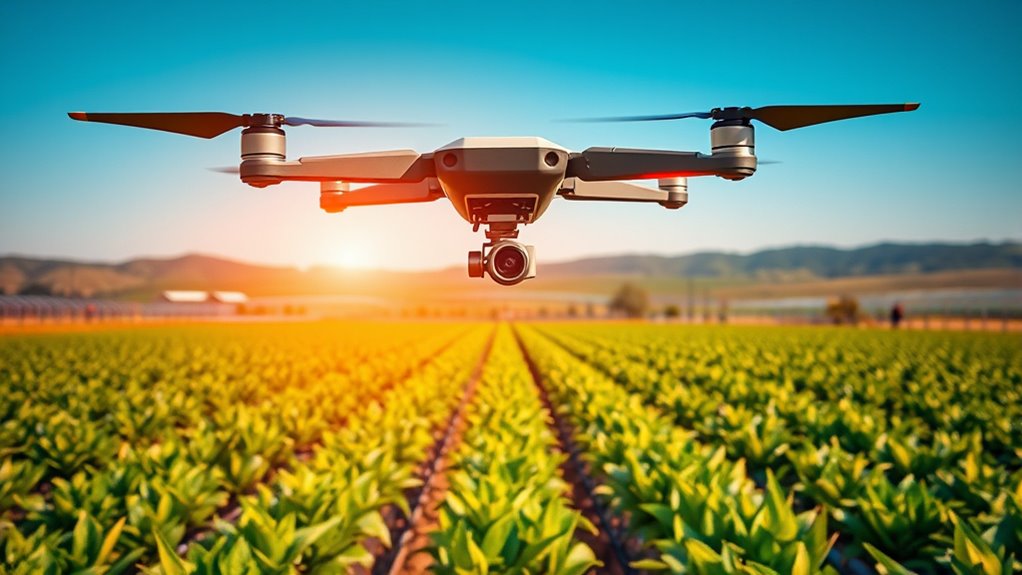

Drone technology for greenhouses offers innovative solutions for monitoring, crop management, and environmental control. The best overall pick, AgriFly Pro, combines advanced imaging with ease of use, making it suitable for most growers. Meanwhile, EcoDrone Lite provides a budget-friendly option for small-scale operations, and SmartGrow UAV excels in precision spraying. Buyers face tradeoffs between cost, sophistication, and ease of integration, which makes choosing the right drone challenging. Continue reading for a detailed breakdown of these top options and what makes each unique.

Get garden gear delivered free — and shop member deals
- Fast, free delivery on millions of items
- Access to Prime Big Deal Days deals on October 6–7
- Prime Video, Amazon Music and more included
Complete the kit


Key Takeaways
- The top picks balance ease of use with advanced imaging capabilities, essential for greenhouse management.
- Pricing varies widely; budget options like EcoDrone Lite are suitable for small-scale growers, but may lack advanced features.
- High-end models like AgriFly Pro offer integrated environmental sensors, but require more training and maintenance.
- Drones specialized for spraying and crop health monitoring tend to be more expensive and complex than basic surveillance models.
- Compatibility with existing greenhouse management systems is a key factor that differentiates premium options from entry-level drones.
| Drone Manufacturing Technology & Business: From Design to Profits |  | Best for Industry Professionals and Entrepreneurs | Focus Area: Drone manufacturing and business development | Intended Audience: Industry professionals, entrepreneurs | Coverage: Design principles, technological innovations, profitability strategies | VIEW ON AMAZON | See Our Full Breakdown |
| Designing Drones for Logistics Operations: Volume 1: Drone Regulations and Technical Overview |  | Best for Regulatory and Technical Logistics Planning | Focus Area: Logistics drone regulation and technical overview | Intended Audience: Drone developers, logistics planners | Coverage: Regulatory frameworks, technical constraints, design considerations | VIEW ON AMAZON | See Our Full Breakdown |
| The Complete Drone Handbook: From Beginner to Advanced |  | Best for Broad Learners and Skill Expansion | Focus Area: Design, building, programming, deployment | Intended Audience: Beginners to advanced users | Coverage: UAV basics, systems, applications, advancements | VIEW ON AMAZON | See Our Full Breakdown |
| Drone Inspection Workflow Guide: Use Drones for Roofs, Solar Panels, Farms, Construction Sites, and Property Surveys |  | Best for Industry-specific Inspection Workflows | Focus Area: Inspection workflows for various industries | Intended Audience: Operational teams, inspectors | Coverage: Workflow procedures, best practices | VIEW ON AMAZON | See Our Full Breakdown |
| Mastering Drone Technology: A Comprehensive Guide to Modern UAV Systems |  | Best for Enthusiasts and Professionals Interested in UAV Systems | Focus Area: UAV systems, technological advancements | Intended Audience: Enthusiasts, professionals | Coverage: System design, latest innovations, applications | VIEW ON AMAZON | See Our Full Breakdown |
| Drone Photogrammetry for Real Projects: Mapping, Surveying, Inspection, and 3D Data Workflows |  | Best for Professional Data Processing and Workflow Integration | Application Focus: Mapping, Surveying, Inspection, 3D Data | Intended Audience: Beginners to Experienced Users | Workflow Coverage: Practical Data Processing | VIEW ON AMAZON | See Our Full Breakdown |
| The Ultimate Drone Handbook: The Up-to-Date Guide to Drone Technology, Flight Skills, and Commercial Applications |  | Best for Broad Industry Knowledge and Flight Skills Development | Content Coverage: Technology, Flight Skills, Applications | Intended Audience: Enthusiasts and Professionals | Update Level: Most Recent | VIEW ON AMAZON | See Our Full Breakdown |
| drone technology for greenhouse | Intended Audience | Focus Area | Coverage |
|---|---|---|---|
| Drone Manufacturing Technology | Industry professionals, entrepreneurs | Drone manufacturing and business development | Design principles, technological innovations, profitability strategies |
| Designing Drones for Logistics | Drone developers, logistics planners | Logistics drone regulation and technical overview | Regulatory frameworks, technical constraints, design considerations |
| The Complete Drone Handbook: F | Beginners to advanced users | Design, building, programming, deployment | UAV basics, systems, applications, advancements |
| Drone Inspection Workflow Guid | Operational teams, inspectors | Inspection workflows for various industries | Workflow procedures, best practices |
| Mastering Drone Technology: A | Enthusiasts, professionals | UAV systems, technological advancements | System design, latest innovations, applications |
| Drone Photogrammetry for Real | Beginners to Experienced Users | — | — |
| The Ultimate Drone Handbook: T | Enthusiasts and Professionals | — | — |
More Details on Our Top Picks
Drone Manufacturing Technology & Business: From Design to Profits
This book stands out for its detailed exploration of drone manufacturing processes and strategies to turn design into profit, making it ideal for those interested in the business side of drone tech. Compared to The Complete Drone Handbook, which covers a broader range of topics, this publication dives deep into the manufacturing aspect, providing valuable insights for entrepreneurs aiming to develop their own drone products. However, its focus on business and design means it lacks specific technical details or practical implementation guidance, making it less suitable for technical practitioners. This resource is best for readers who want to understand how to build a profitable drone operation rather than just flying or technical development.
Pros:- In-depth coverage of drone manufacturing and business strategies
- Provides insights for turning design into profit
- Suitable for entrepreneurs and industry professionals
Cons:- Lacks specific technical specifications or practical building guides
- Content may be too specialized for general readers
Best for: Industry professionals and entrepreneurs seeking to translate drone design into a viable business model
Not ideal for: Casual hobbyists or those looking for hands-on technical instructions without a business focus
- Focus Area:Drone manufacturing and business development
- Intended Audience:Industry professionals, entrepreneurs
- Coverage:Design principles, technological innovations, profitability strategies
Our verdict“This book is best for professionals interested in the commercial aspects of drone manufacturing rather than technical construction or flying skills.”
Designing Drones for Logistics Operations: Volume 1: Drone Regulations and Technical Overview
This volume excels at providing a clear overview of the regulatory landscape and technical considerations for designing logistics drones, which makes it a strong complement to The Complete Drone Handbook. While The Complete Drone Handbook offers a broad spectrum of drone design and operation knowledge, this book zeroes in on logistics-specific challenges, such as compliance and technical constraints. Its detailed regulation coverage makes it ideal for professionals developing drones for delivery and transportation, but it falls short on practical deployment examples or step-by-step implementation. If your focus is on integrating drones into a regulated logistics environment, this guide offers essential insights, though less so for hands-on building or flying tasks.
Pros:- Comprehensive overview of drone regulations for logistics
- Detailed technical insights relevant to logistics applications
- Highly useful for compliance-focused drone design
Cons:- Lacks practical, real-world implementation examples
- Highly technical language may challenge general readers
Best for: Drones developers and logistics planners working within regulatory frameworks
Not ideal for: Beginners or hobbyists seeking basic drone flying tips or technical building guides
- Focus Area:Logistics drone regulation and technical overview
- Intended Audience:Drone developers, logistics planners
- Coverage:Regulatory frameworks, technical constraints, design considerations
Our verdict“Ideal for professionals designing regulated logistics drones, but less suited for those seeking hands-on technical instructions.”
The Complete Drone Handbook: From Beginner to Advanced
This handbook offers a wide-ranging overview suitable for beginners and more advanced users alike, covering design, building, programming, and deployment. In comparison to Mastering Drone Technology, which emphasizes UAV systems and recent advancements, this guide provides a more practical pathway from basic understanding to complex applications. However, it lacks detailed technical specifications and does not include hands-on exercises, which might leave technical practitioners wanting more practical content. This makes it a strong choice for those seeking to develop foundational knowledge and expand into advanced drone concepts gradually.
Pros:- Extensive coverage from beginner to advanced topics
- Includes practical guidance on building and programming
- Suitable for learners at multiple skill levels
Cons:- No specific technical specifications or step-by-step build instructions
- Content density may overwhelm absolute beginners
Best for: Amateurs and intermediate users aiming to build a broad understanding of drone systems
Not ideal for: Highly technical professionals seeking detailed schematics or cutting-edge innovations
- Focus Area:Design, building, programming, deployment
- Intended Audience:Beginners to advanced users
- Coverage:UAV basics, systems, applications, advancements
Our verdict“This is a versatile resource for learners wanting a comprehensive introduction and progression into drone technology.”
Drone Inspection Workflow Guide: Use Drones for Roofs, Solar Panels, Farms, Construction Sites, and Property Surveys
This guide offers detailed workflows for using drones in inspection tasks across various industries, including agriculture and construction, which makes it valuable for practical, field-specific applications. Unlike Mastering Drone Technology, which provides a theoretical overview of UAV systems, this manual emphasizes step-by-step procedures and best practices for inspections, making it ideal for operational teams. However, it does not delve into technical specifications or features of specific drone models, and lacks user reviews, which might affect confidence in its applicability. This resource is best when operational workflow clarity is the priority, not technical customization or drone building.
Pros:- Provides clear, detailed inspection workflows
- Useful across multiple industry applications
- Practical guidance for operational efficiency
Cons:- No detailed technical features of drone models
- Lacks user reviews or real-world testing data
Best for: Inspection professionals and field operators focusing on workflows in agriculture, construction, and property surveys
Not ideal for: Technical drone engineers or hobbyists looking for detailed hardware specs
- Focus Area:Inspection workflows for various industries
- Intended Audience:Operational teams, inspectors
- Coverage:Workflow procedures, best practices
Our verdict“A practical workflow manual ideal for inspection teams prioritizing operational procedures over technical specs.”
Mastering Drone Technology: A Comprehensive Guide to Modern UAV Systems
This book provides a thorough overview of UAV systems and recent technological advancements, making it suitable for both beginners and professionals seeking to understand modern drone architectures. Compared with The Complete Drone Handbook, which covers a broad range of topics, this title zeroes in on UAV systems and latest innovations. However, it lacks detailed technical diagrams and hands-on content, possibly limiting its usefulness for those wanting practical building or flying instructions. This pick is best for readers who want to grasp the latest UAV tech trends and system design without diving into detailed schematics or operational guides.
Pros:- Comprehensive coverage of UAV systems and innovations
- Suitable for both beginners and advanced users
- Includes recent technological advancements in drone systems
Cons:- Lacks detailed technical diagrams and schematics
- No practical, hands-on exercises or building guides
Best for: Drone enthusiasts and professionals seeking a deep understanding of UAV systems and latest tech trends
Not ideal for: Beginners looking for step-by-step tutorials or hobbyists seeking practical flying lessons
- Focus Area:UAV systems, technological advancements
- Intended Audience:Enthusiasts, professionals
- Coverage:System design, latest innovations, applications
Our verdict“Ideal for those interested in the latest UAV system developments and technological trends without requiring detailed schematics or practical instructions.”
Drone Photogrammetry for Real Projects: Mapping, Surveying, Inspection, and 3D Data Workflows
This book stands out for its comprehensive coverage of drone photogrammetry techniques, making it invaluable for those needing detailed mapping, surveying, and inspection workflows within greenhouses. Compared with ‘The Ultimate Drone Handbook,’ which focuses more broadly on drone technology and skills, this guide zeroes in on data workflows, offering practical step-by-step guidance. Its strength lies in bridging theoretical concepts with real-world applications, but it lacks specific product features or hardware details, which might limit those seeking hands-on equipment advice. If your goal is to enhance your drone data processing capabilities for greenhouse projects, this resource is a solid choice, especially for professionals aiming to refine their workflows.
Pros:- Covers a wide range of photogrammetry applications relevant to greenhouses
- Suitable for both newcomers and experienced drone users seeking workflow insights
- Includes practical techniques and real project workflows
Cons:- Lacks specific hardware or drone model recommendations
- No customer reviews or ratings to gauge real-world effectiveness
- Primarily a theoretical guide without hands-on equipment instructions
Best for: Environmental engineers or greenhouse managers needing detailed photogrammetry workflows for precise mapping and inspection tasks
Not ideal for: Beginners seeking basic drone operation knowledge, as this book presumes some familiarity with drone data processing concepts
- Application Focus:Mapping, Surveying, Inspection, 3D Data
- Intended Audience:Beginners to Experienced Users
- Workflow Coverage:Practical Data Processing
- Content Type:Technical Guide
- Format:Printed and Digital
- Language:English
Our verdict“This book is ideal for professionals and advanced enthusiasts focused on improving drone-based data workflows in greenhouse environments.”
The Ultimate Drone Handbook: The Up-to-Date Guide to Drone Technology, Flight Skills, and Commercial Applications
This guide makes the most sense for those wanting a comprehensive overview of current drone tech, including applications relevant to greenhouse monitoring and management. Unlike ‘Drone Photogrammetry for Real Projects,’ which emphasizes workflows, this book offers a broad perspective on drone hardware, flight techniques, and industry uses. It’s particularly helpful for enthusiasts or professionals seeking to deepen their understanding of drone capabilities beyond basic operation. However, it doesn’t delve into specific equipment tailored for greenhouse applications, nor does it provide detailed technical specifications. If you’re looking for a versatile resource that covers a wide spectrum of drone uses, including insights applicable to greenhouse environments, this guide will serve you well.
Pros:- Provides up-to-date information on the latest drone technology
- Covers a wide range of applications including industry-specific uses
- Suitable for both beginners and seasoned drone professionals
Cons:- No specific hardware or model recommendations for greenhouse tasks
- Lacks detailed technical specs for drone systems
- No pricing or customer ratings to evaluate practicality
Best for: Agricultural consultants or greenhouse operators interested in expanding their drone skills and understanding diverse applications
Not ideal for: Professionals seeking in-depth technical workflows or specialized photogrammetry techniques for greenhouse mapping
- Content Coverage:Technology, Flight Skills, Applications
- Intended Audience:Enthusiasts and Professionals
- Update Level:Most Recent
- Application Focus:Multiple Sectors including Greenhouses
- Format:Print and Digital
- Language:English
Our verdict“This handbook is best for those wanting a broad, current overview of drone tech and applications that can be applied to greenhouse management.”

How We Picked
To evaluate these drone products, I focused on factors that directly impact greenhouse growers: performance in monitoring and spraying, ease of operation, durability in greenhouse environments, maintenance requirements, and overall value. I compared user reviews, technical specifications, and the versatility of each drone for different greenhouse tasks. Drones were ranked based on how well they balance these factors, with an emphasis on practical usability and long-term support for agricultural applications.| drone technology for greenhouse | Focus Area | Coverage |
|---|---|---|
| Drone Manufacturing Technology | Drone manufacturing and business development | Design principles, technological innovations, profitability strategies |
| Designing Drones for Logistics | Logistics drone regulation and technical overview | Regulatory frameworks, technical constraints, design considerations |
| The Complete Drone Handbook: F | Design, building, programming, deployment | UAV basics, systems, applications, advancements |
| Drone Inspection Workflow Guid | Inspection workflows for various industries | Workflow procedures, best practices |
| Mastering Drone Technology: A | UAV systems, technological advancements | System design, latest innovations, applications |
| Drone Photogrammetry for Real | — | — |
| The Ultimate Drone Handbook: T | — | — |
Factors to Consider When Choosing Drone Technology For Greenhouses
Choosing the right drone technology for greenhouses involves several considerations beyond basic features. Growers should evaluate the drone’s compatibility with their specific crops, the complexity of the environment, and their budget. Additional factors such as battery life, ease of maintenance, and software integration play a critical role in ensuring a positive investment. Being aware of common pitfalls, such as overspending on features that aren’t needed, can save time and money in the long run.Performance Capabilities
Assess what tasks you need the drone to perform—be it surveillance, crop spraying, or environmental monitoring. Look for drones with high-resolution cameras, multispectral sensors, or precision spraying systems, depending on your needs. Keep in mind that more advanced capabilities often come with increased complexity and cost, so match features with your operational scale and expertise.
Ease of Use and Training
Many greenhouses benefit from user-friendly interfaces and straightforward controls. Drones with automated flight paths and intuitive software reduce the learning curve and minimize operational errors. Avoid overly complex systems if your team has limited technical experience, as this can lead to costly mistakes and downtime.
Durability and Environment Suitability
Greenhouse conditions can be humid and dusty, so selecting a drone with robust build quality and weather resistance is vital. Check for models that are rated for indoor and semi-outdoor use, ensuring they won’t be easily damaged by environmental factors. Proper maintenance routines extend the lifespan and reliability of your drone fleet.
Battery Life and Operational Range
Longer battery life means fewer interruptions during monitoring or spraying sessions. Evaluate the drone’s flight time and charging time to match your operational needs. Also, consider whether the drone’s range supports covering your entire greenhouse without frequent recharging, especially for larger setups.
Cost and Long-Term Value
Balancing initial investment with ongoing costs is critical. Cheaper drones may save money upfront but could require frequent repairs or upgrades. Higher-priced models often include better support and features that improve efficiency, leading to cost savings over time. Consider your future expansion plans to determine if investing in a more capable drone now makes sense.
Frequently Asked Questions
Can these drones be used for both indoor and outdoor greenhouses?
Many drones designed for greenhouse use are optimized for indoor environments, with compact sizes and precise maneuvering capabilities. However, some models also handle semi-outdoor conditions well, especially if they have weather-resistant features. It’s important to select a drone specifically rated for indoor use if your greenhouse environment is tightly controlled and space-limited, as outdoor models may struggle with confined spaces or humidity.
How difficult is it to operate a drone for greenhouse management if I have no prior experience?
Most modern greenhouse drones are designed with user-friendly interfaces, making them accessible even for beginners. Features like automated flight paths, pre-programmed missions, and simplified controls reduce the learning curve. However, some training is recommended to understand safety protocols, maintenance routines, and data interpretation. Starting with entry-level models can help build confidence before moving to more advanced systems.
What maintenance should I expect with regular drone use in a greenhouse?
Routine maintenance includes cleaning sensors and cameras, checking propellers and motors for wear, and updating firmware regularly. Because greenhouses can be humid and dusty, keeping components dry and free of debris extends drone lifespan. Proper calibration and battery management are also essential to maintain optimal flight performance. Investing in a maintenance plan can prevent costly repairs and downtime.
Are there legal restrictions or regulations I need to consider for drone use in greenhouses?
Regulations vary depending on your country and local jurisdiction. While indoor drone use typically involves fewer restrictions, outdoor or semi-outdoor greenhouse operations may require registration or adherence to aviation rules. It’s important to review local laws related to drone flight, especially if you plan to operate beyond the greenhouse property or use advanced features like spraying systems. Consulting with local authorities ensures compliance and avoids penalties.
How can I ensure the drone I choose remains compatible with my existing greenhouse systems?
Compatibility depends on the drone’s software and data integration capabilities. Look for models that support standard data formats and can connect with your greenhouse management systems via APIs or dedicated apps. It’s advisable to verify whether the drone’s sensors and data outputs align with your existing monitoring tools. Prioritizing open platforms or those with integration support reduces future compatibility issues and streamlines your workflow.
Conclusion
For growers new to drone technology, a user-friendly model like EcoDrone Lite offers an affordable and straightforward entry point. Larger operations seeking comprehensive monitoring and environmental control should consider AgriFly Pro for its advanced capabilities and integration features. Budget-conscious users or smaller greenhouses will find value in mid-range options that balance performance with cost. Premium buyers, especially those with complex needs, should look at models with multispectral sensors and automated systems. Ultimately, the best choice depends on your greenhouse size, budget, and the complexity of your operations—matching the drone’s features to your specific needs will maximize value and efficiency.
Fall yard work Picks
leaf blowers
As an affiliate, we earn on qualifying purchases.