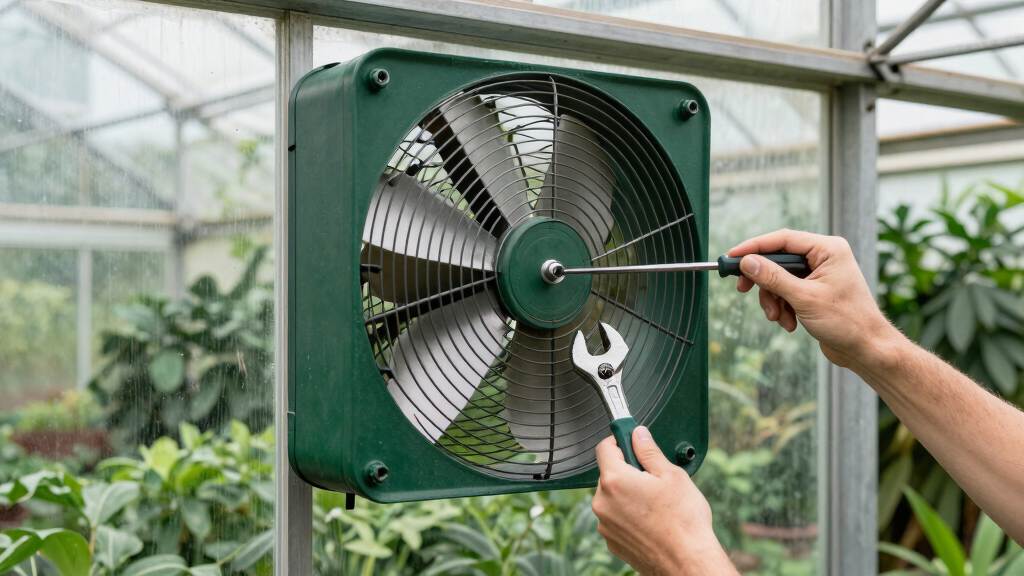

When selecting the best greenhouse booster fans, the goal is to find units that combine reliable performance, quiet operation, and energy efficiency. The VIVOSUN G6 6-inch Inline Fan stands out as the best overall choice for its high airflow and adjustable speed. For those on a budget, the VIVOSUN P4 4-inch Inline Fan offers solid performance at a lower price point, though it may lack some advanced features. The main tradeoffs in this category often involve balancing airflow capacity with noise levels, ease of installation, and energy consumption. Keep reading to see how each option stacks up in detail and find the best fit for your greenhouse needs.

Get garden gear delivered free — and shop member deals
- Fast, free delivery on millions of items
- Access to Prime Big Deal Days deals on October 6–7
- Prime Video, Amazon Music and more included
Complete the kit


Key Takeaways
- High airflow capacity is paired with noise levels that vary significantly across models, influencing suitability for quiet environments.
- Variable speed controls are a key feature for precise climate management but often come at a higher cost.
- Larger diameter fans generally move more air but can be more challenging to install in smaller setups.
- Built-in sensors and timers add automation benefits but may increase complexity and price.
- Overall, the best fans balance performance, noise, ease of use, and price, tailored to different user priorities.


| greenhouse booster fan | Airflow | Noise Level | Fan Size |
|---|---|---|---|
| 6" 260 CFM Inline Duct Fan wit | — | — | — |
| VIVOSUN D4 4-inch AC Motor Inl | 195 CFM | 30 dB | — |
| VEVOR Inline Duct Fan | 400 CFM | 34 dB | 6 inches |
| VIVOSUN G6 6-inch Inline Fan & | 388 CFM | 32 dB | 6 inches |
| VIVOSUN P4 4-inch Inline Fan w | 130 CFM | 26 dB | 4 inches |
| 4 Inch Inline Duct Fan with Te | 183 CFM | 24 dB | — |
More Details on Our Top Picks
6″ 260 CFM Inline Duct Fan with E12 Speed Controller for Ventilation, Grow Tents, Hydroponics
This inline duct fan stands out for its combination of high airflow capacity and adjustable speed, making it versatile for various grow setups. Compared with the VIVOSUN G6, it offers a straightforward control interface, but it lacks detailed noise level information, which could be a concern for noise-sensitive environments. Its compatibility with different ventilation systems is a plus, though the limited warranty details mean buyers should consider additional protection options. Ideal for growers who need flexible, reliable airflow control in medium-sized tents or hydroponic setups.
Pros:- Adjustable speed control for tailored airflow
- High airflow capacity suitable for grow tents and hydroponics
- Easy to install and compatible with various ventilation setups
Cons:- No detailed noise level information provided
- Limited warranty details available
- Requires proper wiring for safe operation
Best for: Growers seeking a versatile, high-capacity inline fan with adjustable airflow for medium-sized tents or hydroponic systems.
Not ideal for: Buyers who prioritize noise level transparency or need a compact, plug-and-play solution without wiring concerns.
- Air Flow Capacity:260 cfm
- Power Connector Type:4-Pin
- Cooling Method:forced air
- Compatible Devices:Radiator, Transmission Coolers
Our verdict“This fan is well-suited for growers who want flexible, high-capacity ventilation but are comfortable with some wiring and warranty considerations.”
VIVOSUN D4 4-inch AC Motor Inline Fan, 195 CFM for Ventilation
The VIVOSUN D4 4-inch inline fan delivers a surprisingly quiet 30 dB operation, making it ideal for bedrooms or noise-sensitive spaces. While its airflow of 195 CFM is lower than the larger models like the VEVOR 6-inch, it excels in environments where silence is key. Its ease of installation and ETL safety certification give it an edge for those seeking reliable, straightforward ventilation. However, the limited 4-inch duct compatibility means it’s not suitable for larger grow tents or greenhouses.
Pros:- Quiet operation at only 30 dB
- Easy to install and maintain with detachable parts
- ETL-listed safety features
Cons:- Limited to 4-inch ducting, not suitable for large setups
- Lower airflow capacity compared to bigger models
- No price details available for budget comparison
Best for: Indoor gardeners or hobbyists who prioritize ultra-quiet operation in small to medium grow spaces.
Not ideal for: Large-scale growers with bigger tents or needing higher airflow, as it may not meet their volume requirements.
- Fan Diameter:4 inches
- Airflow:195 CFM
- Motor Speed:2500 RPM
- Noise Level:30 dB
- Safety Certifications:ETL listed
- Cord Length:5.9 feet
Our verdict“This fan is perfect for quiet, small-scale ventilation needs but may fall short in larger or more demanding environments.”
VEVOR Inline Duct Fan, 6-Inch 400 CFM with Variable Speed Controller, Quiet AC Motor Ventilation Exhaust Fan for Cooling, Grow Tents, Hydroponics
The VEVOR 6-inch fan offers an impressive 400 CFM airflow, making it suitable for larger grow tents and greenhouses. Its included variable speed controller and quiet operation at 34 dB provide precise airflow management, outperforming many competitors like the VIVOSUN G6 in raw power. The adjustable speed and mounting accessories help customize its performance, but the manual adjustment and slightly higher noise level mean it isn’t ideal for ultra-quiet settings or beginners who prefer plug-and-play models. This pick makes the most sense for serious growers needing high airflow and flexible control.
Pros:- High airflow capacity of 400 CFM for large spaces
- Fully adjustable with multiple control modes
- Quiet operation at only 34 dB
Cons:- Requires some setup for optimal use
- Cycle mode features may be complex for novices
- Higher power consumption compared to smaller models
Best for: Experienced growers with large grow spaces who need robust, adjustable airflow with minimal noise overhead.
Not ideal for: Beginners or growers with small tents who might find its power excessive and setup more complex than necessary.
- Airflow:400 CFM
- Fan Size:6 inches
- Noise Level:34 dB
- Control:PWM with cycle modes
Our verdict“This fan is best suited for experienced users needing powerful, adjustable ventilation in large indoor environments.”
VIVOSUN G6 6-inch Inline Fan & Cycle Mode Speed Controller, 388 CFM Aerozesh Fan
The VIVOSUN G6 Aerozesh fan provides strong airflow at 388 CFM, with advanced PWM control and cycle modes that allow precise adjustments for temperature and humidity regulation. Its quiet operation at 32 dB makes it suitable for sensitive environments. Compared with the VEVOR 6-inch fan, it offers more sophisticated control options, though setting up the cycle modes may be complex for newcomers. Its robust airflow and control features cater well to advanced growers seeking fine-tuned environmental management.
Pros:- Powerful airflow of 388 CFM
- Fully adjustable PWM control and cycle modes
- Quiet operation at 32 dB
Cons:- Requires some setup and understanding of control features
- Cycle modes may be too complex for casual users
- Higher price point may not suit budget-conscious growers
Best for: Growers who need precise environmental control and are comfortable with more complex setup procedures.
Not ideal for: Beginners or those seeking a simple, plug-and-play fan without cycle modes or PWM controls.
- Airflow:388 CFM
- Fan Size:6 inches
- Noise Level:32 dB
- Control:PWM with cycle modes
Our verdict“Ideal for experienced growers who want fine environmental control with powerful airflow in a quiet operation.”
VIVOSUN P4 4-inch Inline Fan with Speed Control, 130 CFM Exhaust Fan for Grow Tents and Ventilation
The VIVOSUN P4 offers a modest 130 CFM airflow, making it an excellent choice for small grow tents or delicate ventilation needs. Its upgraded EC motor runs quietly at 26 dB, which is notably quieter than larger models. The stepless speed control and durable materials ensure precise adjustments and longevity. While its lower airflow limits it for larger setups, this fan excels in providing reliable, quiet ventilation for compact or sensitive environments. Compared to the larger, more powerful fans, it prioritizes efficiency and noise reduction, but may require additional units for bigger spaces.
Pros:- High airflow capacity of 130 CFM for small spaces
- Quiet operation at just 26 dB
- Stepless speed control for precise adjustments
- Durable construction with safety features
Cons:- Limited airflow for larger setups
- Specific voltage details not provided
- May need multiple units for bigger spaces
Best for: Small-scale growers or hobbyists who need quiet, precise ventilation in limited spaces.
Not ideal for: Large grow operations or greenhouses that demand higher airflow volumes.
- Airflow:130 CFM
- Fan Size:4 inches
- Noise Level:26 dB
- Motor:EC motor
- Material:ABS plastic housing, PBT blades
- Voltage:Wide voltage range
Our verdict“This fan is perfect for small, quiet ventilation needs but not suitable for larger or high-volume applications.”
4 Inch Inline Duct Fan with Temperature, Humidity Sensor and Remote Timer
This 4-inch inline duct fan stands out for its combination of intelligent features and quiet operation, making it ideal for greenhouse growers who want automated ventilation without noise disruptions. Unlike the larger VEVOR 6-inch model, which offers higher airflow capacity, this fan’s smart humidity and temperature sensors allow for automatic air regulation tailored to your specific needs, reducing manual adjustments. Its six adjustable speeds provide flexibility, but overpowered for very small or low-demand spaces, it could create unnecessary airflow. The remote control with timer adds convenience, especially for users who prefer automation, yet the fan’s smaller size limits its airflow compared to larger units. Compared to similar options like the VIVOSUN D4, this model offers more automation but less raw airflow capacity.
Pros:- Adjustable speed control for tailored ventilation
- Smart humidity and temperature sensors for automatic adjustments
- Quiet operation with a maximum of 24 dB noise level
- Remote control with timer for easy scheduling
Cons:- May be overpowered for very small or low-demand spaces
- Requires wall or ceiling mounting for optimal performance
Best for: Growers who prioritize automation, quiet operation, and precise climate control in small to medium greenhouses
Not ideal for: Large commercial setups requiring very high airflow, or growers needing simple, manual operation without smart features
- Size:4 inches
- Airflow:183 CFM
- Noise Level:24 dB
- Speed Settings:6
- Power Cord Length:5 ft
- Sensor Type:Humidity and temperature
Our verdict“This fan is best suited for growers seeking automated, quiet ventilation in small to medium greenhouses who value smart features over maximum airflow capacity.”

How We Picked
We evaluated each greenhouse booster fan based on airflow capacity, noise levels, build quality, ease of installation, and value for money. Performance metrics such as CFM (cubic feet per minute) were prioritized to ensure the fans could handle typical greenhouse ventilation needs. We also considered features like variable speed controls, automation options, and durability, as these contribute to long-term usability. Our ranking reflects a combination of these factors, aiming to recommend models that serve different budgets and experience levels while delivering reliable climate control.Factors to Consider When Choosing Best Greenhouse Booster Fans
Choosing the right greenhouse booster fan involves several key considerations. Beyond just airflow capacity, you need to think about noise levels, energy efficiency, installation ease, and automation features. Getting the right size and power for your space ensures effective ventilation without overpaying for unnecessary capacity. Understanding these factors helps prevent common mistakes like under-sizing or over-investing in features you don’t need.Airflow Capacity (CFM)
Airflow capacity, measured in CFM, determines how effectively a fan can move air within your greenhouse. An undersized fan may struggle to ventilate the space properly, leading to temperature and humidity issues. Conversely, a fan with too much capacity can waste energy and create unnecessary noise. To choose the right size, measure your greenhouse’s volume and select a fan that can circulate the air multiple times per hour, typically 10-20 times for most setups.
Noise Levels
Since many greenhouse environments are close to living or workspaces, noise management is often overlooked but important. Higher-quality fans with brushless motors tend to operate more quietly, making them suitable for residential or shared spaces. If quiet operation is a priority, look for models specifically designed for low noise or with sound-dampening features, even if that means sacrificing some airflow capacity or paying a premium.
Speed Control and Automation
Adjustable speed controls and automation features like timers, humidity, or temperature sensors make climate management more precise. Variable speed fans allow you to fine-tune airflow to match weather conditions, reducing energy consumption and wear on the motor. However, these features can add to the initial cost and complexity. Consider whether your setup benefits from automation or if a simpler, manual fan suffices.
Installation and Size
Ease of installation varies widely, especially between models with different mounting options or sizes. Larger fans may move more air but can be bulkier and more challenging to fit into existing ductwork or space constraints. Ensure your setup can accommodate the fan’s diameter and mounting requirements. Opt for models with straightforward installation procedures if you’re less experienced, or prepared to invest more time and effort for more advanced units.
Build Quality and Durability
Greenhouse fans often operate in humid, sometimes dusty environments, so durability matters. Look for fans with corrosion-resistant materials, sealed bearings, and high-quality motors. Cheaper models might save money upfront but could require more frequent maintenance or replacement. Investing in a well-built fan ensures consistent performance over time and minimizes downtime, especially in larger or commercial setups.
Frequently Asked Questions
How do I determine the right CFM for my greenhouse?
To determine the appropriate CFM, first calculate your greenhouse’s volume by multiplying length, width, and height. Then, decide how many times per hour you want the air to circulate, typically 10-20 times. Multiplying the volume by your desired air exchanges per hour and dividing by 60 gives you the minimum CFM needed. This ensures your fan can handle the space effectively without over- or under-ventilating.
Is a variable speed fan worth the extra cost?
Variable speed fans provide the flexibility to adjust airflow precisely based on current conditions, which can improve climate stability and energy efficiency. If you experience significant fluctuations in temperature or humidity, or want to automate ventilation, a variable speed model justifies the higher price. For smaller or simpler setups, a fixed speed fan may be sufficient, especially if budget is a concern.
Should I prioritize quiet operation or high airflow?
The decision depends on your environment and personal preferences. If your greenhouse is near living spaces or shared areas, prioritizing quiet operation makes sense to avoid disturbances. For large-scale or commercial setups where maximum airflow is critical, noise might be a secondary concern. Many high-quality fans now offer a good balance, but understanding your specific needs will guide the best choice.
How important are sensors and automation features?
Sensors and automation can significantly improve climate control by adjusting fan operation based on temperature, humidity, or timers. This reduces manual intervention and ensures optimal conditions for plant growth. However, these features add complexity and cost, so consider whether your setup benefits enough from automation to justify the investment. For hobbyist or small-scale users, manual control may be more practical and economical.
Can I install a booster fan myself, or do I need professional help?
Many booster fans are designed for straightforward installation with basic tools, making them suitable for DIY setup if you’re comfortable with simple electrical work and duct connections. However, larger or more complex systems with sensors, timers, or integrated ductwork may require professional installation to ensure safety and optimal performance. Always follow manufacturer instructions and consider your skill level before attempting installation yourself.
Conclusion
For most hobbyist growers or those new to greenhouse ventilation, the VIVOSUN P4 4-inch Inline Fan offers excellent value with reliable performance and straightforward operation. Growers seeking the best overall experience will find the VIVOSUN G6 6-inch Inline Fan to be a versatile, high-capacity choice, especially with adjustable speeds. Gardeners prioritizing quiet operation and automation should consider models with sensor integration, even at a higher price point. Commercial growers or those with larger greenhouses should invest in larger, durable fans like the VEVOR Inline Duct Fan for long-term reliability. Ultimately, your choice depends on your space size, budget, and climate control preferences.
Fall yard work Picks
leaf blowers
As an affiliate, we earn on qualifying purchases.