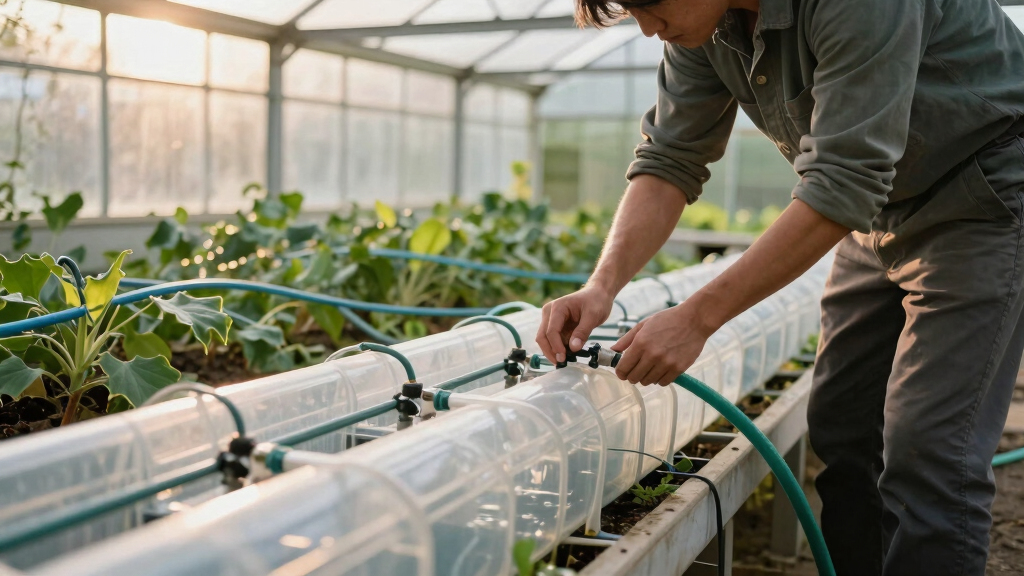

Choosing the right water filtration system for greenhouse irrigation depends on your water source and specific needs. The iSpring WCFM400K excels for those seeking a maintenance-free, chemical-free solution that handles iron and manganese, but it doesn’t reduce TDS or hydrogen sulfide. Meanwhile, the Waterdrop WHF3T-FG offers a multi-stage approach that reduces a wider range of contaminants, making it ideal for well or municipal water with sediment and odors. Both systems come with tradeoffs: the iSpring is simpler but less versatile, while the Waterdrop offers broader filtration at the cost of regular filter changes and larger size.

Get garden gear delivered free — and shop member deals
- Fast, free delivery on millions of items
- Access to Prime Big Deal Days deals on October 6–7
- Prime Video, Amazon Music and more included
Complete the kit


Key Takeaways
- The iSpring WCFM400K provides maintenance-free, chemical-free iron and manganese removal, suitable for those prioritizing ease of use.
- Waterdrop WHF3T-FG offers multi-stage filtration capable of reducing a broader range of contaminants, ideal for complex water sources.
- The iSpring system does not address TDS or hydrogen sulfide, limiting its use for water with these issues.
- Waterdrop’s larger size and more frequent filter replacements may require more setup space and ongoing maintenance.
- Both systems are designed for whole house installation, ensuring clean water reaches all parts of your greenhouse irrigation system.
| iSpring WCFM400K Whole House Iron and Manganese Water Filter System with Digital Control |  | Best Overall for Maintenance-Free, Chemical-Free Iron & Manganese Removal | Type: Whole house water filter system | Media regeneration: Air-based, chemical-free | Control: Digital control valve | VIEW LATEST PRICE | See Our Full Breakdown |
| Waterdrop WHF3T-FG 3-Stage Whole House Water Filter System for Well Water |  | Best for Multi-Contaminant Reduction and Versatility | Container Type: Cartridge | Purification Method: Granular Activated Carbon, Sedimentation | Maximum Flow Rate: 15 gpm | VIEW LATEST PRICE | See Our Full Breakdown |
| water filtration systems for greenhouse irrigation | Type | Media regeneration | Control | Automatic regeneration |
|---|---|---|---|---|
| iSpring WCFM400K Whole House I | Whole house water filter system | Air-based, chemical-free | Digital control valve | Yes |
| Waterdrop WHF3T-FG 3-Stage Who | — | — | — | — |
More Details on Our Top Picks
iSpring WCFM400K Whole House Iron and Manganese Water Filter System with Digital Control
The iSpring WCFM400K stands out for its air-based media regeneration, eliminating the need for chemicals and reducing maintenance complexity. This system is ideal for growers who want consistent iron and manganese removal without ongoing chemical handling or frequent filter changes. Compared with the Waterdrop, it’s less versatile in tackling other contaminants like chlorine or sediment, and it doesn’t reduce TDS or hydrogen sulfide, which can be a limitation for some water sources. Its digital control makes operation straightforward, and automatic regeneration ensures ongoing performance.
Pros:- Chemical-free, air-based media regeneration
- Automatic, maintenance-free operation post-installation
- Easy to set auto-flush intervals
- Effective at removing iron, manganese, turbidity
Cons:- Does not remove hydrogen sulfide (H2S)
- Cannot reduce Total Dissolved Solids (TDS)
- Limited to iron and manganese, not suitable for highly contaminated water with other issues
Best for: Growers seeking a low-maintenance, chemical-free solution for iron and manganese removal in well or city water
Not ideal for: Those needing to reduce TDS or hydrogen sulfide, or who require filtration of sediment and odors beyond iron and manganese
- Type:Whole house water filter system
- Media regeneration:Air-based, chemical-free
- Control:Digital control valve
- Automatic regeneration:Yes
- Removes:Iron, manganese, solids, turbidity
- Certification:NSF/ANSI Standard 61
Our verdict“Ideal for growers prioritizing low-maintenance, chemical-free removal of iron and manganese, especially in well water.”
Waterdrop WHF3T-FG 3-Stage Whole House Water Filter System for Well Water
The Waterdrop WHF3T-FG offers a thorough 3-stage filtration process, making it suitable for complex water sources that contain sediment, odors, chlorine, and heavy metals. Its combination of granular activated carbon and sedimentation filters ensures broader contaminant removal compared to the iSpring, especially the reduction of lead, chlorine, and odors. Its high flow rate of 15 GPM supports large greenhouse operations, and its durable materials promise long-term durability. However, frequent filter replacements every 6 months can add ongoing costs and maintenance effort, and its larger footprint demands more setup space.
Pros:- Effective reduction of lead, chlorine, odors, sediment, rust
- High flow rate of 15 GPM supports large watering setups
- Durable, NSF/ANSI approved components
- Easy to install with clear instructions
Cons:- Requires filter replacement every 6 months
- Installation may need some technical skill
- Larger size requires sufficient space for setup
Best for: Growers needing comprehensive filtration for well or municipal water, especially where sediment, odors, and multiple contaminants are concerns
Not ideal for: Growers with very limited space or those seeking a low-maintenance, chemical-free system without frequent filter changes
- Container Type:Cartridge
- Purification Method:Granular Activated Carbon, Sedimentation
- Maximum Flow Rate:15 gpm
- Supported Water TDS Level:Maximum 300 ppm
- Filter Life Cycle:6 months
- Item Dimensions:22.9″L x 8.46″W x 26.1″H
Our verdict“Best suited for growers who want broad-spectrum filtration with high flow capacity, accepting regular filter changes.”

How We Picked
Our selection process focused on systems that specifically improve water quality for greenhouse irrigation, emphasizing ease of installation, maintenance, and filtration effectiveness. We compared systems based on contaminant removal capabilities, flow rates, ease of use, and suitability for various water sources like well or city water. Each product was evaluated for its ability to deliver consistent, clean water in a greenhouse setting with minimal fuss, balancing performance with practical tradeoffs like size and upkeep.
Factors to Consider When Choosing Best Water Filtration Systems For Greenhouse Irrigation
Selecting the best water filtration system for your greenhouse irrigation depends on understanding your water source and the specific contaminants present. Key factors include the range of pollutants each system can remove, flow rate capabilities for large-scale irrigation, maintenance requirements, and compatibility with your existing setup. I’ll guide you through these considerations to help you identify which system matches your needs and how to balance upfront costs versus ongoing maintenance.Type of Water Source
First, determine whether your water comes from a well or municipal supply. Well water often contains higher levels of iron, manganese, sediment, and sediment-related odors, requiring systems that can handle heavy contaminants. Municipal water may have chlorines, chloramines, and chemical additives, which call for multi-stage filtration solutions. Matching the system to your water source ensures effective treatment without overspending on unnecessary features.
Contaminant Removal Needs
Identify the pollutants that most affect your irrigation water. Iron and manganese are common in well water and can clog drip emitters. If your water contains sediment, odors, or lead, a multi-stage system like Waterdrop’s may be necessary. Conversely, if iron and manganese are the only issues, a simpler system like the iSpring WCFM400K might suffice, saving costs and complexity.
Flow Rate and Capacity
Consider your greenhouse’s irrigation scale. Larger setups require higher flow rates—15 GPM or more—to ensure all plants receive water simultaneously without pressure drops. Both recommended products support high flow rates, but check their specifications to match your volume requirements. A system with insufficient flow can cause uneven watering and stress your plants.
Maintenance and Operating Costs
Evaluate how often you’ll need to replace filters or perform maintenance. The Waterdrop system requires filter changes every 6 months, adding ongoing costs, whereas the iSpring’s air regeneration minimizes maintenance after initial setup. Your choice depends on how much ongoing effort you’re willing to invest and whether you prefer a more hands-off or a more comprehensive, though higher-maintenance, solution.
Frequently Asked Questions
Can these systems handle well water with high iron levels?
Yes, both systems are designed to reduce iron, but the iSpring WCFM400K specializes in iron and manganese removal through air regeneration, making it particularly effective for high-iron well water. The Waterdrop system also reduces iron but is more versatile for multiple contaminants. If iron is your primary concern, the iSpring’s dedicated design offers a more targeted approach.
Will these systems remove all contaminants, including TDS and hydrogen sulfide?
The iSpring WCFM400K does not reduce TDS or hydrogen sulfide, limiting its use for water with these issues. The Waterdrop WHF3T-FG can reduce some chemical contaminants and odors but also does not significantly lower TDS or hydrogen sulfide levels. For these problems, additional or specialized treatment methods would be necessary.
How often do I need to replace filters or perform maintenance?
The iSpring WCFM400K requires no regular filter replacement due to its air regeneration technology, making it very low maintenance. Conversely, the Waterdrop WHF3T-FG needs filter replacements approximately every 6 months, which involves some effort and cost. Your maintenance preference should influence your choice.
Are these systems suitable for large-scale greenhouse irrigation?
Both units support high flow rates, with the Waterdrop offering up to 15 GPM, suitable for sizable irrigation setups. The iSpring’s flow rate is comparable and sufficient for most greenhouse sizes. However, ensure your total water demand aligns with the system’s capacity to prevent pressure issues and ensure consistent watering across your greenhouse.
Is installation complicated for a beginner?
The iSpring WCFM400K generally offers simpler installation due to its straightforward design and digital controls, making it a good choice for those with limited plumbing experience. The Waterdrop system, while well-documented, may require some technical skill for proper setup, especially for larger or more complex configurations. Consider your comfort with DIY plumbing when choosing.
Conclusion
For growers prioritizing minimal ongoing effort and targeted removal of iron and manganese, the iSpring WCFM400K makes a compelling choice, especially if TDS or odor issues are not concerns. If you need broader contaminant reduction, high flow capacity, and don’t mind regular filter changes, the Waterdrop WHF3T-FG is more suitable. Your decision should hinge on your water quality issues, space, and maintenance preferences—each option offers distinct advantages aligned with different grower needs.
Fall yard work Picks
leaf blowers
As an affiliate, we earn on qualifying purchases.