
TL;DR

Get garden gear delivered free — and shop member deals
- Fast, free delivery on millions of items
- Access to Prime Big Deal Days deals on October 6–7
- Prime Video, Amazon Music and more included
Search and coverage interest is spiking around European research into using sensors to manage fertilizer waste. Fertilizer overuse is a long-established environmental and cost problem, and sensor-based precision agriculture is an active research field, but the specific trigger for the current spike is unconfirmed.
Online interest in European research on sensors that manage fertilizer waste has spiked, according to RSS-tracked topic signals in the gardening category. The signal identifies a surge of attention around the concept — but no specific announcement, study release, or named project accompanying it has been confirmed, and the exact trigger for the spike remains unknown.
What is verified at this stage is limited to the trend itself: a topic labeled “European Research Aims to Use Sensors to Manage Fertilizer Waste,” surfacing through an RSS feed in the garden category, indicating elevated reader and publisher interest. The phrasing points to precision fertilization — applying nutrients based on measured need rather than fixed schedules — as the subject of that interest.
The underlying subject matter is well established independently of the spike. Fertilizer overuse is a long-recognized problem in both agriculture and horticulture: excess nitrogen and phosphorus can leach into waterways, contributing to algal blooms and groundwater contamination, while unused fertilizer represents a direct financial loss for growers. These concerns have driven decades of policy and research attention in Europe, including nutrient-management rules under EU water and agricultural policy.
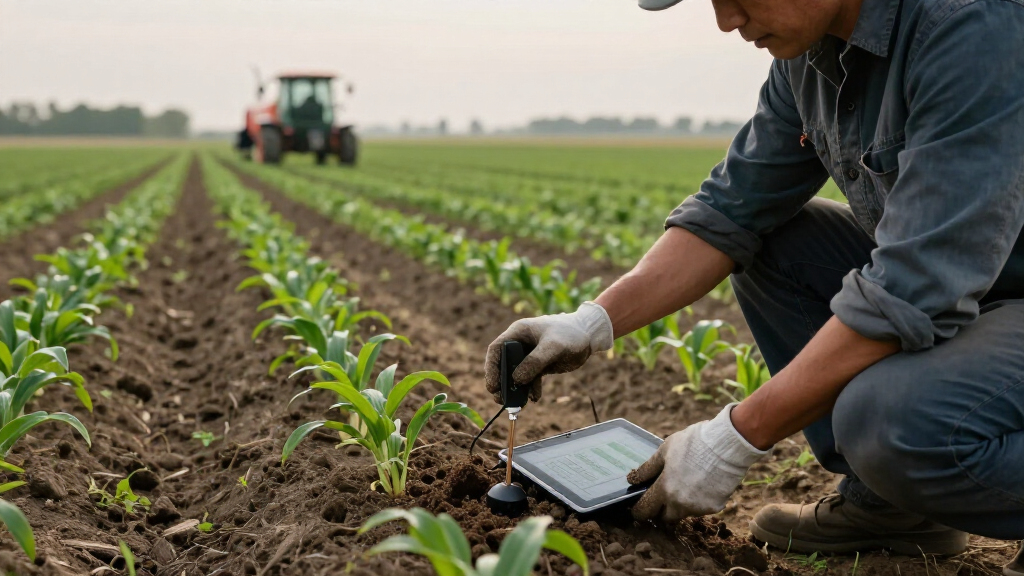
Sensor-based approaches to this problem are likewise an established research field. Soil and crop sensors — measuring parameters such as soil moisture, electrical conductivity, and nitrogen levels — are used in precision agriculture to match fertilizer application to actual plant demand. European universities and agricultural institutes have active programs in this area, though no specific institution, project, or publication tied to the current interest spike has been verified.
Why Fertilizer Waste Draws Attention
Fertilizer waste sits at the intersection of two pressures European growers increasingly face: environmental regulation and input costs. Nutrient runoff from over-fertilized fields is a major contributor to water pollution, and EU member states operate under commitments to reduce nutrient losses to water bodies. At the same time, fertilizer prices have been volatile in recent years, making over-application expensive as well as harmful.
Sensor technology is one of the main proposed answers, because it addresses the root cause — applying fertilizer without knowing what the soil or crop actually needs. For home gardeners, the same logic applies at smaller scale: over-fertilizing gardens wastes money, can damage plants, and can contribute to the same runoff problems. If new European research announcements are behind the current spike, they would be arriving into an audience already primed by these cost and environmental concerns.
The Field Behind the Trend
Research on precision agriculture in Europe spans decades, supported by EU funding programs and national agricultural research institutes. Work on fertilizer specifically has intensified as the EU has tightened rules on nitrates in water and set targets for reducing nutrient losses under its environmental and farm-to-table policy agenda.
Existing sensor approaches include soil-mounted probes, drone and satellite imagery that infer crop nutrient status from plant color and growth patterns, and so-called variable-rate application equipment that adjusts fertilizer output in real time as a machine moves across a field. Garden-scale versions, such as consumer soil-test probes and moisture sensors, are widely sold. Which of these strands — if any — the current interest spike relates to has not been established.
What the Signal Does Not Show
The trigger for the spike is unconfirmed. It could stem from a newly announced research project, a published study, an EU funding call, a press report, or simply algorithmic topic churn — no source material accompanying the signal identifies a specific event, institution, researcher, or publication.
No quotes, named projects, funding amounts, or results can be reported at this stage, and none should be inferred. Readers should treat any specific claims circulating about a particular European sensor-fertilizer initiative as unverified until an identifiable source — a research body, journal, or official announcement — confirms them.
Watching for a Confirmed Source
The next development to watch for is an identifiable primary source: a press release from a European research institute or university, a peer-reviewed paper on sensor-based fertilizer management, or an EU funding announcement. If the spike reflects a genuine research development, such a source should surface in the near term.
Until then, the reliable takeaway for readers is the established background: sensor-based nutrient management is an active, legitimate field of European research aimed at a real problem, and any new claims tied to the current interest should be checked against a named institution or publication.
Key Questions
Has a specific European sensor project been announced?
Not that can be confirmed. The current signal shows only a spike in interest around the topic. No named project, institution, or announcement has been verified alongside it.
Why is fertilizer waste considered a problem?
Excess fertilizer costs growers money and can wash into waterways, where nitrogen and phosphorus contribute to algal blooms, water pollution, and groundwater contamination. This has been long-established in both agricultural and environmental research.
How do sensors help manage fertilizer use?
Sensors measure indicators such as soil moisture, nitrogen levels, and electrical conductivity, or infer crop nutrient status from imagery. That data lets farmers and gardeners apply only the fertilizer the soil and plants actually need, reducing waste and runoff.
Is this relevant to home gardeners, or only farms?
Both. Precision-agriculture systems apply at farm scale, but consumer soil-test probes and moisture sensors work on the same principle for gardens, where over-fertilizing wastes money and can harm plants and nearby water.
What should readers be cautious about right now?
Any specific claims about a particular project, funding amount, or research result tied to the current spike. The trigger is unconfirmed, so such details should be treated as unverified until a named institution or publication confirms them.
Source: rss
Fall yard work Picks
leaf blowers
As an affiliate, we earn on qualifying purchases.