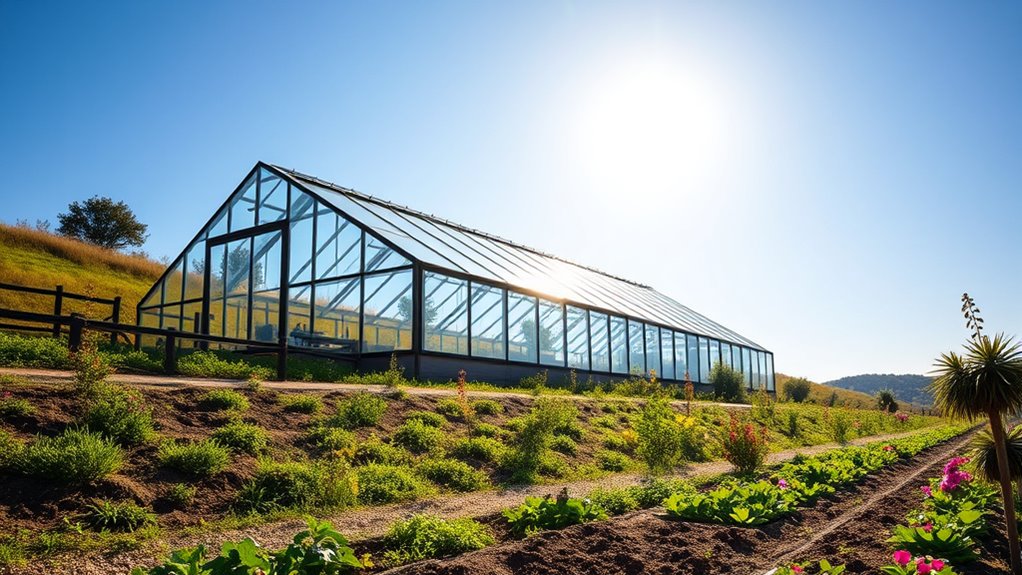
For ideal greenhouse placement, position it facing south or southeast to maximize sunlight exposure, especially during winter. Choose a site with natural wind protection, using existing structures or planting shrubs nearby. guarantee good drainage by selecting well-drained soil and elevating the foundation if needed. Also, pick a location close to your home or water source for easy access and good airflow, which helps regulate temperature and humidity. Keep these tips in mind to create a thriving environment—more insights await you.
Key Takeaways
- Position the greenhouse facing south or southeast for maximum sunlight exposure year-round.
- Choose a site sheltered from prevailing winds using natural barriers or plantings.
- Ensure well-drained soil and elevate the structure on a level foundation to prevent waterlogging.
- Select a location near your home or water source for easier maintenance and accessibility.
- Orient doors and vents to promote natural airflow, enhancing ventilation and temperature regulation.
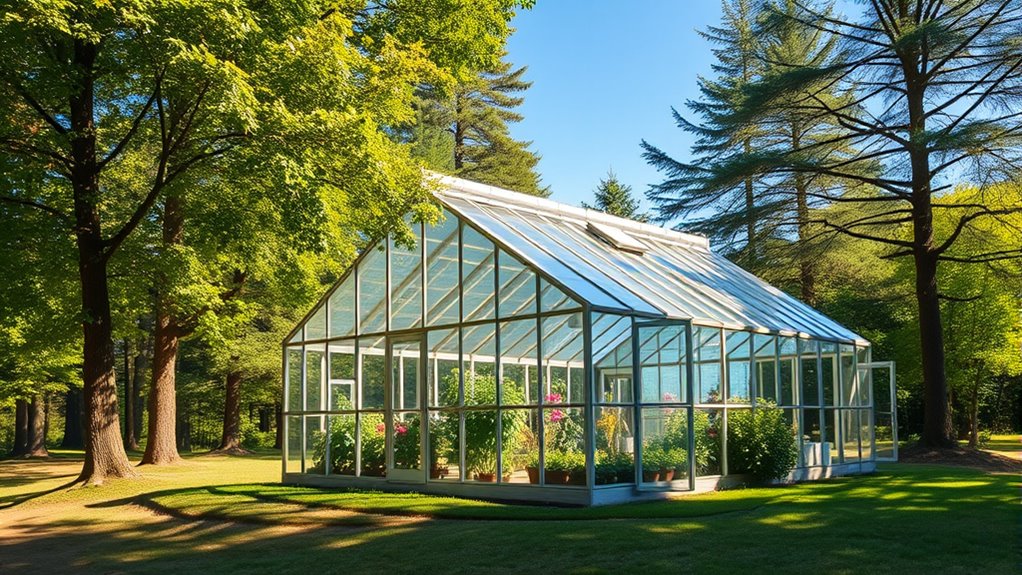
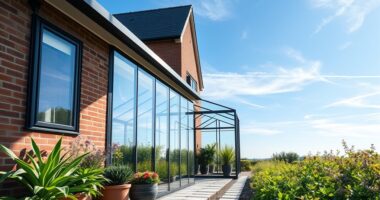
Choosing the right location for your greenhouse is crucial to guarantee healthy plant growth and maximize your gardening success. When selecting a site, focus on sunlight optimization to ensure your plants receive ample light throughout the day. Ideally, position your greenhouse where it will face south or southeast to capture maximum sunlight, especially during winter months when sunlight is limited. Avoid areas shaded by trees, buildings, or tall structures, as these can significantly reduce light exposure and hinder plant development. Remember, consistent, direct sunlight is vital for photosynthesis, so a sunny, unobstructed spot is your best bet.
Wind protection is equally important. Strong winds can cause physical damage to your greenhouse structure, increase heat loss, and create unnecessary stress for your plants. To mitigate this, choose a location that naturally shields your greenhouse from prevailing winds, such as near a hedge, fence, or existing building. If natural windbreaks aren’t available, consider installing a wind barrier or planting shrubs around your structure to serve as a buffer. Proper wind protection not only preserves the internal temperature but also reduces the need for additional heating, saving you energy and costs over time.
Another key aspect of ideal placement involves considering drainage and soil quality. Select a site with well-drained soil to prevent waterlogging, which can lead to root rot and other diseases. Elevating the greenhouse slightly on a level foundation can improve drainage and reduce the risk of flooding during heavy rains. It’s also wise to check the soil’s fertility and amend it if necessary to support healthy plant growth from the start. Good air circulation is another factor to keep in mind; avoid placing your greenhouse in low-lying areas where cold air might pool, as this can create frost pockets that damage tender plants.
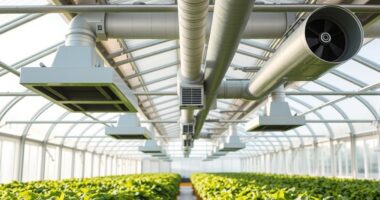
Accessibility and convenience should influence your placement decision as well. Position your greenhouse close to your home or water source to make tending your plants easier. Ensure there’s enough space around the structure for ventilation, maintenance, and future expansions. Additionally, consider the orientation of doors and windows to facilitate natural ventilation and airflow, which helps regulate temperature and humidity levels inside the greenhouse.

Xstronq 10FTx20FT Greenhouse Plastic Sheeting, 6 Mil Thick Clear Polyethylene Film, Waterproof Wind Frost Dust UV Resistant Green House Plastic Covering for Outdoor Plant, Garden, (10ft x 20ft)
10FTx20FT Greenhouse plastic sheeting: The perfect solution for all your planting needs. Made of premium polyethylene material, this…
As an affiliate, we earn on qualifying purchases.
As an affiliate, we earn on qualifying purchases.
Frequently Asked Questions
How Does Local Climate Influence Greenhouse Placement Choices?
You should consider how your local climate influences greenhouse placement decisions. Climate zone considerations help you choose a spot that maximizes sunlight and minimizes wind exposure. Seasonal temperature impacts are essential; in colder zones, you may need to place your greenhouse in a sunnier, protected area to retain heat. By understanding these factors, you can optimize your greenhouse’s location for better plant growth and energy efficiency.
What Are Common Mistakes to Avoid When Positioning a Greenhouse?
Avoid planting your greenhouse where ventilation issues can turn it into a sauna; poor airflow traps heat and humidity, harming your plants. Don’t overlook shading challenges, which can cause overheating or uneven light. Positioning too close to trees or structures hampers airflow and natural light. Think of your greenhouse as a delicate dance of air and light—missteps like poor placement lead to problems that can be hard to fix later.
How Can Surrounding Structures Impact Greenhouse Sunlight Exposure?
You should consider how surrounding structures can impact your greenhouse’s sunlight exposure. Neighbor shading and building shadows can substantially reduce the amount of light your greenhouse receives, affecting plant growth. If your greenhouse is near tall buildings or trees, they may cast shadows during key sunlight hours. To maximize sunlight, choose a location away from such obstructions, or plan for orientation that minimizes shadow impact throughout the day.
Does Greenhouse Color Affect Heat Absorption and Plant Growth?
Have you ever wondered if the color effects of your greenhouse influence heat absorption and plant growth? The color of your greenhouse can considerably impact how much heat it absorbs; darker colors typically retain more warmth, promoting healthier plant growth in cooler climates. Conversely, lighter colors reflect sunlight, helping prevent overheating. Choosing the right color effects guarantees ideal conditions for your plants, boosting growth and productivity. Isn’t that worth considering for your greenhouse?
How Should Wind Patterns Influence Greenhouse Orientation?
You should consider wind patterns when orienting your greenhouse to optimize air flow and minimize damage. Position your structure so that prevailing wind direction allows gentle breezes to pass through, reducing heat buildup and providing natural ventilation. By aligning the greenhouse perpendicular to the wind, you encourage airflow that helps regulate temperature and humidity, creating a healthier environment for your plants and reducing reliance on mechanical cooling systems.

MARS HYDRO Drainage Trays 2-Pack Pot with Drainage Pipe for Grow Tents Greenhouses & Patio Plants
Package Included:Mars Hydro Drainage Trays Comes with 2 heavy-duty vertical pallets and a 1.2m flexible drain pipe. For…
As an affiliate, we earn on qualifying purchases.
As an affiliate, we earn on qualifying purchases.
Conclusion
Think of your greenhouse as a ship sailing smoothly through seasons. By choosing the right location and orientation, you’re setting the course for a bountiful harvest and thriving plants. Just like a seasoned captain reads the stars, you’ll navigate sunlight, shade, and wind to create the perfect environment. When you place your greenhouse wisely, you’re steering your garden toward success—an inviting harbor where growth blossoms and dreams flourish.

iLIVING 12" Wall Mounted Shutter Exhaust Fan, Automatic Shutter, with Thermostat and Variable Speed controller, 0.6A, 960 CFM, 1400 SQF Coverage Area Silver (ILG8SF12V-ST)
POWERFUL AIR VENTILATOR – 960 CFM, 115V, 0.6A, 1/20 Horse Power, 1650 RPM, Coverage up to 1400 square…
As an affiliate, we earn on qualifying purchases.
As an affiliate, we earn on qualifying purchases.
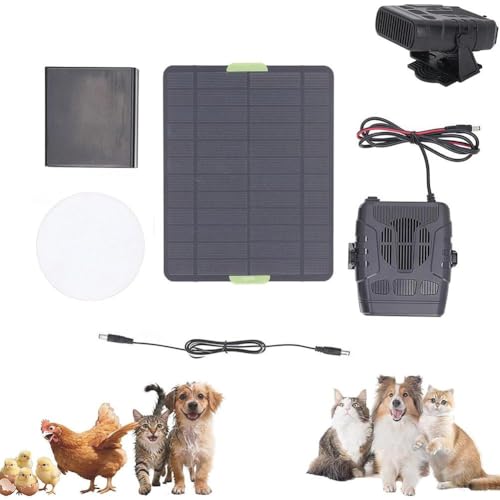
Solar Power Heater, Chicken Coop Heater, Solar Panel Heaters with Overheating Protection for Chicken Coops Greenhouse and Dog House
🔥【All-Season Solar Heating】Upgrade your winter insulation with this solar-powered coop heater! Perfect for poultry houses, greenhouses, and pet…
As an affiliate, we earn on qualifying purchases.
As an affiliate, we earn on qualifying purchases.