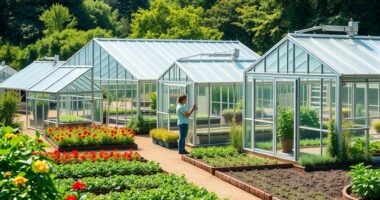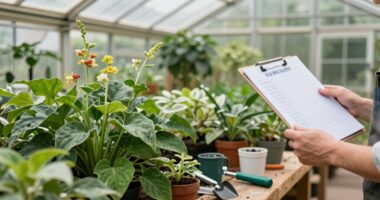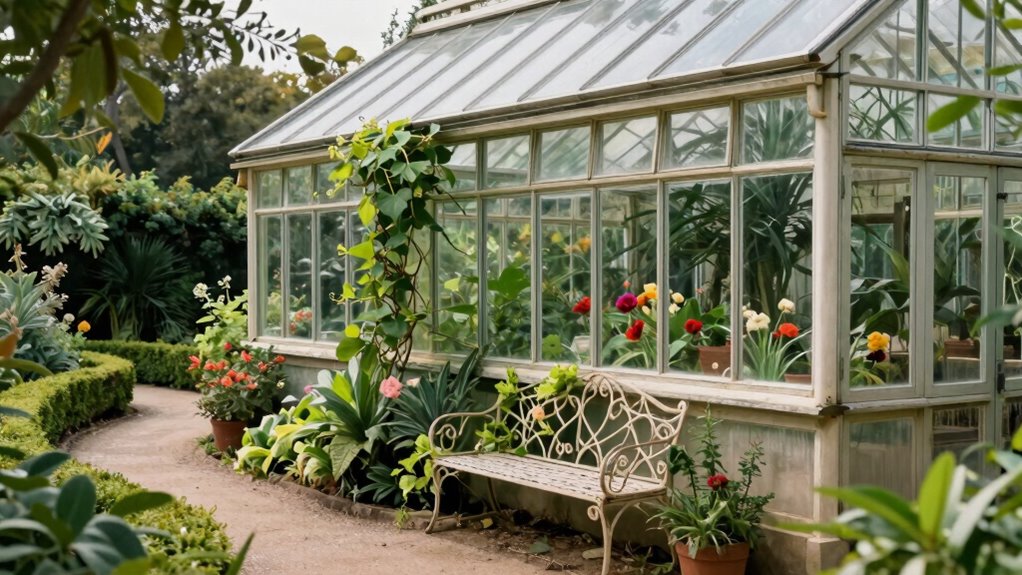

You love the idea of a lush, year-round greenhouse that brings nature close and helps your plants thrive. But, as you soon discover, keeping the environment just right takes constant effort—adjusting temperature, humidity, and light, managing microclimates, and preventing pests. It’s a balancing act that demands patience and attention to detail. If you’re curious about mastering these challenges and making your greenhouse truly rewarding, there’s more to uncover below.

Get garden gear delivered free with Prime
- Fast, free delivery on millions of items
- Prime Video, Amazon Music and more included
- Member-only deals all year
Key Takeaways
- People love the aesthetic and sanctuary of a greenhouse but often find managing climate control demanding.
- The complexity of balancing temperature, humidity, and light can be overwhelming for many users.
- Proper plant selection and microclimate management require ongoing effort and expertise.
- Active monitoring and adjustments are necessary, making greenhouse maintenance feel like a challenging task.
- The initial appeal diminishes when faced with troubleshooting, pest control, and environmental fine-tuning.
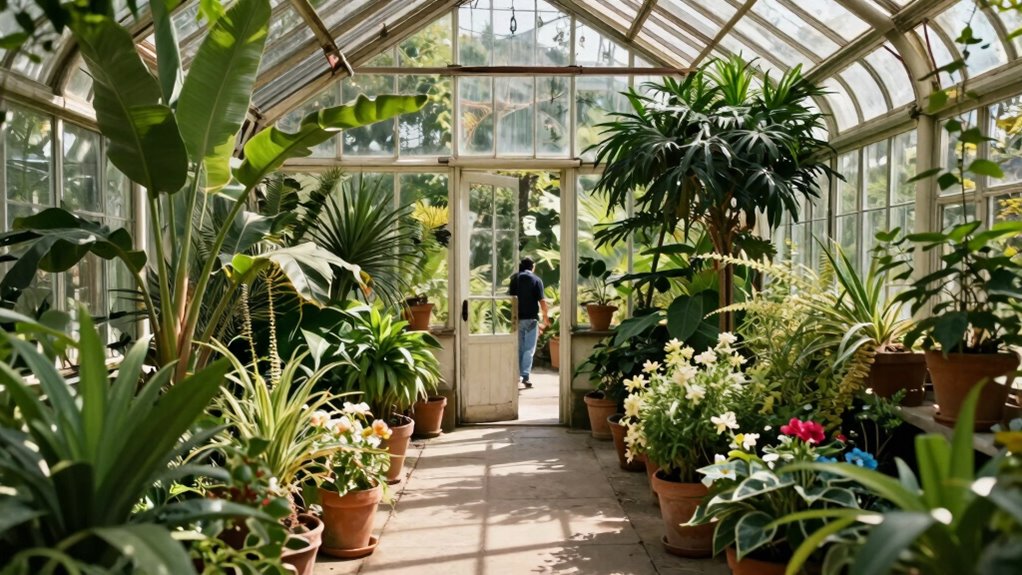
If you’ve ever stepped into a greenhouse, you know it’s more than just a protected space for plants; it’s a haven that brings nature closer to home. The appeal lies in the carefully controlled environment, where climate control plays an essential role. You might love the idea of nurturing delicate plants or growing exotic species, but once you start managing the space, you realize it’s a balancing act. The temperature, humidity, and light levels all need to work together to create an ideal environment. This isn’t just about keeping plants alive; it’s about optimizing conditions so they thrive. And that’s where plant compatibility comes into play—choosing the right plants that can coexist comfortably under your greenhouse’s specific climate conditions.
At first, you’re excited about the possibilities. You imagine lush, vibrant greenery and fresh herbs year-round. However, maintaining the right climate isn’t as simple as flipping a switch. You quickly discover that different plants have distinct needs, and what’s perfect for one might be detrimental to another. For example, tropical plants require high humidity and warmth, while succulents prefer dry, cooler conditions. Achieving a harmonious environment may involve installing fans, heaters, or misting systems. It can become a puzzle, adjusting these elements until everything aligns. You find yourself constantly monitoring and tweaking, realizing that your greenhouse isn’t just a passive space—it demands active management.
Balancing diverse plant needs requires constant monitoring and active management to create a thriving greenhouse environment.
The real challenge appears when you realize that plant compatibility isn’t just about individual plant needs but also how they interact with each other. Certain plants may compete for resources or create unfavorable microclimates. Some may attract pests that threaten others nearby. You learn quickly that strategic placement and plant selection matter immensely. If you ignore these aspects, your greenhouse can turn from a lush paradise into a battleground for plant health. Despite the initial glamour, you also learn that climate control is a crucial element in maintaining a thriving greenhouse environment. The importance of understanding microclimates and plant biology becomes clear as you fine-tune your setup to support diverse species. This understanding helps prevent issues caused by unexpected interactions or environmental imbalances, which are common without proper planning. Gaining insight into microclimates and their impact on plant health can help you prevent problems before they arise, saving you time and effort.
Despite the challenges, many find the effort worthwhile. You develop a deeper understanding of plant biology and microclimates, which enhances your gardening skills. What once seemed a formidable task becomes a rewarding pursuit. But it’s essential to remember that a greenhouse’s true beauty isn’t just in its design—it’s in your ability to manage its environment effectively. When you succeed, your plants flourish, and you gain a sense of accomplishment. Still, the reality remains: maintaining that perfect climate and plant compatibility requires patience, knowledge, and ongoing attention. Achieving this balance often involves learning about climate control systems and how they can be optimized for different plant needs.
greenhouse climate control system
As an affiliate, we earn on qualifying purchases.
As an affiliate, we earn on qualifying purchases.
Frequently Asked Questions
How Do I Prevent Mold and Algae Buildup in the Greenhouse?
To prevent mold and algae buildup in your greenhouse, you should improve air circulation by opening vents and using fans. This helps keep humidity levels low, which is essential for mold prevention. Regularly wipe down surfaces to remove moisture and debris, and avoid overwatering plants. Proper air circulation and diligent cleaning reduce damp conditions, making it harder for mold and algae to thrive, keeping your greenhouse healthier and more efficient.
What Are the Best Plants for Year-Round Greenhouse Growth?
Did you know that some plants, like lettuce and herbs, can grow year-round in a greenhouse? For continuous growth, focus on plant selection suited for your growing conditions. Choose versatile plants like tomatoes, peppers, and leafy greens that thrive in controlled environments. Make sure your greenhouse maintains stable temperature, humidity, and light. Proper plant selection combined with ideal growing conditions will keep your greenhouse productive all year long.
How Do I Maintain Proper Humidity Levels Inside the Greenhouse?
To maintain proper humidity levels, you should start with good soil preparation to retain moisture and prevent dryness. Use a hygrometer to monitor humidity regularly, aiming for 60-70%. If humidity drops, add water trays or mist plants, but also practice pest control to prevent mold and fungal issues. Proper ventilation is key—adjust vents and fans to balance humidity and airflow, ensuring a healthy, thriving greenhouse environment.
What Is the Average Cost to Build a Greenhouse?
Building a greenhouse typically costs between $1,000 and $10,000, depending on your design and materials. Think of it as planting a seed—your choice of greenhouse design and building materials shapes its growth. For a simple DIY setup, you might spend around $1,000 using basic materials like PVC and plastic, while a professional, larger structure with glass and sturdy framing can cost $10,000 or more.
How Can I Improve Ventilation Without Losing Heat?
To improve ventilation without losing heat, you should focus on enhancing air circulation with well-designed ventilation systems. Install adjustable exhaust fans and intake vents to control airflow efficiently. Use louvered windows or vents that open gradually, allowing fresh air in without causing heat loss. Additionally, consider using thermostatically controlled fans to activate only when needed, maintaining ideal temperatures while ensuring proper ventilation and minimizing heat escape.
Conclusion
Ultimately, the greenhouse’s glory often gives way to its grind. While it’s a fantastic feature that fosters fun and flourishing foliage, it also demands dedication and diligence. Don’t dismiss the intimidating duties behind the delightful design. Remember, the true beauty lies not just in the bloom but in the balance you build. So, embrace the effort, enjoy the evolution, and let your greenhouse grow into a garden of greatness.
Halloween Picks
halloween
As an affiliate, we earn on qualifying purchases.