After a storm, you should inspect your home’s foundation for cracks, shifting, or sinking, and look for signs of water damage or uneven floors that could indicate instability. Check your roof for missing or damaged shingles and assess gutters and drainage systems for clogs or damage to prevent water buildup. Examine exterior walls for cracks or leaks, and inside, look for water stains or mold. Staying vigilant helps catch issues early—more tips await to guarantee your home’s safety and stability.
Key Takeaways
- Inspect for visible cracks, shifting, or sinking in the foundation and walls.
- Check the roof for missing shingles, dents, or tears in flashing around vents and chimneys.
- Examine gutters and downspouts for damage or clogs that could cause water backup.
- Look for water stains, mold, or sagging ceilings indicating interior damage from leaks.
- Schedule professional evaluations of foundation and roof to identify hidden structural issues.
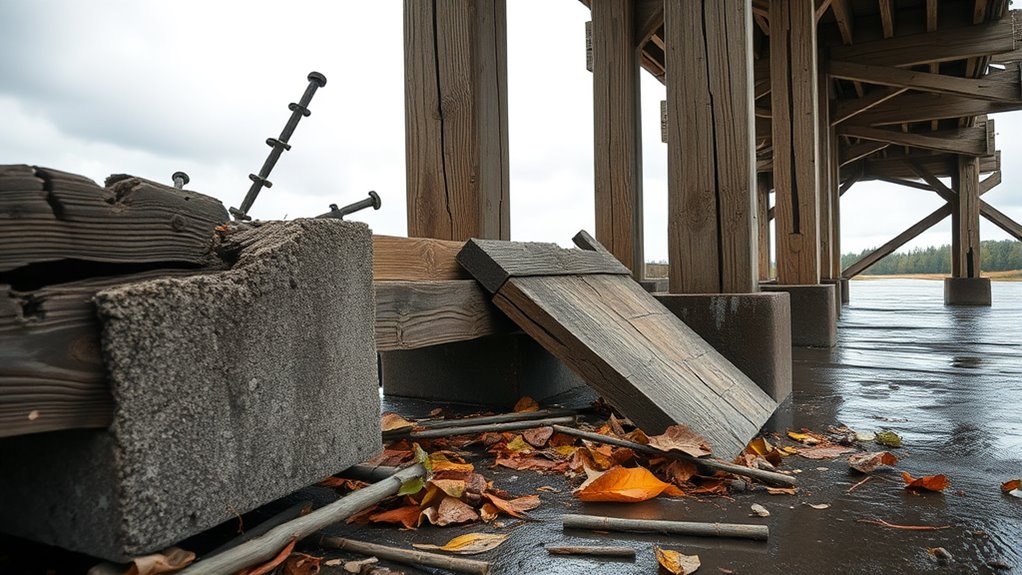
After a storm, it is crucial to assess your property’s structural integrity promptly. Heavy winds, rain, and hail can weaken or damage key components, making thorough inspections necessary to ensure safety. Your first priority should be evaluating foundation stability. You want to look for signs of shifting, cracking, or sinking, which could indicate that the ground has shifted or that water has compromised the soil supporting your home. Cracks in basement walls or uneven floors are common indicators of foundation issues. If you notice any of these, don’t delay in consulting a structural engineer or foundation specialist. Addressing foundation problems early can prevent more extensive damage and costly repairs down the line. While inspecting the foundation, also check your home’s roofing assessment. Storms often cause damage to roofs, which can lead to leaks or further structural problems if left unaddressed. Walk around your property and examine the roof for missing shingles, dents, or tears in the flashing. Pay attention to areas around chimneys, vents, and valleys, as these are common spots for leaks. If you see curling or loose shingles, it’s wise to schedule a professional roofing assessment immediately. Proper assessment helps identify vulnerabilities that might not be visible from the ground, especially if your roof has sustained damage from hail or high winds. Don’t forget to check your gutters and downspouts during this process, as clogged or damaged systems can cause water to back up and seep into your home’s foundation or walls, exacerbating existing issues. After inspecting the exterior, head inside and look for signs of water intrusion, such as stains or mold, which could suggest roof leaks or compromised seals. Examine your attic or upper floors for sagging ceilings or warped drywall, which might point to hidden damage. Remember, even if you don’t see obvious damage, it’s wise to have a professional conduct a detailed inspection, especially if your home has a flat or low-pitched roof or if you experienced severe weather. Storms can weaken structural elements subtly, so relying on experts ensures nothing slips through the cracks. Additionally, understanding building codes and permits can help ensure that any necessary repairs are compliant and safe. Act quickly to address any issues you find, as delaying repairs can lead to further deterioration, increased costs, and safety hazards. Regular maintenance, including annual roof assessments and foundation inspections, can also help you stay ahead of potential storm-related damage. By taking these proactive steps, you protect your home’s integrity and ensure it remains safe for you and your family long after the storm has passed.

RadonSeal Complete DIY Foundation Crack Repair Kit, 10 ft – Low-Viscosity Urethane Injection Sealant for Crawl Spaces & Concrete Basement Walls – Stops Water Leaks – Drill-Free Filler
- Drill-Free Injection: No drilling required for repairs
- Easy to Use: Compatible with standard caulking guns
- Seals Small Cracks: Effective on hairline cracks
As an affiliate, we earn on qualifying purchases.
As an affiliate, we earn on qualifying purchases.
Frequently Asked Questions
How Soon Should a Building Be Inspected After a Storm?
You should inspect your building as soon as it’s safe after a storm, ideally within 24 to 48 hours. Check for damage to building materials like roofs, walls, and windows. Prompt inspection helps identify issues early, preventing further damage and supporting insurance claims. Don’t delay, but prioritize safety first. If you notice significant damage, contact professionals for a thorough evaluation to guarantee your building’s integrity and safeguard your investment.
What Signs Indicate Hidden Structural Damage Post-Storm?
Think of your building as a ship at sea; hidden cracks are like silent leaks, and roof sagging resembles a boat’s hull softening under pressure. If you notice these signs—hidden cracks that weren’t there before or a roof sagging—you should inspect immediately. These subtle indicators suggest hidden structural damage, which could worsen if left unchecked. Addressing them promptly keeps your building safe and seaworthy, ready to weather any storm.
Are There Specific Tools Needed for Damage Assessment?
For storm damage assessments, you’ll need specific assessment tools like a flashlight, a sturdy ladder, a camera or smartphone to document damage, a tape measure for checking cracks, and a moisture meter to detect hidden water intrusion. These tools help you thoroughly evaluate structural damage caused by storms. Using them guarantees you don’t miss hidden issues, allowing for accurate assessment and timely repairs to maintain your property’s safety and integrity.
How Can Homeowners Prepare for Storm-Related Structural Inspections?
To prepare for storm-related structural inspections, you should first review your home’s storm-resistant features, like reinforced windows and strong roofing. Keep emergency preparedness supplies handy and create an accessible plan for quick inspections after storms. Regularly maintain your property by trimming trees and checking for vulnerabilities. Being proactive guarantees you can promptly identify damage, making inspections safer and more effective, and helps protect your home from future storm damage.
What Are the Costs Associated With Professional Structural Evaluations?
You should expect costs around $200 to $600 for a professional structural evaluation, depending on your home’s size and location. If your inspection reveals damage, you might file insurance claims to cover repairs. When selecting a contractor, verify they’re experienced and reputable, as their assessment influences your claim and repair process. Investing in a thorough evaluation now can save you money and headaches later, especially after storms.
Conclusion
Just as a sailor assesses their vessel after a tempest, you must examine your home’s structure to guarantee safety. Ignoring signs of damage can leave you vulnerable, much like Pandora’s box releasing unforeseen troubles. By promptly checking for cracks, leaks, and weakened foundations, you protect your haven from future storms. Remember, resilience isn’t just about weathering the storm but about preparing for what comes after—like the phoenix rising stronger from its ashes.