To prevent Pythium and damping-off in seedlings, sterilize your soil by baking or microwaving it to eliminate pathogens, and use seedling-specific fungicides as a protective barrier. Water only when the top inch of soil is dry, ensuring good drainage and airflow to reduce excess moisture. Keep your workspace and tools disinfected, and monitor seedlings closely for early signs of disease, acting quickly if issues appear. If you continue exploring, you’ll discover more effective strategies to keep your seedlings healthy.
Key Takeaways
- Sterilize soil at 180°F (82°C) or microwave seed-starting mix to eliminate Pythium spores and pathogens.
- Apply seedling-specific fungicides properly to create a protective barrier against damping-off fungi.
- Water only when the top inch of soil is dry and ensure containers have good drainage to prevent excess moisture.
- Disinfect tools, containers, and workspace regularly to reduce contamination risks.
- Monitor seedlings closely and remove any affected plants early to prevent disease spread.
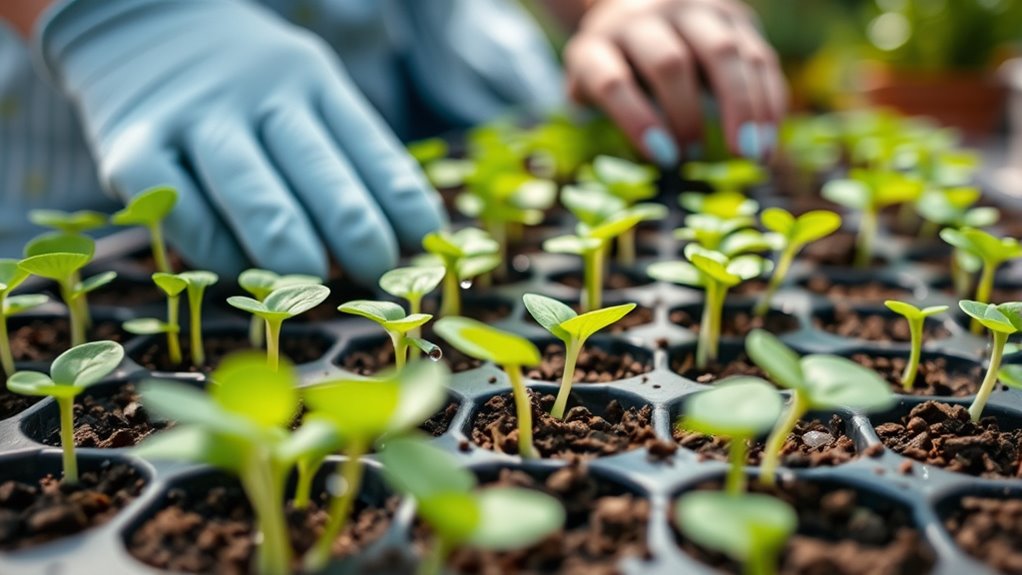
Starting seedlings can be exciting, but it also comes with the risk of disease that can ruin your efforts. Pythium and damping-off are common problems that can wipe out young plants before they even get established. To give your seedlings the best chance, you need to take proactive measures, starting with soil sterilization. Soil sterilization involves heating or treating your seed-starting mix to kill off any pathogens, including spores of Pythium fungi lurking in the soil. You can sterilize the soil by baking it in the oven at 180°F (82°C) for about 30 minutes or using a microwave for smaller batches. This process reduces the likelihood of disease taking hold, especially in containers that have been used before. When you sterilize your soil, you’re effectively eliminating many of the disease-causing agents that can infect vulnerable seedlings.
Sterilize seed-starting soil by baking at 180°F (82°C) for 30 minutes to prevent disease.
In addition to soil sterilization, applying a fungicide can serve as a vital line of defense against damping-off fungi. Fungicides formulated specifically for seedling protection can be applied to the soil or seed surface to create a protective barrier. Be sure to follow the instructions carefully to avoid over-application, which can harm your seedlings or lead to resistant strains. When used properly, fungicides can suppress the growth of Pythium and other fungi that cause damping-off, giving your seedlings a healthier start. You should also consider incorporating beneficial microbes or biological controls as a supplementary measure, but fungicide application remains a reliable method to control immediate threats.
Maintaining proper watering practices is equally important in preventing disease. Overwatering creates a damp environment perfect for Pythium and damping-off fungi to thrive. Water your seedlings only when the top inch of soil feels dry, and ensure good drainage in your containers. Proper airflow and spacing between seedlings can also help reduce humidity levels, discouraging fungal growth. Keep your workspace clean by disinfecting tools and containers regularly, as contaminated equipment can spread pathogens from one batch of seedlings to the next. Additionally, using high-quality, disease-resistant seed varieties can further reduce the risk of infection and promote stronger, healthier seedlings.
Finally, monitor your seedlings closely. Early signs of damping-off include wilting, thinning stems, or seedlings falling over. At the first hint of trouble, remove affected plants immediately to prevent the disease from spreading. Combining soil sterilization, fungicide application, proper watering, and vigilant observation creates a robust defense against Pythium and damping-off, giving your seedlings the best chance to grow strong and healthy.
As an affiliate, we earn on qualifying purchases.
Frequently Asked Questions
Can Organic Methods Effectively Prevent Pythium Infections?
Yes, organic solutions can effectively prevent Pythium infections. You should incorporate soil amendments like compost or biofungicides that boost beneficial microbes, which outcompete harmful Pythium. Guarantee proper drainage and avoid overwatering to keep the soil dry, as moisture promotes disease development. Regularly inspect seedlings and use organic solutions such as neem oil or hydrogen peroxide treatments when necessary. These methods work together to create a hostile environment for the pathogen.
How Does Soil Temperature Influence Damping-Off Disease?
Soil temperature markedly affects damping-off disease development. When soil heating raises temperatures above certain thresholds, typically around 65°F to 75°F, it can inhibit Pythium growth, reducing infection risks. Conversely, cooler soil temperatures create ideal conditions for the pathogen. Keep soil warm and well-drained to stay above these thresholds, and avoid overwatering, which can lower soil temperature and promote damping-off in seedlings.
Are There Resistant Seed Varieties to Pythium?
Yes, there are resistant seed varieties available that have genetic resistance to Pythium. You can select these resistant seeds to reduce the risk of damping-off disease in your seedlings. These varieties are bred specifically to withstand Pythium infections, making them a reliable choice for healthier, stronger seedlings. Incorporating resistant seed varieties into your planting strategy helps you manage disease pressure effectively and promotes better crop success.
What Are Early Signs of Seedling Damping-Off?
You’ll notice seedling damping-off early on through poor seedling health and specific disease symptoms. Seedlings may appear water-soaked, thin, and weak, often collapsing at the soil line. Look for stem rot, discoloration, or a fuzzy mold around the base. These signs indicate infection, so catching them early helps prevent further spread. Maintaining ideal moisture, good air circulation, and proper sanitation can help you spot and manage these symptoms quickly.
How Often Should I Disinfect Seed Trays to Prevent Disease?
Coincidences happen when you least expect them, just like the importance of seed tray sanitation. You should disinfect your seed trays after every planting and at least once a week during active seedling growth. Regular disinfection frequency keeps pathogens at bay, reducing the risk of disease. By staying consistent, you create a healthier environment for your seedlings, preventing damping-off and ensuring strong, vibrant plants.
Conclusion
To keep your seedlings healthy, consistently practice good sanitation and guarantee proper drainage. Remember, Pythium and damping-off can wipe out up to 30% of seedlings if left unchecked. By sterilizing tools, avoiding overwatering, and providing good airflow, you drastically reduce disease risk. Staying vigilant and proactive gives your plants a strong start, increasing your chances of a thriving garden. Protect your seedlings today to enjoy lush, healthy growth tomorrow.