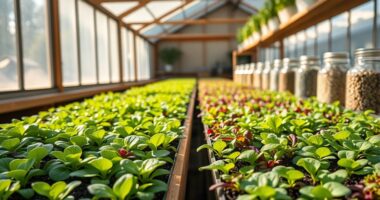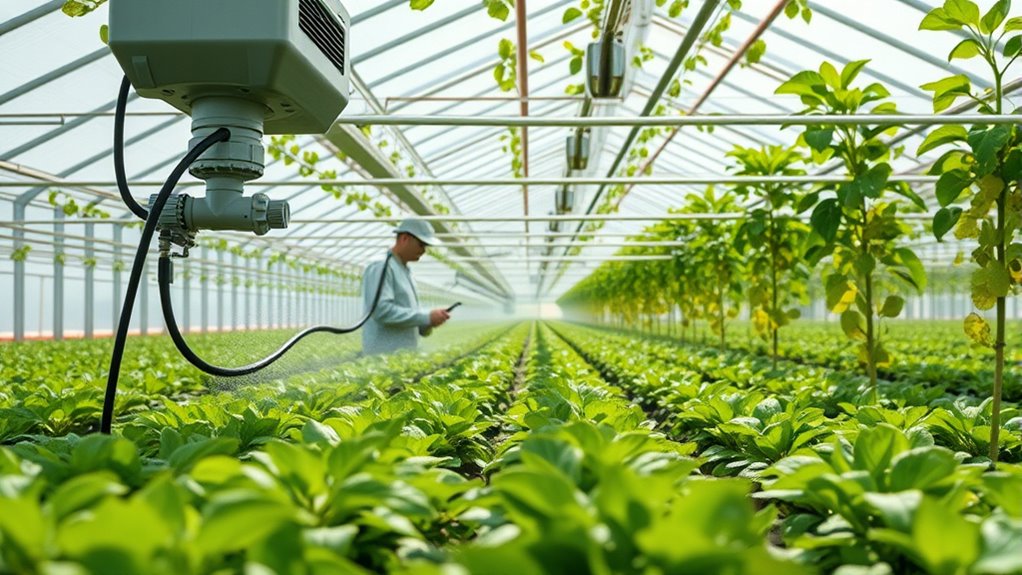

A constant feed program involves providing your greenhouse crops with a steady, balanced supply of nutrients tailored to their specific needs, based on regular soil testing. By adjusting fertilizer blends and application rates as your plants grow, you guarantee peak health and yields. Continuous monitoring helps catch imbalances early, preventing deficiencies or excesses. Implementing this approach makes your fertilization precise and sustainable. Keep exploring to discover more tips for fine-tuning your greenhouse nutrient management.

Get garden gear delivered free with Prime
- Fast, free delivery on millions of items
- Prime Video, Amazon Music and more included
- Member-only deals all year
Key Takeaways
- Constant feed programs provide a steady supply of nutrients, supporting uniform growth and preventing deficiencies in greenhouse crops.
- They utilize fertigation to deliver precise nutrient levels directly to the root zone through irrigation systems.
- Regular soil testing and monitoring ensure nutrient concentrations remain optimal, allowing for timely adjustments.
- Record-keeping of fertilization schedules and plant responses helps fine-tune the program for maximum yields.
- Tailoring nutrient concentrations to crop development stages enhances growth while minimizing waste and environmental impact.

Fertilizing greenhouse crops is essential for ensuring healthy growth and high yields. To do this effectively, you need to understand the specific needs of your plants, which starts with soil testing. Soil testing provides crucial information about your growing medium’s current nutrient levels, pH, and overall health. By analyzing these results, you can determine exactly what nutrients are lacking or in excess, allowing you to develop a precise nutrient management plan. This proactive approach helps prevent deficiencies that could stunt growth or lead to poor yields, and also avoids over-fertilization, which can harm plants and the environment.
Once you’ve completed soil testing, you can focus on nutrient management strategies tailored to your crops’ requirements. A constant feed program relies on delivering nutrients consistently throughout the growing cycle, ensuring your plants always have what they need to thrive. The key is to balance macro- and micronutrients, such as nitrogen, phosphorus, potassium, calcium, magnesium, and trace elements, based on the test results. You may need to adjust your fertilizer blends or application rates as your crops develop, which demands close observation and ongoing monitoring.
Implementing a constant feed program involves applying fertilizers at regular intervals, often through fertigation—supplying nutrients via irrigation systems. This method allows for precise control over nutrient delivery, maintaining steady levels in the root zone. It also minimizes waste and reduces the risk of nutrient runoff, making your fertilization process more sustainable. Depending on your crop type and growth stage, you might increase or decrease nutrient concentrations, ensuring ideal conditions without overloading the plants.
Effective nutrient management also requires keeping detailed records of your fertilization schedule, soil test results, and plant responses. This documentation helps you fine-tune your program over time, avoiding guesswork and ensuring consistent results. Regularly testing soil or runoff water can help you verify that your plants are absorbing nutrients efficiently and that no imbalances are developing. Adjustments based on these findings keep your crops healthy and maximize yield potential. Additionally, understanding the contrast ratio of your fertilizers and soil conditions can influence how well nutrients are absorbed and utilized by your plants.
Products Worth Considering

AMERLIFE 10 × 44 ft Walk-In Tunnel Greenhouse with Watering System

Sylviera 8 x 10 ft Polycarbonate Greenhouse with Hygrometer

Garvee 6×10 ft Polycarbonate Greenhouse with Aluminum Frame, Lockable Door and Adjustable Roof Vent
As an affiliate, we earn on qualifying purchases.
Frequently Asked Questions
How Do I Determine the Ideal Fertilizer Ratio for Different Crops?
To determine the ideal fertilizer ratio for your crops, you need to assess their specific nutrient needs to maintain proper crop nutrient balance. Start by testing your soil or growing medium, then adjust your fertilizer ratio accordingly. Monitor plant responses and growth stages, making fertilizer ratio adjustments as needed. This guarantees your crops receive the right nutrients at the right time, optimizing health and yield.
What Signs Indicate Over-Fertilization in Greenhouse Plants?
Think of your plants as a delicate dance; over-fertilization throws off their rhythm. Signs include leaf scorch, where leaf edges turn crispy, and nutrient deficiency, causing yellowing or stunted growth. If you notice these signs, you’re likely giving too much; reduce the fertilizer to restore balance. Keep an eye on your plants’ health, and you’ll catch overfeeding before it causes lasting damage.
How Often Should I Adjust the Feed Program During Seasonal Changes?
You should adjust your feed program during seasonal changes based on seasonal nutrient shifts and the plants’ growth stage. Monitor plant health and growth patterns closely, and increase or decrease fertilization frequency accordingly. For instance, in active growth seasons, feed more frequently, while slowing down during dormancy or cooler months. Regularly observe your crops to guarantee they’re receiving ideal nutrients without over-fertilizing.
Can I Mix Organic and Synthetic Fertilizers in the Same Program?
Yes, you can mix organic blends and synthetic fertilizers in the same program, but you need to check synthetic compatibility first. Some organic blends may react with synthetic nutrients, causing precipitation or reduced effectiveness. Always start with small test mixes and monitor plant response. This approach provides balanced nutrition, combining the benefits of organic and synthetic fertilizers, but verify compatibility to avoid any negative interactions that could harm your crops.
What Are the Long-Term Effects of Continuous Fertilization?
Continuous fertilization can affect soil health and microbial activity over time. You might notice a decline in soil fertility if nutrients build up or deplete essential microbes. To avoid this, regularly monitor your soil’s condition, adjust your feeding program, and incorporate organic matter or crop rotations. This helps maintain a balanced environment, supporting healthy microbial activity and ensuring long-term plant growth without detrimental soil effects.
Conclusion
By following a consistent fertilizing schedule, monitoring plant needs, and adjusting as necessary, you guarantee healthy growth, vibrant yields, and thriving greenhouse crops. Stay attentive to your plants’ responses, stay proactive in your feeding routines, and stay committed to your fertilizing program. With dedication and careful management, you’ll achieve lush, productive crops, healthy plants, and a successful greenhouse operation. Keep it steady, keep it simple, and keep your crops thriving.