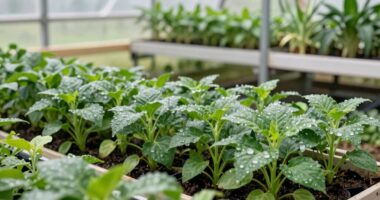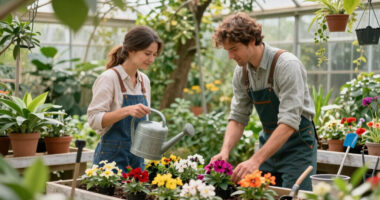
To grow herbs indoors year-round, guarantee they get enough light by using energy-efficient LED grow lights placed 12-24 inches above your plants for 12-16 hours daily. Maintain a clean, well-ventilated environment and avoid overwatering to prevent pests and diseases. Regularly inspect plants and use natural deterrents when needed. Proper lighting, hygiene, and pest prevention help your herbs stay healthy and vibrant through every season—discover more tips to master indoor herb cultivation.

Get garden gear delivered free with Prime
- Fast, free delivery on millions of items
- Prime Video, Amazon Music and more included
- Member-only deals all year
Key Takeaways
- Use adjustable LED grow lights to provide consistent, full-spectrum illumination for herbs indoors year-round.
- Maintain a light schedule of 12-16 hours daily to mimic natural sunlight and promote healthy growth.
- Keep herbs 12-24 inches below lights and ensure proper airflow and hygiene to prevent pests and diseases.
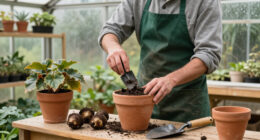
- Start with clean soil and containers, and regularly inspect herbs for pests or signs of stress.
- Optimize environmental conditions like temperature and humidity to support vigorous, year-round herb cultivation indoors.
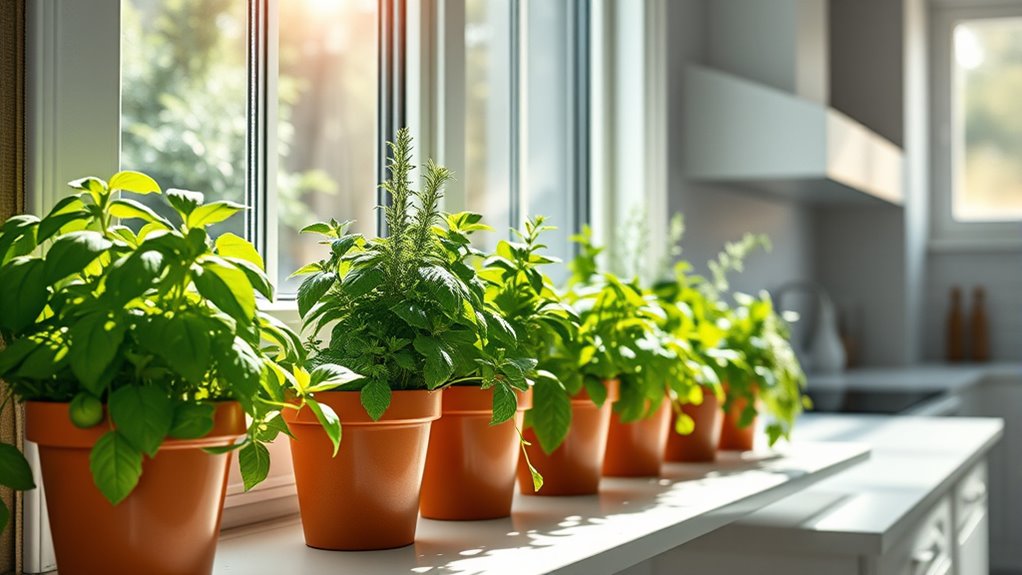
Growing herbs indoors year-round is an easy way to enjoy fresh flavors anytime, regardless of the season. One of the most vital factors to guarantee healthy, thriving herbs is proper indoor lighting. Since natural sunlight varies throughout the year, you’ll want to supplement with grow lights if your windows don’t provide enough light. LED grow lights are energy-efficient and can be adjusted to the specific needs of different herbs, promoting strong growth and vibrant leaves. Position your lights about 12-24 inches above the plants, and keep them on for 12-16 hours daily, mimicking natural sunlight and preventing leggy, weak stems. Consistent lighting not only encourages lush growth but also helps your herbs develop robust flavors, making them more enjoyable in your cooking. Additionally, utilizing AI-powered lighting systems can optimize light schedules and intensities for even better growth results.
Another key aspect of caring for indoor herbs is pest prevention. Unlike outdoor gardens, where pests can be a major issue, pests indoors tend to be less prevalent but can still cause problems if unchecked. To prevent pests, start with clean, healthy plants and avoid overwatering, which can lead to mold and attract pests like fungus gnats. Regularly inspect your herbs for signs of pests such as tiny webs, discolored leaves, or holes. Keeping the growing environment clean and dry reduces the chances of pest infestations. Using natural pest deterrents like neem oil or insecticidal soap can also be effective if you notice early signs of pests. Additionally, guarantee good airflow around your plants, as stagnant air can promote pest and disease problems. Maintaining good hygiene is essential for pest prevention. Remove dead leaves and debris from the soil surface, and avoid overcrowding your plants, which can create a humid environment conducive to pests. If you’re growing multiple herbs, rotate their locations to disrupt pest life cycles. Using sterile, high-quality soil and containers with drainage holes helps prevent root rot and fungal issues, which can attract pests indirectly. Keeping pests at bay not only protects your herbs but also ensures they stay healthy and flavorful.
Frequently Asked Questions
What Are the Best Herbs for Small Indoor Spaces?
You should choose herbs like basil, mint, parsley, or chives for small indoor spaces. Use compact herb containers to save space and guarantee easy maintenance. Make sure to provide adequate indoor herb lighting, such as grow lights or near a sunny window, to promote healthy growth. These herbs thrive in limited space and light, making them perfect for your cozy indoor garden.
How Do I Prevent Pests Indoors?
An ounce of prevention is worth a pound of cure. To prevent pests indoors, keep your herbs healthy with proper watering and good airflow. Use organic pest control methods like neem oil or insecticidal soap when needed, avoiding harsh chemicals. Regularly inspect your plants for early signs of pests, and clean your growing space. This proactive approach guarantees your herbs stay pest-free and vibrant all year round.
Which Herbs Grow Fastest Indoors?
Parsley, basil, and chives grow fastest indoors. To boost growth, practice companion planting by pairing herbs like basil with tomatoes or peppers. Regularly harvest and dry your herbs to encourage new growth and prevent pests. Keep the soil moist but not waterlogged, and make certain they get plenty of bright, indirect light. This combination helps your herbs thrive quickly indoors, providing fresh herbs year-round.
Can I Grow Herbs Without Natural Sunlight?
Yes, you can grow herbs without natural sunlight by using artificial lighting like LED grow lights. These lights provide the necessary spectrum for healthy growth, making natural sunlight unnecessary. Additionally, consider soil alternatives such as hydroponic systems or soilless mixes, which can enhance growth indoors. With proper artificial lighting and suitable soil methods, you can successfully cultivate herbs year-round indoors, regardless of natural sunlight availability.
How Do I Harvest Herbs Without Damaging Plants?
Ever wondered how to harvest herbs without harming your plants? Use gentle harvesting techniques, like snipping just above a set of leaves or a node, to encourage healthy growth. Always maintain your plants properly by keeping them well-watered and trimmed. Do you realize that careful harvesting not only preserves the plant’s health but also boosts yield? With these tips, you’ll enjoy fresh herbs while ensuring your plants thrive.
Conclusion
By growing herbs indoors year-round, you gain fresh flavor, vibrant health, and endless culinary possibilities. With the right care, consistent effort, and a little patience, you create a green oasis that nurtures your passion, enhances your meals, and brightens your space. Embrace the journey of indoor herb gardening, and enjoy the benefits of freshness, flavor, and beauty—every day, every season, every time. Grow herbs indoors and watch your world flourish.
Halloween Picks
halloween
As an affiliate, we earn on qualifying purchases.