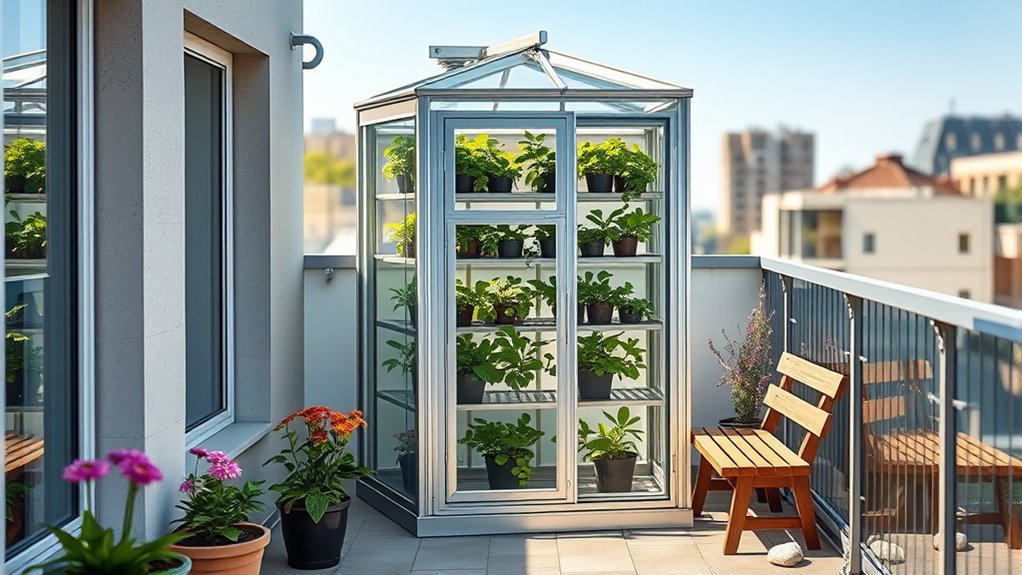
Building a small greenhouse on your balcony or patio is a great way to extend your gardening season and grow diverse plants year-round. Use durable, weather-resistant framing like galvanized steel or treated wood, and opt for impact-resistant polycarbonate panels for the cover. Incorporate adjustable vents to regulate temperature and humidity, ensuring your plants stay healthy. With careful planning, you’ll create a protected environment that boosts plant health and productivity—discover more tips to perfect your setup.
Key Takeaways
- Choose a compact, lightweight design suitable for limited balcony or patio space.
- Use durable, weather-resistant framing materials like galvanized steel or treated wood.
- Incorporate adjustable vents or windows for proper ventilation and temperature control.
- Opt for impact-resistant polycarbonate panels for insulation and safety.
- Ensure easy assembly with standardized components for future modifications or repairs.

Are you ready to extend your growing season and protect your plants? Building a small greenhouse for your balcony or patio is an excellent way to do just that. To guarantee your greenhouse functions effectively, you need to focus on key aspects like ventilation strategies and material durability. Ventilation is vital because it helps regulate temperature, control humidity, and prevent mold or pests from thriving inside. When planning your greenhouse, consider incorporating adjustable vents or windows that you can open and close as needed. This allows fresh air to circulate, keeping the environment healthy for your plants. Proper ventilation also prevents overheating during hot summer days and maintains a stable climate during colder months.
Choosing durable materials for your greenhouse is equally important. Since your structure will be exposed to outdoor elements, you want materials that can withstand wind, rain, and sunlight without deteriorating quickly. For framing, options like galvanized steel or treated wood provide strength and longevity. These materials resist rust and rot, ensuring your greenhouse remains sturdy over time. As for the glazing or cover, polycarbonate panels are a popular choice because they combine durability with good insulation properties. They resist impact and won’t crack as easily as glass, making them safer and more practical, especially if you live in an area prone to hail or strong winds. Additionally, selecting high-quality materials means less maintenance and fewer repairs, saving you money and effort in the long run.
Another aspect to consider is how the materials you choose impact the overall insulation and energy efficiency of your greenhouse. Well-insulated panels can help maintain consistent temperatures, reducing the need for supplemental heating or cooling. This is particularly important if you want to grow a variety of plants year-round. Also, think about the ease of assembly and the availability of replacement parts when selecting materials. Using standardized components can make future repairs or modifications easier, allowing your greenhouse to adapt to your gardening needs over time.

Bamworld Greenhouse for Outdoors Small Plant Green House 3-Tier Rack Stand Portable Greenhouses with Durable PE Cover for Seedling Ideal Gardening Gifts for Women Plants Lover
- Early Growing Season: Start 4-6 weeks earlier with micro-climate
- Easy Installation: Secure fittings with hammer during setup
- Vertical Space Optimization: Stable 3-tier design for efficient use
As an affiliate, we earn on qualifying purchases.
As an affiliate, we earn on qualifying purchases.
Frequently Asked Questions
What Is the Ideal Size for a Balcony Greenhouse?
The ideal size for your balcony greenhouse depends on your balcony size and plant capacity. If you have a small balcony, go for a compact greenhouse, around 3-4 feet wide, to maximize space. For larger balconies, consider a 6-8 foot greenhouse to accommodate more plants. Always measure your balcony carefully and plan for airflow and accessibility, ensuring your greenhouse fits comfortably without overcrowding.
How Do I Ensure Proper Ventilation in a Small Greenhouse?
Think of your greenhouse as a living lung—proper ventilation keeps it breathing. To guarantee this, use ventilation techniques like adjustable vents and small fans. Rely on passive airflow by positioning vents opposite each other to create natural air circulation. This setup prevents overheating and humidity buildup, keeping your plants healthy. Regularly open vents during sunny days, and you’ll create a balanced environment that promotes thriving growth.
What Materials Are Best for Weather-Resistant Greenhouse Frames?
For weather-resistant greenhouse frames, you should select materials with high durability like aluminum, galvanized steel, or PVC. Aluminum offers excellent corrosion resistance and lightweight framing options, making it ideal for small structures. Galvanized steel is sturdy and withstands harsh weather, while PVC is affordable and resistant to moisture. These materials guarantee your greenhouse remains durable and functional despite weather conditions, giving you reliable framing options for long-lasting growth.
How Can I Maximize Sunlight Exposure on a Shaded Balcony?
To maximize sunlight exposure on your shaded balcony, position your greenhouse or plants facing the sun’s path and use reflective surfaces like mirrors or white walls to bounce light. Adjust solar panel placement to optimize energy capture without blocking sunlight. Incorporate vertical planting to make the most of limited space, allowing plants to catch more light from different angles. Keep obstructions minimal to guarantee maximum sunlight reaches your plants.
What Are the Best Plants to Grow in a Small Greenhouse?
Imagine your greenhouse as a tiny jungle; choose plants that thrive in cozy spaces. Succulent varieties flourish with minimal fuss, their fleshy leaves like little water reservoirs. Herb cultivation adds flavor and aroma, filling your space with basil, mint, and parsley. These resilient plants enjoy the controlled environment, making them perfect for small greenhouses. You’ll enjoy lush greenery and fresh herbs year-round, transforming your balcony into a vibrant oasis.
Conclusion
Now that you’ve built your small greenhouse, your balcony or patio will transform into a lush, tropical paradise bursting with life. Imagine stepping into your tiny jungle, where plants grow so vigorously they seem to touch the sky, and every breath is filled with fresh, fragrant air. Your green sanctuary will become the envy of all neighbors, turning even the smallest space into a vibrant oasis. Get ready to watch your garden dreams explode into an extraordinary, living masterpiece!