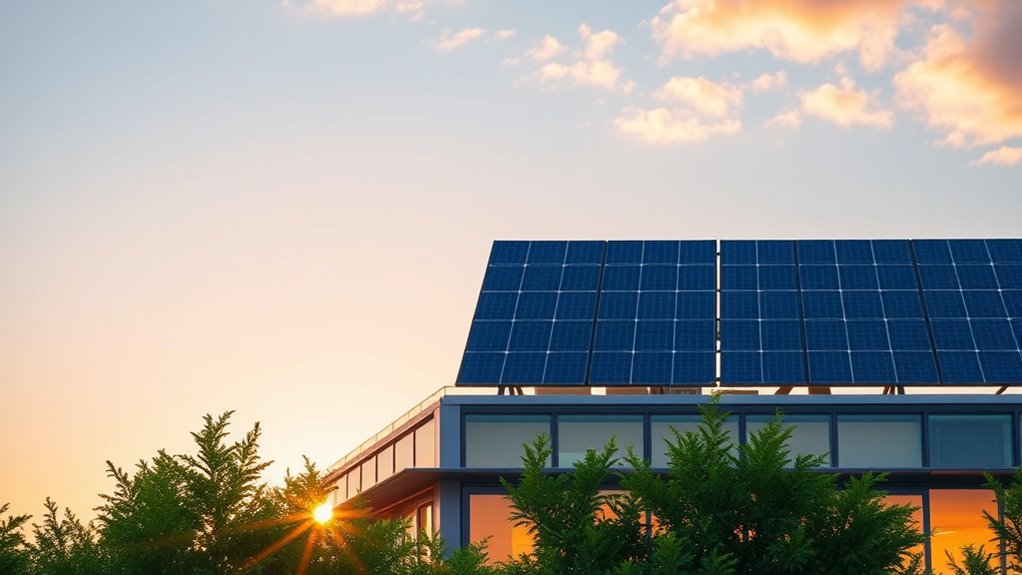

Harnessing solar energy for heating and lighting involves using advanced photovoltaic technology that converts sunlight into electricity. When sunlight hits solar panels made of high-quality silicon, it generates power efficiently even on cloudy days. This clean energy can then be used to heat your home or run lighting systems, reducing reliance on fossil fuels. With ongoing innovations improving durability and efficiency, you’ll discover how you can maximize solar benefits—keep exploring to learn more.

Get garden gear delivered free with Prime
- Fast, free delivery on millions of items
- Prime Video, Amazon Music and more included
- Member-only deals all year
Key Takeaways
- Solar panels convert sunlight into electricity, powering heating and lighting systems efficiently.
- Enhanced photovoltaic technology improves light absorption, increasing energy output even on cloudy days.
- High-quality solar panels ensure durability and long-term performance for reliable energy supply.
- Solar energy can be harnessed through integrated systems for sustainable heating and lighting solutions.
- Innovations in materials and design optimize energy conversion, reducing losses and maximizing efficiency.
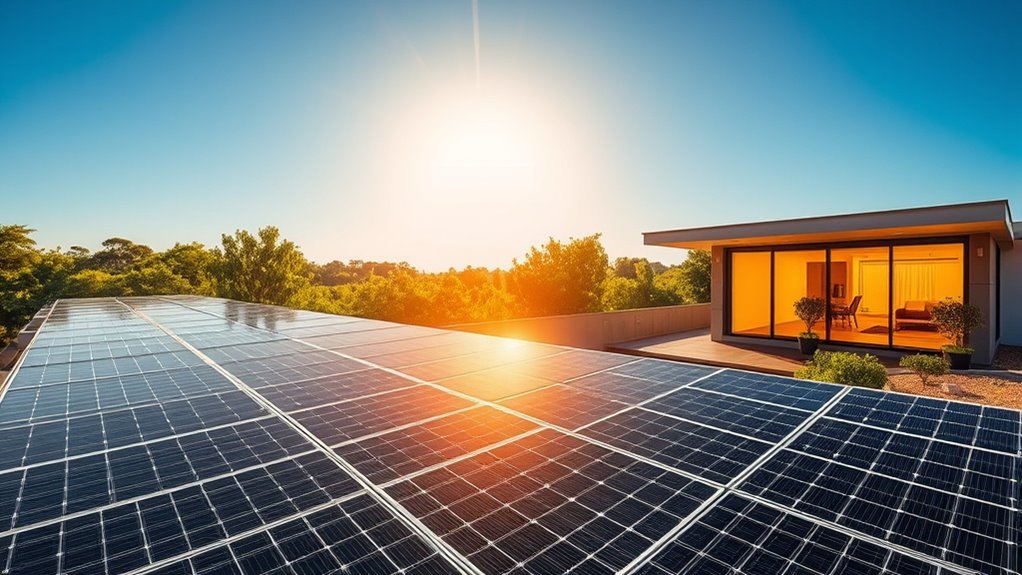
Photovoltaic technology is the backbone of solar energy systems. It involves using semiconductors, usually silicon, to convert sunlight directly into electricity through the photovoltaic effect. As sunlight hits the solar cells, electrons are knocked loose, creating an electric current. Improvements in photovoltaic technology have led to the development of panels with better light absorption, reduced energy losses, and enhanced durability. These innovations mean that even on cloudy days or in less-than-ideal sunlight conditions, your solar system can still produce notable energy. This reliability is essential for powering your heating and lighting needs efficiently. When selecting solar panels, considering factors like panel quality and efficiency ratings can significantly impact your system’s performance and longevity.
Frequently Asked Questions
How Does Solar Energy Impact Local Wildlife and Ecosystems?
You might not realize it, but solar energy can impact local wildlife and ecosystems. For instance, large solar farms may cause ecosystem disruption, affecting habitats and plant life. Bird migration patterns can also be disturbed by reflective surfaces or bright lights from solar installations, leading to potential harm. When you support solar energy, consider its environmental effects and advocate for wildlife-friendly designs to minimize these impacts.
What Are the Best Locations Globally for Solar Heating and Lighting?
You should focus on solar radiation hotspots like deserts in the Middle East, Southwest US, and North Africa, which offer the highest solar energy potential. These ideal installation sites provide consistent sunlight and minimal shading, maximizing efficiency. By choosing these locations, you guarantee your solar heating and lighting systems operate at peak performance, helping you reduce energy costs and carbon footprint while taking advantage of abundant solar resources.
How Do Seasonal Changes Affect Solar Energy Efficiency?
Imagine the sun’s rays stretching across the sky, only to be blocked by shifting cloud cover or seasonal variation. Your solar energy efficiency dips during winter months when days are shorter and clouds are thicker, reducing sunlight. Conversely, in summer, longer, sunnier days boost energy capture. Seasonal changes make it essential to optimize panel angles and storage solutions, ensuring you maximize solar power regardless of the weather or season.
Are There Any Health Risks Associated With Solar Panel Manufacturing?
You should know that solar panel manufacturing has minimal health risks if environmental regulations are followed. Workers might be exposed to chemicals like cadmium or silicon during production, but proper safety measures greatly reduce these hazards. Manufacturers are required to implement strict safety protocols to safeguard worker safety and minimize environmental impact. Staying informed about regulation updates helps ensure the process remains safe for everyone involved.
What Financing Options Are Available for Residential Solar Projects?
Ever wondered how to make solar energy more affordable? You can explore solar loans, which let you finance your system and pay over time, or consider leasing options that require little to no upfront cost. These financing choices make switching to solar easier and more accessible, helping you save on energy bills while supporting renewable energy initiatives. Which option suits your financial situation best?
Conclusion
Now that you understand how to harness solar energy, you can think of it as a reliable friend offering endless warmth and light. By embracing solar power, you’re not just saving money, but also helping the planet breathe a little easier. Just like a sunflower turning toward the sun, you can turn to solar energy for a brighter, greener future. Start small, stay motivated, and watch how this clean energy transforms your life effortlessly.
Fall yard work Picks
leaf blowers
As an affiliate, we earn on qualifying purchases.