To wire your greenhouse without future headaches, plan carefully by mapping out power needs now and for any upgrades. Use durable, weather-resistant materials designed for moisture and humidity, and install waterproof outlets and GFCI protection near watering zones. Keep wiring organized, protected from pests, and elevate it off the ground. Regular inspections and maintenance are key to preventing issues. If you follow these best practices, you’ll guarantee a safe and reliable system that lasts—explore more tips ahead.
Key Takeaways
- Plan circuits meticulously, allocating separate loads for lighting, heating, and irrigation to prevent overloads and interference.
- Use weatherproof, corrosion-resistant wiring and durable components designed for greenhouse conditions.
- Incorporate safety devices like GFCI outlets, circuit breakers, and proper grounding to ensure long-term safety.
- Regularly inspect and maintain wiring, connections, and insulation to catch issues early and prolong system lifespan.
- Install power sources and outlets thoughtfully, supporting current needs and future expansion without compromising safety.

ELEGRP Outdoor GFCI Outlet with Extra-Duty in Use Cover, 20 Amp TRWR Self-Test GFI Receptacle, 1 Gang Weather Resistant in-Use Cover, Lockable, Horizontal/Vertical Mount, UL Listed, 1 Pack, Black
- Complete Outdoor Electrical Set: GFCI outlet with weatherproof cover
- Weather-Resistant Construction: UV-stabilized, corrosion-resistant materials
- Reliable Outdoor Performance: Resists rain, snow, dust, extreme temps
As an affiliate, we earn on qualifying purchases.
As an affiliate, we earn on qualifying purchases.
Why Proper Wiring Is Critical for Safe Greenhouse Operation
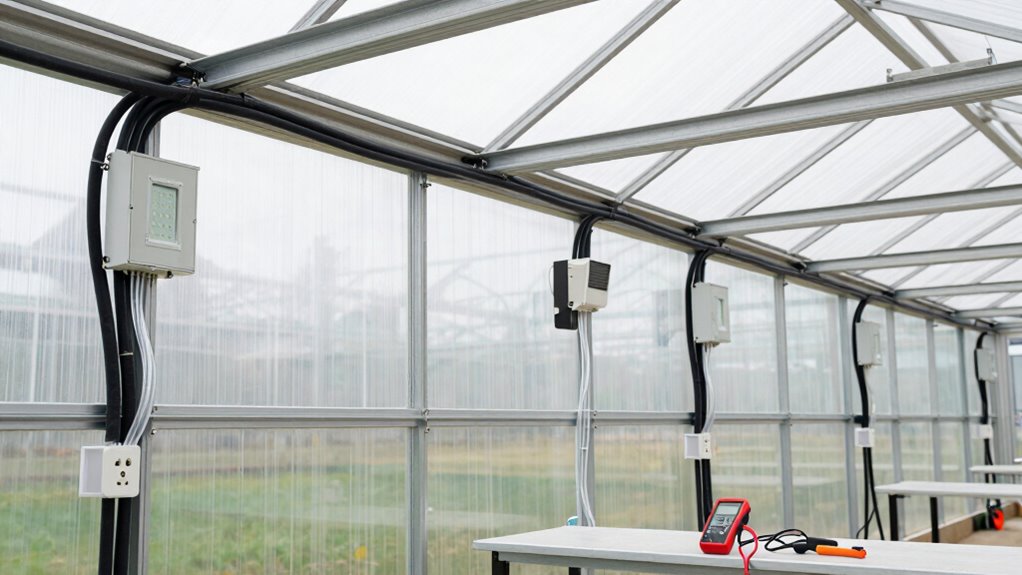
Proper wiring is essential for ensuring the safety and efficiency of your greenhouse. Well-planned wiring safeguards both your plants and yourself, preventing electrical hazards that could cause fires or damage. It also supports your greenhouse aesthetics by keeping wiring neat and hidden, creating a clean, professional look. When wiring is done correctly, it aligns with your planting schedules, ensuring your lighting, fans, and irrigation systems operate smoothly and on time. Proper wiring can also help in infection risks and prevention, as electrical faults might lead to moisture buildup and subsequent issues. Additionally, understanding early detection signs can help prevent serious issues before they develop. Incorporating the appropriate electrical components ensures your system functions reliably and reduces the risk of future failures. Considering landscaping elements during wiring installation can enhance the overall design and accessibility of your setup. Ultimately, good wiring forms the backbone of a reliable, safe, and visually appealing greenhouse environment.
How to Assess Your Greenhouse’s Power Needs
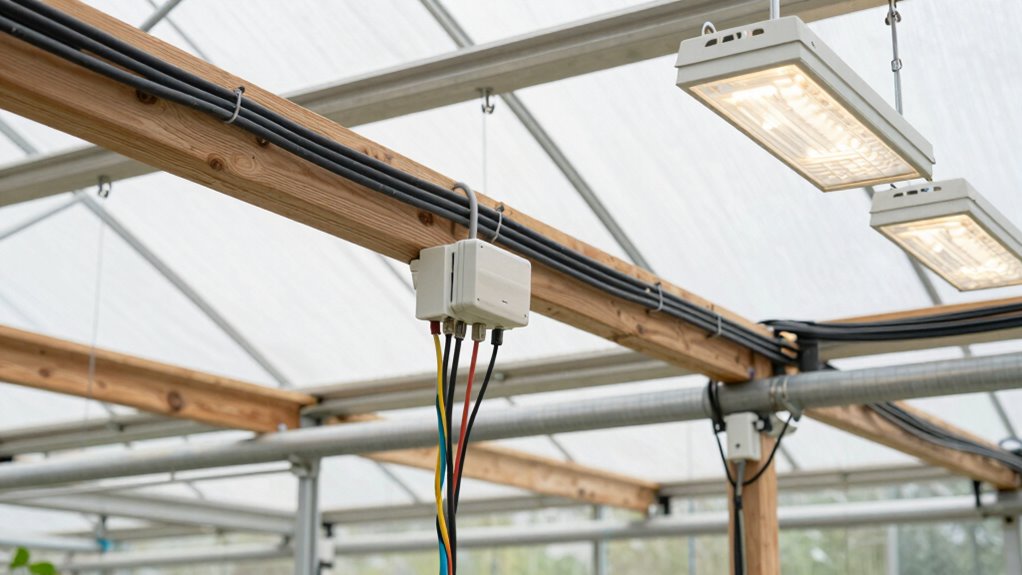
Before installing any wiring, you need to accurately assess your greenhouse’s power requirements. Start by considering your equipment needs, like grow lights, fans, and watering systems. Think about soil preparation tools and lighting, which influence power load. Plant spacing impacts the number of grow lights and heating units, affecting energy use. Additionally, understanding waterpark safety tips can help ensure electrical safety around moisture-prone areas. Use this table to estimate your needs:
| Equipment | Power Consumption (W) | Quantity | Total Power (W) |
|---|---|---|---|
| Grow lights | |||
| Ventilation fans | |||
| Watering systems | |||
| Heating units | |||
| Soil preparation tools |
Sum these figures to determine your total power load, ensuring your wiring can handle future growth. Properly assessing your power needs can prevent costly rewiring later on. Additionally, consulting electrical safety standards is crucial to ensure all wiring complies with safety regulations and minimizes risks. Being aware of electrical load capacity is essential to avoid overloads that could cause outages or hazards.
Choosing Weather-Resistant Wiring Materials for Durability
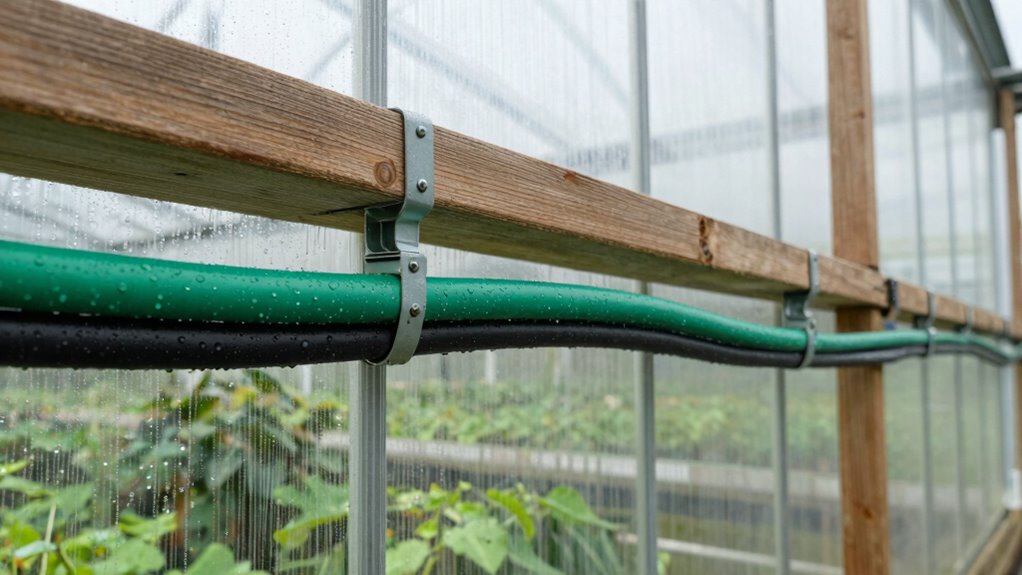
Since your greenhouse is exposed to moisture, temperature fluctuations, and possibly rain, choosing weather-resistant wiring materials is essential for long-term durability. You want wiring that withstands the elements without failing. Look for:
- Weatherproof connectors that seal out water and dirt, preventing corrosion and short circuits.
- Corrosion-resistant cables designed with protective coatings to endure humidity and chemical exposure.
- Heavy-duty insulation that resists cracking and UV damage from sunlight.
- Flexible wiring options that make installation easier in tight or awkward spaces.
- Incorporating regional flavor insights can help you select materials that are best suited for your specific climate conditions, enhancing the longevity of your wiring setup.
Installing Greenhouse Electrical Circuits Safely
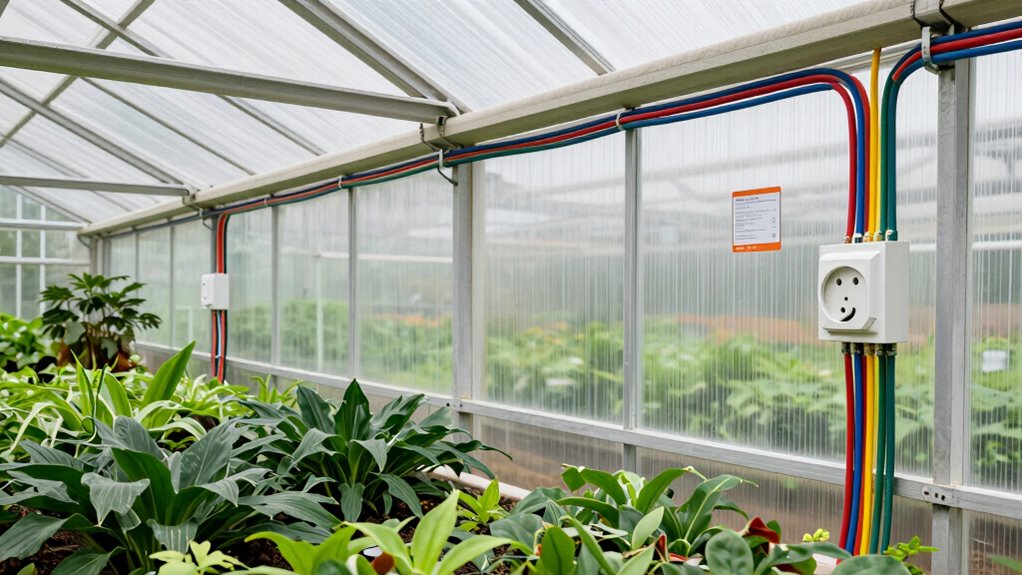
To install your greenhouse electrical circuits safely, start with proper circuit planning to prevent overloads and guarantee enough outlets for your needs. Choose wiring that matches your power requirements and is suitable for outdoor use to avoid future issues. Don’t forget to implement safety measures like grounding and circuit breakers to protect both your plants and yourself. Additionally, consider using appropriate DIY tools to ensure a safe and efficient installation process. Taking inspiration from best gear and knife roundups for smart shopping, selecting high-quality components can improve the durability and reliability of your electrical setup.
Proper Circuit Planning
Careful planning of your greenhouse’s electrical circuits is essential to guarantee safety and efficiency. Start by sketching a layout that mimics a historical greenhouse, balancing aesthetics with function. Visualize your wiring as a network of sustainable wiring, minimizing environmental impact. Consider these steps:
- Map out power sources and outlets, imagining a grid that supports your tools and lighting.
- Decide on circuit loads, ensuring they can handle future upgrades without overloads.
- Separate circuits for heating, lighting, and irrigation to prevent interference.
- Use durable, eco-friendly materials for wiring to promote sustainable wiring practices. Proper circuit planning prevents future headaches, reduces fire risks, and keeps your greenhouse running smoothly. This approach guarantees your setup is both safe and environmentally conscious, aligning with the historical greenhouse aesthetic and modern sustainability goals. Additionally, understanding environmental impact can help you select the most eco-friendly wiring options for your project.
- Incorporate knowledge of astrological influences when planning your space to enhance the overall harmony and energy flow within your greenhouse.
Choosing Correct Wiring
Choosing the right wiring is essential for guaranteeing your greenhouse’s electrical system is safe, reliable, and efficient. Start by selecting wiring insulation rated for outdoor or greenhouse conditions to prevent damage from moisture and temperature changes. Use wiring designed specifically for outdoor use, which has proper insulation to protect against corrosion and wear. Equally important, install circuit breakers that match the electrical load and provide protection against overloads and short circuits. Proper circuit breakers will trip safely if there’s a fault, preventing damage or fire. Always choose high-quality, UL-listed wiring and breakers to meet safety standards. Ensuring correct wiring choices also involves considering the climate conditions your greenhouse will face, which can affect the longevity and safety of your electrical setup. Implementing appropriate wiring methods is crucial to prevent potential hazards and ensure your system remains durable over time. Correct wiring choices not only protect your greenhouse equipment but also ensure smooth operation and peace of mind for years to come.
Ensuring Safety Measures
Ensuring safety when installing greenhouse electrical circuits is essential to protect both your structure and your safety. Start by visualizing a secure setup:
- Use weatherproof, grounded outlets to prevent electrical shocks during plant growth activities.
- Install circuit breakers to quickly shut off power if a fault occurs, safeguarding your plants and equipment.
- Keep wiring away from areas prone to pests or moisture to maintain pest control and prevent damage.
- Incorporate GFCI outlets, especially near watering zones, to protect both you and delicate plant growth.
These measures help avoid electrical hazards, ensure reliable operation, and create a safe environment for healthy plant growth. Proper safety precautions also minimize pest-related issues caused by faulty wiring or moisture intrusion.
Protecting Wiring From Moisture and Pests

To keep your greenhouse wiring safe, you need to safeguard it from moisture and pests that can cause damage or create hazards. Moisture can lead to electrical shorts and corrosion, jeopardizing safety and plant growth optimization. To prevent this, use waterproof conduits and seal all connections thoroughly. Pests, like rodents and insects, can chew through wiring, so install protective covers and keep wiring elevated off the ground. Maintaining a clean, organized space enhances greenhouse aesthetics and reduces pest hiding spots. Regular inspections ensure early detection of damage, preventing costly repairs. Properly protected wiring not only extends its lifespan but also guarantees a safe environment for both your plants and your workflow. Additionally, understanding heat buildup risks can help you implement measures that prevent overheating and potential fires. Proper wiring insulation is essential for mitigating these risks and ensuring long-term safety. Being aware of electrical safety practices can further help you maintain a secure and efficient greenhouse environment. Incorporating preventative maintenance routines can also significantly reduce the likelihood of unexpected electrical issues. Regularly monitoring moisture levels in your greenhouse helps identify potential problems before they cause damage. Prioritizing these measures keeps your greenhouse efficient and free of future headaches.
Wiring Grow Lights, Fans, and Automation Systems Safely
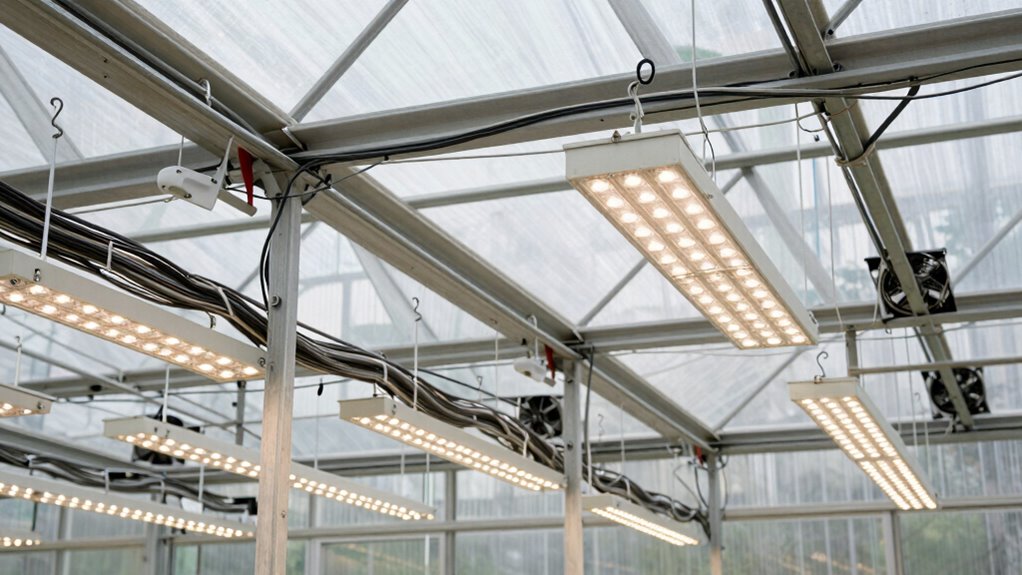
Wiring your grow lights, fans, and automation systems safely is essential to prevent electrical hazards and guarantee reliable operation. Proper wiring guarantees your plant propagation efforts and soil health remain unaffected by electrical issues. Visualize:
- Running weatherproof cables along sturdy conduits, avoiding moisture contact.
- Installing GFCI outlets to cut power instantly if a fault occurs.
- Using correctly rated circuit breakers to handle current loads.
- Securing all connections with waterproof connectors to prevent corrosion.
This careful setup minimizes the risk of short circuits, which could damage your plants or compromise soil conditions. Electrical safety is a critical aspect of greenhouse management, and proper wiring practices help ensure a safe environment for both your plants and yourself. Safe wiring also guarantees your automation system functions smoothly, reducing future headaches. Properly inspecting wiring regularly can help identify potential issues before they cause problems. Prioritize safety now to protect your greenhouse environment and promote healthy plant growth. Additionally, choosing household-grade safety products like ground fault circuit interrupters can further ensure electrical safety in humid or wet environments. Moreover, understanding electrical hazards and how to mitigate them is vital for maintaining a secure greenhouse setting.
Common Mistakes to Avoid When Wiring a Greenhouse
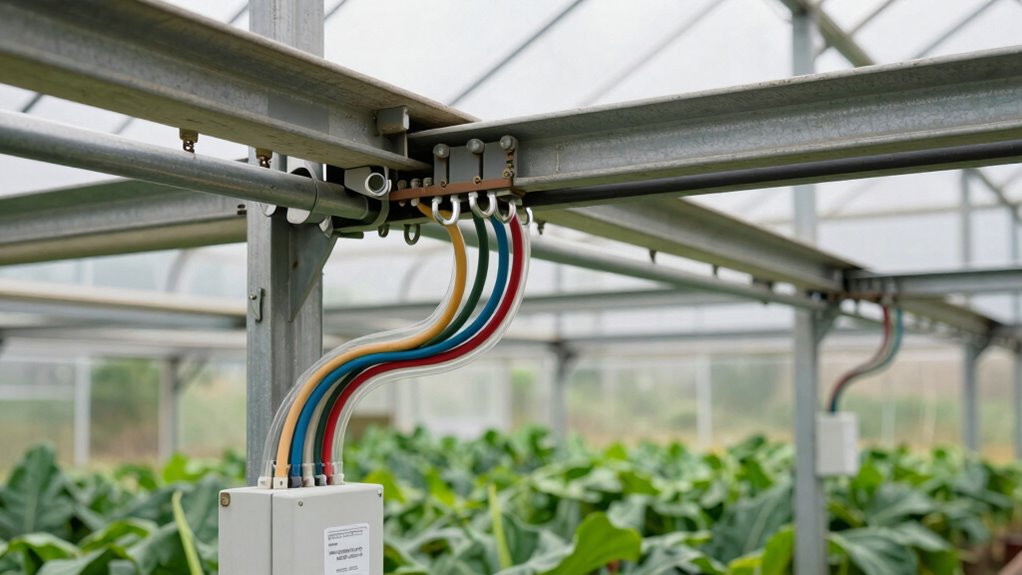
One common mistake is overloading circuits, which can cause breakers to trip or wiring to overheat. You also need to guarantee proper grounding to prevent electrical shocks or damage. Ultimately, using inadequate wiring materials can lead to safety hazards and costly repairs down the line.
Overloading Circuit Circuits
Overloading your greenhouse circuit is a common mistake that can lead to tripped breakers, overheating, or even electrical fires. To avoid this, you must consider wiring compatibility and the total load on each circuit. Imagine these scenarios:
- Plugging in multiple high-wattage grow lights, surpassing the circuit’s capacity.
- Running several heaters and fans simultaneously without checking their combined wattage.
- Connecting too many extension cords, causing the circuit to strain.
- Ignoring the amperage rating of your wiring, risking overheating and damage.
Neglecting Proper Grounding
Neglecting proper grounding is a critical mistake that can compromise the safety of your greenhouse. Without correct grounding techniques, electrical faults can lead to electric shocks or fires, putting your plants and safety at risk. Always follow electrical codes to guarantee proper grounding of your electrical system. This involves connecting all metal parts and equipment to a grounding wire or rod, creating a safe path for stray electricity. Proper grounding helps prevent dangerous voltage buildup and protects from electrical surges. Skipping this step might save time initially, but it increases the risk of accidents and damage. Make sure your wiring setup adheres to local electrical codes, and consult a professional if you’re unsure. Proper grounding is essential for a safe, reliable greenhouse environment.
Using Inadequate Wiring Materials
Using the wrong wiring materials can lead to serious safety issues and undermine the reliability of your greenhouse’s electrical system. Inadequate wiring or substandard materials won’t withstand the environment or load, risking shorts, fires, or equipment failure. Imagine these pitfalls:
- Using thin, cheap wires that melt under high humidity or heat
- Choosing plastic-insulated cables that crack and expose live wires
- Skipping proper connectors, causing loose or exposed connections
- Ignoring UV-resistant or waterproof materials, letting the wiring degrade over time
Substandard materials compromise safety and longevity, making future repairs costly. Always opt for quality, weatherproof wiring rated for greenhouse conditions. Avoid shortcuts—your plants and safety depend on reliable, durable wiring built with appropriate, high-quality materials.
Should You Hire an Electrician or DIY Your Greenhouse Wiring?

Deciding whether to hire an electrician or DIY your greenhouse wiring depends on your experience, comfort level, and the system’s complexity. If you’re familiar with electrical codes and wiring, handling it yourself can save money and give you control. However, if you’re unsure about safety or proper installation, hiring a professional guarantees reliable wiring, especially when considering plant propagation needs and soil fertility. A mistake could lead to future headaches, like power outages or fire hazards. Use this table to assess your skills and project scope:
| Skill Level | Project Complexity | Potential Risks |
|---|---|---|
| Beginner | Simple wiring | Safety hazards, inefficiency |
| Intermediate | Moderate complexity | Future troubleshooting issues |
| Expert | Advanced systems | Optimal plant growth, soil health |
Choose wisely to avoid headaches later!
Troubleshooting and Maintaining Your Greenhouse Wiring
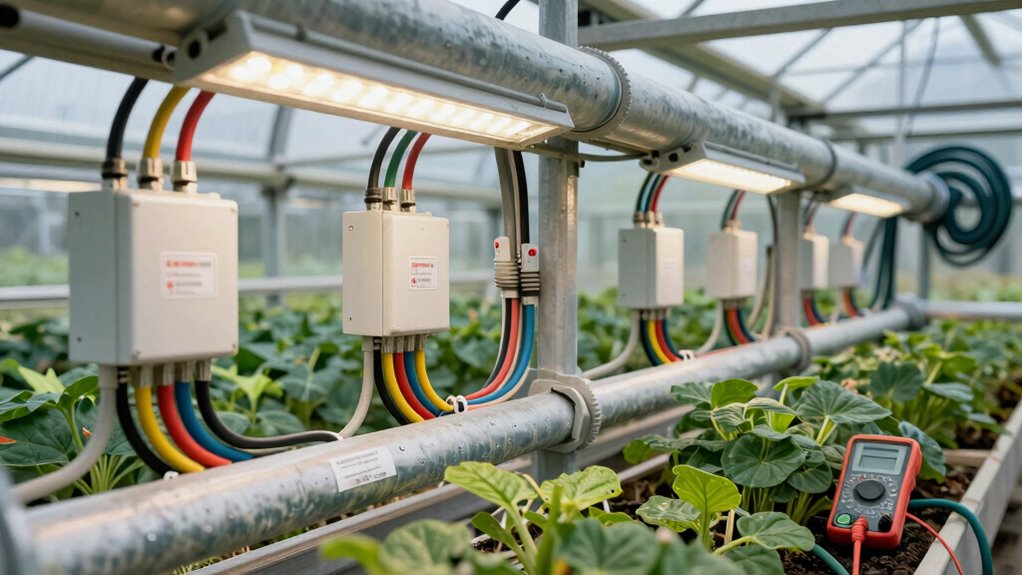
Maintaining and troubleshooting your greenhouse wiring is essential to guarantee safe and reliable operation over time. Regular checks help you spot issues before they escalate. Start by inspecting the greenhouse insulation to make sure no wires are exposed or damaged, especially in damp areas. Next, verify that all connections are secure, preventing potential power interruptions. Then, test the plant light spectrum to confirm your lighting system functions correctly, supporting healthy plant growth. Finally, examine the wiring for signs of wear, such as fraying or corrosion, and replace damaged sections promptly. By routinely following these steps, you reduce risks, extend the lifespan of your wiring, and keep your plants thriving with consistent lighting and safe electrical systems.
Frequently Asked Questions
Can I Wire My Greenhouse Without a Permit?
You shouldn’t wire your greenhouse without checking electrical codes and permit requirements first. Most areas require permits for electrical work to guarantee safety and compliance. Ignoring these rules can lead to fines, safety hazards, or needing costly repairs later. Always consult local building authorities or a licensed electrician to confirm what permits are necessary. Following proper procedures now prevents headaches and keeps your greenhouse wiring safe and legal.
What Tools Are Essential for Greenhouse Wiring?
You’ll need essential tools like wire strippers, pliers, a voltage tester, and a drill for greenhouse wiring. Prioritize electrical safety by wearing gloves and using insulated tools. Use quality wiring materials suitable for outdoor use, such as waterproof cables and weatherproof connectors. These tools and materials help guarantee your wiring is secure, safe, and durable, preventing future headaches. Always double-check connections and follow safety guidelines for a reliable greenhouse wiring setup.
How Often Should I Inspect Greenhouse Electrical Wiring?
You should inspect your greenhouse electrical wiring at least once a year to guarantee insulation maintenance and safety. Regular inspections help identify any wear, damage, or potential wiring upgrades needed to prevent future headaches. Check for loose connections, cracked insulation, and signs of corrosion. Staying proactive with these inspections keeps your greenhouse safe, efficient, and ready for seasonal changes, reducing the risk of electrical issues down the line.
Are Solar Panels a Viable Wiring Option for Greenhouses?
Yes, solar panels are a viable wiring option for greenhouses. During solar panel installation, you can design a system tailored to your electrical load management needs, reducing reliance on external power sources. Proper wiring guarantees efficient energy use, and integrating solar power can lower long-term costs. Just make sure to work with a professional to optimize your setup, ensuring safe, reliable power while avoiding future electrical headaches.
What Safety Precautions Should I Take During Installation?
Picture yourself as a modern-day electrician, taking safety precautions seriously. First, guarantee proper electrical grounding to prevent shocks and protect your equipment. Avoid circuit overload by calculating your power needs carefully. Always switch off power during installation, use insulated tools, and wear protective gear. Double-check all connections before turning on the system. These steps will keep you safe, secure your wiring, and prevent future headaches in your greenhouse setup.
Conclusion
Think of wiring your greenhouse like crafting a steady ship’s course—careful planning now keeps you sailing smoothly later. By following these tips, you’ll avoid the storms of electrical mishaps and guarantee your plants thrive under safe, reliable power. Remember, even Da Vinci needed a blueprint—so don’t hesitate to seek expert help if needed. With the right setup, your greenhouse can flourish like a well-tended garden of dreams, free from future headaches.