The grow light hanging height is essential for healthy plant growth. Keep your lights at the recommended distance specified by the manufacturer, but be ready to adjust based on your plants’ response. If lights are too close, you risk leaf burn and stretching; too far, and plants may become leggy and weak. Regularly monitor your plants, and if you notice any stress signs, tweak the height accordingly. Continuing with this guide will help you master the right setup.

Get garden gear delivered free with Prime
- Fast, free delivery on millions of items
- Prime Video, Amazon Music and more included
- Member-only deals all year
Key Takeaways
- Maintain proper distance to prevent light burn and promote healthy plant development at each growth stage.
- Adjust grow light height based on plant response, such as stretching or leaf scorch, for optimal growth.
- Follow manufacturer guidelines as a baseline, but customize height to fit specific plant needs and conditions.
- Regularly monitor plants for signs of too close or too far lights, adjusting accordingly to avoid stress or damage.
- Ensure consistent light coverage by adjusting height as plants grow, promoting uniform growth and preventing uneven development.
adjustable LED grow light hanging kit
As an affiliate, we earn on qualifying purchases.
As an affiliate, we earn on qualifying purchases.
How Proper Grow Light Height Boosts Plant Growth
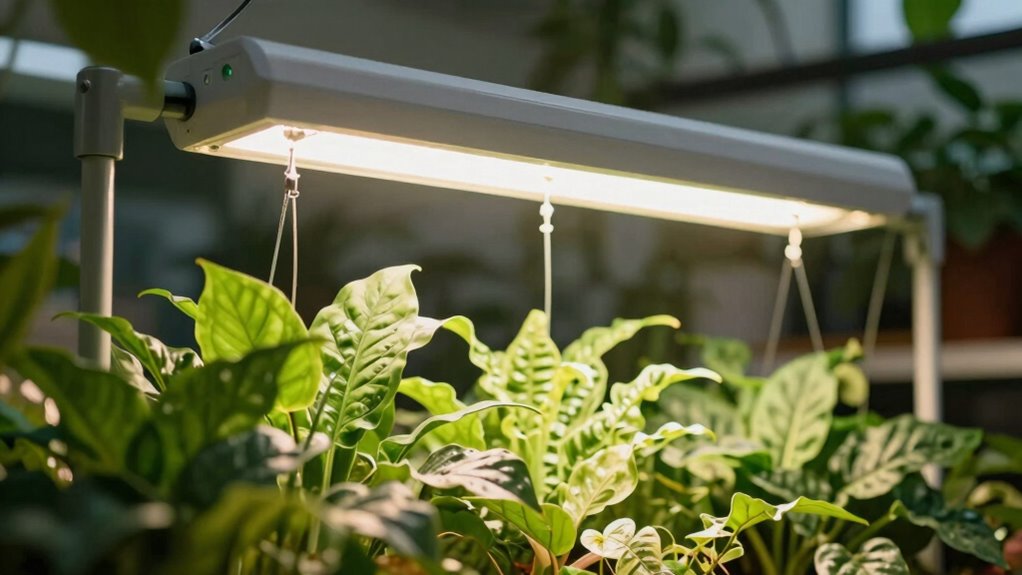
Proper grow light height is crucial because it directly influences how much light your plants receive, which in turn affects their growth and health. When your plants get ideal light, they develop strong stems and healthy leaves. To support this, you should start with good soil preparation, guaranteeing nutrients are balanced to maximize growth. Pest control also plays a key role, as pests can weaken plants and hinder their response to proper lighting. If pests are present, even perfect light won’t yield healthy plants. Maintaining the right grow light height ensures your plants aren’t too close, preventing light burn, or too far, which causes stretching. This balance promotes vigorous growth, making your efforts in soil prep and pest control more effective. Additionally, understanding projector contrast ratios can help you optimize the environment for better plant growth by controlling light and shadow effects in your space. Proper lighting setup also involves monitoring light intensity, which can vary depending on the plant species and growth stage.
How to Find the Best Grow Light Height for Your Plants
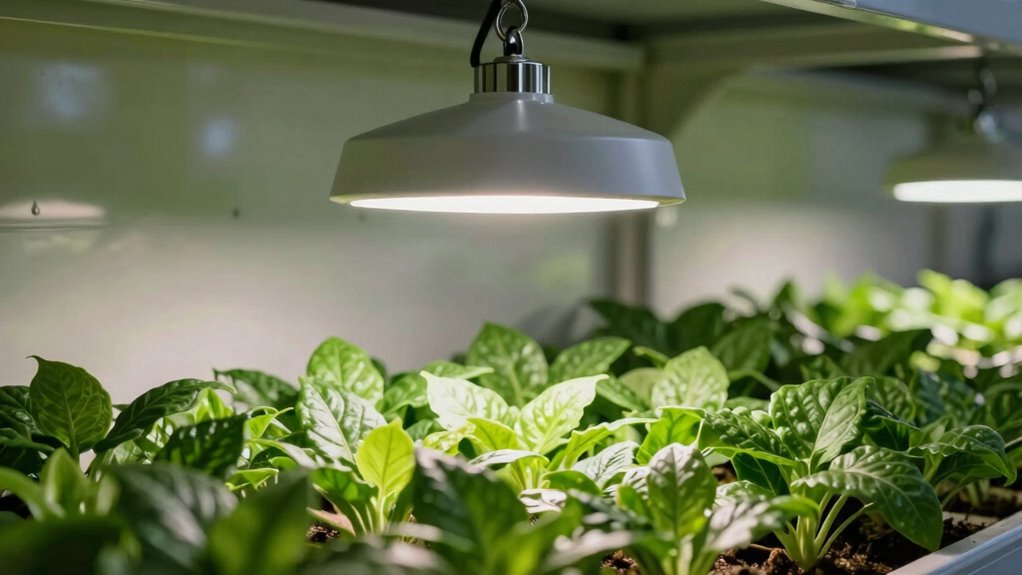
To find the most suitable grow light height, you need to adjust the light intensity based on your plants’ growth stage. Younger plants require less intense light and should be kept closer, while mature plants can handle and benefit from higher placement. Monitoring your plants’ response will help you fine-tune the height for ideal growth. Additionally, considering the luxury lifestyle approach to plant care can enhance the overall environment and aesthetic of your space.
Light Intensity Adjustment
Adjusting the height of your grow light is essential for delivering the right amount of light intensity to your plants. Proper light intensity ensures ideal photosynthesis, promoting healthy growth and development. To do this effectively, consider photoperiod management—how many hours your plants receive light—and adjust the height to prevent light burn or stretch. A higher light position reduces intensity, suitable for seedlings, while lowering it increases light exposure for mature plants. Additionally, pay attention to the light spectrum; different wavelengths affect growth stages and plant responses. Using a light meter can help you measure intensity accurately and make precise adjustments. Regularly monitoring and adjusting your grow light’s height guarantees your plants receive consistent, adequate light for vigorous growth. For optimal results, it’s important to select the right grow light style that fits your setup and plant needs.
Plant Growth Stage
As your plants grow through different stages, their light needs change, making it crucial to modify the grow light height accordingly. During the seedling stage, keep the light closer to prevent stretching, especially if your soil composition is nutrient-rich, promoting healthy root development. As plants enter vegetative growth, gradually raise the light to prevent heat stress and encourage strong stems. During flowering, increase the distance to avoid light burn and support pest management by reducing overly dense canopy areas that can harbor pests. Adjusting the grow light height based on growth stage ensures ideal photosynthesis and healthy development. Properly managing light exposure is essential for optimal plant health and productivity. Monitoring plant response and soil conditions helps you fine-tune the height for each stage, preventing issues and maximizing yield. Recognizing plant growth patterns and adjusting the light accordingly allows for more precise control over development. Paying attention to light intensity levels can help prevent stress and promote uniform growth throughout all stages. Additionally, understanding light spectrum can influence how plants respond to different growth phases, further optimizing overall health.
Signs Your Grow Light Is Too Close or Too Far Away
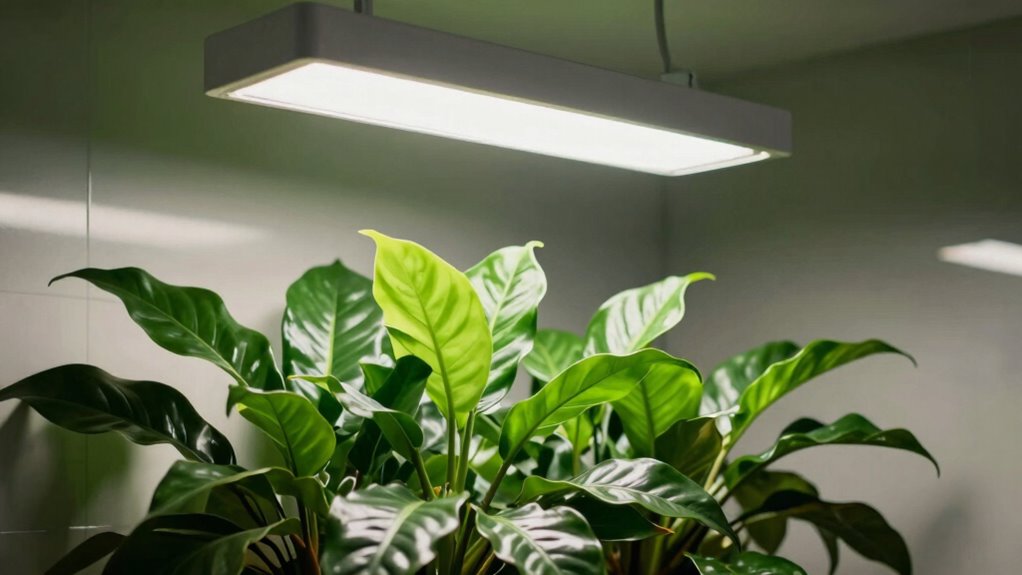
If your grow light is positioned too close, you’ll notice leaves curling or developing white spots, indicating light burn. Conversely, if it’s too far, plants may stretch toward the light, causing weak stems. Recognizing these signs is essential because lighting technology interacts with plant photoreceptors, which regulate growth responses. A well-calibrated light setup can enhance plant health and maximize yields. To help you, here are key indicators:
- Leaf Curling or White Spots — too close, causing light burn.
- Stretching or Tall, Leggy Plants — too far, seeking light.
- Slow Leaf Development — if light intensity isn’t ideal.
- Uneven Growth Patterns — inconsistent light exposure.
Monitoring these signs guarantees your plants receive the right light distance for healthy growth. Additionally, understanding light spectrum and its impact can further optimize your grow setup, especially when considering lighting technology and how it interacts with plants. Being aware of light regulation principles is crucial for achieving consistent results. For instance, adjusting the light distance based on plant responses can prevent stress and promote optimal growth stages.
How to Adjust Grow Light Height as Your Plants Grow
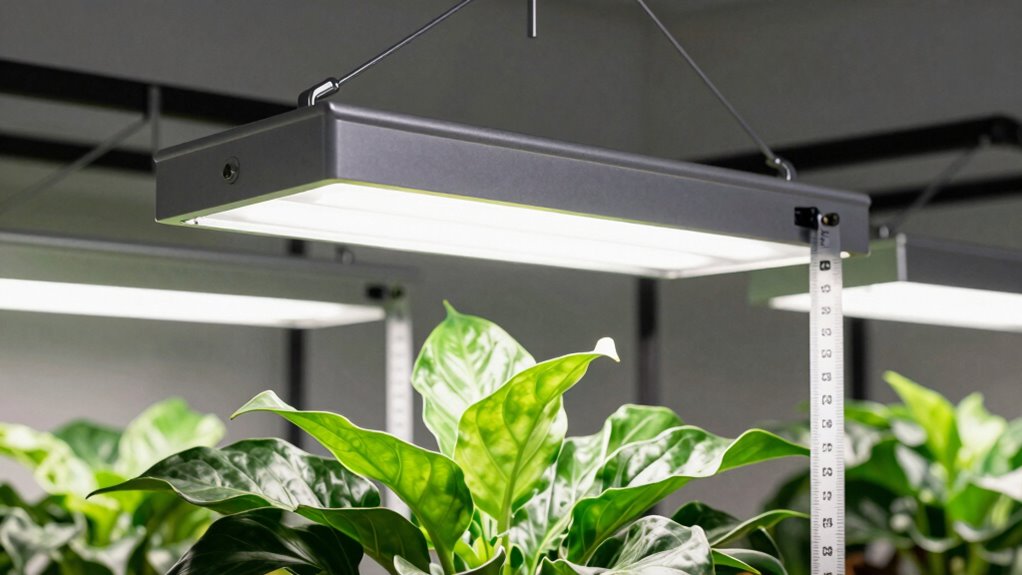
When your plants grow taller and stretch toward the light, it’s essential to raise your grow light to maintain the ideal distance. Proper light height supports best plant nutrition by ensuring efficient photosynthesis, promoting healthy growth and stronger stems. As your plants develop, adjust the light gradually to prevent stress or light burn. Keeping the light at the right height also helps reduce pest attraction, since stressed plants are more vulnerable to pests. Regularly monitor your plants’ growth and adjust the light accordingly, ensuring they stay within the recommended distance. Additionally, understanding how to manage light intensity can further enhance your plant’s development and health. Being aware of how light spectrum affects plant growth can also guide you in optimizing your grow setup. It’s also helpful to be aware of how excessive light can cause damage or stress to your plants, emphasizing the importance of proper adjustment over time. Ensuring your grow light’s adjustment schedule matches your plants’ growth rate is crucial for sustained health.
Key Factors That Determine Your Grow Light Height
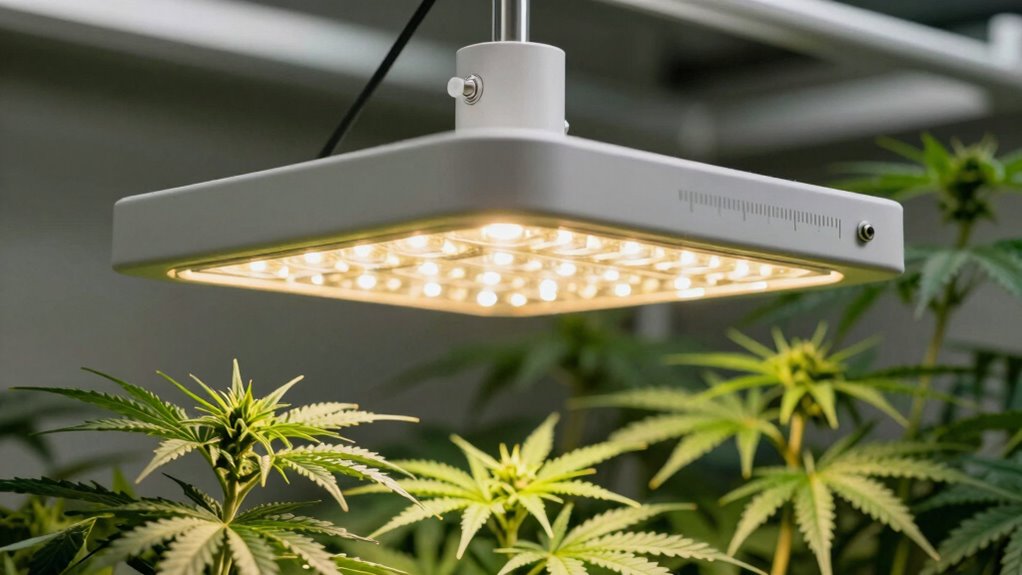
Several factors influence the ideal height of your grow light, ensuring your plants receive the right amount of light without risk of damage. First, plant growth stage matters—seedlings need closer light, while mature plants can handle higher positions. Second, soil testing informs nutrient levels, affecting how much light your plants require for maximum photosynthesis. Third, pest management is essential—overly close lights can stress plants, making them more vulnerable. Fourth, the type of grow light impacts height; LED lights generally need to be closer than HPS lamps. Always monitor plant responses and adjust accordingly. Additionally, understanding the spectral output of your grow light can help optimize plant health at various heights. Being aware of light intensity and how it interacts with plant development helps you maintain the perfect balance, promoting healthy growth and minimizing stress or damage. Properly managing light distribution is also crucial to ensure even coverage across your grow space. Recognizing how light spectrum influences plant growth can further refine your lighting strategy for optimal results. Paying attention to light penetration can help you adjust your setup for deeper canopy coverage and healthier overall development.
Common Mistakes When Hanging Grow Lights and How to Avoid Them
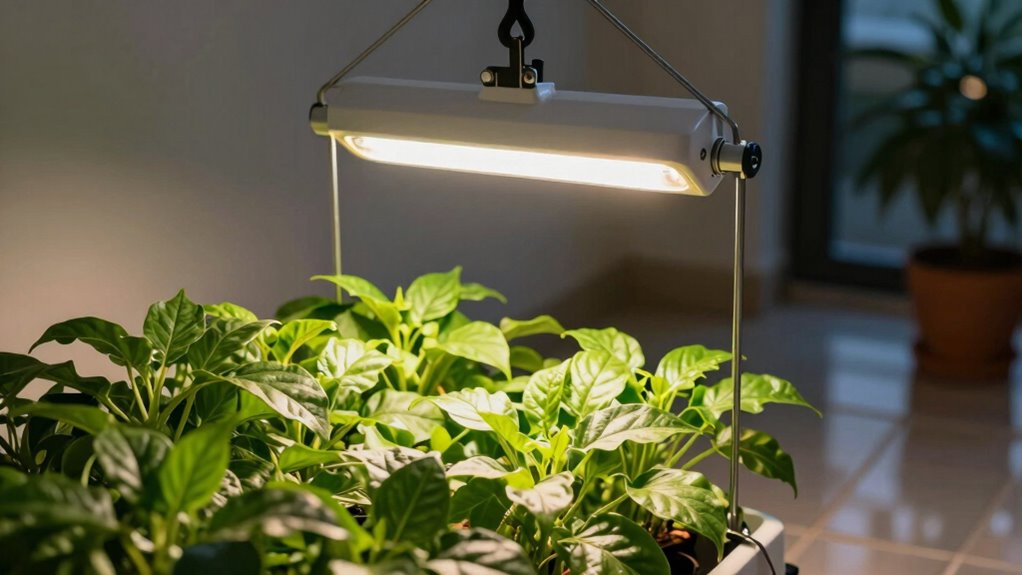
One common mistake is setting the light at the wrong distance, which can either burn your plants or leave them stretching for light. Ignoring how plant growth stages affect their light needs can lead to poor development. Additionally, neglecting proper light coverage results in uneven growth and wasted energy. Being aware of the benefits of curiosity about plant behavior can help you better understand and adjust your lighting setup for optimal growth.
Incorrect Light Distance
Hanging grow lights at the wrong distance is a common mistake that can hinder your plants’ growth. Too close, and you risk light burn; too far, and your plants won’t get enough light. Here’s how to avoid it:
- Check the light spectrum to verify it’s suitable for your plant’s growth stage—some spectrums need closer distances.
- Adjust based on power wattage; higher wattage lights should be hung higher to prevent damage.
- Observe plant response—stretching indicates lights are too far, while leaf burn signals they’re too close.
- Follow manufacturer guidelines for recommended hanging heights, but customize based on your plant’s growth and environment.
Getting the distance right maximizes light efficiency and promotes healthy growth.
Ignoring Plant Growth Stages
Ignoring your plant’s growth stages when hanging grow lights can lead to suboptimal development or even damage. During the seedling phase, lights should be closer to avoid stretching, but once plants enter their vegetative stage, raising the lights helps prevent heat stress. Failing to adapt height according to growth stages can hinder soil nutrition uptake and slow growth. Additionally, neglecting these stages can make plants more vulnerable to pests, as stressed plants are easier targets. Properly monitoring and adjusting the grow light height ensures your plants receive the right intensity at each stage, promoting healthy soil nutrition absorption and reducing pest problems. Ignoring growth stages compromises plant health, so stay attentive and modify your lighting setup as your plants develop.
Neglecting Light Coverage
Even if you hang your grow lights at the correct height, neglecting proper light coverage can still limit your plants’ growth. Making certain of even light distribution is essential for optimal development. In a grow tent, uneven coverage can cause some plants to stretch or become weak. To avoid this mistake, consider these points:
- Check the light spectrum to make sure it covers the entire canopy evenly.
- Use reflective materials inside your grow tent to bounce light where needed.
- Adjust the light angle or use multiple fixtures for uniform coverage.
- Regularly monitor plant health to identify areas with insufficient light.
A Step-by-Step Guide to Setting the Correct Grow Light Height

Setting the correct height for your grow light is essential to guarantee your plants receive the best energy without causing damage. Start by checking the manufacturer’s recommended distance, usually listed on the light’s packaging. Adjust the light gradually, monitoring your plants for signs of stretching or scorching. Keep in mind that proper soil aeration supports healthy root growth, which in turn helps plants tolerate light stress better. As you position your grow light, consider pest management; a well-lit, properly spaced setup discourages pests that thrive in dark, damp areas. Regularly reassess and tweak the height as plants grow, ensuring they stay within the ideal range. This careful setup promotes healthy growth, soil health, and minimizes pest problems.
Frequently Asked Questions
Can Different Plant Species Require Different Grow Light Heights?
Yes, different plant species require different grow light heights because each species has unique needs for light intensity. You should adjust the hanging height based on the plant’s specific requirements to guarantee they get enough light without causing stress or damage. For example, some plants thrive with closer lights, while others need more distance. Monitoring your plants’ health helps you find the perfect light height for maximum growth.
How Often Should I Check and Adjust My Grow Light Height?
You should check and adjust your grow light height at least once a week. Studies show that improper light spectrum and height can cause plant stretch, reducing yield. Regularly monitoring guarantees the light isn’t too close or too far, promoting healthy growth. Adjust as needed, especially when plants grow taller or show signs of stretching. Consistent checks help maintain ideal light conditions for your plants’ development.
Does Grow Light Hanging Height Affect Energy Consumption?
Yes, grow light hanging height affects energy consumption because it influences light intensity and energy efficiency. When your light is too close, it uses more energy to produce maximum light, potentially wasting power. Conversely, hanging it at the right height guarantees ideal light delivery without unnecessary energy use. Adjusting the height properly helps maximize light intensity, making your grow setup more energy-efficient and cost-effective.
What Tools Can Help Measure the Optimal Grow Light Height?
You can use measurement tools like a ruler, tape measure, or a light meter to find the perfect light distance. These tools help you gauge the ideal grow light height, ensuring your plants get enough light without overheating. By accurately measuring, you prevent damage, promote healthy growth, and maximize yield. Trust these measurement tools to keep your grow light at the best height, giving your plants the best environment to thrive.
How Does Grow Light Height Influence Plant Flowering and Fruiting?
When you adjust grow light height, it directly affects plant flowering and fruiting. A light spectrum that’s too intense or too close can cause plant stress, leading to poor flowering or fruit development. Conversely, if the light’s too far, plants may stretch and produce weak flowers. Finding the right height guarantees ideal light spectrum exposure, promotes healthy flowering, and minimizes stress, resulting in better fruit yields and overall plant health.
Conclusion
Think of your grow light as the sun guiding your plants’ growth. When hung too high or too low, it’s like giving them too little or too much sunlight—both can stunt development. I once watched a friend struggle with her plants until she found the perfect height, and they thrived. Remember, adjusting your light isn’t a one-time task; it’s a continuous dance. Keep your plants in the sweet spot, and they’ll reward you with lush, healthy growth.
Fall yard work Picks
leaf blowers
As an affiliate, we earn on qualifying purchases.