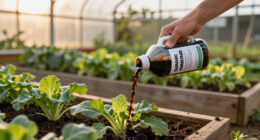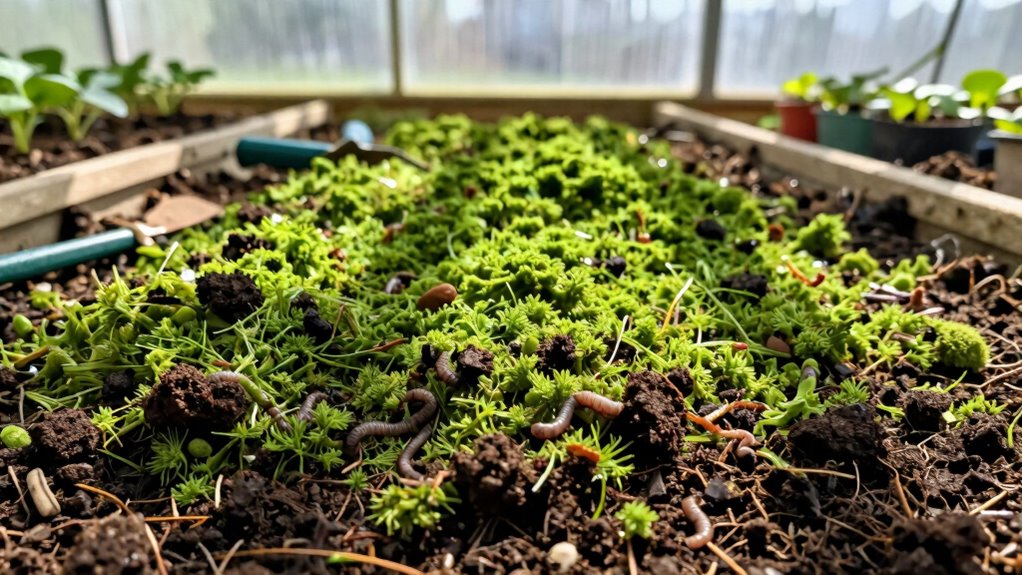
To make your greenhouse soil work harder, focus on balancing your compost with a mix of green (high nitrogen) and brown (high carbon) materials, and turn it regularly to aerate and speed up decomposition. Keep moisture levels ideal—like a damp sponge—and guarantee proper ventilation to prevent odors. Constant additions of rich compost boost soil fertility and promote healthy plant growth. Keep up this simple but effective trick, and you’ll open even better soil vitality for your plants.

Get garden gear delivered free with Prime
- Fast, free delivery on millions of items
- Prime Video, Amazon Music and more included
- Member-only deals all year
Key Takeaways
- Incorporate a diverse mix of green and brown materials to create nutrient-rich, well-balanced compost for enhanced soil activity.
- Regularly turn and aerate compost to accelerate decomposition and boost microbial activity in the soil.
- Apply compost in layers and mix thoroughly to improve soil aeration and nutrient availability.
- Maintain optimal moisture levels like a damp sponge to support active microbial processes.
- Use mature, dark, crumbly compost consistently to maximize soil fertility and plant growth in the greenhouse.
As an affiliate, we earn on qualifying purchases.
How Composting Improves Greenhouse Soil Fertility
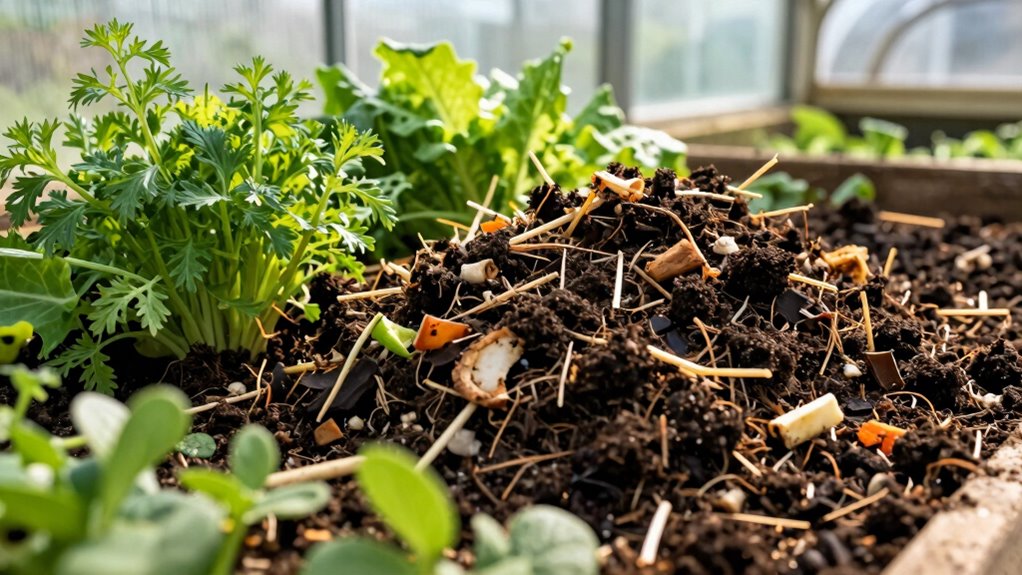
Composting substantially boosts the fertility of greenhouse soil by enriching it with essential nutrients. As organic matter breaks down, it nurtures the soil microbiome, encouraging beneficial microbes to thrive. These microbes play a key role in nutrient cycling, transforming organic materials into forms plants can easily absorb. This process enhances soil structure, increases moisture retention, and supplies indispensable nutrients like nitrogen, phosphorus, and potassium. When you incorporate compost into your greenhouse soil, you promote a healthy environment where plants grow stronger and more resilient. The active soil microbiome accelerates nutrient availability, reducing the need for synthetic fertilizers. Overall, composting creates a dynamic, self-sustaining ecosystem that keeps your greenhouse soil fertile and productive over time.
Choosing the Best Compost Materials for Your Greenhouse
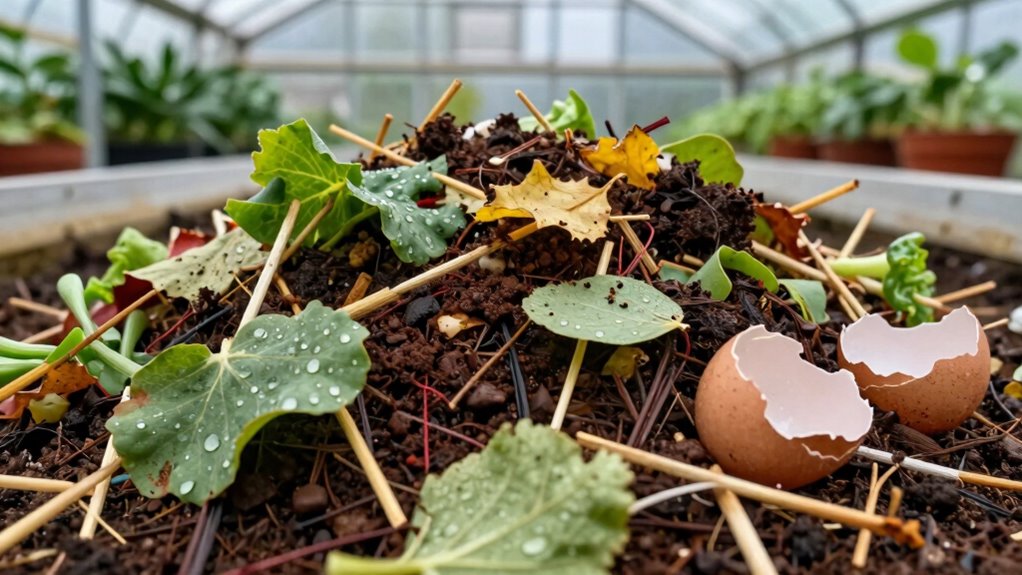
Choosing the right materials for your compost is key to creating rich, healthy soil in your greenhouse. Focus on plant nutrient-rich ingredients like fruit and vegetable scraps, coffee grounds, and plant-based yard waste. Avoid materials that take longer to decompose or contain weeds or pesticides, as they can hinder compost maturity. Balance green materials (high nitrogen) with brown materials (high carbon) to promote active decomposition. Well-chosen materials guarantee your compost reaches maturity faster, providing essential nutrients for your plants. Mature compost has a dark, crumbly texture and a pleasant earthy smell, indicating it’s ready to improve your soil. Incorporating decomposition processes properly ensures your compost develops optimal quality more efficiently. Proper aeration and moisture levels also play a crucial role in speeding up compost maturation and maintaining soil health.
How to Make Compost at Home in 5 Easy Steps
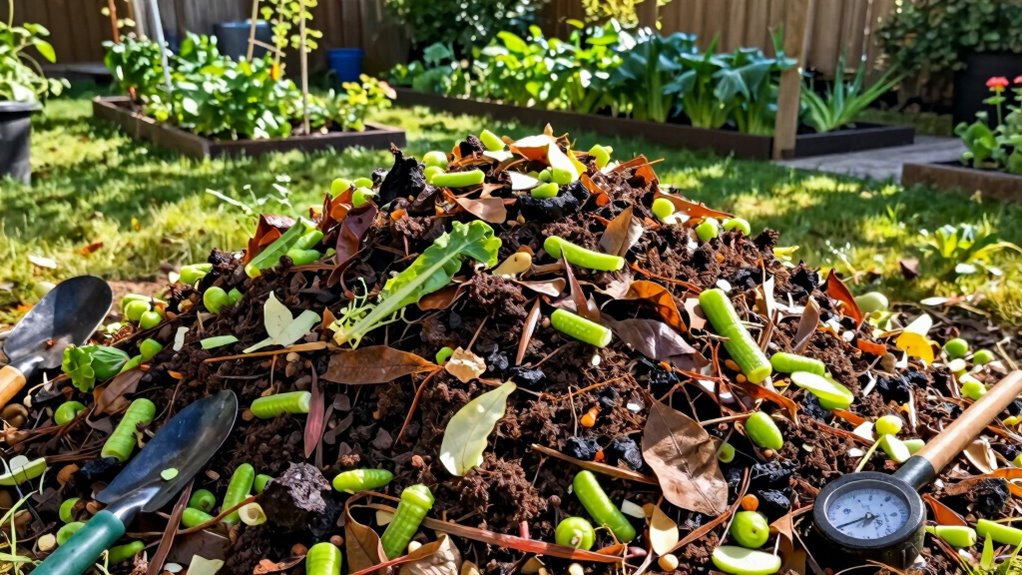
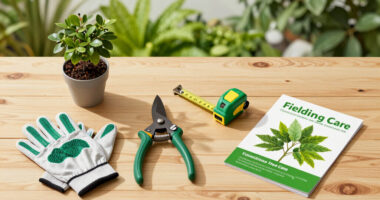
Starting your compost at home is simpler than you might think, and with just five easy steps, you can turn kitchen scraps and yard waste into rich soil for your greenhouse. First, gather your composting tools—like a compost bin, pitchfork, and gloves. Next, layer your greens (fruit and vegetable scraps) with browns (leaves, straw) in your bin, avoiding garden pests by covering food scraps well. Turn the compost regularly to aerate it and speed up decomposition. Keep the moisture level consistent, like a damp sponge. Incorporate natural pest control methods, such as using native plants to promote biodiversity, to keep your compost healthy. Additionally, understanding composting techniques can help optimize the process and produce better soil. Monitoring contrast ratio during composting is important to maintain proper moisture and aeration levels, which can be improved with proper management practices. Paying attention to cloud cover and sunlight can also influence microbial activity and decomposition rates. Finally, wait until the material turns dark and crumbly before using it in your greenhouse. This simple process minimizes pests and creates nutrient-dense compost that boosts your plants’ growth.
Incorporating Compost Into Your Greenhouse Soil Effectively
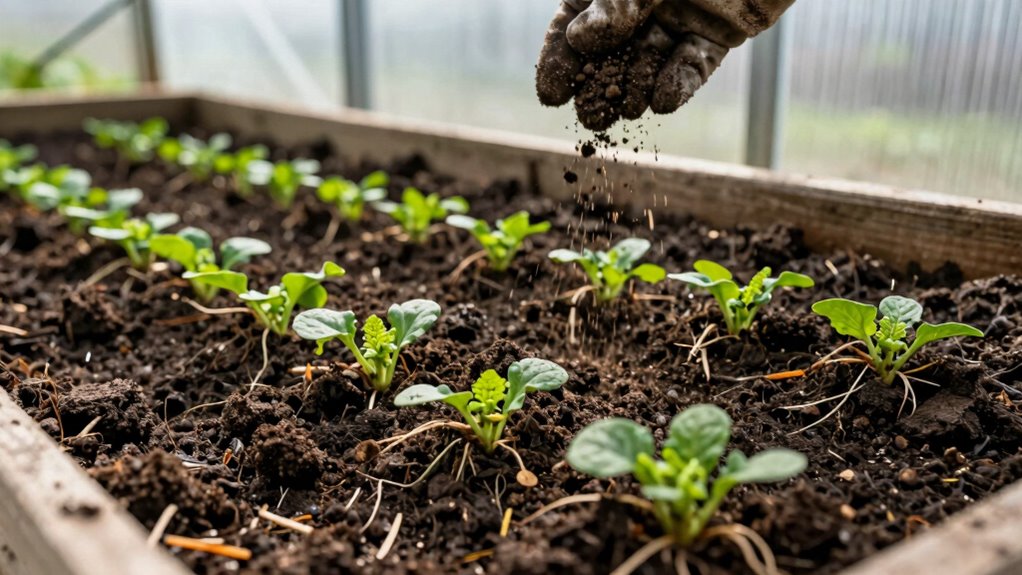
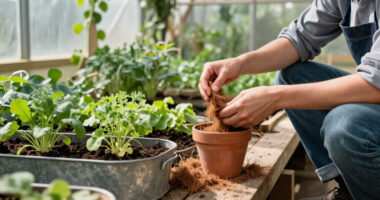
Once your compost is ready, the next step is incorporating it into your greenhouse soil to maximize its benefits. To guarantee healthy plant growth, focus on improving soil aeration by mixing compost thoroughly into the existing soil. This prevents compaction and promotes better oxygen flow to plant roots. Use compost layering by spreading a layer of compost on top of your soil before gently mixing it in. This technique enhances nutrient availability and encourages microbial activity. Avoid over-compactment by gently turning the soil and compost together, which creates a loose, well-draining environment. Proper incorporation ensures your greenhouse soil remains rich, aerated, and primed for vigorous plant growth, making your compost work harder for you. Additionally, understanding the soil health principles can help you maintain a thriving, productive greenhouse environment. Incorporating metabolic health concepts can further optimize your soil management practices for overall plant vitality. Developing a soil management plan can support these practices and provide ongoing guidance for soil health maintenance. Regularly monitoring soil nutrient levels can help you adjust your composting strategy to maintain optimal fertility and plant growth.
Troubleshooting Common Greenhouse Composting Problems
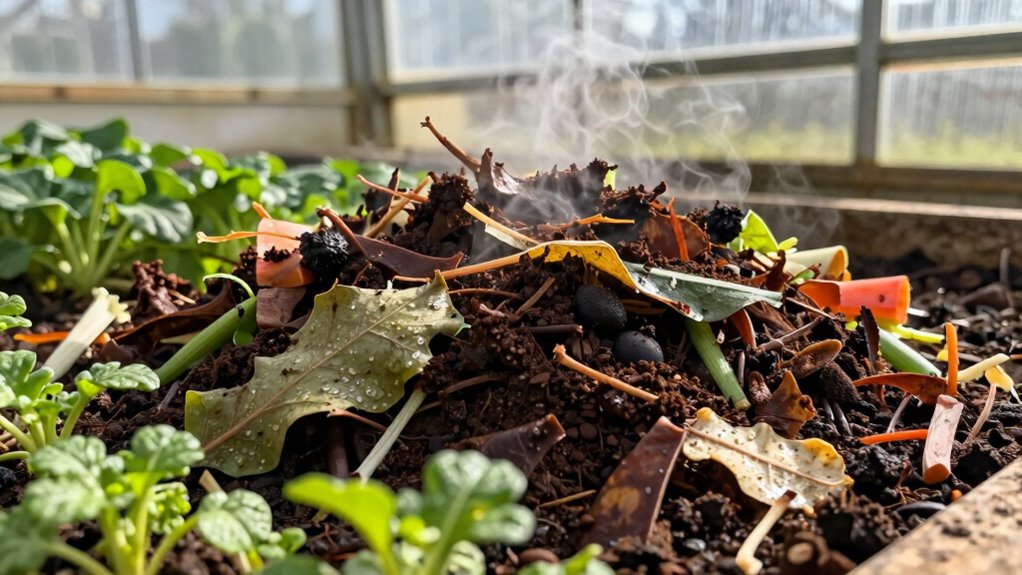
Greenhouse composting can sometimes face issues like foul odors, slow decomposition, or pest problems, but many of these are preventable with proper management. To fix foul odors, check compost bin ventilation—ensure air flows freely. If decomposition is slow, balance your moisture management; keep the compost moist but not soaked. Pests often invade when food scraps are exposed or moisture levels are off, so covering the compost and maintaining proper ventilation helps deter pests. Use this table to troubleshoot common issues:
| Problem | Solution |
|---|---|
| Foul odors | Improve compost bin ventilation; turn compost regularly. |
| Slow decomposition | Adjust moisture; shred materials for faster breakdown. |
| Pest problems | Cover compost; avoid adding meat or dairy. |
| Excess moisture or dryness | Manage moisture; add dry materials or water as needed. |
Additionally, ensuring your compost materials are well-balanced in cycling skills and gear can help promote healthier decomposition. Proper temperature control within the compost pile further accelerates the breakdown process and prevents odor issues. Incorporating aeration techniques can significantly improve airflow and compost health. Regular monitoring of compost conditions can help identify issues early and maintain optimal decomposition rates. Properly managing these factors can also enhance the efficiency of composting, making the process quicker and more effective.
Year-Round Tips for Healthy, Active Greenhouse Compost
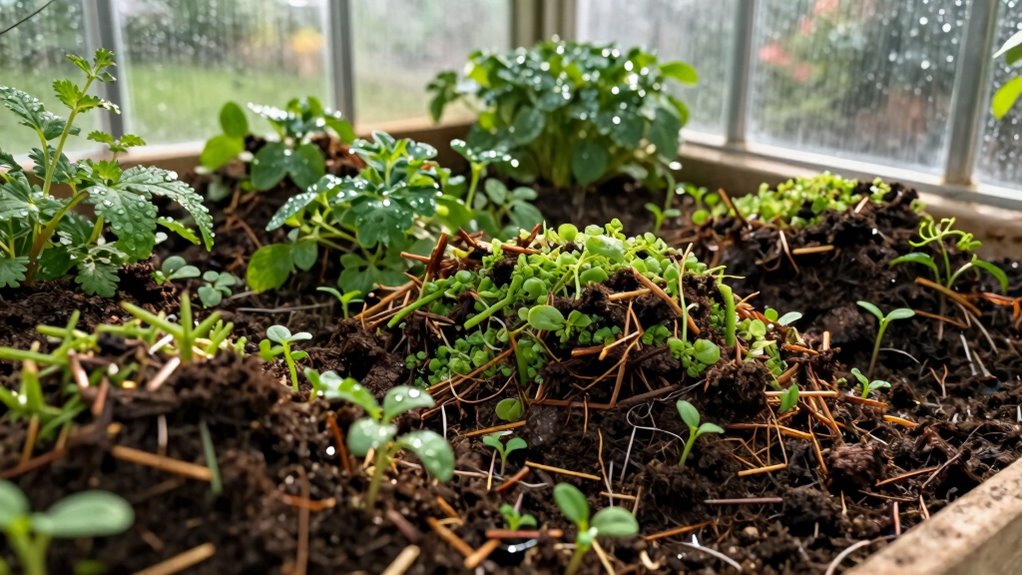
Are you making the most of your greenhouse compost year-round? To keep it active and healthy, adopt seasonal composting strategies that suit each time of year. During warmer months, turn your compost regularly to aerate it and promote microbial activity, aiding greenhouse pest management by reducing pest habitats. In colder seasons, insulate your compost pile with straw or leaves to maintain warmth and prevent it from slowing down. Keep moisture levels consistent to avoid compaction or drying out, which can hinder decomposition. Maintaining proper compost temperature is essential for rapid breakdown of materials and overall compost health. Monitor for pests or mold, taking quick action if needed. Incorporating artistic approaches such as visually appealing compost bins can encourage more consistent maintenance and engagement with your composting routine. By adjusting your composting techniques seasonally and maintaining ideal conditions, you’ll ensure your greenhouse soil stays nutrient-rich and productive, supporting healthy plant growth all year.
Frequently Asked Questions
Can Composting Reduce Greenhouse Gases in My Greenhouse?
Yes, composting can reduce your greenhouse gases by lowering your carbon footprint. When you compost organic waste, it promotes nutrient cycling, which improves soil health and reduces the need for synthetic fertilizers. This process minimizes methane emissions from landfills and captures carbon in the soil. By integrating composting into your greenhouse, you create a more sustainable environment, supporting healthier plant growth while actively combating climate change.
How Long Does It Take for Compost to Fully Break Down?
Compost typically takes anywhere from 3 to 6 months to fully break down, depending on factors like compost maturity and decomposition rate. To speed up the process, turn your compost regularly and keep it moist. As decomposition progresses, compost matures into rich, dark humus. Monitor temperature and aeration to guarantee efficient breakdown. Patience is key, but with proper care, you’ll have nutrient-rich compost ready to boost your greenhouse soil.
Is There an Ideal Compost Temperature for Greenhouse Plants?
The ideal compost temperature for greenhouse plants is around 135-160°F, which promotes ideal fermentation. Maintaining this temperature range accelerates decomposition and kills pathogens. You should regularly regulate temperature by turning the compost and monitoring it with a thermometer. Consistent temperature regulation ensures your compost heats up enough for effective breakdown without overheating, providing nutrient-rich soil that boosts your greenhouse plants’ health and growth.
Can I Compost Diseased Plant Material Safely?
You should avoid composting diseased plant material unless you can guarantee proper pathogen control. To maintain diseased plant safety, compost at high temperatures—around 140-160°F—for several days, which helps break down pathogens effectively. Turning the compost frequently promotes even heat distribution. If you’re unsure, it’s safer to discard diseased plants or use specialized composting methods designed for pathogen elimination, preventing the spread of disease in your greenhouse.
How Does Composting Impact Pest Management in Greenhouses?
Did you know composting can reduce greenhouse pests by up to 50%? When you compost properly, beneficial microbes flourish, enhancing pest suppression. These microbes outcompete harmful pests and pathogens, creating a healthier environment for your plants. By managing compost temperature and moisture, you support beneficial microbes’ activity, which naturally keeps pests at bay. This eco-friendly approach boosts pest management without relying on chemicals, making your greenhouse healthier and more productive.
Conclusion
With composting, you can turn everyday waste into a powerhouse for your greenhouse soil. By choosing the right materials and following simple steps, you’ll boost plant health and yields year-round. Remember, “A little effort goes a long way,” so stay consistent and troubleshoot promptly. Your greenhouse will thrive, and you’ll enjoy the rewarding process of nurturing your plants naturally. Keep at it—your green thumb will thank you!
Evergreen bestsellers Picks
bestsellers
As an affiliate, we earn on qualifying purchases.