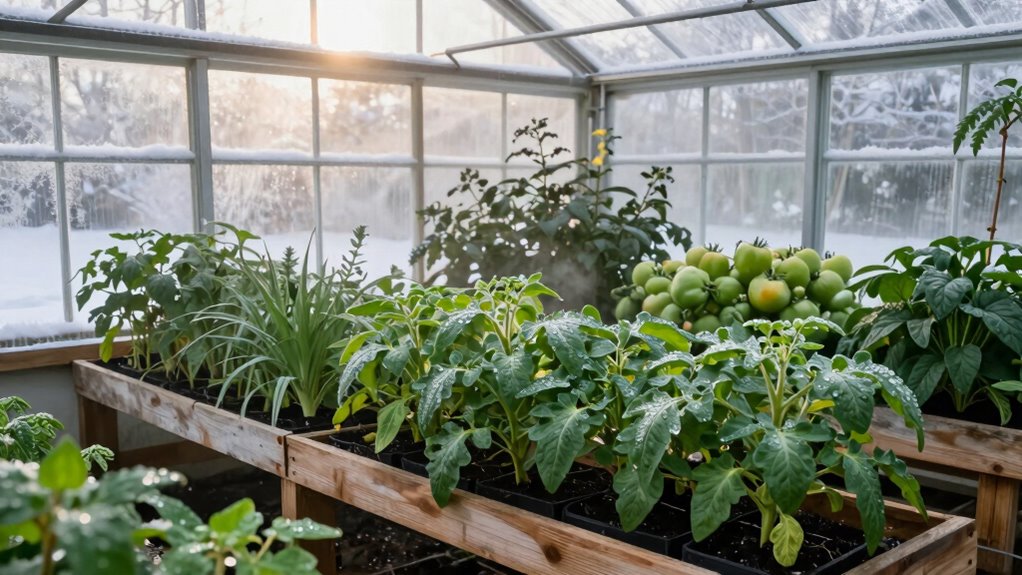
When the weather turns cold, you can still grow hardy vegetables, herbs, and greens in your greenhouse. Choose cold-tolerant crops like kale, spinach, Swiss chard, carrots, and radishes that thrive in lower temperatures. Herbs such as parsley, chives, and mint also do well indoors. To keep your crops healthy, manage temperature and humidity carefully and use insulation techniques. Keep exploring ways to optimize your greenhouse for a successful winter harvest.
Key Takeaways
- Plant cold-tolerant vegetables like kale, spinach, Swiss chard, carrots, turnips, and radishes.
- Grow hardy herbs such as parsley, chives, mint, and thyme indoors.
- Cultivate strawberries and other low-temperature fruit varieties suitable for winter.
- Use root vegetables like carrots and radishes that thrive in cooler conditions.
- Select cold-resistant flower varieties to maintain a vibrant greenhouse environment.

Macrout Wooden Cold Frame Greenhouse Cabinet Kit with Adjustable Shelf and Lockable Door, Fully Transparent Polycarbonate Greenhouse for Outdoor Indoor Use, 0718
- Enhanced Sunlight Transmission: Full transparent polycarbonate panels
- Customizable Shelf Height: Adjustable shelf for various plants
- Ventilated Roof Design: Openable roof with fixing bolts
As an affiliate, we earn on qualifying purchases.
As an affiliate, we earn on qualifying purchases.
Preparing Your Greenhouse for Winter Planting

As winter approaches, it’s essential to prepare your greenhouse to guarantee your plants stay healthy and thrive despite the cold. Start by focusing on indoor propagation to jump-start your crops early, giving them a head start before outdoor planting. Make certain your propagation trays and tools are clean to prevent disease. Soil sterilization is critical; it removes pests, fungi,, and bacteria that could harm your plants during winter. You can sterilize soil by solarizing it under direct sunlight or using heat treatments like steaming. These steps create a healthier environment, reducing the risk of infections and promoting strong root development. Proper preparation ensures your greenhouse remains a productive space, even in cold weather, and sets your plants up for successful growth. Creating healthy environments is key to maintaining productive greenhouses during winter months.
Which Crops Thrive in a Cold Greenhouse? A Grower’s Guide
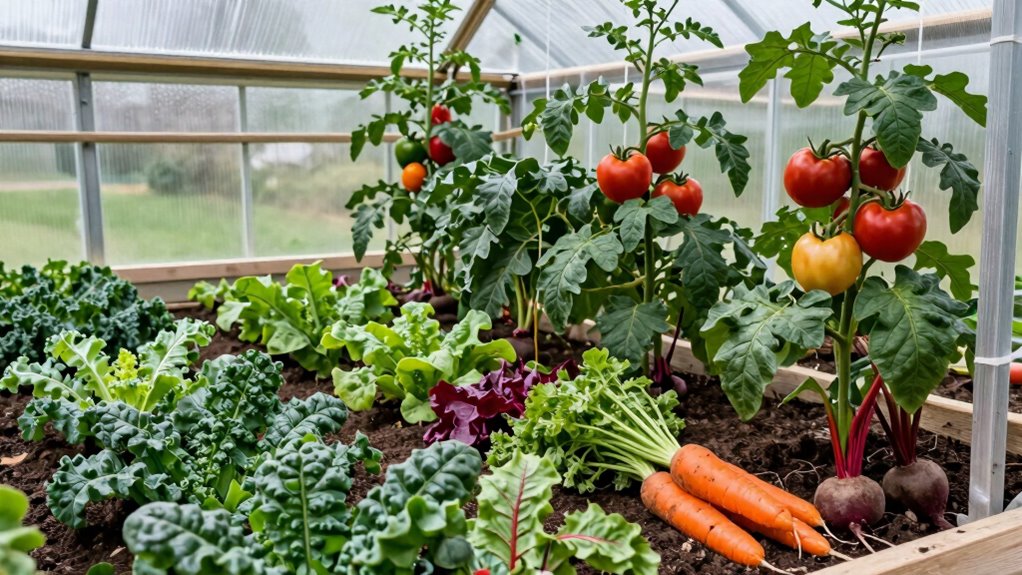
When the temperature drops, certain hardy vegetables and cold-tolerant herbs can still thrive in your greenhouse. These crops are specially suited to withstand lower temperatures, ensuring a steady harvest even in winter. Identifying the best options for your space helps maximize productivity and keeps your greenhouse productive year-round. Additionally, understanding the importance of contrast ratio in your setup can improve visual cues for plant growth under artificial lighting. Recognizing the signs of twin flame connection can also inspire patience and persistence during challenging growing seasons, much like nurturing resilient plants through cold weather. Incorporating Free Floating techniques, such as floating row covers or insulation mats, can further protect your plants from cold stress and extend your growing season. Paying attention to urban pursuits can provide ideas for integrating indoor and outdoor planting strategies that optimize space and light. Moreover, selecting crops with high cold tolerance can significantly boost your success in winter greenhouse gardening.
Hardy Vegetables for Cold
Several hardy vegetables can thrive in a cold greenhouse, allowing you to extend your growing season even when outdoor temperatures drop. Leafy greens like kale, spinach, and Swiss chard are excellent choices, as they tolerate cold weather well. Root vegetables such as carrots, turnips, and radishes can also grow steadily in cooler conditions. Additionally, some cold tolerant fruit, like strawberries, can be cultivated inside during winter, providing fresh harvests. Hardy flower varieties, while not vegetables, often support a healthy greenhouse ecosystem and can help protect tender plants. By choosing these resilient crops, you maximize your greenhouse’s productivity and enjoy fresh produce well into colder months. These hardy vegetables and plants form a reliable foundation for winter gardening success.
Cold-Tolerant Herbs
Cold-tolerant herbs can be valuable additions to your greenhouse during the winter months, providing fresh flavor and nutrition when outdoor gardening slows down. These cold tolerant herbs, such as parsley, chives, mint, and thyme, thrive in lower temperatures, making them perfect for winter herb gardening. They can withstand the chill and continue to grow indoors, giving you a steady supply of herbs even when outside conditions are harsh. Incorporating these resilient plants into your greenhouse to extend your growing season can also help you observe cryptid mysteries and other folklore phenomena that often inspire seasonal storytelling. Regularly monitor temperature and humidity levels to keep your herbs healthy. Understanding home safety measures can also ensure your greenhouse remains a secure environment for your plants during colder months. Implementing accessibility features like adjustable shelving and clear signage can make your greenhouse easier to manage for all users. Additionally, selecting cold-hardy varieties that are well adapted to low temperatures can maximize your success with winter gardening. With minimal effort, these hardy herbs will flourish, ensuring you have fresh ingredients for your winter meals. Transparency in cookie usage and data handling helps build trust and supports your ongoing gardening projects.
Top Cold-Hardy Vegetables for Your Winter Greenhouse
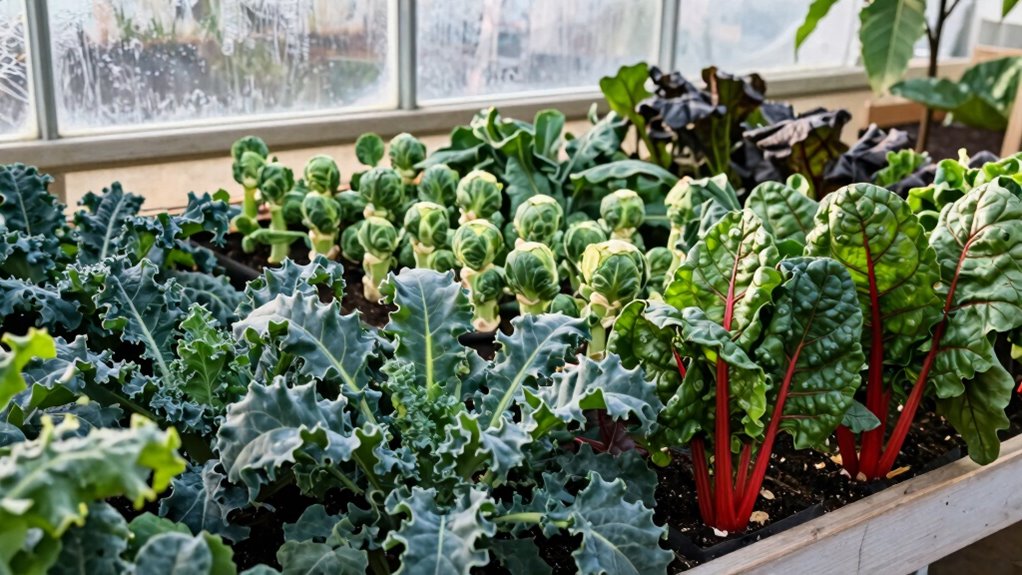
As winter approaches, choosing the right vegetables to grow in your greenhouse becomes essential for a successful season. Cold-hardy vegetables can withstand lower temperatures and extend your harvest. Consider these top options:
- Kale – resilient and nutrient-dense, it’s perfect for winter growing. Focus on plant disease prevention by ensuring good airflow and avoiding overcrowding.
- Brussels Sprouts – they thrive in cold weather, but proper soil nutrient management keeps them healthy and productive.
- Carrots – hardy root vegetables that tolerate cold, provided you keep the soil well-drained and free from excess moisture. Additionally, selecting cold-tolerant varieties can improve your chances of a bountiful harvest during the winter months. Understanding content formats can help you present your harvest results more effectively. Recognizing plant hardiness is also crucial for selecting vegetables that can survive the winter conditions in your greenhouse, especially when selecting appropriate crop varieties based on your local climate. To optimize your greenhouse environment, maintaining consistent temperature control is key to supporting the growth of these hardy vegetables.
Extend Your Growing Season With Winter Herbs and Greens
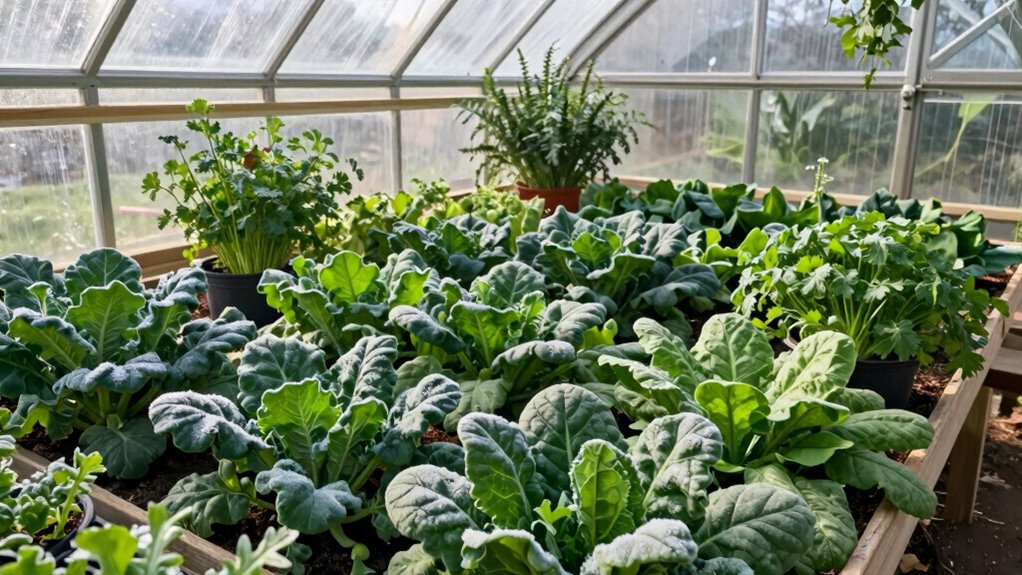
To maximize your greenhouse’s productivity during winter, focus on extending your growing season by planting hardy herbs and greens that thrive in low temperatures. Choose varieties like kale, spinach, and chard, which can handle chilly conditions. Regular indoor composting supplies rich nutrients, encouraging healthy growth and reducing waste. To prevent pests, implement good sanitation practices and keep an eye out for common invaders; healthy plants are less susceptible. Growing herbs like parsley, thyme, and cilantro inside your greenhouse provides fresh flavors year-round. These greens and herbs not only enhance your meals but also contribute to pest prevention by attracting beneficial insects and promoting plant health. Additionally, maintaining proper ventilation helps regulate temperature and humidity, creating an optimal environment for winter growth. Proper environmental controls can further optimize conditions and improve crop success. Implementing climate management techniques ensures your plants remain healthy despite colder outdoor temperatures. Monitoring temperature fluctuations and adjusting your setup accordingly can make a significant difference. Incorporating climate control systems can help maintain consistent conditions, increasing your winter crop yields. By carefully selecting hardy varieties and maintaining a clean environment, you can enjoy fresh produce throughout the winter.
Controlling Temperature and Humidity for Winter Greenhouse Crops
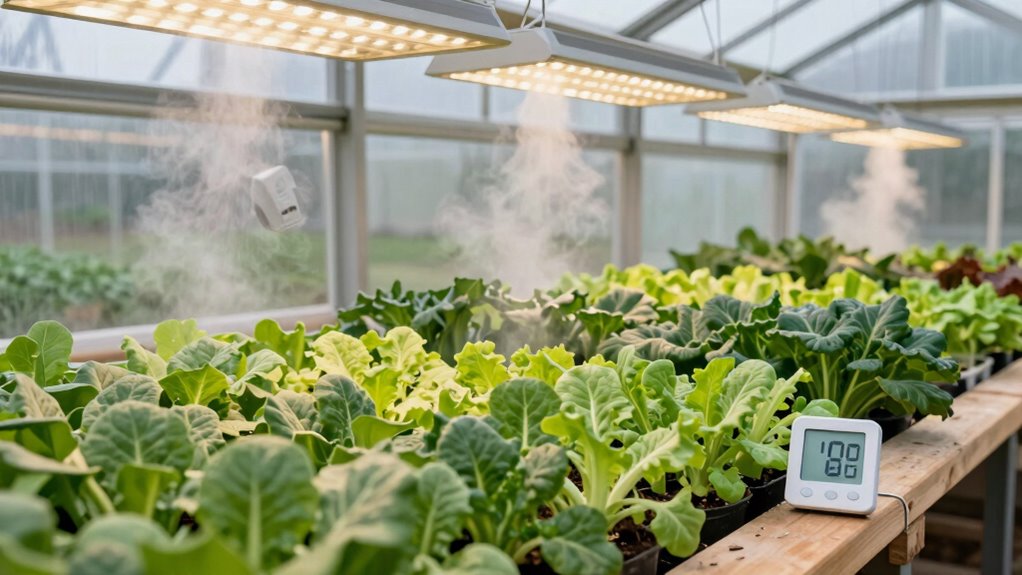
To keep your winter crops healthy, you need to manage your heating systems effectively and monitor humidity levels regularly. Proper insulation can help maintain consistent temperatures and reduce energy costs. Additionally, controlling indoor air quality by reducing microplastics in dust can contribute to healthier plant growth and a safer environment. Implementing air filtration systems can further improve indoor air quality by removing airborne pollutants. Ensuring good ventilation practices can also prevent the buildup of excess humidity, which is vital for preventing mold and pests. Regularly checking humidity levels helps maintain an optimal environment for your plants. By paying attention to these factors, you’ll create an ideal environment for your greenhouse plants during cold weather.
Managing Heating Systems
Managing your greenhouse’s heating system is essential for maintaining the right temperature and humidity levels during the cold months. To do this effectively, consider the following:
- Install solar panels to power your heating system sustainably, reducing energy costs and increasing efficiency.
- Use automated vents to regulate temperature and prevent overheating or excessive humidity, especially during sunny days.
- Incorporate thermostats with precise controls to keep temperatures steady, avoiding sudden fluctuations that stress plants.
Monitoring Humidity Levels
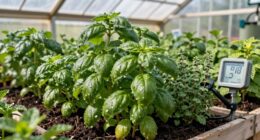
Keeping humidity levels in check is essential for healthy winter greenhouse crops, especially when temperatures drop outside. Proper humidity control helps prevent issues like mold, rot, and plant stress. To monitor humidity effectively, use a hygrometer to keep track of moisture levels daily. Maintain ideal humidity between 50-70%, adjusting with ventilation, dehumidifiers, or misting systems as needed. Moisture management is key; too much humidity encourages fungal growth, while too little can cause plants to dry out. Regularly check for condensation on greenhouse surfaces and adjust airflow accordingly. Ensuring consistent humidity creates a stable environment that supports healthy plant growth through the cold months, reducing stress and increasing resilience. Proper monitoring allows you to respond quickly to changes, promoting robust winter crops.
Insulation Techniques
Insulating your greenhouse is essential for maintaining stable temperatures and humidity levels during cold months. Proper insulation helps retain heat and reduces energy costs. To improve insulation, consider these techniques:
- Use insulation materials like foam boards or bubble wrap on walls and windows to block drafts and conserve heat.
- Install thermal curtains around your plants and over greenhouse openings at night to trap warm air inside.
- Seal all gaps and leaks with weatherstripping or caulk to prevent cold air from entering and warm air from escaping.
These methods create a more controlled environment, protecting your crops from extreme cold and humidity fluctuations. A well-insulated greenhouse leads to healthier plants and a more efficient winter growing season.
Common Mistakes to Avoid When Growing in a Cold Greenhouse
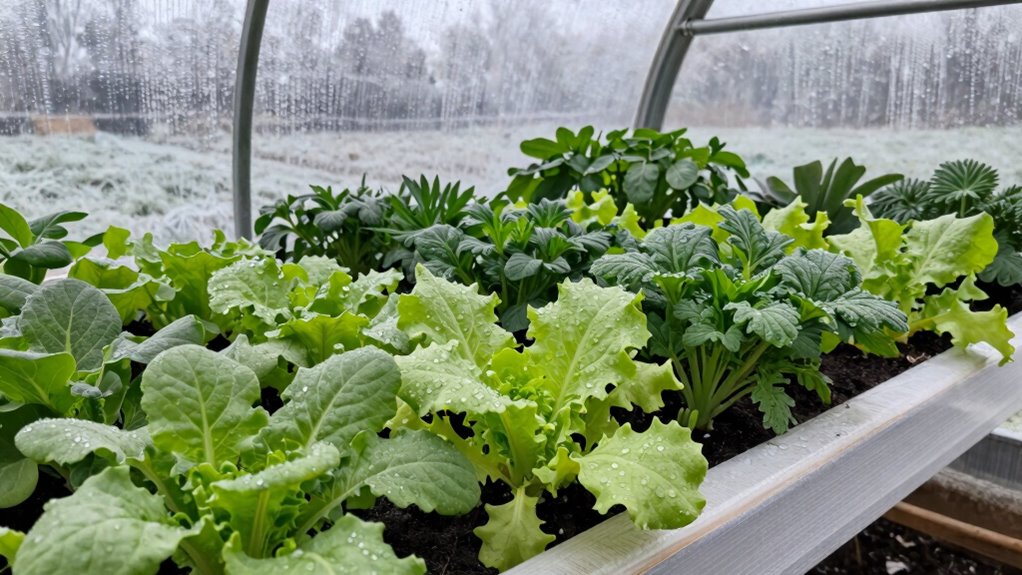
Growing in a cold greenhouse can be rewarding, but it’s easy to make mistakes that hinder your plants’ success. One common mistake is neglecting pest prevention, which can quickly damage crops in a confined space. Regularly inspect plants and keep the environment clean to reduce pest issues. Additionally, failing to soil sterilize before planting can introduce diseases or pests that spread easily in cooler temperatures. Always sterilize your soil or start with fresh, disease-free compost to minimize risks. Overlooking these steps can lead to poor growth or crop failure. Remember, maintaining a clean, pest-free environment and ensuring healthy soil are vital for thriving plants in a cold greenhouse. Avoid these mistakes to give your crops the best chance to flourish during winter.
Caring for Your Winter Greenhouse Crops: Tips and Tricks
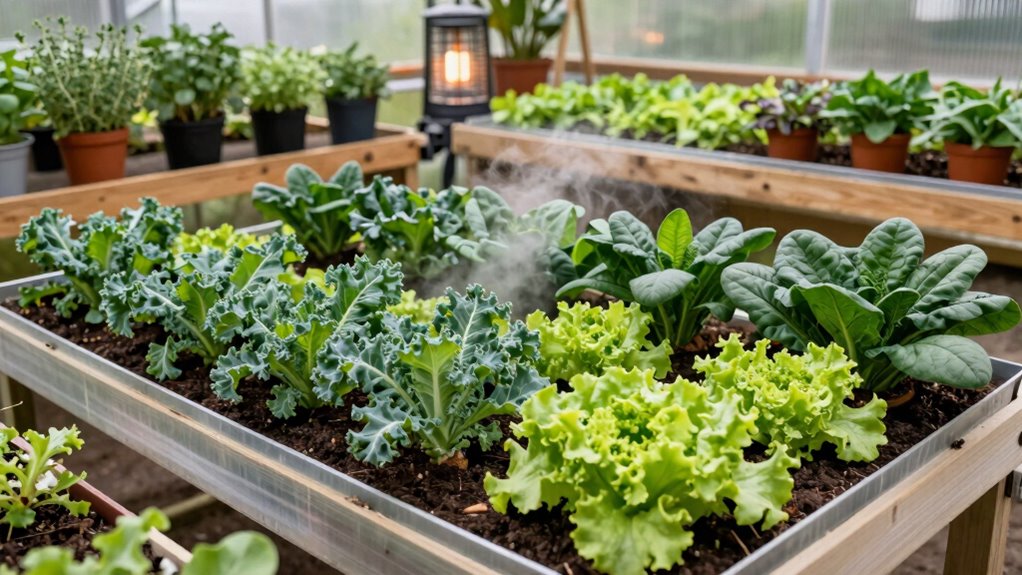
To guarantee your winter greenhouse crops thrive, you need to pay close attention to their specific care needs during colder months. Proper indoor lighting is essential; supplement natural light with grow lights to make certain plants get enough energy. Regular pest control is also crucial, as pests can quickly infest in warm, protected environments—inspect plants frequently and use organic methods when possible. Additionally, monitor temperature and humidity levels to prevent diseases and stress.
Here are three key tips:
- Use grow lights to maintain adequate indoor lighting for healthy growth.
- Implement a pest control routine, checking plants often for signs of unwanted visitors.
- Keep temperatures stable and humidity balanced to avoid plant stress and disease.
When to Move Your Plants Outdoors in Spring
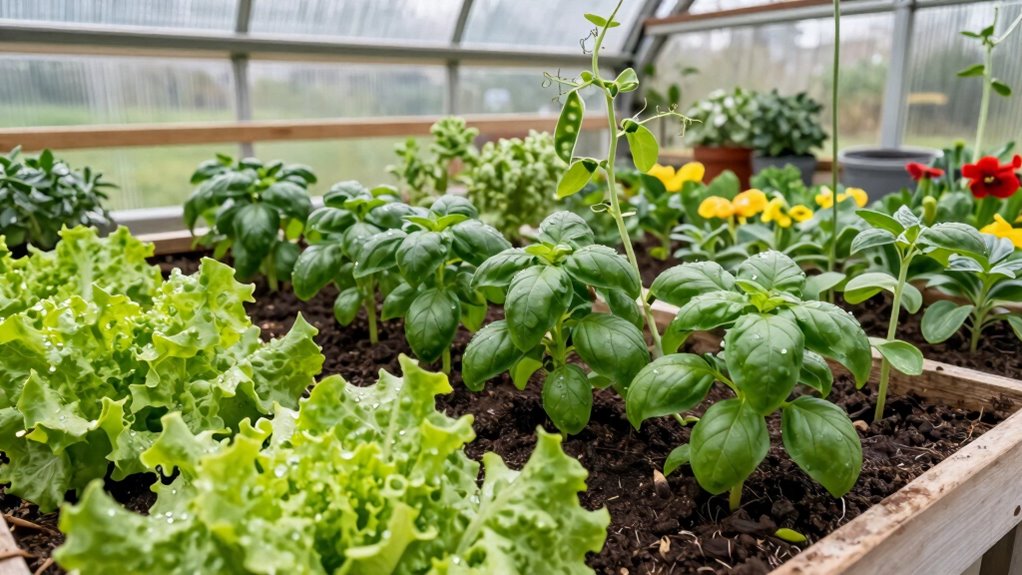
As spring approaches and the danger of frost diminishes, it’s the right time to start shifting your plants outdoors. Before doing so, check their plant hardiness zones to ensure they can handle local conditions. Gradually introduce your plants outside by placing them in a sheltered spot during the day, then bringing them back inside at night to prevent frost damage. Keep an eye on the weather forecast—if frost warning alerts appear, provide additional frost protection with row covers or blankets. Wait until nighttime temperatures stay consistently above freezing before fully relocating your plants outdoors. This careful progression helps your plants adapt to outdoor conditions, minimizes shock, and guarantees healthy growth as they settle into their new environment.
Frequently Asked Questions
How Can I Prevent Frost Damage Inside My Greenhouse?
To prevent frost damage inside your greenhouse, you should implement effective frost protection and insulation techniques. Use heaters or heat mats during cold nights to maintain consistent temperatures. Insulate your greenhouse with bubble wrap or thermal blankets to retain heat. Additionally, sealing gaps and vents helps prevent cold drafts. Regularly monitor the temperature with a thermometer, and take quick action if it drops too low, ensuring your plants stay safe and healthy.
What Are the Best Lighting Options for Winter Greenhouse Crops?
You should choose artificial lighting, like LED or fluorescent grow lights, to support your winter greenhouse crops. These lights provide the necessary spectrum for healthy growth when natural light is limited. Make certain you maintain an appropriate light duration—usually 12-16 hours daily—to mimic summer conditions. Adjust the timing based on plant needs, and keep the lights at the right distance to avoid heat stress, promoting ideal growth during colder months.
How Often Should I Water Plants in a Cold Greenhouse?
You should water your plants in a cold greenhouse based on their specific needs, typically every 2-3 days, but always check the soil moisture first. Maintain a consistent watering schedule, avoiding overwatering to prevent root rot. Use humidity control techniques like ventilation or a humidifier to keep the environment balanced. Adjust watering frequency if the air feels dry or if plants show signs of stress.
Are There Specific Soil Amendments for Winter Planting?
Think of your soil as the foundation of a winter fortress. You should perform soil testing to understand its needs, then enrich it with organic amendments like compost or aged manure to boost nutrients and improve structure. These amendments act like a warm blanket, helping your plants withstand the cold. Properly amended soil creates a nurturing environment where winter plants can thrive, even amidst chilly days.
How Do I Monitor and Adjust Greenhouse Temperature Effectively?
You should regularly monitor your greenhouse temperature with a reliable thermometer. Adjust ventilation strategies like opening vents or installing exhaust fans to prevent overheating or cold drafts. Use humidity control tools, such as dehumidifiers or misting systems, to maintain ideal moisture levels. Keep an eye on temperature fluctuations during different times of the day, and make prompt adjustments to guarantee a stable environment that supports healthy winter plant growth.
Conclusion
As you prepare your greenhouse for winter, remember that over 60% of home gardeners report increased yields by extending their growing season indoors. By choosing cold-hardy crops and managing temperature and humidity, you’ll enjoy fresh vegetables and herbs year-round. Keep an eye on common mistakes, and don’t forget to gradually shift your plants outdoors in spring. With these tips, you’ll turn your greenhouse into a productive winter oasis, no matter how chilly outside.