
Creating an off-grid greenhouse is easier than you may think, thanks to simple DIY designs, affordable materials, and renewable energy options like solar power. With smarter water management, natural ventilation, and durable structures, you can grow lush vegetables year-round without relying on traditional resources. Plus, inventive techniques help overcome common challenges while keeping costs low. If you want to discover how to make your off-grid greenhouse a reality, you’re in the right spot to find out more.
Key Takeaways
- Off-grid greenhouses can be built with simple, affordable materials tailored to local environments.
- Renewable energy and rainwater harvesting support self-sufficient, eco-friendly operations.
- Natural ventilation and insulation help regulate temperature without complex systems.
- Diverse propagation and crop management optimize productivity year-round with minimal external input.
- Creative, resourceful designs ensure durability and resilience in challenging environmental conditions.

Year Round Solar Greenhouse & Off Grid Solar Power: 2-in-1 Compilation Make Your Own Solar Power System and build Your Own Passive Solar Greenhouse Without Drowning in a Sea of Technical Jargon
As an affiliate, we earn on qualifying purchases.
As an affiliate, we earn on qualifying purchases.
Why Are Off-Grid Greenhouses a Sustainable Choice?
Off-grid greenhouses are a sustainable choice because they operate independently of traditional energy and water sources, reducing environmental impact. You can enrich the soil naturally with compost and organic matter, lowering the need for chemical fertilizers. This improves soil health and promotes better plant growth. Pest control becomes more manageable through integrated methods like introducing beneficial insects or using natural repellents, which minimize harmful chemicals. These practices help maintain a balanced ecosystem within your greenhouse, reducing reliance on external inputs. By focusing on soil enrichment and eco-friendly pest control, you support biodiversity and lower your carbon footprint. Overall, off-grid greenhouses let you grow sustainably while protecting the environment and conserving resources.
How to Choose the Best Location and Design for Your Off-Grid Greenhouse
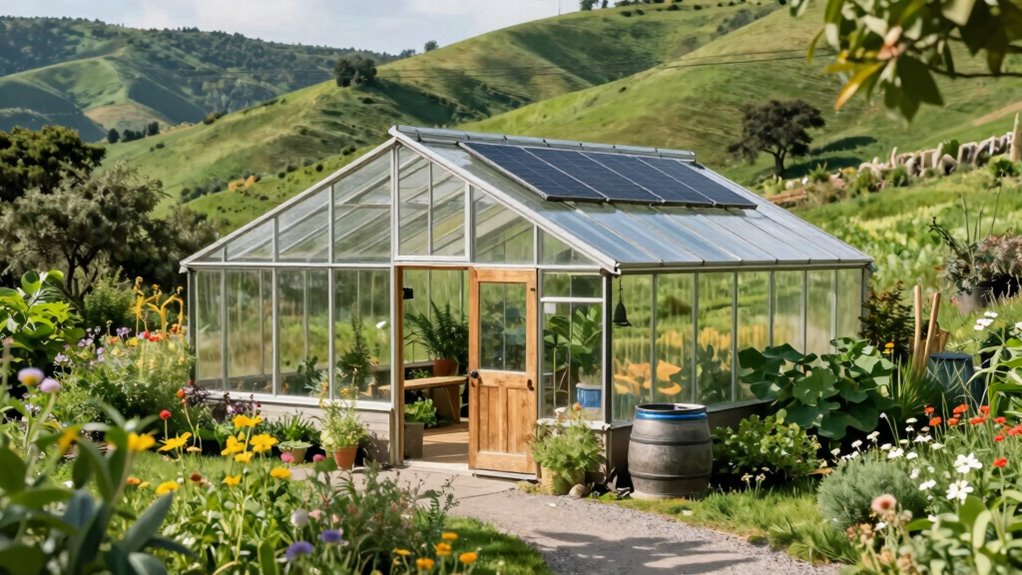
Choosing the right location and design for your greenhouse is essential to ensuring it functions efficiently and sustainably. For urban gardening, select a spot with maximum sunlight exposure, ideally facing south, to optimize plant growth. Keep it sheltered from strong winds and excessive shading from nearby structures or trees. Proper design should include good insulation and ventilation to maintain consistent temperatures, reducing energy needs. Consider pest control from the start by choosing a location that minimizes exposure to common pests and incorporating physical barriers. Elevating the greenhouse can also help prevent pest entry. Thoughtful placement and design help you create a resilient, low-maintenance environment, making it easier to grow healthy plants off-grid while minimizing pest issues and maximizing space. Additionally, selecting a best vacuum can assist in maintaining a clean, pest-free environment inside your greenhouse. Using off-grid energy systems can further enhance sustainability by reducing reliance on traditional power sources. Ensuring proper water management is also crucial for maintaining plant health and reducing water damage risks, especially in designs that incorporate insulation and ventilation to optimize internal climate control. Properly planning for climate considerations can also make your off-grid greenhouse more adaptable to changing weather conditions.
What Key Parts Do You Need to Build Your Off-Grid Greenhouse?
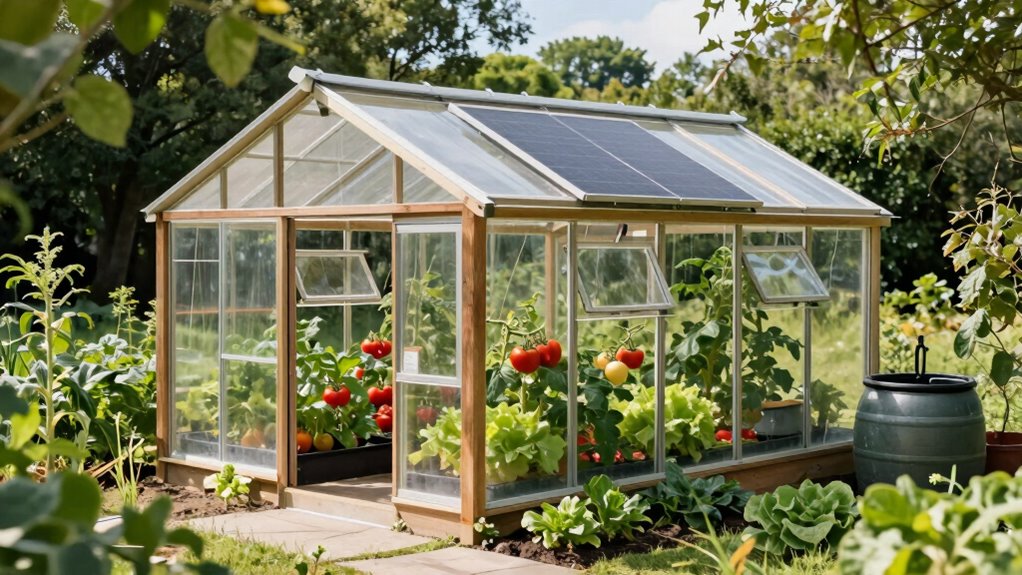
Building your off-grid greenhouse requires selecting key components that guarantee durability, efficiency, and independence. First, choose sturdy, well-insulated framing materials like galvanized steel or treated wood to withstand weather and last for years. For the growing environment, install a reliable, solar-powered ventilation and heating system to regulate temperature. Soil health is vital, so include composting bins and organic amendments to improve fertility naturally. To keep pests at bay without chemicals, incorporate physical barriers such as fine mesh screens and companion planting strategies. Durable, pest-resistant glazing or plastic covers are essential for light transmission and protection. Additionally, ensuring proper temperature regulation is crucial for optimal plant growth and can be achieved through efficient heating and cooling solutions. Incorporating sustainable practices like rainwater harvesting can further enhance your greenhouse’s independence and eco-friendliness. Regular monitoring and maintenance of your systems, including solar panels and irrigation setups, will help ensure long-term efficiency and sustainability. Proper kitchen gear care and eco-friendly disposal methods can also help reduce waste and promote sustainability in maintaining your greenhouse. Remember, maintaining a healthy soil ecosystem is key to supporting robust plant growth and reducing the need for external inputs.
How to Manage Water and Ventilation Off the Grid
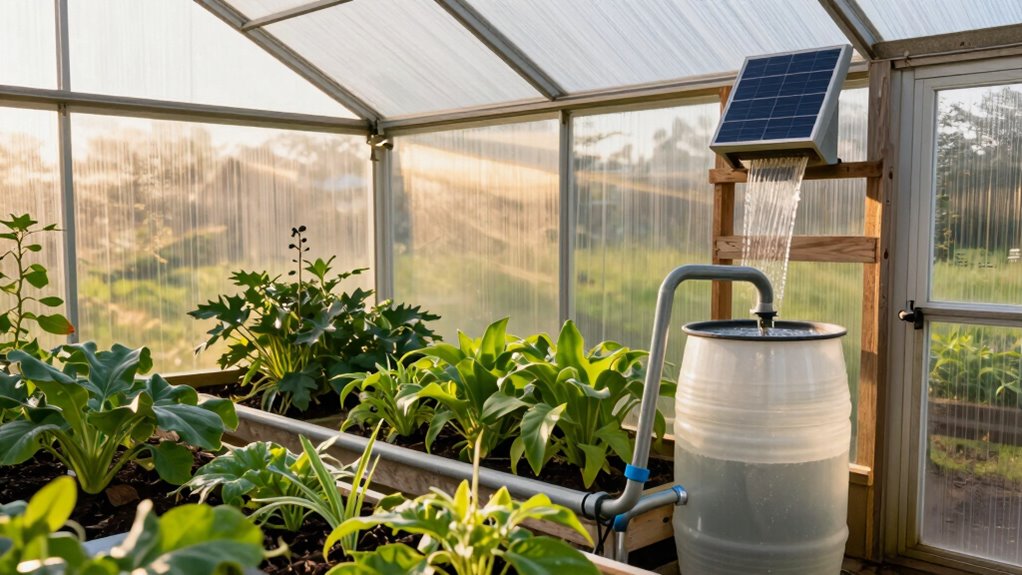
Managing water and ventilation off the grid requires smart strategies like collecting rainwater and using natural airflow to keep your greenhouse comfortable. You can maximize efficiency with simple water-saving techniques and by designing vents that promote good air circulation. These approaches help you stay self-sufficient while maintaining a healthy environment for your plants. Incorporating clear, actionable guidance on your setup can further enhance your greenhouse’s sustainability and performance. Additionally, understanding off-grid water management methods can ensure a reliable water supply even in dry seasons.
Rainwater Collection Systems
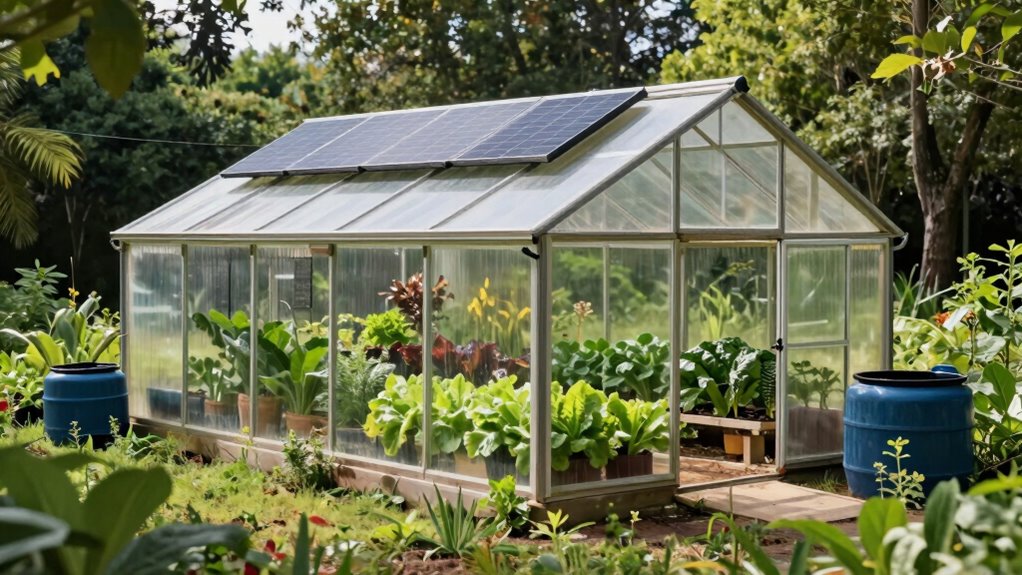
Setting up a reliable rainwater collection system is essential for maintaining water supply and ventilation in your off-grid greenhouse. Rainwater harvesting allows you to gather and store clean water, reducing reliance on external sources. Use gutters and filters to direct rainfall into storage tanks, ensuring the water stays free of debris. Prioritize water conservation by implementing drip irrigation and mulching, which minimize waste. Regularly check and clean your collection system to prevent blockages and algae growth. Incorporating nutritional information about water quality can help ensure the water you collect supports healthy plant growth. This system not only supplies water for plants but also helps maintain proper humidity levels, supporting healthy growth. With effective rainwater harvesting, you’ll have a sustainable water source that enhances your off-grid greenhouse’s independence and efficiency.
Natural Ventilation Techniques
Natural ventilation is a vital strategy for maintaining a healthy, comfortable environment in your off-grid greenhouse without relying on electrical systems. Proper airflow helps regulate temperature, control humidity, and reduce excess moisture that can lead to mold or pests. To promote effective ventilation, you can incorporate adjustable vents, roof openings, or side windows that open with the breeze. These features allow fresh air to flow in, improving indoor lighting by reducing fogging and glare, while also discouraging pest populations that thrive in stagnant conditions. Good ventilation minimizes the need for pest control chemicals and keeps plants healthy. Visualize your greenhouse with wide, operable vents, strategically placed openings, and natural cross-flow to optimize airflow and foster a balanced, pest-free environment. Incorporating indoor air quality gear such as HEPA filters or UV-C sterilization can further enhance your greenhouse’s environment by reducing airborne contaminants and pathogens. Additionally, understanding natural ventilation techniques can help you design your space more effectively and sustainably, especially when considering airflow management to maximize efficiency.
Efficient Water Use Strategies
Since water is a fundamental resource for your off-grid greenhouse, using it efficiently is essential to sustain healthy plants and reduce waste. Water conservation begins with collecting rainwater through barrels or catchment systems, ensuring you have a steady supply. Implementing irrigation efficiency techniques like drip or soaker hoses delivers water directly to plant roots, minimizing evaporation and runoff. Mulching around plants helps retain soil moisture, reducing watering frequency. Monitor soil moisture levels regularly to avoid overwatering. Additionally, scheduling watering during cooler parts of the day decreases water loss due to evaporation. Incorporating outdoor ovens and creating comfortable seating areas can also make your greenhouse space more enjoyable and functional, supporting sustainable off-grid living. Utilizing water-saving techniques, such as installing low-flow fixtures and using greywater systems, can further enhance your water efficiency efforts. Understanding the importance of water management is crucial for maintaining a healthy, productive greenhouse without depending on external water sources. Incorporating efficient water use strategies can significantly reduce your overall water consumption and promote sustainability. These strategies help you maximize water use, conserve this indispensable resource, and maintain a healthy, productive greenhouse without depending on external water sources.
How to Set Up Solar Power and Renewable Energy for Your Greenhouse
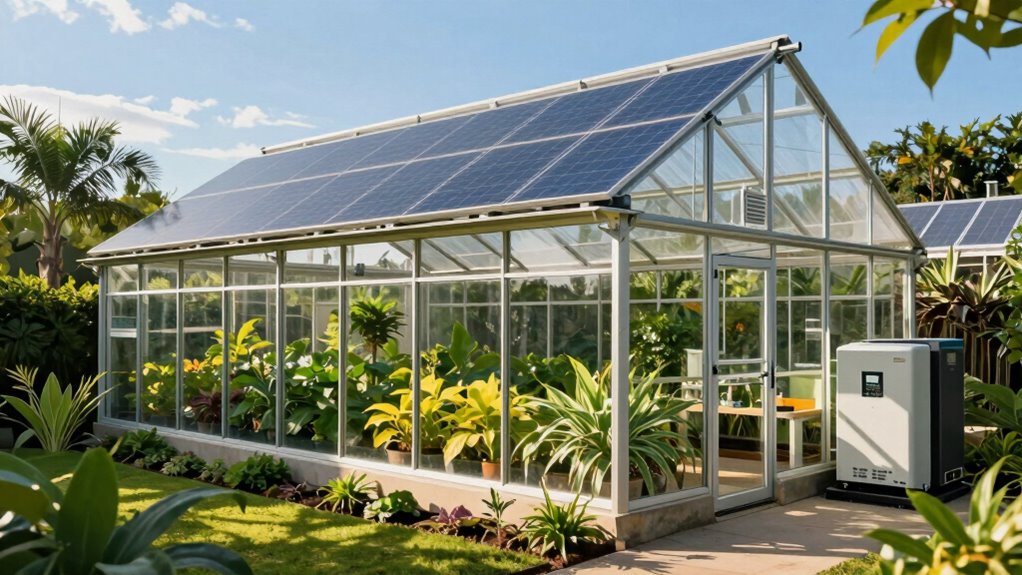
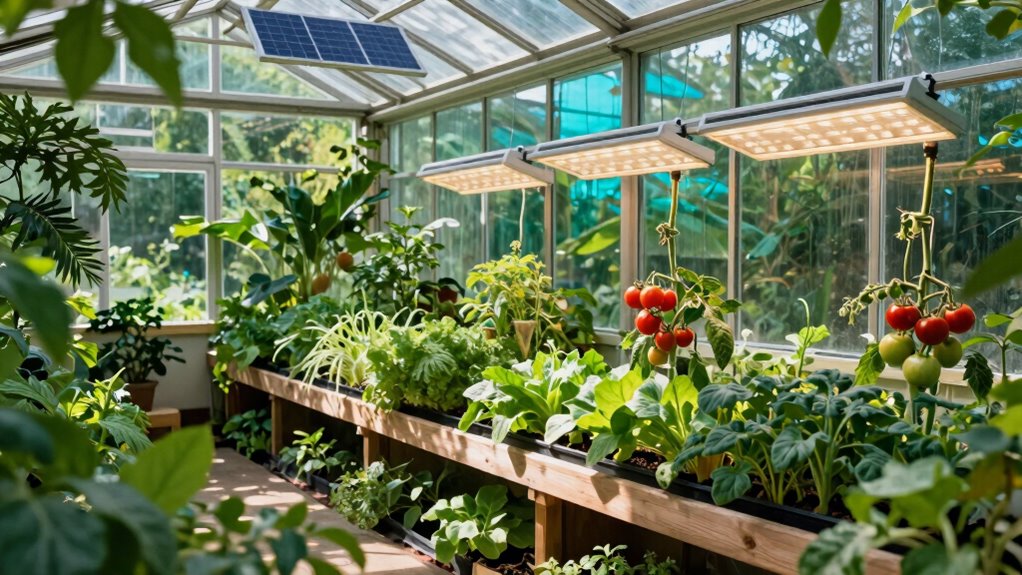
Installing solar power and renewable energy systems is a smart way to make your off-grid greenhouse sustainable and self-sufficient. To get started, you’ll need to choose high-quality solar panels that can generate enough power for your needs. Battery storage is essential to store excess energy for cloudy days and nighttime use. Proper placement of solar panels, ideally facing the sun for maximum exposure, guarantees peak efficiency. You’ll also want to set up a reliable charge controller and inverter system to convert solar energy into usable power. Consider integrating wind or small hydro options if available. This setup provides a steady, renewable energy source, reducing reliance on external power. Additionally, incorporating airless paint sprayers into your maintenance routine can help ensure your greenhouse stays protected and well-painted with minimal effort.
What Are the Best Cost-Effective Materials and DIY Tips?
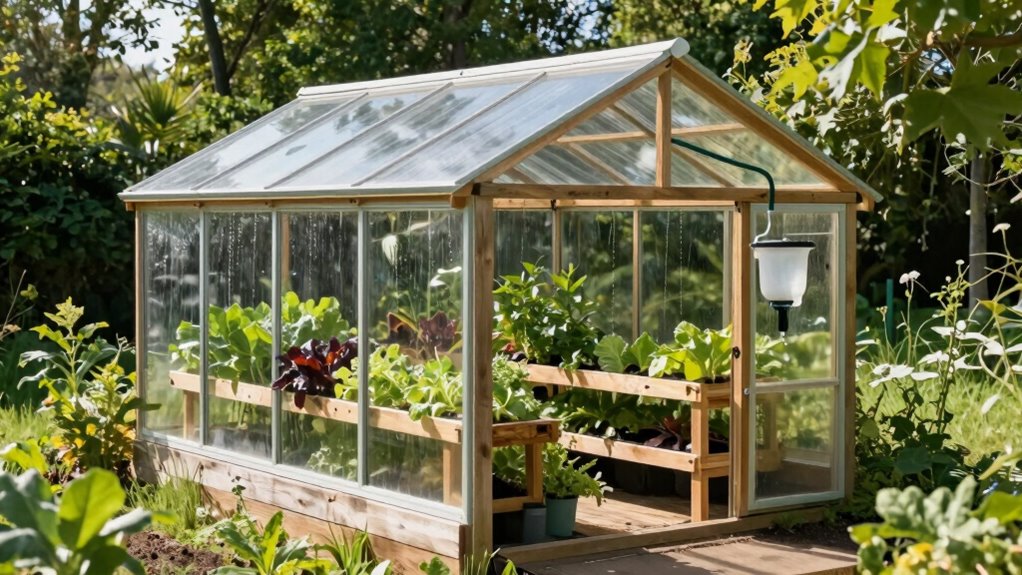
To keep costs down while building your off-grid greenhouse, choosing the right materials and employing smart DIY techniques can make a significant difference. Opt for cost-effective alternatives like recycled windows, PVC piping, and locally sourced wood. These materials reduce expenses and are often easier to work with for DIY construction tips. Instead of expensive glazing, consider using clear plastic sheeting or polycarbonate panels, which are affordable and durable. When building the frame, simple techniques like using pre-cut lumber or repurposed materials save time and money. Additionally, insulating with straw bales or bubble wrap can improve efficiency without breaking the bank. Focusing on energy-efficient options can further reduce long-term operational costs. Carefully planning and measuring your layout helps minimize waste, ensuring your DIY project stays within budget while maximizing functionality. Incorporating environmentally friendly recycled materials can further enhance sustainability and cost-effectiveness.
How to Grow a Wide Range of Plants in Your Off-Grid Greenhouse
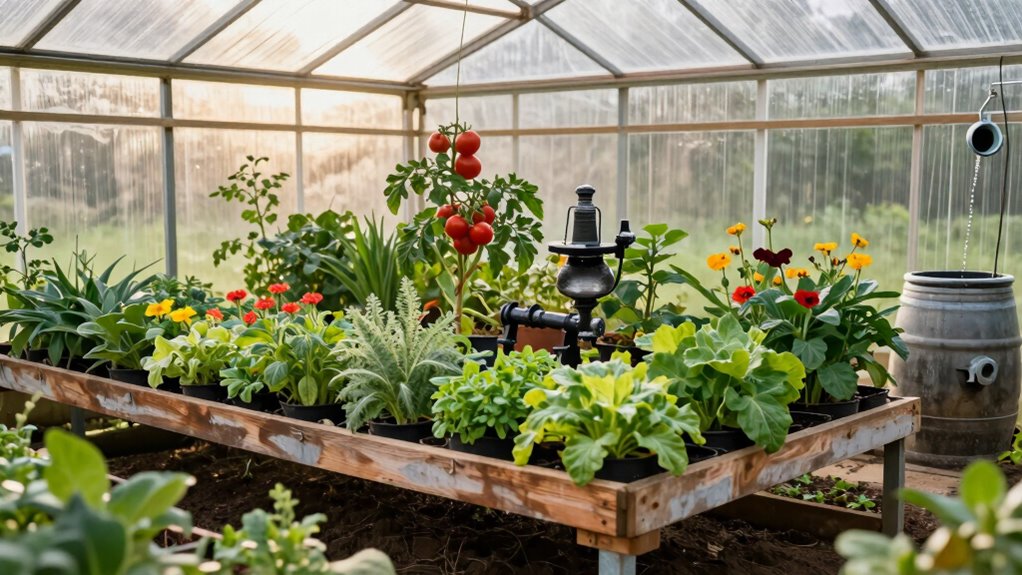
Growing a wide variety of plants in your off-grid greenhouse is entirely achievable with proper planning and understanding of plant needs. To diversify, focus on different plant propagation methods—seeds, cuttings, and root divisions—to expand your collection. Guarantee your greenhouse offers suitable conditions: adjustable temperature, humidity, and light. Use companion planting techniques to naturally manage pests and reduce chemical reliance. Regularly inspect plants for pest issues and act promptly to prevent infestations. Incorporate diverse crop schedules so you can harvest year-round. Keep a detailed planting calendar to track growth stages and optimize space. This strategic approach helps you cultivate herbs, vegetables, and flowers efficiently, making your off-grid greenhouse a thriving, sustainable oasis. Understanding how to master auditory processing skills can also support effective communication and learning within your gardening community.
What Common Challenges Come Up in Off-Grid Greenhouse Projects: and How to Solve Them?

Off-grid greenhouse projects often face a range of challenges that can hinder plant growth and system reliability. One common issue is maintaining consistent temperature, especially during colder months, but solar heating can solve this by harnessing the sun’s energy efficiently. Proper insulation and passive solar design help maximize heat retention. Pest control is another challenge; without chemicals, you need natural methods like companion planting, barriers, or beneficial insects to keep pests at bay. Water management can also be tricky, so collecting rainwater or using efficient drip irrigation is essential. Regular maintenance and monitoring are crucial to identify issues early. Using vetted survival gear and sustainable solutions can also provide backup systems during emergencies. By addressing these challenges with smart design and sustainable solutions, you can keep your off-grid greenhouse healthy and productive year-round.
Successful Off-Grid Greenhouse Stories to Inspire You
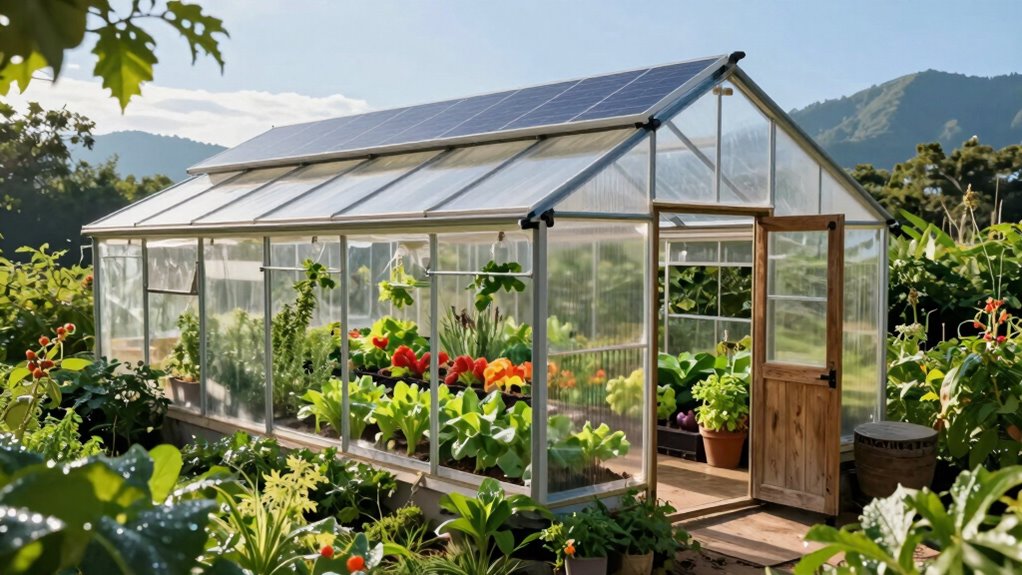
Many off-grid greenhouse projects have turned challenges into opportunities with innovative solutions. These success stories show you that resourcefulness and determination can make sustainable gardening possible anywhere. By exploring these examples, you’ll find inspiration to overcome your own hurdles and create a thriving off-grid greenhouse.
Overcoming Off-Grid Challenges
Have you ever wondered how some off-grid greenhouses flourish despite facing immense obstacles? These growers develop creative solutions to common issues like maintaining soil health and pest control. They often:
- Use composting and crop rotation to enrich soil naturally
- Employ natural pest deterrents like neem oil or companion planting
- Design multi-layered barriers to prevent pests from entering
- Rely on rainwater harvesting and solar-powered systems for reliable water and energy
These strategies help them sustain healthy plants and reduce dependency on external supplies. Overcoming challenges requires adaptability and resourcefulness. By focusing on soil health, they ensure strong nutrient levels; with pest control, they protect crops without harmful chemicals. Success stories like these prove that with determination and smart planning, thriving off-grid greenhouses are well within reach.
Innovative Greenhouse Solutions
Innovative solutions often turn challenges into opportunities, inspiring off-grid growers to think outside the box. For example, some successful greenhouse stories focus on improving soil health by incorporating composting and natural amendments, reducing reliance on external inputs. This boosts nutrient levels naturally, leading to healthier plants and higher yields. When it comes to pest control, many off-grid growers use integrated pest management (IPM), combining biological controls with physical barriers like row covers, instead of chemical pesticides. These methods protect crops while maintaining a sustainable, chemical-free environment. By embracing such innovative techniques, you can create a resilient, productive greenhouse that thrives off-grid. These stories prove that with a little creativity, you can solve problems and nurture a thriving, eco-friendly garden beyond traditional constraints.
Frequently Asked Questions
What Permits or Regulations Are Needed for an Off-Grid Greenhouse?
You’ll need to check local zoning restrictions and building codes before setting up your off-grid greenhouse. Zoning laws determine where you can build and may restrict certain structures, while building codes ensure safety standards are met. Contact your local planning department to understand specific permits required. Usually, small, non-permanent greenhouses may not require permits, but larger or permanent structures often do. Always confirm before starting your project to avoid fines.
How Long Does It Take to Build a Functional Off-Grid Greenhouse?
Building a functional off-grid greenhouse can take anywhere from a few weeks to a couple of months, depending on your planning and experience. You’ll harness alternative energy sources like solar or wind, and master water management to keep your plants thriving. Think of it as planting the seeds for independence, where each step grows your confidence and brings your dream closer to reality, one brick and beam at a time.
Can Off-Grid Greenhouses Support Year-Round Growing in Cold Climates?
Yes, off-grid greenhouses can support year-round growing in cold climates. You’ll need solar power to run heating systems and lighting, ensuring plants stay warm and lighted during winter. Additionally, water collection systems help you harvest and store water efficiently, even in dry seasons. With proper insulation, passive solar design, and these sustainable systems, you can maintain a productive greenhouse all year long, regardless of the climate.
What Are the Common Maintenance Tasks for Off-Grid Greenhouses?
You’ll need to regularly check your pest control measures to keep pests at bay and prevent damage to your plants. Maintain your watering systems by cleaning filters and inspecting hoses for leaks to guarantee consistent moisture. Also, monitor and adjust ventilation, prune plants, and clean the greenhouse to prevent mold and diseases. These tasks keep your off-grid greenhouse thriving and productive throughout the year with minimal effort.
How Much Does an Off-Grid Greenhouse Typically Cost to Set Up?
Imagine building a cozy, solar-powered treehouse—costs vary, and off-grid greenhouses are similar. Typically, they cost between $2,000 and $10,000, depending on size, materials, and features. A thorough cost analysis helps with budget planning, covering essentials like framing, insulation, and renewable energy systems. You can start small and expand over time, making the dream more affordable and manageable, just like crafting your perfect hideaway.
Conclusion
Starting your off-grid greenhouse might seem intimidating, but it’s more within reach than you think. With the right planning, you can turn your dream into a reality and grow fresh plants sustainably. Think of it as planting seeds today for a greener tomorrow. Stay patient, adapt as needed, and you’ll soon see your efforts blossom into a thriving, eco-friendly oasis that proves the sky’s the limit.