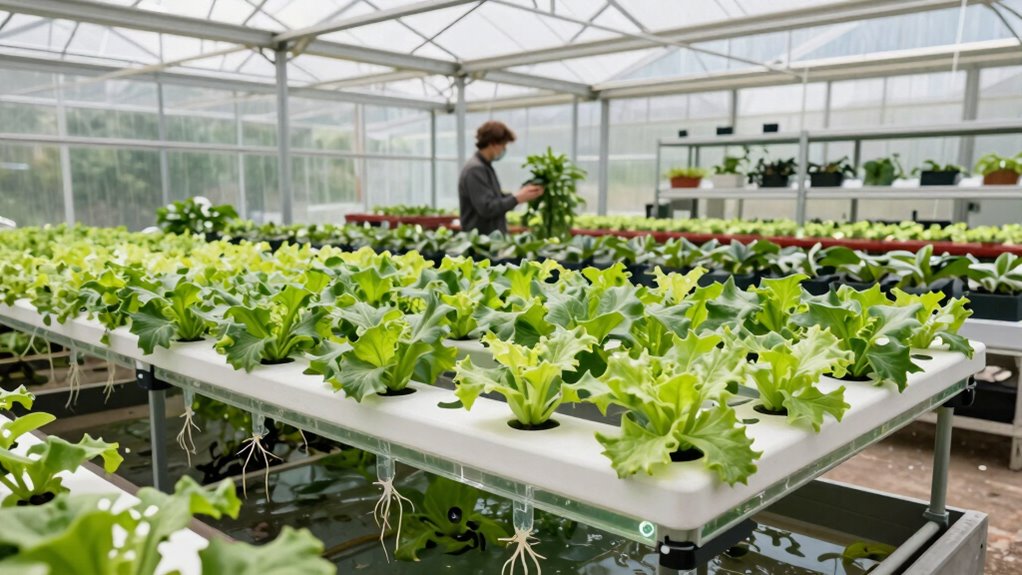
To decide if hydroponics belongs in your greenhouse, consider your plant types and growth goals. Hydroponics offers faster growth and higher yields but requires managing water chemistry and system maintenance. It’s ideal if you’re willing to learn about nutrient solutions and regularly monitor water quality. If you prioritize natural soil methods or lack resources for system upkeep, traditional gardening might be better. Keep exploring to discover how to make hydroponics work best for you.
Key Takeaways
- Assess if your target plants thrive in soilless or soil-based environments to determine hydroponics suitability.
- Consider your capacity to manage water chemistry, nutrients, and system maintenance effectively.
- Evaluate available resources, time, and willingness to learn about hydroponic system setup and upkeep.
- Determine if faster growth and higher yields align with your productivity goals.
- Match your greenhouse’s space and environmental conditions with hydroponic system requirements.
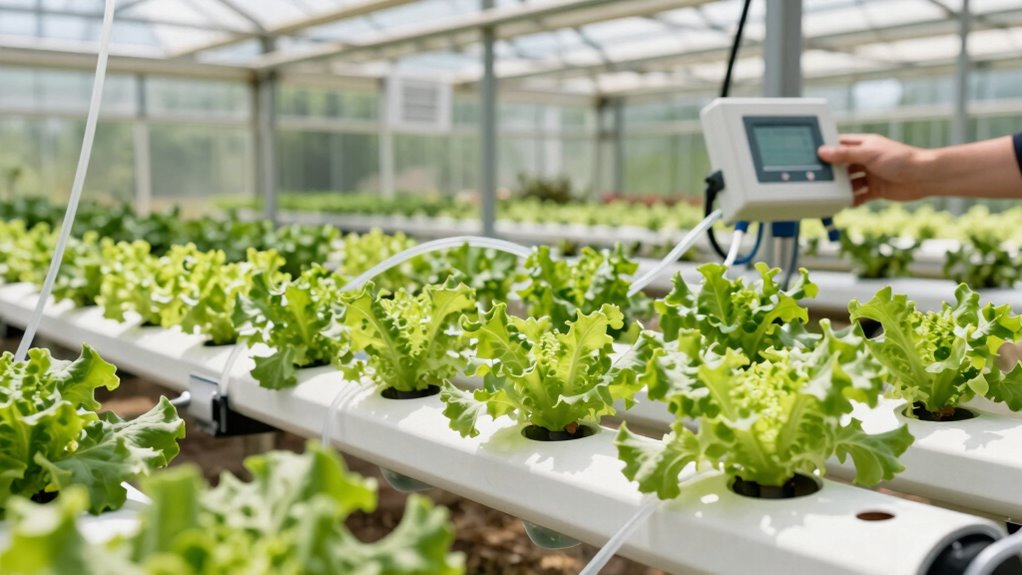
Deciding whether hydroponics belongs in your greenhouse depends on your goals, resources, and the types of plants you want to grow. Hydroponic systems can offer faster growth rates and higher yields, but they also require a different approach to soil compatibility and water management compared to traditional soil gardening. If your plants thrive in soil, and you prefer a natural, organic setup, hydroponics might not be the best fit. Conversely, if you’re aiming for precise control over growing conditions and want to maximize space efficiency, hydroponics can be a game-changer.
When considering soil compatibility, think about whether your plants naturally flourish in soil or if they’re better suited to a soilless environment. Hydroponic systems do away with soil altogether, relying instead on nutrient-rich water solutions. This means you need to be comfortable managing the water chemistry and ensuring your plants receive all the nutrients they need without the buffer of soil. If your plants are delicate or sensitive to changes in water quality, you’ll need to establish a reliable water management system. This involves monitoring pH levels, nutrient concentrations, and oxygen levels regularly to prevent diseases and promote healthy growth.
Water management is an essential aspect of hydroponics because the success of your system depends on delivering clean, well-balanced water to your plants. Unlike traditional soil gardening, where rain and groundwater can supplement watering, hydroponics requires you to actively control and maintain water quality. You’ll need equipment like pumps, timers, and filtration systems to keep the water circulating and free of pathogens. Proper water management also means understanding how much water your plants need at different growth stages and adjusting accordingly. Overwatering or underwatering can lead to root rot or nutrient deficiencies, so precision is key. Understanding water chemistry is particularly important for troubleshooting and optimizing plant growth in a hydroponic setup. Additionally, water pH plays a crucial role in nutrient availability and plant health, making regular testing essential.
Furthermore, understanding the importance of water chemistry in hydroponics is crucial for optimizing plant health and growth. Your decision should also factor in your capacity to handle ongoing maintenance. Hydroponic systems demand consistent monitoring and adjustments, which can be more labor-intensive than traditional soil gardening. If you have limited time or resources for regular upkeep, a soil-based approach might be more manageable. However, staying informed about nutrient solutions and their composition can help you achieve better results and reduce trial-and-error. Investing in testing equipment can streamline this process and ensure your system remains in optimal condition. If you’re enthusiastic about experimenting with innovative growing techniques and can dedicate time to learning about water chemistry and system maintenance, hydroponics can considerably boost your productivity.
Ultimately, whether hydroponics belongs in your greenhouse hinges on your ability to adapt to its unique requirements. Consider your plants’ needs, your familiarity with water management, and how much effort you’re willing to invest. When these factors align, hydroponics can become a highly efficient, productive addition to your greenhouse.

VIVOSUN Liquid Nutrients Base A & B Bundle, Grow Big Hydroponic Fertilizer, Supports Vegetative and Flowering Stages for Outdoor, Indoor Plants, Best Plant Food, Set of Quarts
The Perfect Combination: Vivosun nutrients base A & B are two-part, concentrated, holistic formulas that provide complete macro…
As an affiliate, we earn on qualifying purchases.
As an affiliate, we earn on qualifying purchases.
Frequently Asked Questions
What Are Common Mistakes Beginners Make With Hydroponics?
As a beginner with hydroponics, you might overlook the importance of monitoring nutrient deficiencies and pH imbalances. These issues can stunt plant growth or cause disease if not managed properly. You often add too many nutrients or forget to check pH levels regularly, leading to poor results. Avoid this by testing your water frequently, maintaining balanced pH, and providing the right nutrients to keep your plants healthy and thriving.
How Much Does Setting up a Hydroponic System Cost?
Imagine you’re stepping into the future, because setting up a hydroponic system can cost between $200 and $2,000, depending on size and complexity. The initial investment includes tanks, pumps, grow lights, and nutrients. A cost comparison shows it’s more affordable than traditional soil setups for some, but you’ll want to weigh the expenses against your goals. With careful planning, you’ll find a system that fits your budget and yields great results.
What Types of Crops Thrive Best in Hydroponic Systems?
You’ll find that leafy greens like lettuce, spinach, and kale thrive best in hydroponic systems because they have a high growth rate and require specific plant nutrients for ideal development. Tomatoes and peppers also do well, benefiting from controlled nutrient delivery. These crops respond quickly to the right plant nutrient balance, allowing you to enjoy faster growth rates and higher yields compared to traditional soil methods.
Can Hydroponics Be Integrated With Traditional Soil Gardening?
You can blend hydroponics with traditional soil gardening, creating a harmonious system. Focus on soil compatibility and root health, ensuring each method complements the other. By carefully managing nutrient flow and avoiding over-saturation, you foster a thriving environment for both roots in soil and hydroponic systems. This integration allows you to enjoy the benefits of both worlds, boosting productivity while maintaining healthy, vigorous plants across your garden.
How Do I Troubleshoot Common Hydroponic System Failures?
When troubleshooting hydroponic system failures, start by checking for nutrient deficiency signs like yellowing leaves or stunted growth. Next, test the pH level; an imbalance can hinder nutrient uptake. Confirm your water pumps and aerators are functioning properly, and clean any clogged filters. Regularly monitor and adjust pH and nutrients to keep the system running smoothly, preventing common issues before they escalate.

Digital pH Tester for Water, pH Meter for Hydroponic Water, TDS Tester EC PPM Test for Plant Nutrients, 4-in-1 Meter for Conductivity, pH Pen for Drinking Water, DWC, Indoor Plants
Multi-functional 4-in-1 pH Tester: Our GIDIGI digital pH testers are versatile and can measure not only pH values…
As an affiliate, we earn on qualifying purchases.
As an affiliate, we earn on qualifying purchases.
Conclusion
So, as you weigh the pros and cons, remember that hydroponics might seem like the future of gardening—cutting-edge and efficient. But sometimes, the old-fashioned soil method has its charm and simplicity. Ironically, what feels like the high-tech solution could turn out to be more complicated and costly than sticking with what’s tried-and-true. Ultimately, whether you choose hydroponics or not, just make sure it aligns with your goals, not just the latest trend.

AQUANEAT Aquarium Air Pump 300GPH, for up to 200 Gallon Fish Tank, Powerful Hydroponic Aerator Pump with Tubing, Air Stones, Valves
Powerful: total output 300GPH; 4 outlets make it easy to run multiple sponge filters, air stones, bubbler decorations…
As an affiliate, we earn on qualifying purchases.
As an affiliate, we earn on qualifying purchases.

URUQ Hydroponics Growing System Garden: 8 Pods Indoor Herb Garden with Grow Light Plants Germination Kit Quiet Automatic Hydroponic Height Adjustable – Gardening Gifts for Women Kitchen
5 TIMES FASTER GROW: Hydroponics growing system with a 24-watt LED light that simulates the effects of sunlight…
As an affiliate, we earn on qualifying purchases.
As an affiliate, we earn on qualifying purchases.