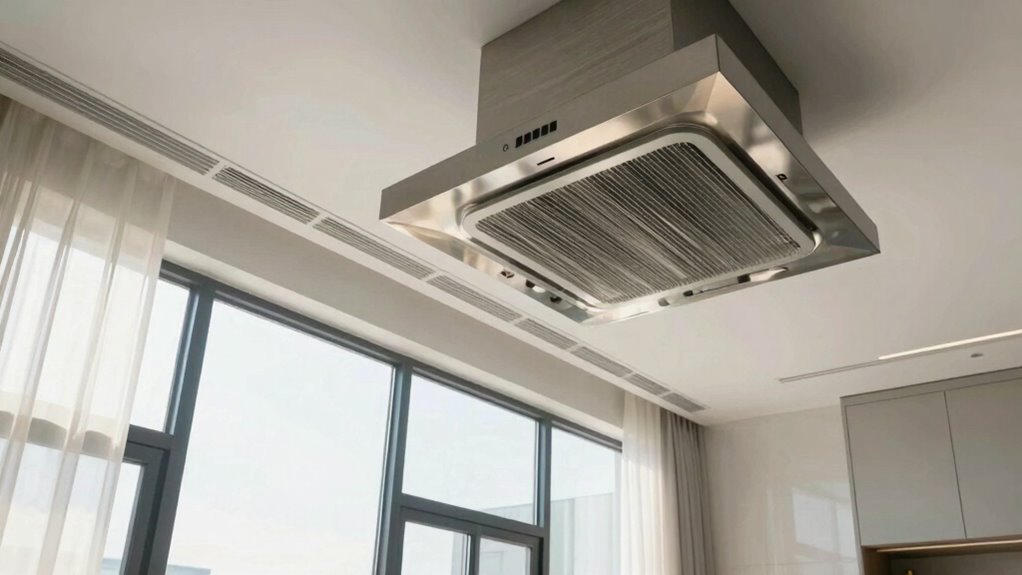

To balance exhaust fans, intake sources, and natural venting, start by checking that exhaust fans are powerful enough to remove excess moisture and odors without creating negative pressure. Guarantee intake points like windows and vents are clear and open selectively during good outdoor conditions. Properly place vents to promote airflow and avoid over-ventilation. Regularly maintain and fine-tune your system with clean filters and adjustable dampers. Keep these tips in mind to create healthier indoor air—more useful details come next.
Key Takeaways
- Ensure exhaust fans are appropriately powerful and not overly forceful to prevent negative pressure and unconditioned outdoor air intake.
- Regularly inspect and unblock intake vents, windows, and natural venting pathways to promote balanced airflow.
- Place vents strategically to optimize airflow and facilitate effective air exchange throughout the space.
- Use dampers, louvers, or adjustable vents to fine-tune airflow and maintain proper pressure balance.
- Perform routine maintenance and adjustments to keep the ventilation system efficient and air quality high.
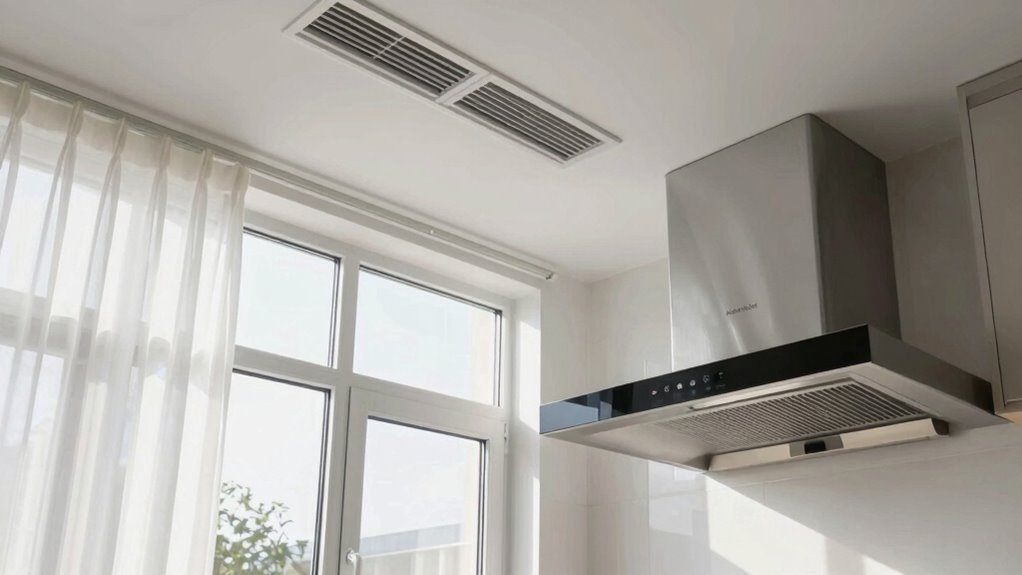
Balancing exhaust fans, intake, and natural venting is vital for maintaining good indoor air quality and energy efficiency. When you get the airflow optimization right, you guarantee that fresh air circulates effectively while stale air is expelled, reducing pollutants and humidity. Proper ventilation efficiency prevents issues like mold growth, condensation, and indoor air pollution, creating a healthier environment for everyone inside.
Ensuring balanced ventilation improves air quality, reduces humidity, and prevents mold for a healthier indoor environment.
To achieve this balance, start by evaluating your current setup. Check if your exhaust fans, typically in kitchens and bathrooms, are powerful enough to remove excess moisture and odors but not so strong that they pull in unconditioned outdoor air. If they’re too forceful, you risk creating negative pressure that draws in unfiltered air through gaps and cracks, decreasing ventilation efficiency. Conversely, weak exhaust fans won’t do their job properly. You want your fans to work harmoniously with your intake vents and natural venting to establish a steady airflow.
Next, examine your intake sources—these include windows, vents, and any mechanical fresh air systems. Make sure that your intake points aren’t blocked or sealed improperly, which can hinder airflow. Opening windows strategically during the day can boost natural venting, especially when outdoor conditions are favorable. Natural venting is a low-energy way to supplement mechanical systems, but it must be balanced with exhaust and intake to avoid creating negative or positive pressure inside your home. Too much intake without adequate exhaust can lead to stale indoor air, while too much exhaust with little fresh air supply can cause discomfort and air quality issues. Additionally, understanding ventilation principles can help you design a more effective airflow system tailored to your space. Incorporating proper vent placement is also crucial, as well-placed vents facilitate better airflow and air exchange.
Furthermore, considering the location of vents can significantly impact overall efficiency, as well-placed vents facilitate better airflow and air exchange. A comprehensive approach involves understanding the airflow dynamics within your home, which can help identify potential problem areas and solutions.
Finally, don’t forget to perform regular maintenance. Clean filters, inspect vents for obstructions, and verify that fans operate smoothly. Small adjustments, like installing dampers or vents with adjustable louvers, can fine-tune airflow and improve overall ventilation efficiency. By actively managing these components, you can optimize airflow, reduce energy costs, and maintain a healthier indoor environment. Balancing exhaust fans, intake, and natural venting isn’t just about comfort—it’s about creating a sustainable, well-ventilated space where air quality thrives.
exhaust fan with adjustable dampers
As an affiliate, we earn on qualifying purchases.
As an affiliate, we earn on qualifying purchases.
Frequently Asked Questions
How Do Outdoor Weather Conditions Affect Vent Balancing?
Outdoor weather conditions considerably impact vent balancing. High outdoor humidity can hinder proper airflow, making it harder for exhaust fans to remove moisture efficiently. Wind influence can cause uneven pressure, leading to imbalanced ventilation. You should monitor these conditions regularly, adjusting intake and exhaust settings accordingly. During windy or humid days, consider sealing leaks or using dampers to maintain ideal airflow and prevent indoor air quality issues.
What Tools Are Best for Measuring Airflow?
You can’t achieve proper ventilation calibration without the right tools for airflow measurement. A digital anemometer is your best bet—it’s accurate and easy to use for measuring airflow at vents and fans. Manometers also help gauge pressure differences, ensuring balanced exhaust and intake. Don’t overlook airflow measurement; it’s essential for fine-tuning your system and maintaining healthy indoor air quality. Invest in quality tools for reliable, precise results.
How Often Should Ventilation Systems Be Inspected?
You should inspect your ventilation systems at least twice a year, or more frequently if you notice issues like poor airflow or unusual noises. Follow a maintenance schedule and use an inspection checklist to guarantee all components, including exhaust fans and intake vents, are functioning properly. Regular inspections help prevent problems, improve efficiency, and maintain good indoor air quality, keeping your system balanced and effective.
Can DIY Adjustments Harm the Building’s Structure?
DIY adjustments can pose risks to your building’s structural integrity if you don’t know what you’re doing. For example, improperly sealing or venting can cause moisture buildup, weakening walls over time. While minor tweaks seem harmless, aggressive or incorrect modifications might compromise the structure, leading to costly repairs. Always consider the potential DIY risks and consult professionals to make certain your ventilation system remains safe and effective.
What Are Signs of Improper Ventilation Balance?
You’ll notice signs of improper ventilation balance through persistent stuffiness, lingering odors, or excessive humidity. Airflow disruptions may cause uneven air distribution, making some areas uncomfortable while others feel stale. Ventilation inefficiencies can lead to condensation, mold growth, and even health issues. If you see these signs, it’s a clear indicator that your exhaust fans, intake, and natural venting aren’t working in harmony, necessitating adjustments for better airflow.
Conclusion
Balancing exhaust fans, intake vents, and natural ventilation is key to maintaining healthy indoor air quality. When properly managed, your home can see a 20% reduction in indoor pollutants, according to recent studies. Keep an eye on airflow patterns, make sure vents aren’t blocked, and adjust as needed to create a comfortable, well-ventilated space. Remember, a balanced ventilation system isn’t just about comfort — it’s about safeguarding your health and energy efficiency too.