If you’re growing plants in a backyard greenhouse, monitoring CO2 isn’t always necessary but can boost growth if managed properly. Proper levels help your plants photosynthesize efficiently and stay healthy. Small-scale setups might do fine with natural airflow and observation, but a CO2 monitor can ensure ideal conditions and prevent issues. If you’re serious about maximizing plant health, you’ll find plenty of useful tips nearby to help you decide what works best for your space.

Get garden gear delivered free with Prime
- Fast, free delivery on millions of items
- Prime Video, Amazon Music and more included
- Member-only deals all year
Key Takeaways
- Small backyard greenhouses often rely on natural airflow and DIY methods instead of dedicated CO2 monitors.
- Proper CO2 levels enhance plant growth but are less critical in less controlled, small-scale environments.
- CO2 monitors help optimize plant health when managing larger or more complex greenhouses.
- Monitoring is essential for maximizing photosynthesis and plant vitality in enclosed or high-density setups.
- Cost and complexity may outweigh benefits for casual gardeners with simple greenhouse systems.
As an affiliate, we earn on qualifying purchases.
How Does CO2 Affect Your Greenhouse Plants?
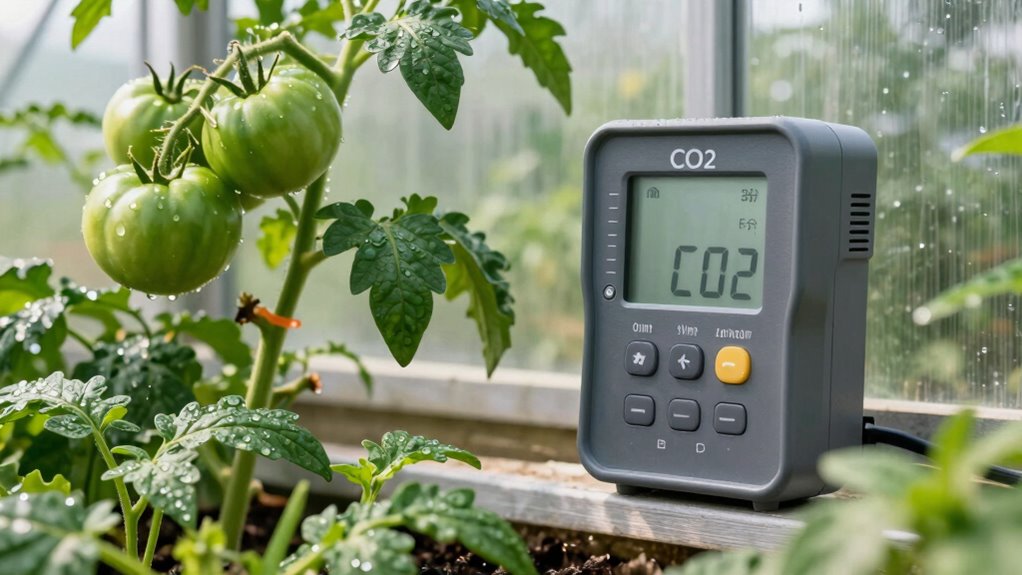
Carbon dioxide (CO2) plays a crucial role in your greenhouse plants’ growth, as it’s a key component of photosynthesis. When CO2 levels are ideal, your plants efficiently convert sunlight into energy, promoting healthy development. This process also influences soil nutrients, as healthy plants better absorb nutrients from the soil, leading to stronger growth. Additionally, proper CO2 levels can indirectly help with pest control, as vigorous plants are more resistant to pests and diseases. If CO2 is too low, plant growth slows, weakening your plants and making them more vulnerable. Conversely, too much CO2 can cause stress or imbalance. Maintaining the right CO2 concentration ensures your greenhouse plants thrive, supporting nutrient uptake and creating a healthier environment that discourages pest problems. Proper CO2 levels are essential for optimal plant health and productivity. Monitoring CO2 levels can also inform electric power generation with bike generators, which is an increasingly popular sustainable energy option for small-scale projects. For optimal results, understanding CO2 measurement techniques can help you keep the environment balanced. Regularly assessing CO2 fluctuations can provide valuable insights into your greenhouse’s overall health and efficiency, especially since CO2 dynamics can vary with weather and ventilation conditions.
Do Backyard Greenhouses Really Need CO2 Monitoring?
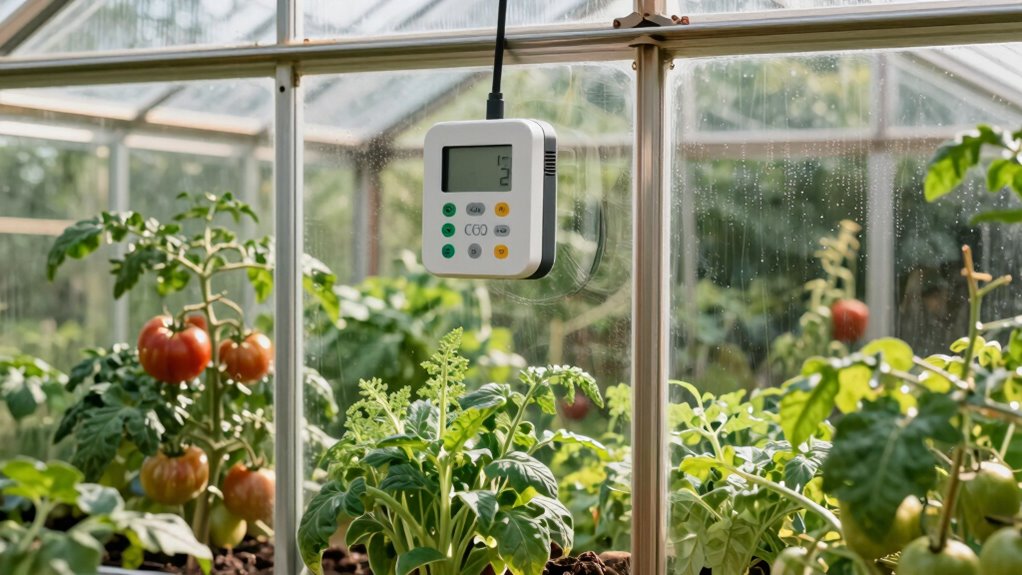
While some might assume CO2 monitoring isn’t necessary for backyard greenhouses, understanding your plants’ needs can make a real difference in their growth. Historically, trends show that small-scale gardeners often rely on DIY solutions like homemade sensors or relying on natural airflow. For most backyard greenhouses, consistent CO2 levels aren’t critical unless you’re optimizing for maximum growth. However, monitoring can help identify issues early, especially in enclosed spaces. Consider these DIY options:
| DIY Solution | Effectiveness |
|---|---|
| DIY CO2 sensors | Moderate; requires calibration |
| Ventilation adjustments | Easy to implement |
| Natural airflow | Maintains baseline levels |
In most cases, understanding your greenhouse environment and plants’ responses is enough without constant monitoring. Regularly inspecting your survival gear and understanding your local environment can also support healthy plant growth. Additionally, being aware of plant respiration can help you better interpret your greenhouse’s conditions. Monitoring CO2 levels can also provide insights into aerobic respiration processes occurring within your plants, especially in enclosed spaces where gases may accumulate. Recognizing the gas exchange process in plants can further enhance your ability to maintain optimal conditions for healthy growth.
What Are the Benefits of Using a CO2 Monitor at Home?
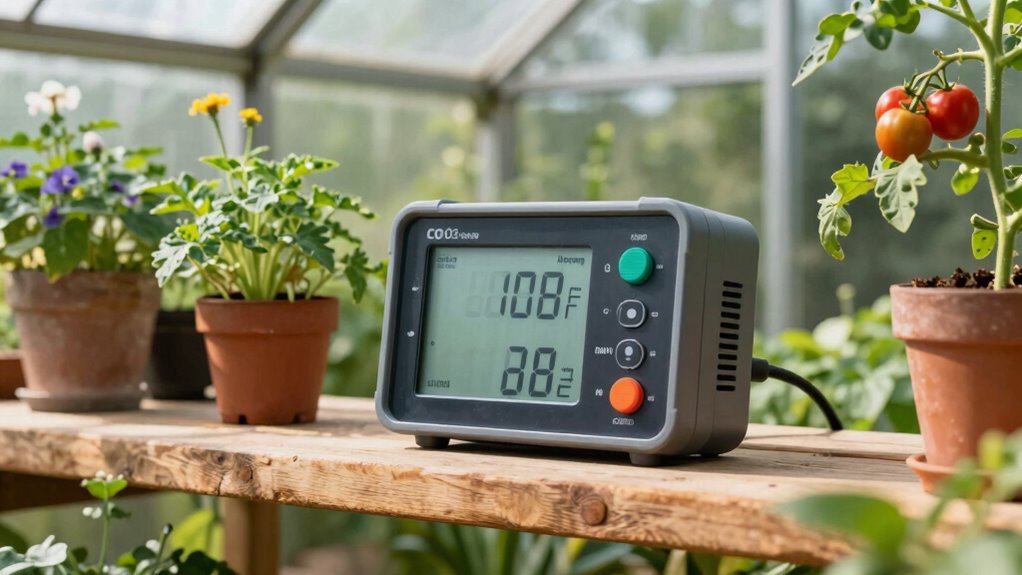
Ever wondered how a simple device like a CO2 monitor can enhance your home gardening or indoor plant care? Using a CO2 monitor helps you keep track of your indoor environment, allowing you to make seasonal adjustments to optimize plant growth. When CO2 levels are ideal, your plants photosynthesize efficiently, producing healthier, more vibrant foliage. This process is similar to how upgrading a engine performance parts can optimize your vehicle’s efficiency and power. This can also reduce the need for excessive plant watering, as healthy plants often require less frequent watering. Monitoring CO2 helps you create a stable environment, reducing stress on your plants during seasonal changes. By maintaining proper CO2 levels, you support overall plant health and growth, making your indoor gardening efforts more successful and rewarding. Additionally, understanding cookie categories can help you manage your gardening expenses more effectively, ensuring your investments in equipment and supplies are financially sound. Maintaining the right indoor conditions not only benefits your plants but also aligns with the principles of Stoic wisdom, encouraging patience and mindful care in your gardening practices.
Factors to Consider Before Buying a CO2 Monitor
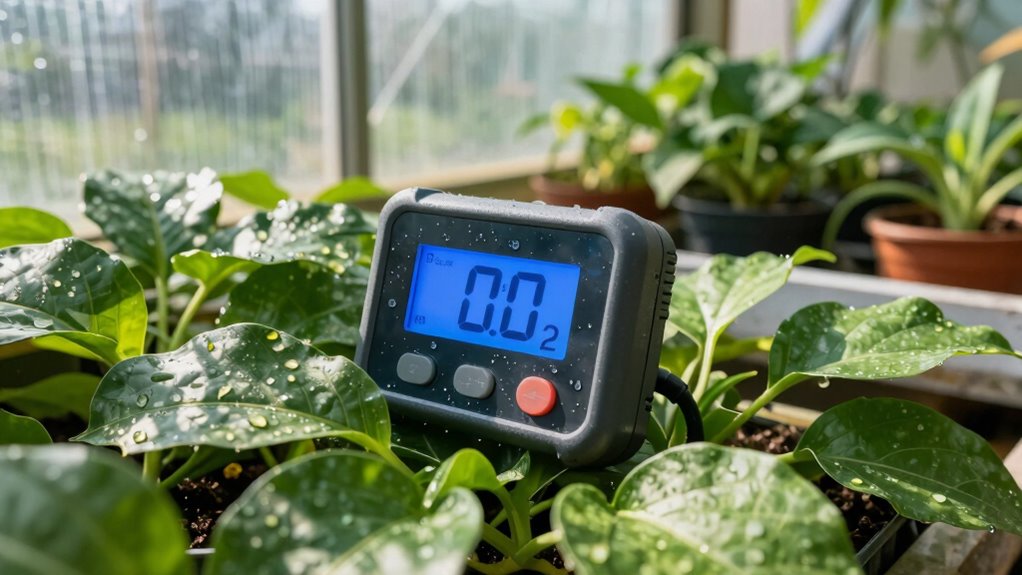
Before you choose a CO2 monitor, you should think about your budget and how much you’re willing to spend. Consider how precise the readings need to be for your greenhouse’s requirements, as accuracy varies between models. Also, evaluate how easy the monitor is to set up and operate to guarantee it fits your level of experience. Additionally, exploring support networks for new dads can provide useful tips on managing stressful situations, similar to choosing the right equipment for your greenhouse. Ensuring your monitor’s filter sizing/flow matches your greenhouse’s needs can improve overall performance and reliability. Proper safety precautions when installing and using CO2 monitors are essential to protect both your plants and yourself, especially in enclosed environments. Incorporating water management strategies can help maintain optimal humidity levels for your plants, reducing the risk of disease. It’s also helpful to research soundproofing techniques that can reduce external noise, creating a more consistent environment for your plants.
Budget and Cost
Budget plays a crucial role in choosing the right CO2 monitor for your greenhouse. Conducting a thorough cost analysis helps you understand what features are worth investing in and what fits within your financial limits. Budget planning guarantees you allocate funds efficiently while still getting a reliable device. Keep in mind that higher-end monitors often come with advanced features and greater durability, but they also cost more. On the other hand, more affordable options may lack some functionalities but can still serve your basic needs. By weighing the costs against your greenhouse’s size and CO2 management goals, you can decide which monitor offers the best value. Remember, investing wisely now can save you money and trouble down the line. Incorporating connected equipment can enhance your greenhouse’s overall environmental control and efficiency. Additionally, understanding the performance and reliability of different monitors helps ensure you select a device that will meet your long-term needs. Furthermore, considering cost-effective models that balance quality and affordability can optimize your investment. Exploring chemical sensing technologies can also aid in choosing monitors that provide accurate and consistent readings over time. A clear understanding of sensor accuracy is vital for maintaining optimal greenhouse conditions and avoiding costly mistakes.
Monitoring Accuracy Needs
When choosing a CO2 monitor for your greenhouse, evaluating its accuracy is essential to guarantee reliable readings that support healthy plant growth. Accurate measurement depends on the monitor’s ability to detect CO2 absorption and gas diffusion effectively. A high-quality sensor ensures that fluctuations in CO2 levels are captured precisely, preventing over- or under-ventilation. Since CO2 absorption varies with environmental conditions, select a monitor that compensates for temperature and humidity changes. Gas diffusion impacts how quickly and evenly CO2 is distributed within your greenhouse, so a monitor with fast response times is preferable. Reliable readings help you maintain ideal CO2 levels, promoting healthy plant development while avoiding unnecessary energy waste. Ultimately, sensor quality is crucial for effective greenhouse management.
Ease of Use
Choosing a CO2 monitor that’s easy to operate can save you time and reduce frustration, especially when you need quick, reliable readings. Look for models with intuitive interfaces, clear displays, and straightforward calibration processes. A monitor with simple controls makes it easier to interpret CO2 absorption levels and understand gas diffusion patterns. Consider how much setup is involved and whether the device offers quick readings without complicated adjustments.
| Feature | Ease of Use Benefit | Consideration |
|---|---|---|
| User-friendly design | Minimizes learning curve | Check for simple navigation |
| Clear display | Readings at a glance | Look for large, readable numbers |
| Quick calibration | Saves time during setup | Ensure it has easy calibration options |
| Automated alerts | Provides instant notifications | Useful for real-time monitoring |
| Compact size | Fits comfortably in your workspace | Portable and easy to handle |
How to Keep CO2 Levels Optimal Without a Monitor
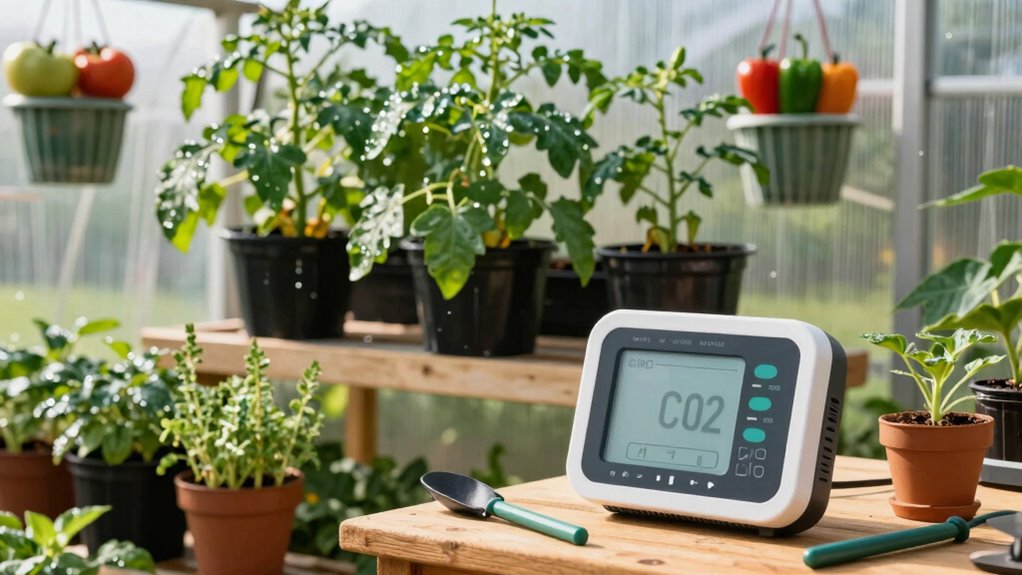
You can maintain ideal CO2 levels by using natural ventilation to control air exchange and prevent buildup. Adjust your plant density to guarantee plants don’t consume or produce excessive CO2, keeping the balance steady. Regularly check your plants’ health, as healthy plants naturally regulate CO2 levels more effectively without relying on monitors.
Use Natural Ventilation
Maintaining ideal CO2 levels in a greenhouse can often be achieved through natural ventilation, which relies on careful timing and environmental cues rather than electronic monitors. By opening vents or windows when outdoor conditions are favorable, you allow natural airflow to regulate CO2 levels and improve humidity control. This process depends on observing weather patterns—like cooler mornings or windy days—to maximize airflow without over-drying or overheating the space. Proper placement of vents ensures consistent exchange of stale air with fresh air, helping maintain stable CO2 levels. Regularly monitoring external conditions allows you to open or close vents at the right times, reducing the risk of CO2 build-up or depletion. This method is simple, cost-effective, and keeps your greenhouse environment balanced naturally.
Incorporate Plant Density
Adjusting plant density is an effective way to manage CO2 levels naturally within your greenhouse. Proper plant spacing ensures that air circulates freely, preventing stagnant pockets and promoting even CO2 distribution. When plants are too crowded, airflow reduces, limiting CO2 exchange and risking deficiencies. Conversely, too much space can lead to excessive ventilation and CO2 loss. Find a balance by enhancing plant density for your crop type, maintaining good air circulation, and encouraging natural CO2 enrichment. Here’s a quick guide:
| Plant Spacing | Air Circulation | CO2 Levels Effect |
|---|---|---|
| Close spacing | Restricted | Lower CO2 |
| Moderate | Good | Balanced |
| Wide spacing | Excellent | Higher CO2 |
Adjusting plant density helps keep CO2 levels ideal without a monitor.
Monitor Plant Health
How can you tell if your plants are getting enough CO2 without relying on a monitor? Look for signs like rapid growth, vibrant green leaves, and healthy stems. You can also use photography techniques—taking close-up photos can reveal subtle changes in leaf color or texture that indicate stress or deficiency. Soil testing is another effective method; testing the soil’s pH and nutrient levels helps gauge overall plant health, indirectly reflecting CO2 availability. If plants seem sluggish, exhibit yellowing leaves, or show poor development, it might signal low CO2 levels. Regularly observing these signs, combined with soil testing, allows you to assess plant health without specialized monitors, ensuring your greenhouse environment supports ideal growth conditions naturally.
Affordable Alternatives to CO2 Monitoring Devices

If traditional CO2 monitoring devices seem too costly for your greenhouse, there are several affordable alternatives that can still help you keep an eye on your plants’ environment. Regular soil testing is a simple, cost-effective way to assess nutrient levels, moisture, and pH, indirectly indicating plant health and CO2 needs. Maintaining proper pest control also supports ideal plant growth, reducing stress that can be caused by pests or diseases. Healthy plants with balanced soil and minimal pests often require less intensive monitoring of CO2 levels. Additionally, observing plant vigor, color, and growth patterns can give you clues about whether your environment is suitable. These practical approaches help you manage your greenhouse effectively without investing in expensive CO2 monitoring devices.
When Is It Time to Upgrade to a CO2 Monitoring System?

Knowing when to upgrade to a CO2 monitoring system is essential for enhancing your greenhouse’s plant growth and health. If you notice your plants aren’t thriving despite proper watering schedules, or soil nutrients seem depleted faster than expected, it might be time to contemplate an upgrade. Elevated CO2 levels can boost photosynthesis and growth, especially when your plants need extra support. Look for signs like uneven growth, stagnating yields, or difficulty maintaining consistent soil nutrients. Additionally, if you’re managing larger or more complex setups, a dedicated CO2 monitor can help maintain ideal levels. Upgrading becomes necessary when manual adjustments no longer keep CO2, soil nutrients, and watering schedules in sync, ensuring your plants stay healthy and productive.
Frequently Asked Questions
How Accurate Are DIY CO2 Monitoring Methods?
DIY sensors can provide a rough idea of CO2 levels, but their monitoring accuracy varies widely. You might find them useful for general trends, but they often lack precision and consistency. Factors like sensor quality, calibration, and environmental conditions impact their reliability. If you need precise measurements for plant health or safety, investing in a commercial CO2 monitor is a smarter choice, as it guarantees more accurate and dependable readings.
Can Natural Ventilation Affect CO2 Levels in Greenhouses?
Sure, natural ventilation can totally mess with your greenhouse’s CO2 levels — it’s like a rollercoaster for CO2 fluctuation! Ventilation impact is real; opening vents or windows allows fresh air in, lowering CO2, but can also cause sudden spikes. So, if you’re counting on stable CO2 levels for your plants, be aware that natural airflow can make things unpredictable, making monitoring even more essential.
Are There Specific CO2 Levels Best for Different Plant Types?
Different plant types thrive at specific CO2 thresholds to optimize plant growth. For example, most green leafy vegetables prefer CO2 levels around 800-1,200 ppm, while flowering plants may need slightly higher levels. Monitoring these CO2 thresholds helps you maintain ideal conditions. By adjusting ventilation or adding supplemental CO2, you can support healthy plant growth and maximize yields, ensuring each plant type reaches its full potential.
How Often Should CO2 Monitor Calibration Be Performed?
You should calibrate your CO2 monitor at least once every six months to guarantee accuracy. Regular calibration helps maintain your CO2 sensor’s longevity and keeps readings reliable. If you notice inconsistent data or after any sensor maintenance, consider calibrating more frequently. Proper calibration frequency prevents drift and ensures your greenhouse environment stays ideal for plant growth, making your CO2 monitor a dependable tool.
What Are Common Signs of CO2 Deficiency in Plants?
You’ll notice signs of CO2 deficiency in plants through slowed growth, pale leaves, and reduced crucial. During plant respiration, they rely on adequate CO2, and poor soil aeration can hinder this process. If plants seem sluggish or have weak, yellowing foliage, it indicates they aren’t getting enough CO2. Ensuring proper soil aeration and monitoring indoor conditions help maintain healthy CO2 levels, supporting robust plant respiration and growth.
Conclusion
Thinking about adding a CO2 monitor? While it can help optimize your greenhouse conditions, remember that maintaining good airflow and proper watering often do the trick. Do you want to watch your plants thrive like a lush, green oasis, or risk missing the subtle signs that CO2 levels are off? Sometimes, simple adjustments make all the difference. Keep your greenhouse healthy and vibrant—because your plants deserve the perfect environment to flourish.
Fall yard work Picks
leaf blowers
As an affiliate, we earn on qualifying purchases.