
The best irrigation timing isn’t always early morning or late evening. Instead, it depends on real-time weather conditions and soil moisture. Check soil moisture regularly and watch for weather changes, like rain or hot, windy days, that affect watering needs. By being flexible and observing your garden, you can avoid overwatering or stress. Keep exploring to discover how to fine-tune your watering schedule for healthier plants and efficiency.
Key Takeaways
- Optimal irrigation timing depends on soil moisture levels and weather conditions, not fixed clock times.
- Watering in the early morning or late evening reduces evaporation and supports plant health.
- Adjust watering based on recent rain forecasts to avoid overwatering and runoff.
- Soil structure and drainage influence the best time to irrigate, ensuring efficient water use.
- Observation and real-time environmental data enable adaptive watering, not rigid schedules.
Timing your irrigation correctly can make a significant difference in your garden’s health and water efficiency. If you want your plants to thrive without wasting water, you need to pay close attention to soil moisture levels and weather patterns. Many gardeners assume that the best time to water is early morning or late evening, but that’s not always the case. The real key lies in understanding your garden’s specific needs and adjusting your watering schedule accordingly.
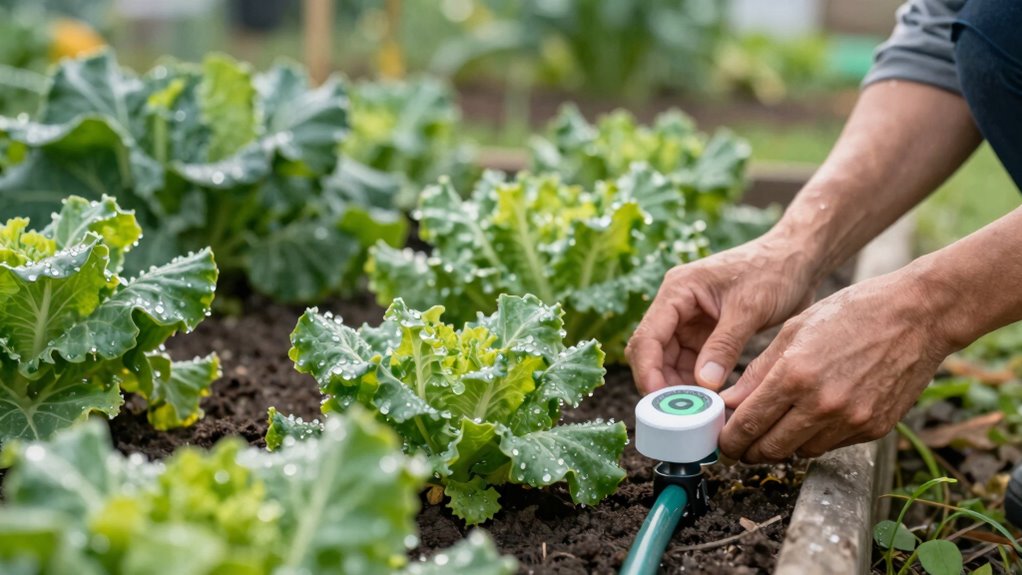
Soil moisture is the foundation for healthy plants, and maintaining the right levels is crucial. Instead of sticking to a fixed schedule, check your soil regularly. Use a soil moisture meter or simply dig a small hole near your plants to see how moist the soil actually is. If the soil feels damp a few inches down, you probably don’t need to water yet. Overwatering can lead to root rot and other issues, so it’s better to wait until the soil dries out a bit. Conversely, if the soil is dry, your plants need hydration. The goal is to keep the soil consistently moist—not soaked or bone dry. This approach ensures your plants get the water they need without waste. Monitoring soil moisture levels regularly helps you make more informed watering decisions. Understanding soil moisture and its role in plant health can help you fine-tune your watering practices even further. Additionally, understanding soil structure can assist in determining how quickly water drains and is retained in your garden.
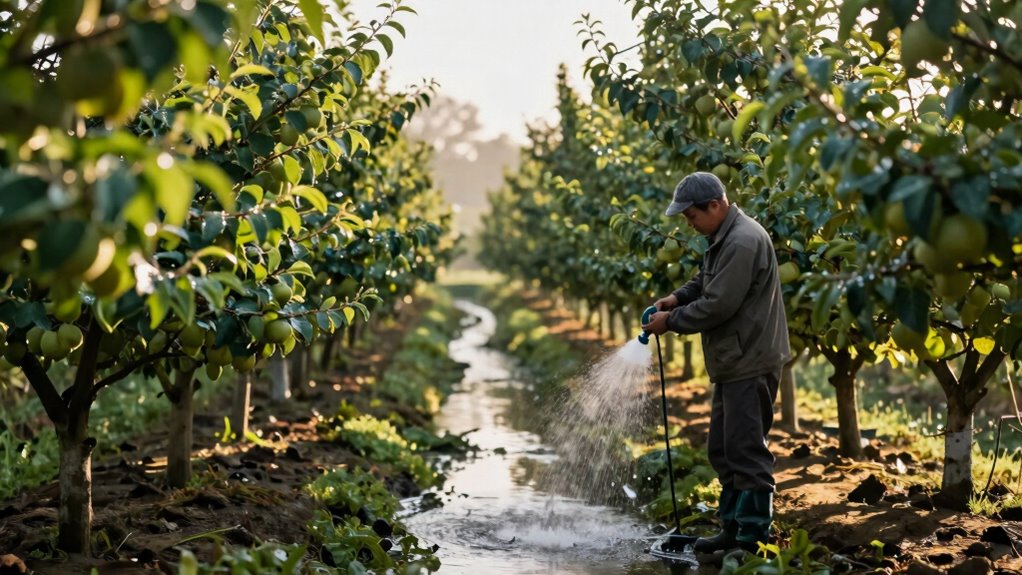
Weather patterns also play a vital role in your irrigation timing. If rain is forecasted, you can skip watering altogether, saving water and preventing over-saturation. On hot, windy days, water can evaporate quickly, so watering early in the morning can help your plants absorb moisture before the heat of the day. Conversely, if the weather is cool and humid, your plants may not need watering as often, since moisture loss through evaporation is minimal. It’s about adjusting your schedule based on current weather conditions rather than sticking to a rigid routine. Understanding how weather patterns influence soil moisture and plant needs can help you make better watering decisions.
Many people overlook the importance of timing relative to weather patterns, thinking that watering in the morning is always best. While that can be true, it’s more effective to base your watering on soil moisture levels and weather forecasts. This adaptive approach reduces water waste and helps prevent issues like fungal diseases caused by prolonged leaf wetness or excessive moisture.
In essence, the most effective irrigation timing isn’t always obvious or based on a fixed schedule. Instead, it’s a dynamic balance between checking your soil’s needs and staying aware of weather patterns. When you adapt your watering habits to these factors, you’ll notice healthier plants, less water waste, and a more sustainable garden. The key is to observe, assess, and adjust—your garden’s health depends on it.
soil moisture meter for garden
As an affiliate, we earn on qualifying purchases.
As an affiliate, we earn on qualifying purchases.
Frequently Asked Questions
How Do Weather Forecasts Influence Optimal Irrigation Timing?
Weather forecasts help you plan irrigation by predicting rain patterns, so you avoid watering unnecessarily before rain arrives. If a forecast shows upcoming rain, you can delay watering to conserve water and reduce drought risk. Conversely, if dry conditions are expected, you’ll know to irrigate more efficiently. By paying attention to weather updates, you optimize watering schedules and protect your plants from both overwatering and drought stress.
Can Soil Type Affect the Best Watering Schedule?
Soil type certainly influences your watering schedule, acting like a sponge that either holds or lets go of moisture easily. With soil composition, sandy soils drain quickly, needing more frequent watering, while clay soils retain moisture longer, requiring less. Knowing your soil’s moisture retention capabilities helps you plan irrigation more effectively, ensuring your plants get just the right amount of water without waste or drought stress.
What Role Does Plant Species Play in Irrigation Timing?
Plant species play a vital role in irrigation timing because their adaptations influence water absorption needs. Some plants have deep roots, requiring less frequent watering, while others with shallow roots need consistent moisture. By understanding each plant’s adaptation, you can time irrigation when water absorption is maximized, preventing overwatering or drought stress. Tailoring your schedule to these differences guarantees healthy growth and efficient water use.
How Does Climate Change Impact Irrigation Strategies?
Climate change impacts your irrigation strategies like a storm shifting course unexpectedly. You need to adapt by prioritizing water conservation and boosting crop resilience, because unpredictable rainfall and higher temperatures make traditional schedules less dependable. By adjusting your watering times and methods, you help guarantee your plants get enough moisture without wasting water, safeguarding your crops against climate uncertainties and supporting sustainable farming practices.
Are There Technological Tools to Determine Ideal Watering Times?
Yes, there are technological tools that help you determine ideal watering times by monitoring soil moisture levels. These sensors provide real-time data, allowing you to water only when necessary, which promotes water conservation. Smart irrigation systems integrate weather forecasts and soil moisture readings, ensuring you irrigate efficiently. Using these tools helps you optimize watering schedules, reduce water waste, and adapt to climate changes affecting your landscape’s needs.
automatic garden irrigation controller
As an affiliate, we earn on qualifying purchases.
As an affiliate, we earn on qualifying purchases.
Conclusion
Remember, choosing the right time to water is like tending to a delicate garden at dawn, when the world’s quiet whispers nurture growth. The most obvious moments—like midday heat—may seem tempting, but they often leave your plants parched or burned. Trust your intuition, listen to nature’s subtle cues, and you’ll find that the best irrigation timing isn’t always in plain sight. Sometimes, the smallest shift in timing can turn a struggling seed into a flourishing bloom.
garden rain sensor for irrigation
As an affiliate, we earn on qualifying purchases.
As an affiliate, we earn on qualifying purchases.
digital soil moisture sensor
As an affiliate, we earn on qualifying purchases.
As an affiliate, we earn on qualifying purchases.