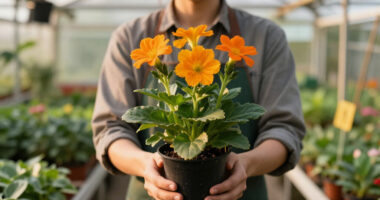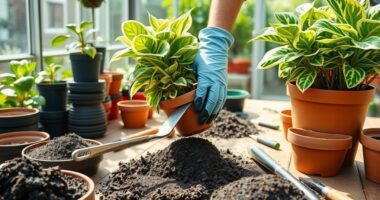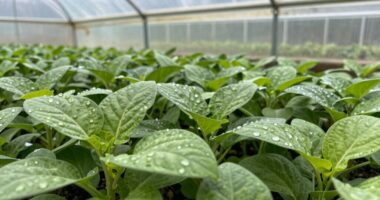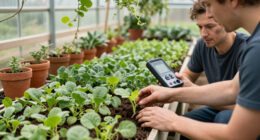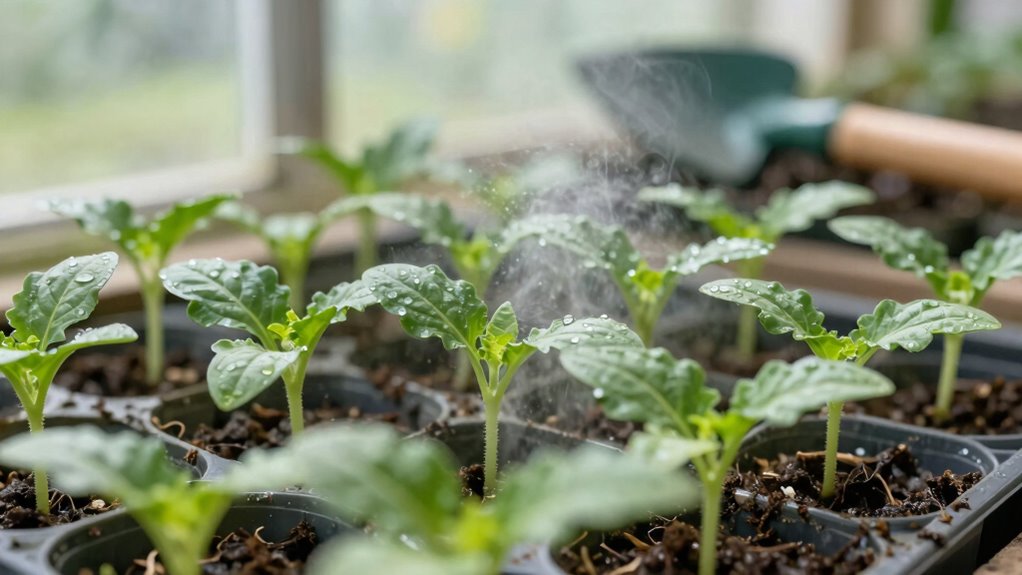

To keep seedlings compact without slowing growth, focus on gentle root pruning to prevent root-bound conditions and encourage dense, fibrous roots. Guarantee they receive ample, high-quality light to promote bushier, shorter growth without stretching. Maintain consistent light intensity and rotate seedlings regularly for even development. Also, monitor watering and air circulation to strengthen plants and prevent legginess. By balancing root health and lighting cues, you’ll foster healthy, manageable seedlings—continuing strategies that will help you master the process.

Get garden gear delivered free with Prime
- Fast, free delivery on millions of items
- Prime Video, Amazon Music and more included
- Member-only deals all year
Key Takeaways
- Use gentle root pruning regularly to promote dense, fibrous roots without stressing seedlings.
- Provide consistent, adequate light close to seedlings to encourage bushier growth.
- Avoid overwatering and over-fertilizing, which can promote excessive vertical growth.
- Rotate seedlings frequently to ensure even light exposure and prevent leaning.
- Maintain good air circulation to strengthen plants and prevent leggy, elongated growth.
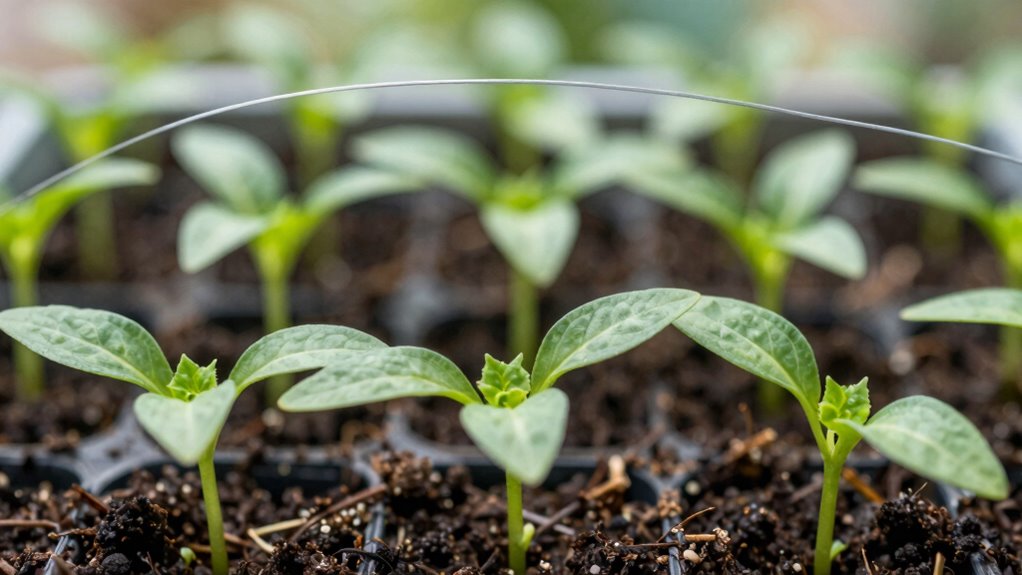
If you want your seedlings to grow strong and stay manageable, it’s vital to control their growth from the start. One effective way to do this is through careful root pruning. When seedlings outgrow their containers, their roots can become tangled and root-bound, which encourages excessive top growth and makes them lanky. By gently trimming the roots, you encourage a more fibrous root system that supports healthy, compact growth. You don’t need to cut too much—just remove any circling or overly long roots to stimulate new, denser root development. Root pruning should be done when you transplant seedlings or when they show signs of becoming root-bound, typically every few weeks during early growth stages. This process helps prevent the plant from investing energy into excessive upward growth, keeping it more compact and sturdy. Additionally, monitoring digital security practices can help protect your gardening data and resources online. Light management also plays a vital role in maintaining seedling compactness. Seedlings tend to stretch toward light sources, a phenomenon called etiolation, which results in tall, spindly plants. To combat this, make sure they receive ample, direct light—preferably natural sunlight or high-quality grow lights—so they don’t need to stretch for illumination. Keep the light source close to the seedlings but not so close that it causes heat stress or burns. Providing consistent, bright light encourages shorter, bushier growth habits. If your seedlings are starting to stretch, consider adjusting the light intensity or duration to mimic the natural sun’s strength, which helps maintain a healthy, compact form. Rotating your seedlings regularly to ensure even light exposure on all sides can prevent them from leaning and growing unevenly. Proper light positioning is essential for uniform growth and healthy development. Combining these techniques—root pruning and light management—creates a balanced environment that discourages excessive vertical growth. While you want your seedlings to grow strong roots and healthy foliage, you don’t want them to become leggy or unruly. Regularly monitor their growth, and don’t be shy about trimming roots when needed. Proper watering and fertilizing also support healthy development without encouraging excessive growth. Likewise, keep the light consistent and sufficient to prevent stretching, but avoid overexposure that could cause stress. Adequate air circulation can also help prevent disease and promote stronger plant structure. By actively managing root development and providing ideal lighting, you promote compact, resilient seedlings that will thrive once transplanted into larger containers or your garden. This approach guarantees your seedlings grow in a controlled, healthy manner, setting the stage for robust plants later on.
As an affiliate, we earn on qualifying purchases.
Frequently Asked Questions
Can Over-Fertilizing Affect Seedling Compactness?
Yes, over-fertilizing can affect seedling compactness. Excess fertilizer disrupts the fertilizer balance, encouraging rapid growth instead of compactness. It also influences growth hormones, leading to leggier, weaker seedlings. To keep your seedlings compact without slowing growth too much, use a balanced fertilizer in moderation. This approach supports healthy, strong development while preventing over-stimulation that causes seedlings to stretch out.
What Are Natural Methods to Control Seedling Height?
If you want to control seedling height naturally, think of plant spacing and root pruning as your secret weapons. By giving seedlings enough space, you prevent overcrowding and encourage healthy, compact growth. Regular root pruning keeps roots in check, stopping them from growing too tall or leggy. These simple yet powerful methods help you manage height without slowing growth too much, ensuring sturdy, well-shaped seedlings ready for transplanting.
How Does Light Intensity Influence Seedling Growth?
Light intensity directly influences seedling growth by affecting light manipulation techniques. When you increase light intensity, seedlings receive more energy, promoting stronger, healthier growth. Conversely, reducing light helps prevent seedling stretching, keeping them compact. You can control this by adjusting light duration or distance from the source. Proper light management guarantees seedlings grow sturdy without becoming spindly, balancing growth speed and plant health effectively.
Are There Specific Soil Types That Promote Compact Seedlings?
You should choose soil with a balanced pH, around 6.0 to 7.0, to promote sturdy, compact seedlings. Soil rich in organic matter provides essential nutrients and improves structure, helping seedlings grow strong without becoming leggy. Well-draining soil prevents waterlogging, which can cause legginess. Regularly amend your soil with compost or organic matter, ensuring it stays fertile and supportive of healthy, compact growth.
How Often Should I Prune Seedlings for Best Results?
Imagine a gentle breeze shaping a field of seedlings; you must prune your seedlings every 7-10 days to maintain ideal seedling spacing and promote healthy growth. Use root pruning carefully to encourage compactness without stressing the plant. Regular, light pinches help keep seedlings sturdy and prevent them from becoming leggy. Consistent pruning ensures your plants grow strong, bushy, and well-formed, ready for transplantation or further development.
Conclusion
By following these simple tips, you’ll transform your seedlings into perfectly compact, bushy plants that seem to defy gravity itself. Remember, don’t overdo the pruning or too much fertilizer — you don’t want to turn your garden into a jungle of wild, unruly growth. With a little careful attention and patience, your seedlings will stay neat, healthy, and thriving, making your garden look like a lush, vibrant paradise that visitors could get lost in for hours.
Halloween Picks
halloween
As an affiliate, we earn on qualifying purchases.